Related Articles

There are liturgical feasts that, at first glance, may seem quiet, almost unnoticed. And yet, they contain immense spiritual depth. One of them is the Purification of the Blessed Virgin Mary, celebrated on February 2, also known as Candlemas.
This mystery, deeply rooted in the tradition of the Church, is not merely a pious remembrance: it is a true school of Christian life. In it are woven together Mary’s humility, obedience to God’s law, the recognition of Christ as the light of the world, and an urgent call to our conversion today.
A simple act… with an eternal meaning
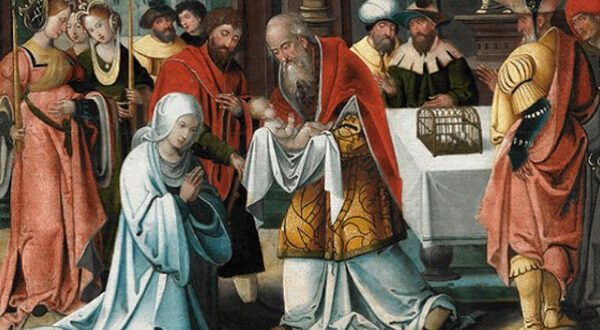
The feast of the Purification commemorates the day when the Virgin Mary went up to the temple in Jerusalem to fulfill two precepts of the Mosaic Law:
- The ritual purification of the mother after childbirth
- The presentation of the firstborn to God
All of this was prescribed in the ancient law given by God through Moses. According to this law, every woman had to be purified after giving birth and offer a sacrifice. Moreover, firstborn sons had to be consecrated to the Lord.
But here a key question arises.
Was Mary obliged to undergo purification?
The answer is clear: no.
The Virgin Mary had conceived by the power of the Holy Spirit and remained ever Virgin. There was no stain in her, neither physical nor spiritual. She had no need of purification.
And yet, she goes up to the temple anyway.
Why?
Here we find one of the most beautiful lessons of the Gospel:
👉 Mary does not act out of obligation, but out of love, humility, and obedience.
In a world obsessed with rights, Mary teaches us the value of duty. In a culture that looks for excuses, she embraces fidelity. In a society that flees from humiliation, she freely chooses it.
The poverty of God: an offering of turtledoves
The Gospel reveals a moving detail: Mary does not offer a lamb, but two turtledoves or young pigeons, the sacrifice permitted to the poor.
God enters the world without human privileges.
Christ is not presented with outward grandeur, but in the simplicity of the humble.
This challenges us deeply today:
- Where do we seek God?
- In success, in power, in the spectacular… or in what is small and hidden?
The Presentation of the Child Jesus: Christ, light for the world
The culminating moment arrives when the Child Jesus is presented in the temple. There, something extraordinary happens: two righteous souls recognize what many failed to see.
Simeon: the fulfillment of waiting
A just and devout old man, filled with the Holy Spirit, takes the Child in his arms and proclaims the famous canticle:
“Now, Lord, you may let your servant go in peace…”
Simeon recognizes in this Child:
- salvation
- the light for the nations
- the glory of Israel
But he also foretells suffering:
- Christ will be a sign of contradiction
- And a sword will pierce Mary’s soul
The Cross is already present… even in this moment of light.
Anna: the hope that is proclaimed
Alongside Simeon appears an elderly prophetess, Anna, who:
- gives thanks to God
- speaks of the Child to all who were awaiting redemption
She represents the faithful who, in the midst of the world’s darkness, have not ceased to hope in God.
Candlemas: a procession of light in the midst of darkness
From this mystery arises one of the most beautiful traditions of the Church: the procession of candles.
The lit candles symbolize something profoundly relevant today:
👉 Christ is the light that illuminates our darkness
In an age marked by:
- moral confusion
- loss of meaning
- crisis of faith
the Church invites us to walk with a light in our hands.
It is not an empty gesture. It is a proclamation:
- I believe in Christ
- I want Him to illuminate my life
- I desire to reach the eternal temple
Three lessons for our life (more necessary than ever)
From this mystery flow concrete and urgent teachings:
1. Fidelity without excuses
Mary fulfills the law without seeking dispensations.
Today we live surrounded by justifications:
- “It’s not a big deal”
- “Everyone does it”
- “God understands…”
But the Gospel is not negotiable.
👉 Holiness begins in the small things, in the everyday.
2. Living offered to God
Jesus is presented to the Father. Mary gives Him.
And us:
- Have we truly offered ourselves to God?
- Or do we live only for our own plans?
The Christian life is not only about believing…
👉 It is about belonging to God.
3. Loving humility and interior purification
Mary submits to a rite she does not need.
We, on the other hand:
- avoid penance
- flee from sacrifice
- reject correction
And yet, the soul needs to be purified:
- through confession
- through prayer
- through offered sacrifice
👉 Without purification, there is no holiness.
A special call to parents
The tradition of the Church proposes something profoundly relevant:
👉 To offer children to God
Not as an empty symbolic gesture, but as a real commitment:
- to educate them in the faith
- to teach them to pray
- to form their conscience
- to protect their soul
In a world that seeks to form children without God,
Christian parents are called to be the first evangelizers.
Walking toward the definitive light
The Candlemas procession is not only a remembrance of the past. It is an image of our life.
We walk:
- amid shadows
- with struggles
- with uncertainty
But we carry a light.
That light is Christ.
And Mary walks with us.
If we remain faithful, humble, and offered to God, one day that small flame will become eternal vision:
👉 we will enter the temple of glory
Conclusion: returning to what is essential
The Purification of the Blessed Virgin Mary is not just another feast on the calendar. It is a radical call:
- to humility in a proud world
- to obedience in a rebellious culture
- to light in the midst of darkness
Mary did not need purification…
yet she did it out of love.
And therein lies the secret of every authentic Christian life:
👉 to do the will of God, even when it is not necessary… but when it is loved.