
Related Articles
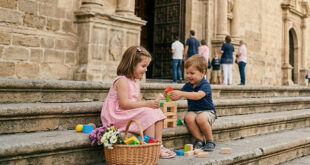


We live in an age in which speaking about family has become increasingly complex. What for centuries seemed clear, today appears wrapped in doubts, wounds, ruptures, and new forms of coexistence that deeply challenge the Christian vision of marriage.
Many Catholics ask themselves: what does the Church really say about irregular family situations? Is there hope for those living in these circumstances? Does the Church exclude or accompany? Can mercy and truth exist at the same time?
The Catholic answer cannot be reduced either to cold harshness or to sentimentality without truth. The Church, as Mother and Teacher, clearly proclaims God’s plan for marriage, but also extends her arms to those living difficult situations, always seeking conversion, healing, and the salvation of souls.
Speaking about irregular situations does not mean pointing fingers with contempt, but illuminating with charity. Because behind every story there are concrete people, real sufferings, difficult decisions, and very often a deep thirst for God.
God’s Plan for the Family
Before speaking about what is irregular, we must remember what is regular according to the heart of God.
Marriage is not a simple coexistence nor a social contract. It is a divine institution. From the beginning, God created man and woman for a stable, faithful, fruitful, and indissoluble union.
Christ elevated this union to the dignity of a sacrament, making Christian marriage a visible sign of His love for the Church.
That is why true marriage implies:
- unity (one man and one woman)
- fidelity (forever)
- openness to life
- definitive commitment
- total mutual self-giving
- sacramentality among the baptized
When any of these elements is rejected or replaced, the so-called “irregular situations” appear.
What Are the Main Irregular Situations?
Among the main situations that contradict God’s plan for the family we find:
- the so-called “trial marriage”
- free unions
- Catholics united only by civil marriage
- separated or divorced persons not remarried
- divorced persons remarried civilly
- those deprived of family
Each of these situations requires discernment, truth, and pastoral accompaniment.
The So-Called “Trial Marriage”: An Interior Contradiction
Today many young people say:
“First we will live together, and if it works, we will get married.”
This mentality has normalized what is called “trial marriage.”
However, properly speaking, this is not marriage.
Why?
Because true marriage excludes precisely the idea of provisionality. Total self-giving cannot exist while the exit door is left open.
Authentic love does not say:
“I stay as long as it works.”
It says:
“I give myself forever.”
When a couple lives together “testing,” in reality they are not building on rock, but on the permanent possibility of rupture.
That weakens love from its very root.
A person is not tested like a product. Love is not rehearsed: it is decided.
Free Unions: Cohabitation Without Commitment
Another increasingly frequent reality is the so-called free unions.
Here there is not even a clear intention of future marriage. A man and a woman simply decide to live together without assuming any stable commitment.
The causes can be many:
- economic problems
- secularized cultural environments
- fear of commitment
- emotional immaturity
- previous family wounds
- disordered search for pleasure
- ideological rejection of marriage
But deep down there is usually a great difficulty: not wanting to assume the responsibility of forming a true family.
Freedom wrongly understood leads people to think that commitment means losing autonomy, when in reality mature love demands precisely the capacity to give oneself.
Without commitment there is no covenant. Without covenant there is no solid family.
How Can These Situations Be Avoided?
It is not enough to condemn. We must form.
The solution is not simply repeating rules, but educating the heart.
It is necessary to:
- teach young people the value of fidelity
- show the beauty of Christian marriage
- present the family as a vocation and not as a burden
- heal emotional wounds
- accompany from adolescence
- strengthen spiritual and moral formation
Many reject marriage not because they understand it and deny it, but because its true greatness was never shown to them.
Family pastoral care must begin long before the wedding.
Catholics United Only by Civil Marriage
Here we must distinguish two very different cases.
Those Who Never Received the Sacrament
These are baptized persons who married only civilly.
Their situation is different from free unions because, at least, they accept certain obligations proper to marriage: stability, responsibility, and public recognition.
Nevertheless, among Catholics, the only valid and licit marriage is the sacramental one.
For this reason, the Church encourages them to regularize their situation by receiving the sacrament of marriage.
Not as a simple “religious procedure,” but as a true consecration of their home to God.
As long as that situation persists, they cannot fully access the sacraments.
This is not a punishment, but coherence between the faith professed and the life lived.
Those Who Were Already Sacramentally Married and Then Married Civilly
Here the situation is more serious, because there is a previous marital bond that remains in force as long as its nullity is not proven.
The Church cannot recognize a second union while the first remains.
Not because compassion is lacking, but because Christ was absolutely clear about the indissolubility of marriage.
Can a Catholic Separate?
Yes. And this is important to clarify.
The Church does not oblige someone to remain living together when there is real danger or grave injustice.
In cases of:
- violence
- serious infidelity
- abandonment
- moral corruption of the children
- seriously destructive situations
the innocent spouse may licitly request separation.
This is not about breaking the sacramental bond, but about protecting dignity, safety, and the good of the children.
Separating does not always mean sinning.
Sometimes it is an act of prudence and justice.
That said, it is always advisable to seek the counsel of a prudent and experienced priest.
Divorced and Remarried: A Deep Wound
This is one of the most delicate pastoral issues.
Jesus was very clear:
“Whoever divorces his wife and marries another commits adultery.”
This is not a cultural or disciplinary statement: it is the word of the Lord.
Therefore, when a divorced person enters into a new civil union while the first sacramental bond remains valid, the Church cannot recognize that second union as true marriage.
This does not mean rejection of the person.
It means fidelity to Christ.
What Paths Exist?
The Church invites these people to seek real solutions:
Investigating a Possible Nullity
This is not about “annulling” a valid marriage, but about verifying whether it truly existed from the beginning.
If true consent, sufficient freedom, or essential elements were lacking, nullity could be declared.
Attempting Reconciliation
When possible, rebuilding the first marriage remains a deeply Christian ideal.
Living in Continence
If there are serious duties—especially because of children—and the second cohabitation cannot be dissolved, the Church proposes living as brother and sister, that is, without conjugal relations.
In that case, also avoiding public scandal, access to the sacraments could be possible.
This teaching may seem demanding, but the Gospel was never a moral discount: it was a call to holiness.
Are They Outside the Church?
By no means.
This must be repeated clearly.
Divorced and remarried persons are not excommunicated nor expelled from the Church.
They remain children of God and members of the People of God.
They can and must:
- pray
- listen to the Word of God
- attend Holy Mass
- practice charity
- educate their children Christianly
- live penance
- participate in ecclesial life according to their situation
The Church does not close her doors.
But neither can she call good what objectively contradicts the Gospel.
True mercy never lies.
Those Deprived of Family: A Special Call of the Church
There are also people who have no family: involuntary singles, widows, abandoned people, lonely elderly people, marginalized persons, orphans, those who carry profound loneliness.
The Church looks upon all of them with special affection.
Saint John Paul II insisted that the Church should open her doors even wider to those who have no family, because the Church herself must be family.
The parish cannot be only a place of worship.
It must be home.
It must be embrace.
It must be refuge.
Christ had immense sensitivity toward the lonely, the tired, and the discarded.
The Church cannot do less.
Truth and Mercy: Never Separate Them
One of today’s greatest mistakes is opposing truth and mercy.
As if telling the truth were a lack of love.
As if mercy consisted in denying sin.
No.
Christ said to the adulterous woman:
“Neither do I condemn you.”
But He added:
“Go, and sin no more.”
There lies the whole of Catholic pastoral care.
To welcome, yes.
To justify error, no.
To accompany, yes.
To renounce truth, never.
The Family Remains Hope
Although we live in difficult times, the family remains the great spiritual battlefield of our time.
Satan attacks the family because he knows that there the soul, faith, and the future of the Church are formed.
That is why defending marriage is not a moralistic obsession, but a spiritual urgency.
Every holy home is a victory of Heaven.
Every faithful marriage is a silent preaching.
Every family reconciliation is a defeat of hell.
Conclusion: No One Is Lost
If someone reads this from within a difficult situation, they must know something important: the Church does not abandon them.
Never.
There may be sin.
There may be wounds.
There may be serious mistakes.
But the possibility of returning to God never disappears.
There is always a path.
There is always an open door.
There is always sufficient grace.
The Church is not a museum of the perfect.
It is a hospital for sinners.
But precisely because of that, she cannot stop calling the wound a sickness, nor the medicine what kills.
Truth saves.
Grace transforms.
And the family, even when wounded, remains sacred ground where God wants to work miracles.