Related Articles

We live in a paradoxical age. Never before has humanity had access to so much information, and yet rarely has there been so much confusion. We can consult millions of pieces of data in a matter of seconds, but it is becoming increasingly difficult to find solid answers to the fundamental questions of existence: Who am I? What am I living for? What is good? What is truth? What does God want from me?
This situation also deeply affects Catholics. Many baptized people know a few prayers, occasionally attend Mass, or preserve certain religious traditions, yet honestly admit that they do not know their faith well. Others find themselves disoriented by the controversies that arise both within and outside the Church. Some even abandon religious practice because they never truly came to understand what the Church teaches.
That is why an urgent question arises: how can a Catholic become well formed?
The answer is of enormous importance, because a poorly understood faith is a fragile faith. And a fragile faith will hardly withstand trials, doubts, temptations, and the cultural pressures of the modern world.
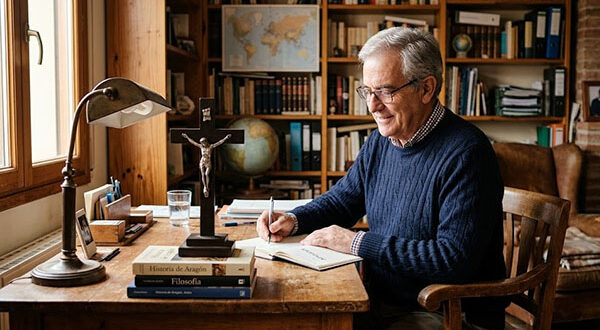
Being a well-formed Catholic does not mean becoming a professional theologian, memorizing hundreds of Church documents, or constantly debating doctrinal issues. It means something much deeper: knowing Christ, understanding the faith of the Church, and learning to live it fully.
What Does It Really Mean to Be Well Formed?
Many people reduce Catholic formation to the accumulation of religious knowledge. However, the Church’s tradition has always understood formation as something far more complete.
A well-formed Catholic develops harmoniously in four dimensions:
- Doctrinal formation.
- Spiritual formation.
- Moral formation.
- Apostolic formation.
These dimensions support one another.
It is not enough to know doctrine if one does not live spiritually. Nor is it enough to pray frequently while remaining ignorant of the fundamental teachings of the faith. Likewise, apostolic work loses its effectiveness when it is not supported by a solid interior life.
Authentic formation seeks to transform the whole person.
It is not simply about learning things about God.
It is about learning to live with God.
The Importance of Formation in Sacred Scripture
The need for formation is not a modern invention.
From apostolic times, we find constant exhortations to grow in the knowledge of the faith.
Saint Peter writes:
“But grow in the grace and knowledge of our Lord and Savior Jesus Christ.” (2 Peter 3:18)
Saint Paul likewise insists:
“Do not be conformed to this world, but be transformed by the renewal of your mind.” (Romans 12:2)
The Christian life requires a continual renewal of the intellect.
Faith does not abolish reason.
It elevates it.
God wants to be loved with all our heart, but also with all our mind.
For this reason, the serious study of the faith is part of the vocation of every baptized person.
The Example of the First Christians
The first Christians understood this necessity perfectly.
Before receiving Baptism, catechumens underwent long periods of instruction.
They learned the teachings of Christ.
They became familiar with apostolic doctrine.
They received moral formation.
They prepared themselves spiritually.
Baptism was not viewed as the end of the journey, but as the beginning of a life of continual growth.
The Church Fathers insisted that Christians should constantly deepen their understanding of the mysteries of the faith.
Religious ignorance was considered a grave danger to salvation.
Not because God demands academic degrees, but because error can lead us away from the truth.
Religious Ignorance: One of the Great Diseases of Our Time
For centuries, a phrase attributed to several saints and pastors has been repeated:
“Ignorance of the Scriptures is ignorance of Christ.”
This statement by Saint Jerome remains astonishingly relevant today.
Many Catholics are perfectly informed about the latest sports, political, or economic news.
Yet they know little about:
- The Ten Commandments.
- The Sacraments.
- The Beatitudes.
- The Creed.
- The basic teachings of the Catechism.
- The history of the Church.
- The foundations of Christian morality.
This situation creates vulnerability.
When criticism of the Church arises, many do not know how to respond.
When moral doubts appear, they lack clear criteria.
When suffering comes, their faith often lacks sufficiently deep roots to sustain them.
The Catechism: A Reliable Compass
Among all the available tools for formation, few are as valuable as the Catechism.
The Catechism gathers the teachings of the Church in an organized and authoritative way.
It is not a book reserved for priests or specialists.
It is a guide for all the faithful.
Its structure addresses four great pillars:
- What we believe (the Creed).
- What we celebrate (the Sacraments).
- How we live (Christian morality).
- How we pray (the life of prayer).
In reality, these four pillars summarize the entire Christian life.
A well-formed Catholic should gradually become familiar with them.
Doctrinal Formation: Knowing the Truth in Order to Love Better
There is a mistaken idea that doctrinal study cools faith.
The reality is exactly the opposite.
No one loves what he does not know.
The more we know God, the more reasons we find to love Him.
Doctrine is not a collection of abstract theories.
It is the description of reality seen through divine light.
Every dogma reveals something about God.
Every moral teaching protects our dignity.
Every sacrament manifests the love of Christ.
For this reason, studying doctrine strengthens spiritual life.
The Importance of Spiritual Reading
Formation cannot be limited to academic texts.
It also requires spiritual nourishment.
For centuries, the saints recommended daily spiritual reading.
Among the classic works are:
- The Bible.
- The Imitation of Christ.
- Introduction to the Devout Life.
- The Confessions of Saint Augustine.
- Story of a Soul.
- The Spiritual Combat.
These readings help form the heart as well as the intellect.
Prayer: The School Where God Forms the Soul
No formation will be authentically Catholic if it is not sustained by prayer.
Prayer is the place where knowledge becomes encounter.
Many people know facts about Jesus Christ.
Few truly know Jesus Christ.
The difference lies in the life of prayer.
The saints dedicated time to study, but above all they dedicated time to God.
Prayer purifies the intellect.
It corrects errors.
It strengthens the will.
It increases charity.
It opens the soul to the action of the Holy Spirit.
Moral Formation in a Culture of Confusion
One of the greatest challenges today is moral confusion.
Contemporary culture often presents moral truth as something subjective.
Each person supposedly has his own truth.
However, Christianity teaches that there is an objective moral law inscribed by God in human nature.
For this reason, a well-formed Catholic needs to understand:
- What sin is.
- What grace is.
- What conscience is.
- What natural law is.
- What the Commandments teach.
- What the Church teaches about virtue.
Without this moral formation, it is difficult to live the faith consistently.
The Importance of the Sacraments
We must not forget that Catholic formation is not only about learning.
It is also about receiving grace.
That is why the Sacraments occupy a central place.
Especially:
Confession
Confession forms the conscience.
It helps us know ourselves.
It teaches humility.
It strengthens us against sin.
The Eucharist
The Eucharist is the source and summit of the entire Christian life.
No amount of formation can replace the transforming action of Christ present in the Blessed Sacrament.
The best theology always leads to the altar.
How to Form Yourself in Practice: A Concrete Guide
Many people wonder where to begin.
One possible roadmap would be:
Every Day
- Read a passage from the Gospel.
- Dedicate time to prayer.
- Examine your conscience.
Every Week
- Participate devoutly in Holy Mass.
- Read portions of the Catechism.
- Listen to a good Catholic lecture or formation talk.
Every Month
- Go to Confession.
- Read a spiritual book.
- Review your spiritual progress.
Every Year
- Make a spiritual retreat or attend spiritual exercises.
- Deepen your understanding of a specific aspect of doctrine.
Consistency is worth more than occasional bursts of effort.
The Dangers a Well-Formed Catholic Must Avoid
Authentic formation also requires avoiding certain extremes.
Intellectualism
This consists of accumulating knowledge without growing in holiness.
Theology should lead to adoration.
Sentimentalism
This consists of reducing faith to passing emotions.
Faith must be grounded in truth.
Activism
This consists of doing many things for God without spending time with God.
Spiritual Pride
Perhaps this is the most subtle danger.
The more a Catholic learns, the more he should grow in humility.
The saints were great precisely because they never ceased to recognize how small they were before God.
Formation as a Path to Holiness
The ultimate goal of all Catholic formation is not to win arguments.
It is not to impress others.
It is not to accumulate religious information.
The goal is holiness.
All authentic Christian knowledge ultimately leads to Christ.
Every study of doctrine points toward a deeper relationship with God.
All moral formation seeks to conform us to the divine will.
All sacramental life unites us more intimately with the Lord.
Therefore, the real question is not simply how much we know about the faith.
The real question is how much we are allowing ourselves to be transformed by it.
An Urgent Challenge for Catholics in the Twenty-First Century
We live in complex times.
Ideologies change rapidly.
Social media constantly generates confusion.
The dominant culture questions many of the fundamental principles of Christianity.
Precisely for this reason, there has never been a greater need for well-formed Catholics.
Men and women capable of explaining their faith.
Capable of defending the truth with charity.
Capable of living the Gospel consistently.
Capable of passing on the faith to their children and grandchildren.
Capable of illuminating the world without being absorbed by it.
The Church does not simply need more nominal Catholics.
She needs convinced disciples.
She needs faithful men and women who know Christ.
She needs souls who unite intelligence, prayer, doctrine, virtue, and love.
Because when a Catholic seriously forms himself in the faith, he does not only change his own life.
He also becomes a light for others.
And in an age marked by confusion, few things are more necessary than that light.
As Our Lord reminded us:
“You are the light of the world. A city set on a hill cannot be hidden.” (Matthew 5:14)
Catholic formation, ultimately, is not a luxury reserved for a few. It is a necessity for every baptized person who wishes to remain firm in the faith, grow in grace, and walk securely toward the goal for which he was created: eternal union with God. For only the one who truly knows Christ can love Him fully; and only the one who loves Him fully can follow Him to the end.