
Related Articles
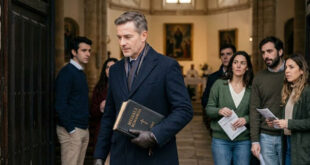
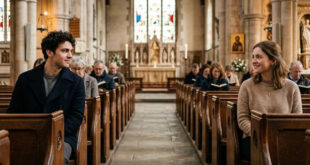

When we speak about the Catholic Church, there are terms we use regularly without stopping to think about their true meaning. One of them is the expression “layperson” and another is “secular faithful.” Many times, they are used as synonyms, and in everyday practice they usually refer to the same reality. However, behind these words lies a theological, historical, and pastoral richness that deserves to be understood.
Is being a layperson exactly the same as being one of the secular faithful? Why does the Church use both terms? What role do non-ordained faithful have in the mission of the Church? What is the specific vocation of the Christian who lives in the world?
The answer to these questions is not merely a linguistic curiosity. Understanding the identity of the lay faithful can profoundly change the way one lives the faith in family life, work, society, and daily life.
We live in an age in which many Catholics think that holiness is something reserved for priests, religious brothers, or nuns. Yet the Church teaches exactly the opposite: the vast majority of saints are called to become holy precisely in the midst of the world.
For this reason, understanding what it means to be a layperson or one of the secular faithful is to better understand the place God has reserved for millions of Christians.
The Origin of the Words
Let us begin with the meaning of the terms.
What Does “Layperson” Mean?
The word “layperson” comes from the Greek laikos, derived from laos, meaning “people.”
Originally, it designated someone who belonged to the People of God.
In the first centuries of Christianity, the word distinguished the faithful who had not received the Sacrament of Holy Orders.
Therefore, the term did not have a negative meaning nor did it imply an inferior category within the Church.
On the contrary.
Being a layperson meant being part of the holy people gathered by Christ.
What Does “Secular” Mean?
The word “secular” comes from the Latin saecularis, meaning “belonging to the age” or “to the world.”
It does not refer to the world understood as a sinful reality, but rather to the temporal sphere in which human life unfolds:
- Family.
- Work.
- Politics.
- Economics.
- Culture.
- Education.
- Science.
- Social relationships.
For this reason, the term “secular” emphasizes the Christian’s presence within temporal realities.
Are Layperson and Secular Faithful the Same?
In current Catholic usage, both terms are often used interchangeably.
However, there is an important nuance.
“Layperson” describes what a person is within the structure of the Church.
“Secular” describes the sphere in which that person lives out his or her Christian vocation.
In other words:
- Every secular faithful person is a layperson.
- Every layperson is ordinarily secular.
- But the terms highlight different aspects of the same reality.
A simple example:
A Catholic father of a family who works as a physician is a layperson because he is neither a priest nor a religious.
And he is secular because he lives out his Christian vocation in the midst of the world.
The Fundamental Structure of the Church
To better understand this question, it is necessary to recall how the Church is constituted.
Traditionally, we distinguish three major states of life:
1. Ordained Ministers
These are those who have received the Sacrament of Holy Orders:
- Deacons.
- Priests.
- Bishops.
Their principal mission consists in sanctifying, teaching, and governing the People of God.
2. Religious
These are men and women who profess the evangelical counsels through vows:
- Poverty.
- Chastity.
- Obedience.
Their vocation is to provide a visible witness to the Kingdom of God.
3. The Laity
They constitute the overwhelming majority of the baptized.
They remain fully immersed in temporal realities.
It is precisely there that they must live and spread the Gospel.
The Great Rediscovery of the Second Vatican Council
For centuries, many Christians developed the impression that religious life was a higher form of holiness and that laypeople occupied a secondary position.
Although the Church never formally taught this, a certain mentality did encourage that perception.
The Second Vatican Council forcefully recovered the proper dignity of the laity.
The constitution Lumen Gentium states:
“The laity are called by God to contribute, from within as a leaven, to the sanctification of the world.”
This teaching was revolutionary for many Catholics.
Holiness is not the monopoly of convents and monasteries.
Holiness also flourishes:
- In an office.
- In a factory.
- In a school.
- On a farm.
- In a kitchen.
- At a university.
- In a business.
The Proper Vocation of the Secular Faithful
Here we find one of the most important points in the entire theology of the laity.
The priest sanctifies primarily through the sacraments.
The religious sanctifies through the radical witness of the evangelical counsels.
The secular faithful sanctify the world from within.
This difference is essential.
The principal mission of the layperson is not to become a “half-priest.”
Nor is the mission of the layperson to do what properly belongs to the clergy.
His or her specific vocation is to transform temporal realities according to the spirit of Christ.
An Image That Helps Us Understand
Imagine a batch of bread dough.
The priest could be compared to the baker who prepares the dough.
But the layperson is the yeast working from within.
It is not seen.
It does not draw attention.
Yet it transforms the entire dough.
That is exactly what Christ expects from the laity.
The Biblical Foundation of the Lay Vocation
Sacred Scripture contains numerous texts that illuminate this mission.
Jesus said:
“You are the salt of the earth.”
(Matthew 5:13)
And also:
“You are the light of the world.”
(Matthew 5:14)
Let us observe something important.
Jesus does not address these words exclusively to the Apostles.
He addresses them to His disciples.
That is, to all believers.
The mission of illuminating the world belongs to every baptized person.
The Common Priesthood of the Faithful
One of the most important concepts for understanding lay identity is the so-called common priesthood.
Saint Peter writes:
“You are a chosen race, a royal priesthood, a holy nation, God’s own people.”
(1 Peter 2:9)
This does not mean that everyone is a ministerial priest.
It means that every baptized person participates spiritually in the priesthood of Christ.
How?
By offering to God:
- Their work.
- Their sufferings.
- Their joys.
- Their sacrifices.
- Their daily lives.
Every day can become an offering pleasing to the Lord.
Modern Errors Concerning the Laity
Today we encounter two opposite errors.
First Error: Clericalizing the Laity
This consists in thinking that a layperson is important only when performing functions within the parish.
According to this mentality:
- Reading at Mass.
- Assisting in parish activities.
- Collaborating in church groups.
Would be more important than evangelizing in the workplace or within the family.
But this is false.
The primary mission of the layperson lies outside the church building.
Second Error: Secularizing the Layperson
This is the opposite error.
It consists in thinking that faith belongs only to the private sphere.
The result is a divided life:
- Christian on Sunday.
- Worldly during the rest of the week.
This mentality completely contradicts the Gospel.
The Family: The First Field of Apostolate
For most secular faithful, the first mission is not in a parish.
It is at home.
Parents are the primary educators in the faith.
The family constitutes a true domestic church.
There one learns:
- To pray.
- To forgive.
- To sacrifice.
- To love.
No catechesis will ever replace the example of truly Christian parents.
Work as a Path to Holiness
One of the greatest spiritual discoveries of recent centuries is the understanding that work can become a direct path to God.
We do not work merely to earn money.
Work performed with love:
- Sanctifies the one who performs it.
- Sanctifies those who benefit from it.
- Sanctifies society.
A holy mechanic.
A holy nurse.
A holy farmer.
A holy entrepreneur.
A holy teacher.
All of them transform the world for Christ.
The Social Commitment of the Secular Faithful
The Church teaches that laypeople have a special responsibility in building a just society.
For this reason, they are called to exert a Christian influence in:
- Politics.
- Economics.
- Education.
- Culture.
- The media.
Not to impose the faith by force.
But to illuminate these realities with the truth of the Gospel.
Lay Saints Who Changed the World
The history of the Church is filled with extraordinary laypeople.
Among them we find:
- Saint Thomas More.
- Saint Louis IX.
- Saint Gianna Beretta Molla.
- Blessed Carlo Acutis.
None of them needed to leave the world in order to attain holiness.
It was precisely in the midst of the world that they found their path to God.
The Importance of Recovering Secular Identity Today
Our age urgently needs well-formed laypeople.
It is not enough to be baptized.
It is not enough to attend Mass occasionally.
The modern world requires Catholics capable of:
- Defending the truth.
- Building strong families.
- Educating their children in the faith.
- Living their faith consistently.
- Giving public witness to Christ.
The crisis of modern society will not be solved merely by having more priests.
It requires millions of secular faithful who are convinced of their mission.
So Should I Say “Layperson” or “Secular Faithful”?
The simple answer is that both terms are correct.
However:
- “Layperson” emphasizes that you belong to the People of God without being part of the clergy.
- “Secular faithful” highlights that your vocation is lived primarily in the midst of the world.
They are two complementary perspectives of the same reality.
Conclusion: Holiness Is Not Far From You
Perhaps the most important lesson of this entire subject is this:
God does not call most Christians to leave the world.
He calls them to transform the world.
You do not need to wear a religious habit to attain holiness.
You do not need to live in a monastery.
You do not need to preach from a pulpit.
The overwhelming majority of the baptized are called to find God in ordinary life.
In the kitchen.
In the office.
In the workshop.
In the field.
In the hospital.
In the classroom.
In family life.
It is there that a great part of salvation history is played out.
The secular faithful are not second-class Christians. Nor are they mere spectators within the Church. They are disciples of Christ sent into the very heart of the world to be salt, light, and leaven.
And when a layperson truly understands this mission, he or she discovers something extraordinary: that their desk, their home, their workshop, their business, or their school can become a true altar upon which they offer their life to God each day and collaborate in the establishment of the Kingdom of Christ on earth.