
Related Articles

When there is no priest nearby, when death is approaching, when sin weighs heavily on the conscience…
Let us imagine a dramatic situation. A man suffers an accident. A woman finds herself alone in a hospital room. A soldier is in the midst of war. An elderly person senses that death is drawing near. They all have something in common: there is no priest available to administer the Sacrament of Penance.
What can a soul do in such a situation if it sincerely desires to be reconciled with God?
The answer given by the Catholic Church is as consoling as it is extraordinary: Perfect Contrition.
This is one of the most beautiful, hope-filled, and least understood doctrines of Catholic spirituality. It is a true gift of Divine Mercy, a door that remains open for anyone who sincerely repents out of love for God.
Yet many Catholics have never heard of it or know it only superficially. This is a spiritual tragedy because understanding and practicing it can make the difference between eternal life and eternal death.
In an age when so many live far from the sacraments, when sin has become normalized, and when death can arrive unexpectedly, rediscovering Perfect Contrition is more urgent than ever.
What Exactly Is Perfect Contrition?
The word “contrition” comes from the Latin contritio, meaning “brokenness” or “deep sorrow.”
In the spiritual sense, contrition is sincere repentance for sins committed.
However, not all contrition is the same.
Catholic theology distinguishes between:
Imperfect Contrition (Attrition)
This is repentance motivated primarily by:
- Fear of punishment.
- Fear of Hell.
- Shame over one’s sins.
- The loss of Heaven.
This form of contrition is good and sufficient for validly receiving sacramental absolution in confession.
Perfect Contrition
This is repentance motivated primarily by love of God.
The person grieves for his sins because they have offended God, who is infinitely good and worthy of all love.
He does not repent primarily because he fears suffering.
Not because he fears punishment.
Not because he fears Hell.
He repents because he has wounded the Heart of God.
Because he has rejected the love of Christ.
Because he has responded with ingratitude to the One who died for him on the Cross.
This is Perfect Contrition.
What the Church Officially Teaches
The Catechism of the Catholic Church teaches:
“When it arises from a love by which God is loved above all else, contrition is called ‘perfect’ (contrition of charity). Such contrition remits venial sins; it also obtains forgiveness of mortal sins if it includes the firm resolution to have recourse to sacramental confession as soon as possible.” (CCC 1452)
This teaching is not a modern innovation.
It is deeply rooted in the Tradition of the Church and was clearly defined by the Council of Trent in response to Protestant errors.
For centuries, the Church has taught that perfect love of God can reconcile a soul with Him even before sacramental absolution is received, provided there is a sincere intention to confess as soon as possible.
A Truth Filled with Hope
Here we find one of the most merciful teachings of Christianity.
Perfect Contrition immediately wipes away even mortal sin.
Yes.
Even mortal sin.
Even that sin which has broken friendship with God.
Even that sin which has deprived the soul of sanctifying grace.
When there is genuine repentance motivated by love of God and a sincere intention to confess, the soul is reconciled with God at that very moment.
This does not mean that confession is no longer necessary.
The Church clearly teaches that anyone who has committed mortal sin must seek the sacrament as soon as possible.
But it does mean that God does not leave a repentant sinner helpless when immediate access to a priest is impossible.
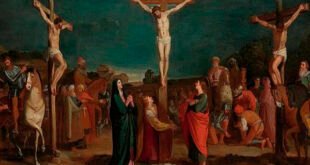
The Good Thief: An Example of Perfect Contrition
One of the most moving examples appears in the Gospel.
As Christ hangs dying upon the Cross, one of the thieves crucified beside Him acknowledges his guilt and turns to Jesus:
“Jesus, remember me when You come into Your kingdom.” (Luke 23:42)
And Christ replies:
“Truly I tell you, today you will be with Me in Paradise.” (Luke 23:43)
There was no time for sacramental confession.
There was no lengthy penance.
There was no extended work of reparation.
There was something more important.
There was love.
There was humility.
There was repentance.
There was trust.
Divine Mercy acted immediately.
The Secret to Making an Act of Perfect Contrition
Many people mistakenly believe that they must experience overwhelming emotions.
They think:
“I must cry.”
“I must feel tremendous sorrow.”
“I must experience intense sadness.”
But Catholic theology teaches something extremely important:
Perfect Contrition is primarily an act of the will, not of the emotions.
Emotions can help, but they are not necessary.
A person may shed many tears and still lack true contrition.
Another may feel emotionally dry and yet love God deeply.
What matters is the interior decision:
- To reject sin.
- To love God above all things.
- To desire never to offend Him again.
The Crucifix: The Simplest School of Perfect Contrition
Many saints taught an extraordinarily simple method.
Place yourself before a Crucifix.
Then ask yourself three questions.
Who is suffering?
This is not just any man.
It is the Son of God.
The Eternal Word.
The King of the universe.
The Creator of all things.
The One who has loved us from all eternity.
What is He suffering?
The scourging.
The crowning with thorns.
The nails.
The thirst.
The abandonment.
The agony.
Death itself.
A terrible death reserved for criminals.
Why is He suffering?
Because of my sins.
Because of my infidelities.
Because of my pride.
Because of my selfishness.
Because of my indifference.
Because of my lack of love.
When the soul truly grasps this, even in a small way, perfect repentance begins to emerge.
Not from fear.
But from love.
Perfect Contrition and the Hour of Death
Perhaps this is where its greatest importance lies.
No one knows when he will die.
We live in a culture that seeks to hide death.
Yet death will come.
And it may come when least expected.
For this reason countless saints recommended making acts of Perfect Contrition frequently.
Not because they replace confession.
But because they prepare the soul for its encounter with God.
If the supreme moment arrives and no priest is available, the soul that knows how to make a sincere act of Perfect Contrition possesses an immense treasure.
It can literally make the difference between salvation and damnation.
A Forgotten Practice That Should Be Taught to Every Catholic
There was a time when children learned this doctrine in catechism classes.
Parents taught it to their children.
Priests preached about it regularly.
The faithful practiced it every night before going to sleep.
Today many Catholics have never heard of it.
Yet it should be part of ordinary spiritual life.
Indeed, it is prudent to make an act of Perfect Contrition:
- Every night.
- After a serious fall into sin.
- Before traveling.
- During illness.
- After receiving difficult news.
- Whenever there is danger of death.
Also for Non-Catholics
There is another pastoral consequence of enormous importance.
Many people have loved ones who are far from the Church.
Others have Protestant friends.
Others know individuals who were never baptized or who possess very little religious formation.
In extreme circumstances, especially when someone is in danger of death, teaching them to turn toward Christ with sincere repentance and love can be an immense act of charity.
God desires the salvation of all men.
And grace can work in extraordinary ways during the final moments of life.
The Error We Must Avoid
Upon learning this doctrine, some people might think:
“Then I don’t need to go to confession.”
That would be a serious mistake.
Perfect Contrition necessarily includes the intention to go to sacramental confession as soon as possible.
Anyone who deliberately refuses confession demonstrates precisely that his love of God is not perfect.
Perfect Contrition does not replace the Sacrament.
It leads to it.
It desires it.
It seeks it.
It longs for it.
A Remedy for an Age of Spiritual Lukewarmness
We live in a society where sin is no longer called sin.
Where many have lost the sense of guilt.
Where the Cross of Christ is ignored or ridiculed.
For precisely that reason, Perfect Contrition is so necessary.
It forces us to look once again upon the Crucified One.
It reminds us of the price of our redemption.
It helps us understand that sin is not merely the violation of a rule.
It is a wound inflicted upon Love.
It is a rejection of the One who gave His life for us.
The Act of Perfect Contrition
The following prayer beautifully expresses the interior dispositions proper to Perfect Contrition:
“O MY GOD, I repent with all my heart and ask Your forgiveness for all my sins, NOT SO MUCH because these sins bring me suffering and Hell, but because they have crucified my beloved Savior Jesus Christ and have offended Your Infinite Goodness. I firmly resolve, with the help of Your grace, to confess my sins, do penance, and amend my life. Amen.”
Conclusion: A Key of Mercy That No Catholic Should Ignore
Perfect Contrition is one of the most precious jewels in the spiritual treasury of the Church.
It reminds us that God is not a cold judge seeking condemnation, but a Father who runs out to meet the prodigal son.
It teaches us that love possesses immense power.
It shows us that even after the gravest sins, the road home remains open.
When you gaze upon a Crucifix, remember these three questions:
Who is suffering?
What is He suffering?
Why is He suffering?
And allow your heart to answer.
You may discover that perfect repentance is not something reserved for great saints alone.
It is a grace that God desires to grant to all who return to Him with humility, love, and trust.
For as long as there is life, as long as the heart still beats, as long as the soul can sincerely say, “Jesus, I love You and I am sorry for having offended You,” the mercy of God remains greater than all our sins.