Related Articles

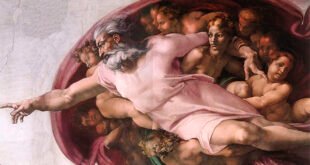
Introduction: What if Jesus Christ had not truly suffered?
There are doctrinal errors that, at first glance, may seem like simple theological discussions belonging to the past. However, some of them affect the very heart of the Christian faith and continue to have consequences for the way we understand Jesus Christ, Redemption, and our own salvation.
One of these errors is Docetism, one of the earliest doctrinal deviations the Church had to confront.
Its central proposition can be summarized in an apparently simple statement, but one with extremely serious consequences: Jesus Christ did not truly possess a human body; rather, His humanity was merely an appearance. He would have seemed to be a man, seemed to suffer, and seemed to die, but none of these things would have happened in a genuinely human way.
The problem is obvious: if Christ did not truly assume our nature, how could He redeem it? If His body was not real, what meaning would His birth in Bethlehem have? If He did not truly suffer under Pontius Pilate, what value would His Passion have? And if He did not truly die on the Cross, what foundation would remain for our hope in the Resurrection?
The Church’s answer is unequivocal: the eternal Son of God truly became man. He did not adopt a human appearance; He assumed our human nature in all its reality, without ceasing to be God.
This truth is not a secondary detail of Christian doctrine. It is one of its essential foundations.
Understanding Docetism therefore allows us to deepen our knowledge of the mystery of the Incarnation, discover the importance of the humanity of Jesus Christ, and recognize why the Church has defended the historical and bodily reality of the life, Passion, and Resurrection of Our Lord since her earliest days.
1. What Is Docetism? The Error of a Christ Who Only Appeared to Be Human
The word Docetism comes from the Greek term dokein, meaning “to seem” or “to appear.”
The name perfectly describes the essence of this movement: Jesus Christ would have had a human appearance, but not a true human nature.
In its most characteristic formulations, Docetists maintained that Christ’s body was not a real human body, but rather an apparent manifestation of His divinity. Consequently, they could not fully accept that He had experienced the limitations, sufferings, and death proper to our bodily condition.
It is important to clarify that Docetism did not necessarily constitute a uniform movement, organized under a single authority or possessing an identical doctrinal system. It was a tendency present in certain Christian circles of antiquity, particularly associated with Gnostic movements that distrusted matter and considered the spiritual superior to the bodily.
Some of these conceptions were based on a radical opposition between spirit and matter. If God was absolutely spiritual and matter was considered inferior or even evil, it became difficult to accept that the Son of God had truly assumed a human body.
From this perspective, the Incarnation could be interpreted as a mere external manifestation: Christ would have used a human appearance to communicate with men, but without truly becoming one of us.
However, this explanation destroys precisely what it claims to preserve.
Christianity does not teach that God merely manifested Himself to mankind through a human figure. It teaches something infinitely deeper: God truly entered our history and assumed our nature in order to save us from within it.
The Incarnation was not a performance. It was a real event.
2. The Historical Context: One of the First Threats to the Apostolic Faith
Docetism appeared during the first centuries of Christianity, when the Church was still consolidating her doctrinal expression in the face of different interpretations that altered the content of the apostolic preaching.
We should not imagine that all Christians of that period shared an identical, perfectly developed theological understanding. There were communities influenced by different cultural and philosophical traditions, and some attempted to interpret the Christian message through categories foreign to the faith received from the Apostles.
Among these influences were certain Gnostic movements.
The Influence of Gnostic Thought
Ancient Gnosticism was neither a single religion nor a completely homogeneous system. The term encompasses various religious and philosophical movements that attributed particular importance to a form of spiritual knowledge reserved for the initiated, through which man could attain liberation from his material condition.
Some of these systems established a marked separation between the spiritual world and the material world.
In certain interpretations, matter was considered inferior, imperfect, or even connected with evil. From such a perspective, it was problematic to accept that the true God had assumed a bodily nature.
How could the Son of God become flesh if flesh was considered unworthy of divinity?
How could He experience hunger, exhaustion, pain, and death?
Some Gnostic responses involved separating the heavenly Christ from the historical Jesus or presenting His body as an appearance. The explanations varied among different groups, so it would be historically incorrect to attribute one identical doctrine to all of them.
Saint Irenaeus of Lyon, in his work Against Heresies, describes and combats some of these interpretations. In Book III, he explains how certain groups distinguished between Jesus and a heavenly Christ who had descended upon Him, remaining impassible and separating from Him before the Passion.
Saint Irenaeus specifically denounces how these theories ultimately denied that the Word of God had truly become flesh.
The issue was not a simple difference in terminology. The very identity of Jesus Christ and the reality of His saving work were at stake.
Saint Ignatius of Antioch: An Early Defense of Christ’s Humanity
Among the most important testimonies of the early Church are the letters of Saint Ignatius of Antioch, Bishop of Antioch and martyr of the early second century.
In his Letter to the Smyrnaeans, Ignatius explicitly opposes those who denied that Jesus Christ had truly suffered.
His affirmation is extraordinarily clear:
Christ truly suffered.
In the first chapter, he insists that Jesus was truly born, was baptized, and was crucified under Pontius Pilate in His own flesh.
In the second chapter, he affirms that He suffered for us so that we might attain salvation. He explicitly rejects the idea that He suffered merely in appearance.
And in the third chapter, he defends the fact that the risen Lord retained His true flesh, recalling the Gospel episode in which Jesus invites His disciples to touch Him in order to verify that He is not an incorporeal spirit.
This testimony has exceptional historical and doctrinal importance. It allows us to see that the defense of Christ’s real humanity was not a later development of medieval theology, but a conviction already defended by the Church’s earliest pastors.
For Saint Ignatius, denying the reality of the Passion meant seriously altering the content of the Christian faith.
The Cross was not a performance. The blood shed was not an illusion. The suffering of Our Lord was real.
3. Sacred Scripture Against Docetism: The Word Became Flesh
The Church did not base her defense of Christ’s humanity on philosophical arguments independent of Revelation.
Its foundation is found in Sacred Scripture itself.
From the Gospels to the apostolic letters, the New Testament presents Jesus Christ as a true man, born of a woman, possessing a real body, a human will, human feelings, and the genuine capacity to suffer.
The Incarnation is not a symbolic interpretation of God’s presence in the world. It is the central event of salvation history.
“And the Word Was Made Flesh” (John 1:14)
The prologue of Saint John’s Gospel contains one of the most profound declarations in all of Revelation:
“And the Word was made flesh, and dwelt among us” (Jn 1:14).
The Evangelist does not say that the Word adopted a human appearance or temporarily manifested Himself under a bodily form.
He affirms that He became flesh.
In biblical language, the expression “flesh” can refer to the human condition in its concrete reality, marked by fragility and mortality.
The eternal Son of God assumed this condition without ceasing to be what He had been from all eternity.
This means that Jesus Christ truly experienced human life: He was born, grew, walked, worked, felt hunger, experienced exhaustion, and wept.
His divinity did not abolish His humanity. His humanity did not diminish His divinity.
This is precisely the mystery the Church proclaims when she confesses that Jesus Christ is true God and true man.
“Every Spirit That Confesses That Jesus Christ Has Come in the Flesh Is of God” (1 John 4:2)
The First Letter of Saint John contains a particularly important warning:
“Every spirit that confesseth that Jesus Christ is come in the flesh, is of God” (1 Jn 4:2).
In the following verse, the Apostle warns about those who do not confess Jesus Christ.
And in his Second Letter, he again refers to those who do not acknowledge Jesus Christ as having come in the flesh (2 Jn 7).
These statements must be understood within their context: Saint John is offering criteria for discerning true Christian teaching in the face of deceptive doctrines.
The expression “come in the flesh” is not a secondary formula. It constitutes a fundamental criterion for recognizing fidelity to the apostolic faith.
The Catechism of the Catholic Church explicitly recalls this teaching in paragraph 463 and reminds us that faith in the true Incarnation of the Son of God is the distinctive sign of the Christian faith.
It is not enough to speak about Jesus, admire His teachings, or consider Him a great spiritual teacher. We must confess who He truly is: the Son of God who became man for our salvation.
Christ Truly Experienced Suffering
The Gospels present numerous episodes that would be incomprehensible if Jesus’ humanity had been merely apparent.
In the Gospel of Saint Matthew, Jesus feels hunger after fasting for forty days (Mt 4:2).
In the Gospel of Saint John, He is tired as He sits beside Jacob’s well (Jn 4:6).
At the death of Lazarus, Jesus weeps (Jn 11:35).
In Gethsemane, He experiences profound anguish as the approaching Passion weighs upon Him:
“My soul is sorrowful even unto death” (Mt 26:38).
And on the Cross, He utters the words:
“I thirst” (Jn 19:28).
All these events demonstrate the reality of His human nature.
Jesus Christ did not pretend to be hungry. He did not act out exhaustion. He did not simulate pain or anguish.
The Son of God truly experienced human suffering.
Naturally, this does not mean that His divine nature ceased to be divine or that divinity could suffer as though it were a bodily nature. It means that the divine person of the Word truly suffered in the human nature He had assumed.
This distinction is fundamental to correctly understanding the mystery of Christ.
The Resurrection: The Victory of a True Body
The Docetist opposition to Christ’s humanity also directly affected the Resurrection.
If Jesus Christ had not possessed a true body, what meaning could there be in claiming that He had risen bodily?
The Gospel of Saint Luke records a particularly revealing scene.
After His Resurrection, Jesus appears to His disciples and says:
“See my hands and feet, that it is I myself. Handle, and see; for a spirit hath not flesh and bones, as you see me to have” (Lk 24:39).
He then asks for something to eat and takes a piece of broiled fish before them (Lk 24:41-43).
This is not an anecdotal detail. The Evangelist wants to show that the Risen One is truly Jesus, the same One who had suffered and died, now alive and glorified.
The Resurrection does not consist in His memory surviving in the disciples or in His message remaining spiritually alive.
Christ has truly risen from the dead, bodily as well.
The humanity of Jesus did not disappear with the Resurrection. His body was transformed and glorified, but it remained His true body.
This aspect is also essential for understanding our own Christian hope: we do not await a salvation consisting of definitively abandoning our bodily condition, but rather the resurrection of the dead and the glorification of our humanity.
4. The Church Fathers and the Defense of Christ’s Flesh
The struggle against Docetism was not an abstract discussion. The earliest Christian writers understood that denying the humanity of Jesus Christ meant compromising the very foundation of salvation.
Among them, Saint Ignatius of Antioch, Saint Irenaeus of Lyon, and Tertullian stand out in particular.
Saint Irenaeus of Lyon: Christ Assumed Our Humanity to Save Us
Saint Irenaeus of Lyon, Bishop of the second century, is one of the fundamental figures in the defense of the apostolic faith against Gnostic doctrines.
In his work Against Heresies, he combats theories that separated the heavenly Christ from the historical Jesus, as well as those that denied that the Word had truly assumed flesh.
His thought is deeply connected with the doctrine of recapitulation.
What does this expression mean?
For Saint Irenaeus, Christ is the new Adam who recapitulates, that is, gathers together and brings human history to its fulfillment. Where the first man introduced disobedience, Christ inaugurates a humanity obedient to the Father.
Jesus does not save man from outside the human condition, but by truly entering into it.
His obedience, His life, His Passion, and His Resurrection are directly related to our restoration.
If Christ had not truly assumed our humanity, He could not have accomplished this work of recapitulation in all its depth.
Salvation does not consist merely in receiving a divine teaching. It consists in being reconciled with God through Jesus Christ, who has become one of us.
Saint Irenaeus’s doctrine allows us to understand a fundamental truth: what Christ did not truly assume from our nature could not be healed through His Incarnation.
This formulation expresses a central idea of the patristic tradition: all of humanity needed to be reached and restored by the Savior.
Tertullian: If Christ Had No Flesh, Our Flesh Will Not Rise Again
Another important author in this controversy was Tertullian, a Christian writer of the late second and early third centuries.
In his treatise De carne Christi (On the Flesh of Christ), he combats various doctrines that denied the reality of the Lord’s flesh or its true identity with our bodily nature.
His argument is closely connected with the hope of the resurrection.
If Christ did not have a true human body, how can His Resurrection provide the foundation for our hope in the resurrection of the flesh?
Tertullian understood that both truths are profoundly united.
The flesh of Christ was not a passing appearance. It was a true humanity, received from Mary, capable of suffering and dying, and destined for the glory of the Resurrection.
His reasoning retains enormous force: the Christian faith does not despise the human body, because the Son of God Himself chose to assume it.
For this reason, defending the flesh of Christ is also defending the dignity of our own bodily nature.
5. What Does the Church Definitively Teach About the Humanity of Jesus Christ?
The Church progressively developed the theological language necessary to express precisely the mystery of Jesus Christ.
It is important to point out that the Council of Chalcedon, celebrated in the year 451, was not convened specifically to condemn Docetism. Its definition responded to later Christological controversies, but it constitutes a fundamental formulation of the faith in the two natures of Christ.
The doctrine confessed by the Church at this council allows us to understand fully why Docetism is incompatible with the Catholic faith.
The Council of Chalcedon (451): True God and True Man
The Council of Chalcedon taught that Jesus Christ is:
- Perfect in His divinity.
- Perfect in His humanity.
- Truly God.
- Truly man.
- Composed of a rational soul and a body.
- Consubstantial with the Father according to His divinity.
- Consubstantial with us according to His humanity, except for sin.
The conciliar definition affirms that in Jesus Christ there are two natures, divine and human, united in one person, without confusion, without change, without division, and without separation.
This formulation is decisive.
Christ is not half God and half man. Nor is He a mixture of both natures. He is one divine person, the eternal Son of the Father, who possesses the divine nature fully and has assumed the human nature fully.
The humanity of Christ is neither an appearance nor a reality absorbed by His divinity.
The Catechism reproduces this teaching in paragraph 467, drawing upon the definition of the Council of Chalcedon.
The doctrinal precision is extraordinary: Jesus Christ is just as truly man as He is truly God.
The Importance of His Human Soul
When we speak about the humanity of Christ, we must not limit our understanding to His physical body.
The Church teaches that the Son of God assumed a complete human nature, composed of a body and a rational soul.
This means that Jesus Christ possessed a human intellect and a human will.
He did not merely use a body as an external instrument of His divinity. He truly lived human existence.
The Catechism develops this teaching in paragraphs 470 to 475.
In paragraph 470, it recalls a particularly beautiful expression from the pastoral constitution Gaudium et spes of the Second Vatican Council:
“He worked with human hands, He thought with a human mind, acted by human choice, loved with a human heart” (GS 22,2).
This statement allows us to contemplate the depth of the Incarnation.
Jesus did not merely possess a human body: He loved humanly, thought humanly, willed humanly, and suffered humanly.
His humanity was real, although it always remained free from sin.
Why Was It Necessary to Affirm This Truth?
Because Christian salvation affects the whole human person.
Sin is not merely an intellectual mistake or a spiritual illness separate from our bodily existence. It affects the human person in his entirety.
Therefore, the salvation God offers does not consist in rescuing only one part of us either.
The Son of God assumed our nature in order to reconcile us with the Father and restore supernatural life to us.
The Catechism, in paragraphs 456-460, explains the reasons for the Incarnation: the Son of God became man for us and for our salvation, in order to reconcile us with God, manifest His love to us, become our model of holiness, and make us partakers of the divine nature.
Docetism, by denying the true humanity of Christ, ultimately obscures all these dimensions of the Christian mystery.
6. The Consequences of Docetism: What Is Lost When Christ Is Not Truly Man?
To understand the seriousness of this ancient heresy, we should pause to consider its consequences.
Denying the humanity of Christ does not simply mean modifying an aspect of His biography. It means profoundly altering our understanding of Redemption.
The Passion Is Emptied of Its Meaning
If Christ did not possess a true body, neither could He have truly experienced physical suffering.
The scourging, the crowning with thorns, the nails, the thirst, and the death would all be reduced to an external representation.
But the Passion was not a staged performance.
The sacrifice of Jesus Christ was real. His self-giving took place in history, through a true humanity and a human will that remained perfectly united to the will of the Father.
In Gethsemane, Christ freely accepts the cup of the Passion. On Calvary, He gives His life for our salvation.
The mystery of the Cross requires us to recognize that God did not contemplate our suffering from an inaccessible distance: the Son truly assumed it in His humanity.
The Meaning of Redemption Is Weakened
Saint Paul writes:
“For there is one God, and one mediator of God and men, the man Christ Jesus” (1 Tim 2:5).
This statement is extraordinarily important.
Jesus Christ is the one Mediator because He is true God and true man.
As the eternal Son, He shares the divine nature of the Father. As man, He truly belongs to our humanity.
In His one person, both natures meet, without being confused or separated.
That is why He can reconcile us with God.
Redemption is not merely a moral example of generosity or a symbolic manifestation of divine love. It is a real work of salvation, accomplished by the Son of God made man.
The Depth of Hope in the Resurrection of the Flesh Is Lost
Christianity does not teach that the body is a prison from which we must definitively free ourselves.
Matter is not evil simply because it is matter. The human body is part of God’s creation and belongs to the identity of the person.
It is true that our bodily condition is subject to illness, aging, and death as a consequence of man’s fallen condition. But this does not mean that the body lacks dignity.
The Resurrection of Christ constitutes the guarantee of our hope.
Saint Paul writes:
“And if Christ be not risen again, then is our preaching vain, and your faith is also vain” (1 Cor 15:14).
And he develops the doctrine of the bodily resurrection extensively in 1 Corinthians 15.
Christian hope does not consist in surviving as memories or disembodied consciousness. We await the resurrection of the dead and eternal life.
Docetism, by denying the bodily reality of Christ, weakens precisely the foundation of this hope.
7. Does Docetism Exist Today? Ancient Errors Under New Appearances
We might think that Docetism belongs exclusively to the first centuries of Christianity and has no relevance for contemporary Catholics.
However, although it would be incorrect to automatically identify every modern error with the ancient heresy, there are attitudes that recall some of its underlying assumptions.
This is not about claiming that every spiritualist thought or every symbolic interpretation of the faith is Docetist. Rather, it is about recognizing that certain ways of understanding Jesus Christ can end up weakening, in a similar way, the reality of His Incarnation.
A Jesus Reduced to an Idea, Symbol, or Spiritual Figure
In some contemporary discourses, Jesus Christ appears as a symbol of love, a teacher of values, a social revolutionary, or a moral role model.
All these interpretations may contain partial elements of His teaching, but they are insufficient when His identity is intended to be reduced to them.
Jesus is not simply someone who spoke about God.
He is the eternal Word who became flesh.
He is not merely an example of human goodness.
He is the Son of God who truly died and rose again to save us.
When the historical and supernatural dimensions of Jesus Christ are eliminated, Christianity runs the risk of becoming a moral philosophy without the reality of Redemption.
We are not dealing with historical Docetism in the strict sense, but rather with a reduction of the faith that loses sight of the central mystery of the Incarnation.
Contempt for the Body and Material Reality
We must also pay attention to certain spiritual movements that present the bodily dimension of man as secondary, negative, or incompatible with an authentic interior life.
Christian spirituality does not share this vision.
Man is not a spirit accidentally imprisoned in a body. He is a unity of body and soul.
For this reason, the Church has always defended the dignity of the human body, from conception until natural death.
This conviction has concrete consequences for Christian morality, the defense of life, sexuality, the family, and the respect owed to every person.
The Incarnation constitutes an extraordinary affirmation of the dignity of human nature: God Himself chose to assume it.
A Faith Without the Cross and Without Suffering
Another tendency worthy of reflection is the search for a form of religiosity that wishes to preserve only the pleasant aspects of Christianity.
People speak about love, hope, happiness, and personal fulfillment, but avoid speaking about sin, sacrifice, penance, conversion, and the Cross.
It is true that Christianity is a message of hope and that God’s mercy is infinite. But this mercy cannot be separated from the truth of our sinful condition or from the need for Redemption.
A Christ who never suffered, never gave Himself, and never died is not the Christ of the Gospels.
The Cross is not a decorative element of the Christian religion. It is the center of the redemptive sacrifice.
Saint Paul expresses this clearly:
“But we preach Christ crucified” (1 Cor 1:23).
A Christian cannot eliminate the Cross without altering the Gospel.
8. The Humanity of Christ and the Richness of Traditional Catholic Spirituality
The true humanity of Jesus Christ is not merely a doctrinal question that we must understand intellectually.
It has direct consequences for our spiritual lives and for the way we live our relationship with God.
Throughout the centuries, the Church has developed a profoundly Christ-centered spirituality in which the humanity of Our Lord occupies a fundamental place.
Devotion to the Sacred Heart of Jesus
Devotion to the Sacred Heart is one of the most beautiful expressions of Catholic spirituality.
The Heart of Jesus is not merely a sentimental representation of divine love.
It expresses the true love of the Son of God made man, who loved with a human heart and gave Himself for the salvation of mankind.
When we contemplate the Sacred Heart, we remember that God has loved us in a truly human way.
Jesus had affections, experienced sadness, showed compassion, and loved to the very end.
His human heart is inseparable from His divine person.
That is why this devotion invites us to make reparation for our infidelities, respond to His love, and learn from Him humility, meekness, and charity.
The Adoration of the Holy Cross
The Cross occupies a central place in the Catholic liturgy, especially during Holy Week.
On Good Friday, the Church directs her gaze toward the instrument of our Redemption.
We do not venerate the wood as though it possessed power in itself. We venerate the Cross because of its inseparable relationship with the sacrifice of Jesus Christ.
The adoration of the Cross reminds us that our salvation was not achieved through an appearance of suffering, but through the real self-offering of the Son of God.
Every time we make the Sign of the Cross, we profess our faith in the mystery of Redemption.
The Eucharist: The Same Christ Who Gave Himself for Us
The true humanity of Jesus Christ is also fundamental to understanding the sacrament of the Eucharist.
In the Holy Mass, we do not receive a symbolic representation of Christ or a simple remembrance of His Last Supper.
Through the consecration, under the sacramental species of bread and wine, Jesus Christ becomes present truly, really, and substantially: His Body, Blood, Soul, and Divinity.
He is the same Christ who was born of Mary, walked through Galilee, suffered under Pontius Pilate, died on the Cross, and rose gloriously.
The Catechism of the Catholic Church, especially in paragraphs 1374-1377, develops this doctrine concerning the Real Presence of Our Lord in the Most Blessed Sacrament.
The Eucharist allows us to contemplate the extraordinary continuity between the Incarnation and the sacramental life of the Church.
The Word who became flesh continues to give Himself sacramentally to mankind.
That is why we must approach the altar with faith, reverence, and adoration.
The reality of Christ’s humanity helps us understand the greatness of this sacrament and the importance of receiving Him worthily.
The Virgin Mary and the True Incarnation
We cannot deepen our understanding of the mystery of the Incarnation without contemplating the Most Blessed Virgin Mary.
Mary was not simply an external instrument used by God to manifest Himself in the world.
She was truly the Mother of Jesus Christ according to His humanity.
The eternal Son of God received His human nature from her.
That is why the Council of Ephesus, celebrated in the year 431, defended the title Theotokos, meaning Mother of God.
This title does not mean that Mary is the origin of divinity or that she gave the eternal Word the beginning of His existence.
It means that the One she gave birth to according to the flesh is truly God, because the One born of her is the divine person of the Son.
Denying the true humanity of Christ would also ultimately affect our understanding of Mary’s divine motherhood.
The Virgin did not give birth to a human appearance. She gave birth to Jesus Christ, true God and true man.
Therefore, when we pray the Holy Rosary and contemplate the mysteries of Our Lord’s life, we are not following a succession of symbolic images.
We contemplate real events in salvation history: the Annunciation, the Visitation, the Nativity, the Presentation in the Temple, the Passion, the Resurrection, and the glorification of Christ.
The Catholic faith is profoundly historical because it is founded upon a God who has truly entered our history.
9. How Can We Live This Teaching in Our Daily Lives?
The doctrine concerning Docetism may seem far removed from our everyday concerns, but its teaching has very concrete spiritual applications.
Believing that Christ was truly man transforms the way we understand prayer, suffering, the body, the family, and our Christian hope.
First: we must come to know the Christ of the Gospels.
We must not be satisfied with a superficial image of Jesus constructed according to our personal preferences.
We need to read the Gospels, meditate upon His words, and contemplate His actions.
We must come to know the Christ who teaches, forgives, corrects, weeps, shows compassion, suffers, and rises again.
Prayer must lead us to a true relationship with Our Lord, not with an image fabricated by our own desires.
Second: we must learn to unite our sufferings with those of Christ.
Jesus knew human pain and truly assumed it.
When we face illness, family difficulties, injustice, or loneliness, we can turn to Him with complete confidence.
We do not approach a God who is unfamiliar with our condition, but the Son of God who chose to share it.
This does not mean that suffering is good in itself or that we should seek it unnecessarily. It means that, when united to Christ, it can become an opportunity for sanctification and participation in His redemptive work.
Third: we must respect our own bodily nature.
Our body is not an accidental obstacle to holiness.
It is part of our personal identity and is also called to the glory of the Resurrection.
For this reason, we must live chastity, temperance, respect for life, and responsible care for our health as expressions of authentic Christian spirituality.
Fourth: we must defend the fullness of the faith.
In an age when Jesus Christ can be presented in countless different ways, Catholics must preserve intact the faith received from the Apostles.
We cannot accept a Christ reduced to a historical figure, a cultural symbol, or a moral teacher.
Nor can we separate His divinity from His humanity, or His Resurrection from His Passion.
The Christ of the Church is the Christ of the Gospels: true God and true man.
Fifth: we must live our faith with hope in the Resurrection.
Death does not have the final word.
Christ has truly risen, and we hope to share in His victory.
This hope must transform the way we live, face difficulties, and contemplate death.
We were not created for definitive disappearance, but for eternal communion with God.
10. Conclusion: God Did Not Pretend to Become Man; He Truly Became One of Us
Docetism constitutes one of the earliest great warnings in Christian history against any attempt to separate Jesus Christ from His true humanity.
Its error consisted in presenting as an appearance what constitutes one of the greatest mysteries of our faith: the eternal Son of God truly assumed our human nature in order to save us.
He was not merely born under a human appearance. He was born of the Most Blessed Virgin Mary.
He did not walk through the world as a representation of a man. He truly lived our human condition.
He did not simulate pain. He truly suffered.
He did not pretend to die on Calvary. He truly died for our salvation.
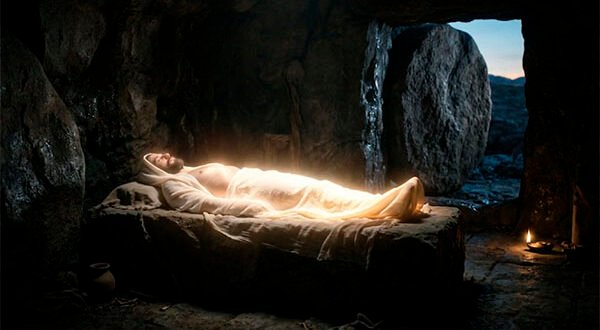
And He did not remain in the tomb: He rose gloriously, with His true body.
The Church has defended this truth since her earliest days because the entirety of the Gospel is at stake in it.
If Christ had not truly become man, our humanity would not have been assumed by Him. If He had not truly suffered, the Cross would have lost its redemptive meaning. And if He had not risen bodily, our hope in the resurrection of the dead would have no foundation.
But Christianity proclaims something infinitely greater:
God became man so that man might be reconciled with God.
This is the mystery we contemplate in Bethlehem, in Nazareth, on Calvary, and before the empty tomb.
Therefore, in the face of any interpretation that reduces Jesus Christ to an appearance, an idea, or a mere moral teacher, Catholics must firmly proclaim the apostolic faith.
The Word became flesh.
The Cross was real.
The Resurrection was real.
And Jesus Christ remains forever true God and true man.
May this truth illuminate our faith, strengthen our hope, and help us live each day more closely united to Our Lord.
For our salvation is not founded upon an appearance, but upon the real mystery of a God who loved us so much that He became one of us and gave His life for us.
“And the Word was made flesh, and dwelt among us” (John 1:14).
Doctrinal and Historical Sources for Further Study
- Sacred Scripture: John 1:1-18; John 11:1-44; John 19; Luke 24:36-43; 1 John 4:1-3; 2 John 7; 1 Timothy 2:5; 1 Corinthians 15; Hebrews 2:14-18.
- Saint Ignatius of Antioch: Letter to the Smyrnaeans, chapters 1-3.
- Saint Irenaeus of Lyon: Against Heresies, Book III, especially chapters 11 and 22.
- Tertullian: De carne Christi (On the Flesh of Christ).
- Council of Ephesus (431): Doctrine concerning the personal unity of Jesus Christ and the divine motherhood of Mary.
- Council of Chalcedon (451): Definition of the two natures of Christ.
- Second Vatican Council: Pastoral Constitution Gaudium et spes, paragraph 22.
- Catechism of the Catholic Church: Paragraphs 456-483 (the Incarnation and Jesus Christ, true God and true man); 1374-1377 (the Real Presence of Christ in the Eucharist).