Related Articles
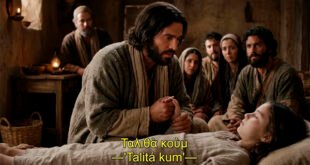
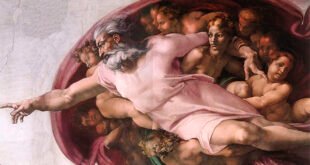
There is a question that contains one of the deepest truths of the entire Christian faith: Why does the Church call Jesus Christ the Word? Why does the Gospel of Saint John not begin by presenting Him simply as Jesus of Nazareth, the Messiah, or the Son of God, but instead with a solemn statement that seems to transport us back to before the beginning of time: “In the beginning was the Word, and the Word was with God, and the Word was God” (Jn 1:1)?
This is not a poetic title, a religious metaphor, or an especially solemn way of referring to Christ. The word Word contains one of the most important affirmations of Catholic doctrine: Jesus Christ is the eternal Word of God, the only-begotten Son of the Father, eternally begotten, consubstantial with Him, and true God.
When Saint John uses this expression, he is revealing something extraordinary: the One who was born in Bethlehem, who walked through Galilee, who preached to the crowds, who suffered under Pontius Pilate, and who died on the Cross did not begin to exist at the moment of His human birth. He has existed forever. Before the universe existed, before there was time, before the stars were created, the Word already existed eternally with the Father.
And yet that eternal Word became man.
This truth constitutes the very heart of Christianity. God did not merely send a message from Heaven, nor did He settle for inspiring a prophet to speak in His name. In Jesus Christ, God Himself came to meet us. The eternal Word entered our history, assumed our human nature, and dwelt among us.
Understanding why Jesus Christ is the Word means entering into the mystery of the Most Holy Trinity, understanding the Incarnation, and discovering that all creation, the entire history of salvation, and our whole Christian life find their ultimate meaning in Him.
1. What Does It Mean That Jesus Christ Is the Word?
The word Word comes from the Latin Verbum, meaning “word”. In the theological context, it translates the Greek term Logos, used by Saint John in the prologue to his Gospel.
But we must understand that when the Church calls Jesus Christ the Word, she is not simply saying that Christ is someone who speaks well, transmits divine teachings, or communicates a religious message.
Jesus Christ is not merely someone who brings the Word of God: He Himself is the eternal Word of God.
This distinction is fundamental.
The prophets of the Old Testament received the word of the Lord and transmitted it to the people. Moses spoke in God’s name. Isaiah proclaimed His purposes. Jeremiah communicated His warnings and promises. All of them were servants of a word that did not belong to them.
Christ, by contrast, possesses a radically different identity. He does not receive an external word that He must transmit like a messenger. He is the eternal Son of the Father, His personal Word.
Therefore, when Jesus speaks, we are not dealing with another prophet in a long succession of messengers. We are standing before the very Son of God who has become man.
The prologue to Saint John’s Gospel expresses this with extraordinary depth:
“In the beginning was the Word, and the Word was with God, and the Word was God” (Jn 1:1).
In this brief statement, we find three fundamental truths:
- The Word exists from the beginning: He is not a creature or a being who began to exist at some point.
- The Word was with God: He is personally distinct from the Father.
- The Word was God: He fully possesses the same divine nature as the Father.
Saint John leaves no room for considering Christ a mere exceptional man, a superior angel, or a creature especially favoured by God.
The Word is eternal, personal, and divine.
And a few verses later, the evangelist introduces one of the most astonishing statements in all of Scripture:
“And the Word became flesh and dwelt among us” (Jn 1:14).
Here we find the heart of the Christian mystery: the eternal God truly became man without ceasing to be God.
2. Why Does Saint John Use the Word Logos?
To understand the depth of this expression, we must place ourselves in the cultural and religious context in which the Fourth Gospel was written.
The Greek term Logos had a long history before Saint John employed it. In Greek philosophical thought, it could designate reason, discourse, speech, or an intelligible principle that made it possible to understand the order of the universe.
Some thinkers had reflected on the existence of a rational principle that explained the structure and harmony of the world.
In Stoic philosophy, for example, the logos could be understood as a rational principle that permeates and orders the cosmos. In other authors, it acquired different meanings related to reason and the intelligibility of reality.
There were also reflections on the Logos in Hellenistic Jewish thought. Philo of Alexandria, for example, made extensive use of this concept when discussing the relationship between God and the created world.
However, it would be a mistake to think that Saint John simply took a Greek philosophical idea and applied it to Jesus.
The Logos of the Gospel is not an impersonal force, a cosmic energy, or an abstract principle that organises the universe. He is a divine Person: the eternal Son of God.
The originality of Saint John’s prologue lies precisely in identifying this Logos with Jesus Christ and proclaiming that He became flesh.
Philosophy could reflect on the reason that governs the universe. Christian revelation announces something infinitely deeper: that eternal Word has a face, has entered our history, and has become man.
Furthermore, the beginning of Saint John’s Gospel is deeply connected with the first chapter of Genesis:
“In the beginning God created the heavens and the earth” (Gn 1:1).
Saint John begins with the same words: “In the beginning”.
This does not appear to be an accidental literary coincidence. The evangelist wants to take us back to the origin of everything to show us that Christ does not simply belong to human history: He existed before creation and eternally shares in divine life.
Genesis presents God creating through His word: “And God said, ‘Let there be light’, and there was light” (Gn 1:3).
Saint John reveals to us who this divine Word ultimately is: the eternal Word through whom all things were made.
3. The Word Was with God: Jesus Christ Is Not the Father
One of the most important theological questions we must understand is the relationship between the Word and the Father.
Christianity proclaims that there is one God in three truly distinct Persons: Father, Son, and Holy Spirit.
They are not three gods, nor three temporary manifestations of one and the same Person. They are three distinct Persons who possess one single and indivisible divine nature.
When Saint John states that “the Word was with God”, he is revealing the personal distinction between the Father and the Son.
The Father is not the Son. The Son is not the Holy Spirit. And the Holy Spirit is not the Father.
Nevertheless, all three are truly God.
This truth constitutes the mystery of the Most Holy Trinity, the foundation of the entire Christian faith.
The Word is the eternal Son, begotten by the Father, but not created by Him.
Here we must pause over an essential distinction: begotten does not mean created.
Creatures begin to exist because God calls them into existence. Angels, human beings, animals, stars, and everything that exists outside God are creatures.
The Son, however, does not belong to the category of creatures. He was not created at a particular moment, did not appear after the Father, and is not inferior to Him in divinity.
He is eternally begotten by the Father.
The Nicene-Constantinopolitan Creed expresses this truth in words that the Church continues to proclaim in the liturgy:
“God from God, Light from Light, true God from true God, begotten, not made, consubstantial with the Father.”
This formulation is not a philosophical construction unrelated to Scripture. It is a doctrinal expression that safeguards the truth revealed in the Gospel.
The Son is truly God, equal to the Father in divinity, although distinct from Him as a Person.
4. The Word and Creation: All Things Were Made Through Him
Saint John continues his prologue with a decisive statement:
“All things came to be through him, and without him nothing came to be” (Jn 1:3).
These words allow us to understand another extraordinary dimension of Christ’s identity: the Word is not only prior to creation, but all things were created through Him.
The universe does not exist independently of Christ. Matter, life, time, the stars, and humanity find their ultimate origin in God, who creates through His Word.
This teaching also appears in other passages of the New Testament.
The Letter to the Colossians states about the Son:
“For in him all things were created, in heaven and on earth, visible and invisible” (Col 1:16).
And the Letter to the Hebrews teaches that God has spoken definitively through the Son, “through whom he also created the universe” (Heb 1:2).
Therefore, Jesus Christ is not merely another component within the universe. He is not the result of the evolution of the cosmos, nor a creature who subsequently attained divine status.
The entire universe depends on the Word for its existence.
This affirmation has very important spiritual consequences.
First, it teaches us that creation has meaning. The world is not the product of absolute absurdity, nor is it a reality abandoned to itself. Everything that exists proceeds from the creative will of God.
Second, it allows us to understand the dignity of created things. If everything was created through the Word, material reality is neither contemptible nor intrinsically evil.
Christianity does not teach that the body is a prison from which the soul must escape in order to attain salvation. It teaches that God created the human being as a unity of body and soul, and that matter can become an instrument of sanctification.
Finally, it shows us that Christ is the centre of all reality.
Saint Paul expresses this by affirming that all things were created through Christ and for Christ (Col 1:16).
We do not merely come from Him: we are called to live in Him and attain our fulfilment in Him.
5. The Word Became Flesh: The Mystery of the Incarnation
We now arrive at one of the most moving truths of the Catholic faith.
The same Word who has existed from all eternity, the same One through whom all things were created, became flesh.
Saint John does not say that the Word merely appeared to be human, adopted a human appearance, or temporarily manifested Himself in bodily form.
He says that He became flesh.
This expression means that He assumed a true human nature, with a body and a rational soul, without ceasing to possess His divine nature.
This is the mystery of the Incarnation.
The Catechism of the Catholic Church teaches that the Son of God truly became man without ceasing to be truly God (CCC, 464-469).
It is important to understand what this means.
Jesus Christ is not half God and half man. Nor is He a man who received an extraordinary divine dignity or was adopted by God.
He is one divine Person, the Person of the Son, who possesses two natures: divine and human.
This truth was solemnly defined by the Council of Chalcedon, held in the year 451.
The council confessed Jesus Christ as true God and true man, acknowledged in two natures, without confusion, without change, without division, and without separation.
These expressions safeguard the mystery against two opposing errors.
On the one hand, we cannot confuse the divine and human natures as though they were mixed together to form a third reality.
On the other hand, neither can we separate them as though Christ were two different persons, one divine and one human.
The One who was born of Mary is the same eternal Son of God. The One who cries in Bethlehem is the same One who sustains the universe. The One who suffers under Pontius Pilate is the same Word through whom all things were created.
This is the greatness of the Incarnation.
God did not cease to be God in order to become man. The Son assumed our human nature and united it personally to His divine Person.
That is why the Virgin Mary is truly the Mother of God (Theotokos), not because she is the origin of divinity, but because the Son born of her is a divine Person.
The Council of Ephesus, held in the year 431, defended this truth against the Christological controversies of its time.
Mary did not give birth to an independent human person who was subsequently united to the Word. She gave birth, according to His human nature, to the eternal Son of God made man.
6. Why Did the Word Wish to Become Man?
The Incarnation was not an accidental event or an improvised solution to an unexpected problem.
It forms part of God’s eternal plan for our salvation.
The human being, created in the image and likeness of God, lost through sin the supernatural friendship with his Creator. Original sin introduced a rupture in the relationship between God and humanity, and personal sins perpetuate this separation whenever man freely turns away from the divine will.
Humanity needed to be redeemed.
God, in His mercy, chose to save us through the Incarnation, Passion, Death, and Resurrection of His Son.
The Catechism explains that the Word became flesh to save us by reconciling us with God, so that we might know divine love, so that He might be our model of holiness, and so that He might make us partakers of the divine nature (CCC, 457-460).
This last expression is especially important.
God did not become man simply to teach us a set of moral rules, transmit a philosophy of life, or show us how to become better people.
All these things may form part of the consequences of His coming, but the goal is much deeper: Christ came to rescue us from sin and restore the supernatural life we had lost.
The Gospel of Saint John expresses this admirably:
“For God so loved the world that he gave his only-begotten Son, that whoever believes in him should not perish but have eternal life” (Jn 3:16).
The Incarnation is therefore the supreme manifestation of God’s love.
The Creator enters His creation. The Eternal One enters time. The Almighty accepts the weakness of the human condition. The Lord of the universe is born in the humility of a stable.
And He does so out of love.
7. The Word in the Old Testament: A Revelation That Prepares the Coming of Christ
Although the expression “the Word became flesh” appears explicitly in the Gospel of Saint John, the reality it proclaims is prepared throughout the entire history of salvation.
The Old Testament repeatedly presents the word of God as an instrument of creation, revelation, judgement, and salvation.
In Genesis, God creates through His word.
In the Psalms, we find a particularly significant statement:
“By the word of the Lord the heavens were made” (Ps 33:6).
The prophets, for their part, receive the divine word and transmit it to the people.
The word of God is not merely a sound. It is effective, accomplishes that for which it is sent, and manifests the will of the Lord.
The prophet Isaiah conveys this teaching through an extraordinary comparison:
“For as the rain and the snow come down from heaven, and do not return there but water the earth, making it bring forth and sprout […], so shall my word be that goes forth from my mouth; it shall not return to me empty” (Is 55:10-11).
The divine word accomplishes what God wills.
We also find references to divine Wisdom in the Old Testament, especially in the wisdom books.
The Book of Proverbs presents Wisdom in personified language, while the Book of Wisdom describes its relationship with God’s creative action.
Christian tradition has read these texts in the light of the full revelation of Christ, recognising in them a preparation for and an illumination of the mystery of the eternal Son.
However, it is important to avoid a misunderstanding: these passages should not be interpreted as though they all offered, explicitly and directly, a complete formulation of the Trinitarian dogma.
Christian revelation reaches its fullness in Jesus Christ.
He is the One who enables us to understand definitively who God is and what His plan of salvation entails.
8. The Church Fathers Defended the Divinity of the Word
During the first centuries of Christianity, the identity of the Word became the subject of important controversies.
Christians had to answer a fundamental question: Is Jesus Christ truly God, or is He an extraordinary creature placed above all the others?
The Church’s answer was unequivocal: the Son is true God, not a creature.
One of the most important episodes in this history was the Arian controversy.
Arius, a presbyter of Alexandria, defended a conception according to which the Son was not eternal in the same sense as the Father and had been brought into existence by Him before all other created beings.
This teaching directly compromised the full divinity of Jesus Christ.
If the Son were a creature, even the most exalted of all, He could not be true God, nor could He communicate divine life to us in the full sense proclaimed by Christianity.
In response to this controversy, the Church held the Council of Nicaea in the year 325.
The council confessed that the Son is “begotten, not made, consubstantial with the Father”.
The Greek word used to express this equality of nature was homoousios, meaning “of the same substance” or “consubstantial”.
This was not merely a terminological discussion. The identity of Jesus Christ was at stake and, with it, the reality of our salvation.
Among the great defenders of the divinity of the Word was Saint Athanasius of Alexandria.
In his writings against the Arians, he defended the idea that the Son could not be a creature, because only God can truly save man and communicate divine life to him.
Saint Irenaeus of Lyons, in the second century, had also defended the identity of the eternal Word and His role in creation and redemption. His theology of recapitulation presents Christ as the One who gathers and restores the history of humanity in Himself.
For his part, Saint Augustine devoted profound reflection to the prologue of Saint John in his Tractates on the Gospel of John.
In his thought, the eternal Word is God’s subsisting Word, not a passing sound or a created expression.
The human word disappears after it has been spoken. The divine Word, however, remains eternally.
All these testimonies show that the doctrine of the Word is not a late interpretation or a philosophical invention of the medieval Church.
From her earliest centuries, the Church has confessed that Jesus Christ is the eternal Son of God, true God and true man.
9. The Word Is the Perfect Revelation of the Father
Another essential dimension of this mystery is that Jesus Christ is not only the Word through whom God creates and saves: He is also the definitive revelation of the Father.
The prologue of Saint John concludes with an extraordinary statement:
“No one has ever seen God; the only-begotten Son, who is in the bosom of the Father, he has made him known” (Jn 1:18).
The meaning of these words is profound.
God, in His essence, surpasses every human capacity for understanding. No creature can fully comprehend Him through its own powers.
However, the Father has chosen to make Himself known through His Son.
Jesus Christ is the perfect revelation of God because He is God Himself made man.
That is why, when Philip asks Jesus to show them the Father, the Lord replies:
“He who has seen me has seen the Father” (Jn 14:9).
This statement does not mean that the Father and the Son are the same Person, but that the Son perfectly reveals the Father because He shares the same divine nature with Him.
In Jesus Christ we contemplate the love, mercy, holiness, justice, and truth of God.
We contemplate a God who forgives repentant sinners, has compassion on the sick, calls people to conversion, denounces hypocrisy, and demands authentic holiness.
But we also contemplate a God who does not trivialise sin or reduce salvation to a feeling of well-being.
Christ reveals divine mercy without ever separating that mercy from the truth.
Therefore, to know Jesus Christ is to know the Father.
And truly knowing Christ means accepting the entirety of His teaching, rather than selecting only those words that coincide with our personal preferences.
10. The Word and the Cross: The Eternal Word Who Gives Himself for Us
There is a paradox that should deeply move every Christian.
The Word through whom all things were created allowed Himself to be nailed to a cross by men.
The One who sustains the universe allowed His body to be mistreated, His face to be spat upon, and His blood to be shed.
The eternal Son of God, without ceasing to be God, truly experienced human suffering.
The Passion was not a theatrical performance or an apparent suffering.
Jesus Christ truly suffered according to His human nature.
He experienced hunger, thirst, exhaustion, anguish, and pain. His human nature was real and complete.
In Gethsemane, before His arrest, He manifested the anguish of His human soul:
“My Father, if it is possible, let this cup pass from me; nevertheless, not as I will, but as you will” (Mt 26:39).
These words reveal the reality of His humanity and His perfect obedience to the Father.
The Word did not come merely to speak words of love. He came to give Himself for us.
Saint Paul expresses this with a sentence of extraordinary depth:
“He loved me and gave himself for me” (Gal 2:20).
The Cross is the supreme manifestation of this love.
But we must understand that the One who dies on the Cross is not a human person separate from the Son of God.
It is the very eternal Son who, having assumed a human nature, experiences death according to that nature.
That is why we can affirm that God the Son died for us, without this meaning that the divine nature ceased to exist or that divinity was subjected to death.
The Person is one; the natures are two.
This Christological precision does not diminish the mystery of the Cross. On the contrary, it enables us to understand its true greatness.
The One who gives Himself for our salvation is the same eternal Word who exists before all ages.
11. The Word Continues to Speak to Us: The Relationship Between Christ and the Word of God
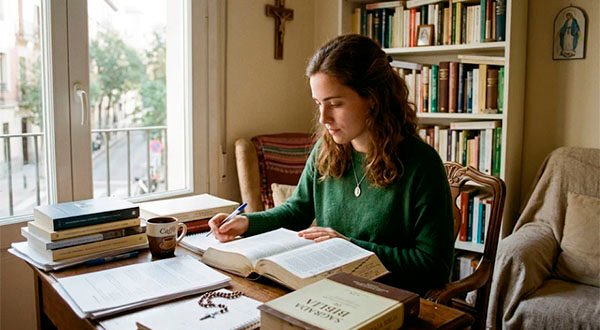
If Jesus Christ is the eternal Word, what relationship does this truth have with Sacred Scripture?
The answer requires us to distinguish between Christ, who is God’s personal Word, and the inspired words of the Bible, which transmit divine revelation.
Scripture is not a divine Person and must not be confused with the incarnate Word.
Nevertheless, all of Scripture is oriented towards Christ and finds its centre in Him.
Jesus Himself explained to the disciples on the road to Emmaus how the Scriptures announced His mystery:
“And beginning with Moses and all the prophets, he interpreted to them in all the scriptures the things concerning himself” (Lk 24:27).
The Old Testament prepares for His coming. The New Testament proclaims its fulfilment.
Therefore, the Christian must not read the Bible as a mere collection of ancient stories, moral rules, or religious reflections.
He must approach it seeking to know the God who reveals Himself and, especially, the Son in whom this revelation reaches its fullness.
The dogmatic constitution Dei Verbum, from the Second Vatican Council, teaches that Jesus Christ brings divine revelation to completion and that in Him God reveals Himself definitively (DV, 2 and 4).
This has an important consequence for our spiritual lives: we cannot separate Christ from the truth He has revealed.
At times, contemporary culture presents an image of Jesus reduced to a teacher of tolerance, a defender of certain values, or an admirable historical figure.
But this image, although it may capture certain aspects of His activity, is profoundly incomplete.
Christ is not merely a moral example.
He is the Son of God, the eternal Word, the Saviour of the world, and the Lord of history.
If we eliminate His divinity, we distort His identity. If we forget His humanity, we empty the Incarnation of its meaning. And if we separate His message from His Person, we end up turning Christianity into yet another human philosophy.
12. What Does It Mean for a Catholic Today That Jesus Christ Is the Word?
We might think that these questions belong exclusively to great theological treatises or to the controversies of the first councils.
However, understanding that Jesus Christ is the Word has very concrete consequences for our everyday lives.
12.1. It Reminds Us That God Is Not an Idea, but a Divine Person Who Has Drawn Near to Us
We live in a society that tends to reduce religion to feelings, personal experiences, or subjective values.
For some, God is an energy. For others, an impersonal force that each person interprets according to their needs. For others, an idea that is useful for finding comfort.
Christianity proclaims something radically different.
God has revealed Himself. He has spoken. And His eternal Word has become man.
We do not need to invent a God according to our own preferences, because God Himself has come to meet us in Jesus Christ.
This invites us to abandon the false images of God that we construct according to our desires and to know Him as He has revealed Himself.
12.2. It Teaches Us to Listen Before Speaking
If Christ is the Word, our Christian life must begin by learning to listen to His Word.
We often pray to ask for things, express our concerns, or present our needs. All of this is legitimate and forms part of Christian prayer.
But we also need silence.
We need to open the Gospel, meditate on its teachings, and allow Christ to enlighten our conscience.
It is not simply a matter of seeking phrases that comfort us, but also of accepting those that correct us, challenge us, and call us to change.
The true disciple does not try to adapt the Gospel to his preferences. He seeks to adapt his life to the Gospel.
12.3. It Helps Us Understand the Importance of Truth
If the Word is the eternal Word of God, truth cannot be reduced to an individual opinion or a cultural construction subject to the changes of each era.
Jesus Christ declared:
“I am the way, and the truth, and the life” (Jn 14:6).
Christian truth is not merely a theory. It is inseparably united to the Person of Christ.
This is especially important in an age marked by disinformation, the manipulation of words, propaganda, and the relativisation of moral principles.
The Christian is called to seek the truth, defend it with charity, and reject falsehood.
He must not use religion to justify his prejudices or turn his personal preferences into supposed divine teachings.
Fidelity to the Word requires intellectual humility, doctrinal formation, and moral consistency.
12.4. It Reminds Us That Human Dignity Has a Supernatural Foundation
If the Word assumed our human nature, the human body possesses a dignity that does not depend on its usefulness, beauty, health, or productivity.
Christ did not assume an idealised humanity, but our true human nature.
This enlightens the way we treat children, the elderly, the sick, vulnerable people, and those whom society considers insignificant.
Every human being deserves respect because he has been created by God and is called to communion with Him.
The Incarnation prevents us from despising the human condition.
12.5. It Invites Us to Rediscover Wonder Before the Eucharist
There is an intimate relationship between the Incarnation and the Eucharist.
The same Jesus Christ who assumed our human nature in Mary’s womb continues to give Himself sacramentally to His Church under the species of bread and wine.
In the Eucharist, Christ is present truly, really, and substantially, whole and entire: His Body, His Blood, His Soul, and His Divinity.
This is taught by the Catechism of the Catholic Church in paragraphs 1373-1377.
We must not confuse the Incarnation with the Eucharistic presence, since they are distinct mysteries, although they are profoundly related.
In the Incarnation, the Word assumed a human nature. In the Eucharist, Christ becomes sacramentally present under the consecrated species.
Both mysteries show us the extraordinary humility of the Son of God.
The eternal Word chose to draw near to us in a way that surpasses our imagination.
Therefore, every Mass should be an opportunity for us to renew our wonder, respect, and adoration before Jesus Christ.
13. The Word and Silence: A Spiritual Lesson for Our Time
There is a particularly beautiful paradox in the mystery of the Word.
The One who is God’s eternal Word spent much of His earthly life in the silence of Nazareth.
The Gospels do not provide a detailed description of all the years of His childhood and youth. We know that He lived under the authority of Mary and Joseph and that He grew in wisdom, stature, and grace before God and men (Lk 2:51-52).
The eternal Son, through whom the universe was created, chose to live an ordinary human existence, marked by work, family obedience, and a hidden life.
This reality contains a spiritual lesson of extraordinary depth.
In our time, it seems that everything must be expressed, published, commented on, and shared. Social networks have multiplied words, but they have not necessarily increased our ability to listen or understand.
We live surrounded by speeches, opinions, and messages that constantly compete for our attention.
In the midst of this noise, the mystery of the Word reminds us that not all words have the same value and that true wisdom requires silence.
The Christian needs moments of recollection in order to listen to God.
It is not enough to consume religious content, listen to lectures, or read spiritual reflections. All of this can be useful, but it does not replace a personal encounter with Christ in prayer.
Silence allows the Word to penetrate the heart.
And perhaps one of the most necessary ways of recovering our spiritual life is precisely to dedicate time once again to listening to the Word.
14. Mary, the Mother of the Incarnate Word
We cannot explore the mystery of the Word made flesh without contemplating the Virgin Mary.
God willed that the Incarnation should take place through the free consent of a woman.
The Gospel of Saint Luke recounts how the Angel Gabriel announced to Mary that she would conceive and give birth to the Son of the Most High (Lk 1:26-38).
Mary replied:
“Behold, I am the handmaid of the Lord; let it be to me according to your word” (Lk 1:38).
Her response constitutes one of the most important moments in the history of salvation.
The eternal Word, who needed no creature in order to exist, chose to assume our humanity through the virginal womb of Mary.
The Virgin is not a secondary figure within the mystery of the Incarnation. Her motherhood truly belongs to the history of our salvation.
The Son whom she receives from her is the same eternal Son of the Father.
That is why the Church proclaims her Mother of God.
The title Theotokos safeguards precisely this Christological truth: Jesus Christ is not divided into two persons, one divine and one human.
The One who was born of Mary is truly God made man.
Authentic Marian devotion must always lead us to Christ.
Mary does not take the place of the Word; rather, she teaches us to receive Him, listen to Him, and obey Him.
At Cana, her words retain a permanent spiritual force:
“Do whatever he tells you” (Jn 2:5).
This is also the essence of all authentic Marian devotion: to lead the Christian towards obedience to Jesus Christ.
15. The Word, Centre of the Life of the Church
The Church does not exist to proclaim her own philosophy, defend a mere cultural tradition, or transmit a collection of human values.
She exists to proclaim Jesus Christ, the eternal Son of God made man, who died and rose again for our salvation.
Her entire sacramental, liturgical, doctrinal, and pastoral life finds its foundation in Him.
Preaching must lead to Christ. Catechesis must teach His doctrine. The liturgy must give glory to God through Him. Moral life must be shaped according to His example and commandments.
The Church cannot replace the Gospel with the intellectual fashions of each generation.
Nor can she present Christ as though He were a character whose identity could be modified according to the cultural preferences of the moment.
The Word is eternal. His truth does not depend on social trends.
The Church can use new means of communication, develop educational methods, and find appropriate forms of evangelisation.
But she can never replace the Word with a different message.
Because Christianity is not founded on an idea that we have constructed.
It is founded on a Person who has been revealed to us.
16. How to Personally Deepen Your Understanding of the Mystery of the Word
Intellectually understanding that Jesus Christ is the Word is an important step, but the Christian faith does not end with theoretical knowledge.
We are called to enter into a living relationship with Him.
To do so, we can adopt some concrete spiritual practices.
Read and meditate on the prologue of Saint John.
The first eighteen verses of the Fourth Gospel constitute one of the deepest presentations of the mystery of Christ. It is worth reading them slowly, without haste, pausing over each statement.
Study the Gospels.
We must know the words, gestures, teachings, and works of Jesus Christ. We cannot deeply love someone whose identity we barely know.
Rediscover silence in prayer.
Spending a few minutes each day in God’s presence, without constantly needing to fill that time with words, can help us deepen our relationship with Him.
Form yourselves doctrinally.
The Catechism of the Catholic Church, especially paragraphs 422-483, offers a fundamental exposition of Jesus Christ, the Son of God, and the mystery of the Incarnation.
Approach the Eucharist with faith and reverence.
Eucharistic adoration allows us to remain in the presence of the same Christ who became man for our salvation.
Live according to the truth of Christ.
Faith in the Word must transform our conduct. We cannot confess that Jesus Christ is the Truth while willingly living in falsehood, injustice, or indifference towards our neighbour.
True contemplation of Christ must always produce fruits of conversion.
Conclusion: The Eternal Word Has a Face, a Name, and a Cross
Why is Jesus Christ the Word?
Because He is the eternal Word of God, the only-begotten Son of the Father, begotten from all eternity, true God and consubstantial with Him.
Because all things were created through Him.
Because He is the One who perfectly reveals the Father.
Because, when the fullness of time had come, He assumed our human nature without ceasing to be God.
And because He chose to give His life on the Cross to rescue us from sin and open the gates of eternal life to us.
The prologue of Saint John is not merely a solemn introduction to a Gospel. It is a window opened onto the deepest mystery of our faith.
It allows us to contemplate the eternal Son before creation, recognise Him as Lord of the universe, adore Him in His humanity, and discover in His self-giving the infinite love of God.
There is something extraordinary about this truth: the God who created the universe through His Word chose to become a Word who was close, visible, and human so that we might know Him.
The eternal Word accepted having a body. The Creator accepted being born of a creature. The Lord of Heaven and earth accepted living in the humility of Nazareth. And the One through whom all things were made allowed His own creatures to nail Him to a Cross.
All out of love.
That is why being a Christian does not simply mean admiring the teachings of Jesus, adopting some of His values, or finding inspiration in His words.
Being a Christian means recognising who Jesus Christ truly is, believing in Him, worshipping Him as God, following Him as our Teacher, and remaining united to Him as our Saviour.
In a world that multiplies words but frequently forgets the truth, the Christian is called to return to the beginning of everything: to the eternal Word.
To the One who was not created, because He has existed forever.
To the One who is not an idea, because He is a divine Person.
To the One who is not merely a messenger, because He is the very Son of God.
To the One who did not limit Himself to speaking to us from Heaven, because He descended to us and dwelt among men.
The Word became flesh. And His name is Jesus Christ.
“In the beginning was the Word, and the Word was with God, and the Word was God.”
(John 1:1)