Related Articles
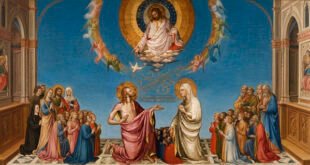
There is a reality that runs throughout the entire history of humanity and that, nevertheless, we often prefer not to face directly: evil is not simply a consequence of human mistakes, nor merely the sum of injustices, sins and misfortunes. There is also a spiritual dimension to evil, a deliberate opposition to God that acts throughout history and that Sacred Scripture calls the “mystery of iniquity.”
Saint Paul uses this expression in his Second Letter to the Thessalonians to describe a reality that was already at work in his own time and that would reach a particularly intense manifestation before the Second Coming of Jesus Christ:
“For the mystery of iniquity is already at work; only he who now restrains it will do so until he is out of the way” (2 Thessalonians 2:7).
These words, written almost two thousand years ago, contain extraordinary depth. The Apostle is not speaking merely about individual sins, persecutions against Christians or injustices committed by the powerful. He is speaking about an opposition to God’s plan that remains hidden at its root but progressively manifests itself throughout history through lies, rebellion, moral corruption and the rejection of truth.
The mystery of iniquity does not mean that evil possesses the same power as God, nor that there is a struggle between two eternal principles of equal strength. The Catholic faith rejects such a conception. God is the Creator of everything that exists; the devil is a spiritual creature who rebelled against Him and whose power, although real, is limited and subject to divine sovereignty.
Understanding this distinction is fundamental if we are to approach correctly one of the deepest subjects of Christian eschatology, that is, theological reflection on the last things: death, judgment, the consummation of history and the glorious return of Christ.
But this is also a profoundly contemporary subject. In a society that frequently presents sin as freedom, lies as a legitimate tool and the rejection of God as a form of progress, Saint Paul’s words invite us to recover a spiritual perspective on history.
Not so that we may live dominated by fear, obsessed with prophecies or searching for signs of the end of the world in every event, but so that we may understand that human history is also the setting for a spiritual battle and that no Christian can remain indifferent to truth, sin and the salvation of souls.
1. What Does the Mystery of Iniquity Really Mean?
The expression “mystery of iniquity” comes from Saint Paul’s Second Letter to the Thessalonians, specifically its second chapter.
The word iniquity expresses something deeper than a simple moral mistake. In biblical language, it is associated with injustice, the perversion of the order willed by God and opposition to His will.
The mystery of iniquity is therefore the action of evil unfolding throughout history, whose ultimate root lies in rebellion against God.
Why does Saint Paul call it a mystery?
Because it does not always manifest itself in an obvious way. Evil can present itself under the appearance of good, lies can disguise themselves as truth, and disobedience to God can appear to be a conquest of freedom.
Not everything that seems beneficial is truly good for humanity. Not everything that a society considers progress constitutes genuine moral advancement. And not everything presented as freedom leads to the authentic freedom of the children of God.
The mystery of iniquity operates precisely through this inversion of the moral order: when humanity ceases to recognize God as the foundation of truth and seeks to become the ultimate measure of good and evil.
This does not mean that every intellectual error, every cultural transformation or every person who does not share the Catholic faith consciously participates in a demonic action. Such a conclusion would be unjust and theologically incorrect.
It means that there is an objective opposition between God’s plan and everything that, through sin, seeks to destroy truth, justice, human dignity and communion with the Creator.
The mystery of iniquity has a personal dimension because it manifests itself through the free decisions of each human being; a social dimension because sin can become embedded in customs and institutions; and a supernatural dimension because Scripture reveals the existence of Satan and the evil spirits.
These dimensions are related, but they must not be confused.
2. The Origin of Evil: Rebellion Against God
To understand the mystery of iniquity, we must go back to the origin of sin.
Sacred Scripture presents Satan as a spiritual creature who opposes God and exercises his tempting influence over humanity.
In Genesis, we find one of the fundamental passages for understanding this reality.
The serpent approaches Eve and directly questions the divine word:
“Did God actually say, ‘You shall not eat of any tree in the garden’?” (Genesis 3:1).
Temptation begins by sowing distrust. The serpent does not simply propose a forbidden action: he introduces the suspicion that God does not truly desire humanity’s good.
Then comes the promise of absolute autonomy:
“You will be like God, knowing good and evil” (Genesis 3:5).
Here we find one of the spiritual keys to the entire history of iniquity: the creature seeks to take the place of the Creator and determine for itself what is good and what is evil.
Original sin did not consist simply in eating a fruit. It was an act of disobedience and distrust, a rupture in the relationship of love and obedience that united humanity with God.
The Catechism of the Catholic Church, in paragraphs 391–395, explains the reality of the fallen angels and the existence of the devil as the consequence of a free and irrevocable choice against God.
The devil was not created evil. Everything God creates is good insofar as it is a creature. His wickedness comes from his own decision to reject God.
This teaching is essential because it prevents us from falling into a dualistic interpretation of reality.
Christianity does not teach that God and Satan are two equivalent powers that have been in conflict since eternity. The devil is not the creator of evil nor does he possess independent sovereignty.
He is a fallen creature.
His ability to tempt, deceive and harm is real, but it remains limited by divine providence.
The Book of Job offers a particularly significant illustration: Satan cannot act without his activity remaining within the limits permitted by God (Job 1:6–12; 2:1–6).
This does not mean that God desires sin or suffering. It means that even the evil He permits does not escape His sovereignty and that His providence can bring good out of what is evil by its very nature.
For this reason, the mystery of iniquity must never make us forget a fundamental truth: evil does not have the final word.
3. Saint Paul Announces That the Mystery of Iniquity Is Already at Work
The passage in 2 Thessalonians constitutes the most important biblical foundation for understanding this mystery.
Saint Paul writes to a Christian community concerned about the Second Coming of Christ. Some people had spread the idea that the Day of the Lord had already arrived, causing anxiety and confusion among the faithful.
The Apostle begins by calling for calm and warning against deception. He then explains that certain events must take place before the definitive manifestation of Christ, including the apostasy and the appearance of the man of iniquity.
In this context, he utters the words that give our reflection its name:
“For the mystery of iniquity is already at work” (2 Thessalonians 2:7).
There is a particularly important detail here: Saint Paul does not present iniquity as a reality that will begin to exist only at the end of time. He states that it is already at work.
This means that opposition to God has been part of human history since the earliest days of Christianity and that its final manifestation will not be a phenomenon entirely disconnected from what has happened before.
Evil has a historical continuity, although its manifestations change.
Throughout the centuries, it has appeared in different forms: religious persecutions, idolatries, doctrines contrary to revealed truth, moral corruption, violence against the innocent and movements that seek to build a society without God.
We must not conclude that all these events have an identical nature or that each one constitutes an immediate sign of the Antichrist. But we can recognize in them manifestations of that opposition to God that Scripture invites us to take seriously.
What Does That Which Restrains the Man of Iniquity Mean?
In the same passage, Saint Paul speaks of someone or something that is restraining the manifestation of the man of iniquity.
This is one of the most difficult elements to interpret in the entire chapter.
Throughout the history of theology, different explanations have been proposed. Some ancient and later interpreters associated this restraining power with the political order of the Roman Empire; others have connected it with authority, God’s providential action, the preaching of the Gospel or a spiritual reality.
The very ambiguity of the words used by Saint Paul has prevented the emergence of a single, definitively established interpretation by the Church.
Therefore, it would be incorrect to present any one of these explanations as though it were a Catholic dogma.
What is clear from the passage as a whole is that the definitive manifestation of evil does not take place outside the time established by God.
The Apostle insists that the man of iniquity will be revealed at the proper time. He also states that his power will be destroyed by Jesus Christ.
History has not been abandoned to chance, nor can the devil impose his will independently of divine providence.
4. The Antichrist: The Supreme Manifestation of Rebellion Against God
When we speak about the mystery of iniquity, it is inevitable that we address the figure of the Antichrist.
Sacred Scripture uses different expressions to refer to this opposition to Christ.
Saint John explicitly mentions the Antichrist in his letters:
“You have heard that antichrist is coming, so now many antichrists have come. Therefore we know that it is the last hour” (1 John 2:18).
This verse contains a fundamental teaching: the phenomenon of opposition to Christ is not limited exclusively to a future individual.
Saint John speaks of many antichrists who were already present in his own time. He later explains that whoever denies the Father and the Son participates in this opposition to revealed truth.
In another letter, he writes:
“For many deceivers have gone out into the world, men who will not acknowledge the coming of Jesus Christ in the flesh; such a one is the deceiver and the antichrist” (2 John 7).
Opposition to Christ can therefore manifest itself through the denial of His true identity and His Incarnation.
The issue is not simply the rejection of a religious institution or a particular cultural tradition. The central issue is Jesus Christ Himself: His divinity, His humanity, His redemptive work and His authority as the one and only Saviour.
The Antichrist and the Man Who Seeks to Take God’s Place
Saint Paul describes the man of iniquity as someone who:
“Opposes and exalts himself above every so-called god or object of worship, so that he takes his seat in the temple of God, proclaiming himself to be God” (2 Thessalonians 2:4).
The central characteristic of this figure is self-exaltation.
He does not simply want to live without God: he seeks to take His place.
The Antichrist represents the culmination of a rebellion that began with the original temptation: the creature wants to become the absolute measure of reality.
Here we find a profound connection between Genesis and Christian eschatology.
In the Garden of Eden, the serpent promises humanity that it will become like God. In Saint Paul’s description of the man of iniquity, we find an even more explicit claim: that of presenting oneself as God.
The same logic of rebellion runs through both events.
The Catechism of the Catholic Church, in paragraph 675, teaches that before the Second Coming of Christ, the Church must pass through a final trial that will shake the faith of many believers.
During this trial, the mystery of iniquity will be manifested through a religious imposture that will offer humanity an apparent solution to its problems in exchange for abandoning the truth.
The Catechism identifies the supreme religious imposture with the Antichrist and describes it as a pseudo-messianism in which humanity glorifies itself by placing itself in the place of God and Jesus Christ.
This definition deserves particular attention.
The Antichrist does not represent merely external persecution against Christians. His deception can take a much subtler form: offering an apparent salvation that dispenses with the true Saviour.
Promising a reconciled humanity without conversion.
Promising peace without justice.
Promising fraternity without truth.
Promising freedom without moral responsibility.
Promising an earthly paradise without the need for God.
The imposture is particularly dangerous because it does not always present itself under the appearance of evil. It may offer attractive answers to real problems facing humanity, but it demands the abandonment of revealed truth and the replacement of Christ’s salvation with a purely human construction.
This does not mean that every social, scientific or political project seeking to improve living conditions is anti-Christian. The Church recognizes the value of genuine human progress and commitment to the common good.
The problem arises when a temporal reality becomes an absolute promise of salvation and seeks to occupy the place that belongs exclusively to God.
Do We Know Who the Antichrist Will Be?
The Church teaches the reality of the final trial and the imposture of the Antichrist, but it has not officially identified any specific historical individual as the definitive Antichrist.
Throughout the centuries, numerous identifications and speculations have been proposed. Rulers, emperors, religious leaders and figures from different periods have been identified by certain authors as possible manifestations of this figure.
We must not confuse these particular interpretations with Catholic doctrine.
Nor can we establish dates for his appearance or claim that a contemporary event proves that we are living in the final days.
Jesus Christ Himself warned against the presumption of knowing the exact moment of His coming:
“But of that day and hour no one knows, not even the angels of heaven, nor the Son, but the Father only” (Matthew 24:36).
The Christian attitude does not consist in feeding speculation, but in remaining vigilant, faithful and prepared.
5. The Great Strategy of Iniquity: Deception Through Lies
One of the most revealing elements of Saint Paul’s text is the relationship between iniquity and deception.
Saint Paul explains that the activity of the man of iniquity will be accompanied by false signs and wonders, as well as every kind of deception.
And he adds a decisive explanation:
“Because they refused to love the truth and so be saved” (2 Thessalonians 2:10).
Let us pause over this phrase.
The Apostle does not simply say that these people lacked information. He points out that they refused to love the truth.
Here we find a profoundly spiritual dimension of the problem.
Human beings can come to reject the truth not because they have no opportunity to know it, but because accepting its consequences requires a conversion they do not wish to undertake.
The truth can be uncomfortable.
It may require abandoning a particular behaviour, acknowledging a mistake, making amends for an injustice or giving up a personal advantage.
For this reason, when people begin to prefer what suits them over what is true, their conscience can gradually become distorted.
Sin does not always begin with a great rebellion. Sometimes it begins with small compromises.
First, a lie is justified because it seems necessary.
Then an injustice is normalized because it benefits certain interests.
Later, any moral judgment that contradicts one’s desires is considered excessive.
Finally, what was once recognized as evil may come to be defended as a right.
This dynamic does not mean that all processes of moral change are identical or that every ethical disagreement constitutes an extraordinary manifestation of the devil. But it helps us understand why Scripture considers the relationship between truth, conscience and salvation so important.
Lies as an Instrument of Spiritual Enslavement
In Saint John’s Gospel, Jesus Christ describes the devil in particularly severe terms:
“He was a murderer from the beginning, and has nothing to do with the truth, because there is no truth in him. When he lies, he speaks according to his own nature, for he is a liar and the father of lies” (John 8:44).
Lying appears here as a fundamental characteristic of the Evil One.
It is not merely a matter of transmitting false information. Spiritual deception consists in presenting a distorted reality in order to lead humanity away from God.
The devil deceives when he makes people believe that sin has no consequences, that obedience to God is a form of slavery or that happiness can be achieved by breaking away from the Creator.
The deepest lie is the one that succeeds in making humanity cease to recognize its need for salvation.
That is why Christian truth is not simply a collection of religious ideas. It is a reality that must be welcomed, loved and lived.
Jesus Christ does not merely teach truths: He Himself declares:
“I am the way, and the truth, and the life” (John 14:6).
To turn away from the truth ultimately means to turn away from Christ.
A Particularly Relevant Warning for Our Time
We live in an age in which information circulates with extraordinary speed.
Social networks, digital media and new technologies allow us to transmit knowledge and communicate in ways that would have been difficult to imagine just a few decades ago.
However, this same capacity can become an instrument of manipulation.
Fake news, manipulated images, propaganda, disinformation and the irresponsible dissemination of accusations can distort our perception of reality.
There is also a spiritual danger when Catholics constantly consume content that fuels hatred, suspicion, indignation or fear without checking whether it is true.
Not every message that uses religious language comes from a reliable source. Not every alleged private revelation is authentic. Not every prophecy circulated on the internet deserves credibility. And not every accusation made in the name of defending the Church is supported by facts.
Christian prudence requires discernment.
Love for the truth means verifying information, humbly acknowledging our own mistakes and avoiding the dissemination of things we do not know to be true.
A Catholic cannot fight lies by using lies.
The truth of Christ cannot be defended through slander, manipulation or hatred.
Fidelity to the truth also requires charity, justice and control of the tongue.
6. Apostasy: When Humanity Abandons the Faith
Saint Paul mentions another event associated with the manifestation of the man of iniquity:
“Unless the rebellion comes first” (2 Thessalonians 2:3).
Apostasy, in its proper sense, consists in the abandonment of the Christian faith by someone who had previously professed it.
It should not be confused with every doubt, spiritual difficulty or passing crisis.
A believer who experiences a moment of darkness, has questions or struggles to understand a teaching of the Church is not automatically an apostate.
Faith can undergo trials. The saints themselves experienced moments of inner suffering and spiritual struggle.
Apostasy involves a much deeper rupture: the rejection of what was previously received and professed as true.
The Loss of Faith Sometimes Begins with the Abandonment of Christian Life
It does not always occur through a public declaration.
Sometimes distancing oneself from God begins silently.
Prayer is abandoned because it seems unimportant.
Participation in Holy Mass is neglected because other activities take priority.
The sense of sin is lost.
Confession begins to seem unnecessary.
Religious formation is gradually abandoned.
Eventually, faith ceases to guide decisions and becomes a childhood memory or a cultural reference with no real influence on life.
We must not automatically identify this process with apostasy in the strict sense. But we must recognize that it can create favourable conditions for the weakening of supernatural life.
Faith needs to be nourished.
Saint Paul exhorts the Thessalonians precisely to remain steadfast and preserve the teachings they have received:
“So then, brethren, stand firm and hold to the traditions which you were taught by us, either by word of mouth or by letter” (2 Thessalonians 2:15).
This exhortation is of extraordinary importance.
The apostolic response to deception does not consist in inventing a new doctrine adapted to the concerns of each age, but in remaining faithful to the teaching that has been received.
Apostolic Tradition is not a collection of human customs that each generation may change at will. It is the living transmission of Revelation entrusted by Christ to His Apostles and handed down within the Church.
For this reason, doctrinal formation is a genuine spiritual necessity.
A Christian who does not know his faith can easily be confused by any discourse that uses religious words without respecting their true meaning.
Lukewarmness and the Danger of Superficial Faith
The Book of Revelation records a warning addressed to the Church of Laodicea:
“Because you are lukewarm, and neither cold nor hot, I will spew you out of my mouth” (Revelation 3:16).
These words must not be used to indiscriminately condemn those who are experiencing spiritual difficulties.
Their context is a severe call to a community that considers itself self-sufficient and does not recognize its true need for God.
Lukewarmness appears when Christian life loses its spiritual intensity and people become accustomed to a superficial relationship with the Lord.
They may retain certain religious practices but lack a genuine willingness to convert.
They may know the teachings of the Church but avoid applying them when they contradict their interests.
They may speak about God but live as though God had no authority over their decisions.
The answer to this situation is not a more intense external religiosity, but the recovery of the sincerity of conversion.
Faith must penetrate every aspect of our existence.
It is not enough to identify culturally as Christian. We must follow Jesus Christ.
7. The Mystery of Iniquity and the Persecution of the Church
The history of Christianity demonstrates that fidelity to Christ has never been completely separated from persecution.
From the earliest centuries, the disciples of Jesus have experienced the hostility of those who rejected His message.
The Lord Himself foretold this:
“If the world hates you, know that it has hated me before it hated you” (John 15:18).
Persecution can take different forms: physical violence, imprisonment, discrimination, prohibition of worship, social pressure or attempts to silence the preaching of the Gospel.
Not every difficulty encountered by the Church constitutes persecution in the strict sense. Nor does every criticism of an ecclesiastical action necessarily represent hostility towards Christ.
The Church must accept just correction, acknowledge her human failings and examine her own actions with humility.
But there is a genuine opposition when people seek to prevent Christians from professing their faith, proclaiming the Gospel or living according to God’s moral law.
The Final Trial of the Church
The Catechism of the Catholic Church, in paragraph 675, teaches that the Church must undergo a final trial before the Second Coming of Christ.
This trial will shake the faith of many believers and will be associated with a religious imposture that offers an apparent solution to human problems in exchange for abandoning the truth.
It is important to understand the scope of this teaching.
The Church does not claim that her history will end with a universal political conquest, nor that she will achieve a position of temporal dominance that definitively eliminates evil.
Nor does she teach that the Kingdom of God can be identified with a particular political system, social organization or historical project.
In paragraph 677, the Catechism explains that the Church will enter the glory of the Kingdom by following her Lord in His final Passover, sharing in His Death and Resurrection.
The definitive victory will not come through the progressive historical triumph of the Church, but through God’s final intervention, which will defeat the last unleashing of evil.
This teaching is fundamental to avoiding two opposite errors.
The first consists in believing that the Church must conquer the world through temporal power in order to establish the Kingdom of God.
The second consists in falling into pessimism, as though the action of evil could prevent God from remaining faithful to His promises.
The Church is called to evangelize, sanctify and bear witness to the truth, but her ultimate hope does not depend on political circumstances, religious statistics or social influence.
The Church belongs to Christ, and her ultimate destiny rests in the hands of Christ.
The Suffering of Christians Is Not a Defeat
The Book of Revelation repeatedly presents the faithful who remain united to the Lamb despite persecution.
The image of the Lamb is particularly significant because it expresses the central paradox of Christianity: Christ conquers by giving His life.
The Cross, which seemed to represent the triumph of His enemies, becomes the instrument of Redemption.
For this reason, remaining faithful during persecution is not a spiritual defeat.
A Christian may lose his social position, possessions, freedom and even his life without losing what truly matters: communion with God.
The martyrs are the most luminous testimony to this truth.
Their strength does not come from a self-sufficient human will, but from the grace that sustains them and unites them to Jesus Christ.
The Church does not need to manufacture heroes or artificially seek suffering. She is called to remain faithful, even when that fidelity comes at a price.
8. The Mystery of Iniquity in Contemporary Society
Can we recognize manifestations of the mystery of iniquity in our own time?
The answer requires prudence.
We must not turn every political, technological or cultural event into an apocalyptic sign. The Church does not invite us to interpret every crisis as an immediate announcement of the end of the world.
Nevertheless, we can examine our society in the light of the moral and spiritual principles of Revelation.
The mystery of iniquity manifests itself wherever humanity deliberately rejects the truth and seeks to build its existence apart from God.
There are several contemporary realities that deserve Christian reflection.
The Exaltation of Absolute Autonomy
Freedom is an extraordinary gift from God.
Without freedom, voluntary love, moral responsibility and the possibility of consciously responding to grace would not exist.
But freedom does not mean that human beings can turn every desire into something good simply because they desire it.
True freedom is oriented towards the good.
The Catechism of the Catholic Church teaches that freedom is the ability to act or not to act and to perform deliberate actions. It also explains that freedom reaches its perfection when it is ordered towards God, the Supreme Good.
When freedom is separated from truth and moral goodness, it risks becoming a justification for selfishness.
People cease asking whether their actions are good and begin asking only whether they are able to perform them.
This mentality reverses the moral order.
Christian freedom does not consist in living without limits, but in being able to choose the good, even when it requires sacrifice.
The Reduction of the Human Person to a Purely Material Reality
The human person is not merely a biological organism, an economic unit or an individual defined by desires.
Human beings have been created in the image and likeness of God and possess a dignity that does not depend on their usefulness, productivity, age or abilities.
When society loses sight of this truth, it may begin to value people according to purely functional criteria.
The weak, the sick, the elderly, the unborn and those who require special care then risk being regarded as burdens rather than recognized as persons possessing inviolable dignity.
The Catholic faith reminds us that human life is a sacred gift and that no one loses their dignity by finding themselves in a situation of dependence.
Defending this dignity is not a secondary matter: it is part of the moral mission of the Church.
The Replacement of Truth with Usefulness
Another worrying manifestation appears when truth ceases to be considered an objective good.
If something is useful for achieving a particular goal, it is justified, even if it is false or unjust.
If a lie prevents an immediate problem, it is presented as necessary.
If manipulation benefits a cause considered good, people attempt to justify it.
This mentality ultimately destroys trust, because a society that renounces truth also loses the foundations of justice.
The Christian must remember that there are no good works that justify every possible means.
Catholic morality teaches that it is never lawful to do evil in order to achieve good.
For this reason, defending a just cause can never justify slander, deliberate deception or unjust violence.
Religion Turned into an Instrument of Self-Satisfaction
There is also a danger within the religious sphere itself.
Faith can be transformed into an instrument for satisfying personal expectations, obtaining recognition or constructing a social identity.
In that case, God ceases to be the centre and becomes a means of achieving human objectives.
The Gospel is reduced to messages of well-being, self-esteem or personal success.
Prayer becomes exclusively a request for benefits.
Morality is adapted to individual desires.
And conversion disappears because it no longer seems necessary.
However, Jesus Christ did not come simply to improve our self-esteem or offer us a pleasant philosophy of life.
He came to save us from sin, reconcile us with the Father and open the gates of eternal life.
A religion that eliminates the need for conversion ultimately empties the Cross of its meaning.
Hostility Towards Christian Truth
In certain societies and circumstances, the Christian faith may be ridiculed, marginalized or subjected to cultural pressure.
Christians must respond without hatred and without complexes.
They are not called to impose the faith by force, but neither should they conceal it out of fear of making others uncomfortable.
Charity does not require renouncing the truth.
In fact, true charity needs truth, because authentic love does not exist when someone is deliberately led towards error.
The challenge is to proclaim the Gospel clearly, respecting everyone’s dignity and avoiding both cowardice and aggression.
Christian fidelity is not measured by the world’s approval, but by faithfulness to Jesus Christ.
9. How Can We Fight the Mystery of Iniquity? The Christian’s Spiritual Battle
Faced with this reality, an inevitable question arises: what should a Catholic do?
The answer does not consist in living in terror of the devil, becoming obsessed with prophecies or searching for enemies everywhere.
Nor does it consist in adopting a passive attitude, as though evil were inevitable and nothing could be done against it.
The Christian response is spiritual combat.
Saint Paul writes to the Ephesians:
“For we are not contending against flesh and blood, but against the principalities, against the powers, against the world rulers of this present darkness, against the spiritual hosts of wickedness in the heavenly places” (Ephesians 6:12).
The Apostle reminds us that the spiritual dimension of human existence cannot be reduced to visible conflicts.
But immediately afterwards he offers the weapons with which Christians must face this battle: truth, righteousness, faith, salvation, the Word of God and prayer.
These are not human instruments of violence, but virtues and supernatural means.
First Weapon: Living in the Truth
If lies are one of the fundamental instruments of iniquity, truth must occupy a central place in the Christian’s life.
This requires much more than knowing a few doctrinal formulas.
It means ordering the intellect towards truth, properly forming the conscience and humbly accepting what God has revealed.
Catholics should study the Catechism, know Sacred Scripture, deepen their understanding of the Church’s teaching and avoid building their faith exclusively on opinions circulated on the internet.
They must also examine their own conduct.
Am I sincere with others?
Do I acknowledge my mistakes?
Do I justify certain actions simply because they benefit me?
Am I willing to change when I discover that I am wrong?
The fight against lies often begins within our own conscience.
Second Weapon: Recovering the Sacramental Life
The sacraments are not simply religious ceremonies or outward expressions of belonging to a community.
They are efficacious signs of grace instituted by Christ and entrusted to the Church.
In them, we find an essential source of help for our sanctification.
The Eucharist occupies a central place because in it we truly receive Jesus Christ, present under the sacramental species of bread and wine.
Holy Mass is not merely a communal gathering or a symbolic representation of a past event. It is the sacramental sacrifice of Christ, made present in an unbloody manner, in which we participate in His redemptive self-offering.
Anyone who understands this discovers that the Eucharist cannot be relegated to a secondary aspect of Christian life.
It is nourishment for the journey, a source of grace and the centre of the life of the Church.
The Sacrament of Penance is also indispensable.
Confession allows us to acknowledge our sins, receive sacramental absolution and recover sanctifying grace when we have lost it through mortal sin.
Christians must not become accustomed to living comfortably with that which separates them from God.
They must examine their conscience, sincerely repent and turn to divine mercy.
We cannot fight sin if we have lost the desire to convert.
Third Weapon: Persevering Prayer
Jesus Christ taught His disciples to ask the Father:
“And lead us not into temptation, but deliver us from evil” (Matthew 6:13).
The Catechism of the Catholic Church devotes paragraphs 2850–2854 to this final petition of the Lord’s Prayer.
It explains that evil is not merely an abstraction, but also designates a person: Satan, the Evil One, the one who opposes God and His plan of salvation.
When we pray this petition, we ask to be protected from his activity and to persevere in fidelity to Christ.
Prayer is not a resource reserved for moments of anguish.
It must form part of our everyday lives.
A Christian who seeks to remain steadfast against temptation without cultivating a constant relationship with God risks placing excessive trust in his own strength.
Prayer reminds us that we need grace.
Fourth Weapon: Devotion to the Blessed Virgin Mary
Catholic tradition has always recognized a unique place for the Virgin Mary in the history of salvation.
In Genesis, we find the announcement of enmity between the serpent and the woman:
“I will put enmity between you and the woman, and between your seed and her seed; he shall bruise your head, and you shall bruise his heel” (Genesis 3:15).
This verse has traditionally been interpreted by the Church in the light of Christ’s victory over Satan and Mary’s unique participation in the mystery of Redemption.
The liturgy and theological tradition have contemplated the Virgin as the New Eve, whose obedience contrasts with the disobedience of the first woman.
Where Eve welcomed temptation, Mary responded with complete surrender to the divine will:
“Behold, I am the handmaid of the Lord; let it be to me according to your word” (Luke 1:38).
Mary is not a divinity nor an independent power apart from God. All her greatness comes from the grace of Christ.
Her mission is entirely subordinate to the redemptive work of her Son.
For this reason, turning to Mary means learning to remain faithful to Jesus Christ.
The Rosary, consecration according to approved forms of Marian spirituality, the Angelus and various traditional devotions can help us keep our relationship with God alive.
But we must remember that no devotion replaces conversion, sacramental life or obedience to the divine will.
True Marian devotion always leads to Christ.
Fifth Weapon: Vigilance Over Our Senses and Thoughts
Spiritual combat also takes place in our everyday lives.
Not everything that enters through our eyes is beneficial to our souls.
Not every conversation helps us grow in virtue.
Not every form of entertainment is morally indifferent.
Contemporary culture offers extraordinary possibilities, but it can also constantly expose us to environments of vulgarity, violence, impurity and superficiality.
Christian vigilance requires learning to set limits.
This may mean reducing the consumption of harmful content, avoiding certain conversations, controlling disordered curiosity or renouncing habits that weaken our spiritual life.
It is not a question of despising the world or living isolated from society.
It is a question of remembering that the heart needs to be guarded.
Jesus Christ taught:
“Blessed are the pure in heart, for they shall see God” (Matthew 5:8).
Purity of heart is not limited to chastity. It involves an interior disposition that allows us to look at reality without being dominated by selfishness, greed, envy or malice.
Sixth Weapon: Charity and Works of Mercy
There is a danger among those who reflect extensively on the devil and the mystery of iniquity: forgetting that spiritual combat must produce concrete fruits of holiness.
Christians do not demonstrate their fidelity by constantly speaking about evil, but by living the good.
Charity towards our neighbour, forgiveness, patience, humility, justice and mercy are manifestations of the new life received in Christ.
Saint Paul writes to the Romans:
“Do not be overcome by evil, but overcome evil with good” (Romans 12:21).
This exhortation admirably summarizes the Christian attitude.
We must not fight darkness by turning ourselves into instruments of darkness.
We must not respond to hatred with hatred, nor to injustice with injustice.
Christian victory consists in remaining united to Christ and allowing His grace to transform the way we think, speak and act.
10. The Mystery of Iniquity and the Mystery of Godliness
There is a particularly beautiful theological relationship that allows us to understand the ultimate meaning of our subject.
The same Saint Paul who speaks of the mystery of iniquity in 2 Thessalonians mentions the mystery of godliness in another letter:
“Great indeed, we confess, is the mystery of our religion: He was manifested in the flesh” (1 Timothy 3:16).
The reference is to Jesus Christ.
The contrast is extraordinary.
On one side, we find the mystery of iniquity: rebellion against God, lies, sin and the attempt to replace the Creator.
On the other, the mystery of godliness: God made man, who comes to meet humanity in order to rescue it from sin.
The mystery of iniquity begins with the pride of a creature seeking to rise up and occupy the place of God.
The mystery of godliness is manifested in the Son of God, who humbles Himself and takes our human nature in order to save us.
Saint Paul expresses this reality in his Letter to the Philippians:
“He humbled himself and became obedient unto death, even death on a cross” (Philippians 2:8).
Here we find two completely opposing spiritual movements.
Pride seeks to exalt itself through rebellion.
Humility accepts God’s will through love and obedience.
Iniquity destroys communion.
Grace restores our relationship with the Father.
Lies enslave.
Truth liberates.
Sin leads to death.
Christ offers eternal life.
This opposition does not mean that two equivalent principles exist. Iniquity is a created and limited rebellion; salvation comes from the eternal and almighty God.
Evil cannot become a definitive alternative to good because it has no independent existence apart from the Creator.
The Catechism of the Catholic Church, in paragraph 385, offers a fundamental key to understanding this: the mystery of iniquity is clarified only in the light of the mystery of godliness.
And this statement completely changes our perspective.
We cannot fully understand evil if we turn our gaze away from Christ.
The Cross reveals how far human sin can go, but it also reveals how far God’s love extends.
On Calvary, injustice, betrayal, cowardice, violence and hatred seem to reach their fullest expression.
Nevertheless, precisely there, Jesus Christ offers His life for the salvation of the world.
What appeared to be the ultimate defeat becomes the victory of Redemption.
That is why the centre of Christian spirituality is not the devil, but Jesus Christ.
We are not called to live obsessed with darkness, but to remain in the light.
11. The Definitive Victory Belongs to Jesus Christ
The mystery of iniquity does not end with the triumph of the Antichrist.
Sacred Scripture is clear in announcing the outcome of this opposition.
Saint Paul states that the Lord Jesus will slay the wicked one with the breath of His mouth and destroy him by the manifestation of His coming (2 Thessalonians 2:8).
The image is powerful.
The man of iniquity may appear clothed in power, deceive many and exercise extraordinary influence.
But he cannot withstand the glorious manifestation of Christ.
The Book of Revelation develops this same teaching through the image of the Lamb’s victory.
In chapter 19, Jesus Christ appears as the victorious King who defeats the forces opposing God.
This is not a victory achieved through human weapons, nor the result of a political strategy.
It is the definitive manifestation of divine sovereignty.
The Catechism of the Catholic Church, in paragraph 677, explains that the consummation of the Kingdom will come through God’s victory over the final unleashing of evil and the Last Judgment.
This means that history has a direction and a destiny.
We are not moving towards an endless darkness without an exit.
We are moving towards our definitive encounter with Christ.
Christian Hope Is Not Naivety
Hope does not consist in denying the seriousness of sin, persecution or human suffering.
Nor does it mean believing that everything will necessarily turn out well from the perspective of our personal plans.
Christian hope has a much more solid foundation: God’s faithfulness to His promises.
Christ has conquered sin and death through His Passion, Death and Resurrection.
His victory has already begun, although we still await its full manifestation.
This tension between a victory already accomplished and a consummation still awaited constitutes a fundamental dimension of Christian life.
The Kingdom of God is present in the Church, in grace, in the sacraments and in the lives of those who belong to Christ, but we still await its fullness.
For this reason, Christians live between two certainties: evil continues to act, and Christ has already conquered it.
This is why we can face difficulties without falling into despair.
Saint John expresses this confidence in words that should always accompany our spiritual lives:
“He who is in you is greater than he who is in the world” (1 John 4:4).
This is not an invitation to presumption or to despising spiritual dangers.
It is an affirmation of confidence in the absolute superiority of God.
The devil can tempt, but he cannot force us to sin.
He can deceive, but he cannot destroy the truth.
He can persecute the Church, but he cannot annul Christ’s promises.
He can cause suffering, but he cannot separate from God’s love those who remain united to Him.
12. Living Prepared: A Call to Everyday Fidelity
After contemplating the teachings of Scripture, the Catechism and Tradition, we must return to a practical question: how should we live today?
The answer does not consist in abandoning our ordinary responsibilities in order to search for extraordinary events.
A father fights the mystery of iniquity when he educates his children in the truth, teaches them to pray and passes on an authentic faith.
A mother fights the mystery of iniquity when she forms her home in charity, patience, sacrifice and fidelity to God.
A priest fights the mystery of iniquity when he proclaims the Gospel in its entirety, faithfully administers the sacraments and leads souls towards Christ.
A young person fights the mystery of iniquity when he rejects the pressure to live according to the world’s standards and seeks to preserve purity, honesty and virtue.
A worker fights the mystery of iniquity when he acts justly, rejects corruption and fulfils his obligations responsibly.
A Catholic fights the mystery of iniquity when he defends the truth without abandoning charity, when he forgives, when he prays for his enemies and when he remains faithful to the Church even in difficult times.
Holiness does not consist in constantly doing extraordinary things.
It consists in loving God above all things and faithfully fulfilling His will in the concrete circumstances of our lives.
For this reason, when faced with the great eschatological questions, we must also recover the importance of small acts of fidelity.
Daily prayer.
Sunday Holy Mass.
Frequent and well-prepared confession.
Reading Sacred Scripture.
Doctrinal formation.
The Christian education of children.
The practice of the works of mercy.
Vigilance over our thoughts and actions.
Perseverance in grace.
These realities, which may seem simple, constitute a genuine school of holiness.
Christians do not need to know the date of the end of the world to know what they must do today.
They need to know Christ, love Him and remain united to Him.
Conclusion: When Iniquity Advances, Christians Must Remain in the Truth
The mystery of iniquity is one of the deepest and most demanding teachings of Sacred Scripture.
Saint Paul reminds us that evil is not a purely superficial reality nor merely a consequence of human mistakes. There is a spiritual opposition to God at work throughout history, using lies, seeking to lead humanity away from the truth and destined to find its supreme manifestation in the imposture of the Antichrist.
The Church, for her part, teaches that before the Second Coming of Jesus Christ she must undergo a final trial that will put the faith of many believers to the test.
We do not know when these events will take place, nor should we hastily attribute an eschatological meaning to contemporary individuals or events that we cannot demonstrate.
But we do know what our response must be.
To remain faithful to the doctrine received from the Apostles.
To defend the truth without falling into hatred.
To reject sin without despising the sinner.
To practise charity without renouncing justice.
To live in God’s grace.
To receive the sacraments worthily.
To persevere in prayer.
And, above all, to keep our eyes fixed on Jesus Christ.
There is a particularly dangerous temptation when we contemplate the seriousness of evil: to end up speaking more about darkness than about light.
Christians must not fall into it.
The devil is not the protagonist of the history of salvation. Jesus Christ is.
He is the Alpha and the Omega, the beginning and the end.
He is the One who died on the Cross, rose gloriously and will return to judge the living and the dead.
Therefore, faced with the mystery of iniquity, the Catholic’s response must not be fear, but fidelity; not despair, but hope; not speculation, but spiritual vigilance.
Because when the world invites us to forget God, Christians are called to remember Him.
When lies seek to become truth, they are called to stand firm.
When sin presents itself as freedom, they are called to live in the true freedom of the children of God.
And when darkness seems to advance, they are called to bear witness to the light.
May we never forget the words of our Lord:
“In the world you have tribulation; but be of good cheer, I have overcome the world” (John 16:33).
Iniquity has its time. Christ has eternity. And the final word will not belong to evil, but to God.
Biblical and Doctrinal Sources for Further Study
Sacred Scripture
- Genesis 3:1–15: original sin and the enmity between the serpent and the woman.
- Job 1–2: the limits of Satan’s activity under divine providence.
- Matthew 24: tribulations, false prophets and vigilance in anticipation of the Lord’s coming.
- Matthew 6:9–13: the Lord’s Prayer and the petition to be delivered from evil.
- John 8:44: the devil as the father of lies.
- John 14:6: Jesus Christ, the way, the truth and the life.
- Ephesians 6:10–18: the armour of God and spiritual combat.
- 2 Thessalonians 2:1–17: the mystery of iniquity and the man of lawlessness.
- 1 John 2:18–23: the antichrists and the denial of the Father and the Son.
- Revelation 19–20: Christ’s victory and the final judgment.
Catechism of the Catholic Church
- Paragraphs 385–421: the mystery of evil, the fall of the angels and original sin.
- Paragraphs 391–395: the reality of the devil, his rebellion and the limits of his power.
- Paragraphs 675–677: the Church’s final trial, the imposture of the Antichrist and the consummation of the Kingdom.
- Paragraphs 2850–2854: the petition “deliver us from evil” and Christ’s victory over the Evil One.
A Particularly Relevant Doctrinal Document
– Fourth Lateran Council (1215), constitution Firmiter credimus: teaching on God as the Creator of all spiritual and material creatures and on the fall of the angels who became evil through their own choice.
These sources make it possible to explore the subject more deeply while distinguishing Catholic doctrine from particular interpretations and speculation about the end of time.