Related Articles


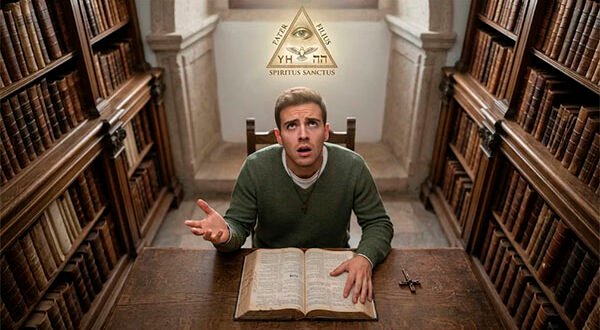
There is a question that, although it may seem simple, contains one of the deepest mysteries of the entire Christian faith: Is Jesus Christ the Son of God, or is He God Himself?
Some people answer that Jesus is the Son of God, as though this meant that He is inferior to the Father. Others affirm that Jesus is God, but seem to forget that He Himself constantly spoke of His Father, addressed Him in prayer, and declared that He had been sent by Him. And there are those who consider these two statements contradictory.
However, the Catholic faith teaches something much deeper: Jesus Christ is truly the Son of God and truly God. He is not an extraordinary creature, a prophet elevated to divine status, or an intermediate being between God and humanity. He is the eternal God, of the same nature as the Father, who assumed our humanity in order to save us.
Here lies the heart of Christianity. We do not simply believe that God sent an extraordinary man to teach us the way of goodness. We believe that God Himself came to meet us in the person of Jesus Christ.
To understand this truth, we must delve into the mystery of the Most Holy Trinity, listen to the words of Jesus Himself, examine the testimonies of the Apostles, and understand why the Church defended Christ’s divinity from its earliest centuries, even in the face of controversies that threatened to undermine the very foundation of the faith.
The question, therefore, is not merely who Jesus was. It is also who He is, who God is, and what it truly means that the eternal Word became man.
1. The Catholic Church’s Answer: Both Statements Are True
The Catholic answer does not force us to choose between two possibilities. We do not have to decide whether Jesus is the Son of God or whether He is God Himself, because both statements express the same reality from different perspectives.
The Church professes that:
- Jesus Christ is the Son of God: He is the second Person of the Most Holy Trinity, eternally begotten of the Father.
- Jesus Christ is God: He fully possesses the same divine nature as the Father. He is not inferior to Him in divinity.
- Jesus Christ is truly man: He assumed a complete human nature, with a body and rational soul, without ceasing to be God.
This means that Jesus is not the Father, but neither is He a god different from the Father. The Father is God, the Son is God, and the Holy Spirit is God, but they are not three gods: they are three distinct Persons in one unique and indivisible divine nature.
The Catechism of the Catholic Church expresses this with absolute clarity in paragraphs 464 and 469: Jesus Christ is true God and true man. He is not a mixture of both natures, nor is He a being who is half divine and half human.
Here we must pause over a fundamental distinction: a person is one thing, and a nature is another.
Nature answers the question, “What is it?” Person answers the question, “Who is it?”
In Jesus Christ there is one Person, the divine Person of the Son, and two natures: divine and human.
That is why we can affirm that Jesus experiences hunger, feels tiredness, weeps, suffers, and truly dies as a man, while also forgiving sins, ruling over creation, and possessing the eternal glory that belongs to God.
It is not two different subjects acting within the same body. It is the same Jesus Christ who acts according to His divine nature or according to His human nature.
This truth constitutes one of the fundamental pillars of Catholic Christology.
2. What Does It Really Mean That Jesus Is the Son of God?
To understand this question, we must abandon an overly human interpretation of the word “Son.”
When we hear that Jesus is the Son of God, we may unconsciously imagine a relationship similar to that between a human father and son: a father who exists first and subsequently has a son.
But the generation of the Son of God does not take place in time.
The Father did not exist for an eternity without the Son and then beget Him at some later moment. The Son is eternally begotten of the Father. There was never a moment when the Father existed without the Son.
This is one of the essential truths of the Trinitarian faith.
The Son does not begin to exist when the Father begets Him. He is eternally begotten of the Father and has always existed.
The Gospel of Saint John begins with these extraordinary words:
“In the beginning was the Word, and the Word was with God, and the Word was God” (John 1:1).
The evangelist does not say that the Word began to exist in the beginning. He says that He already existed.
Nor does he say that the Word was a creature close to God. He expressly affirms that the Word was God.
And a few verses later we find an even more astonishing statement:
“And the Word became flesh and dwelt among us” (John 1:14).
This is the biblical foundation of the Incarnation.
The eternal Son of God assumed our human nature and entered history. He who existed before all ages was born of a woman in Bethlehem. He who created the universe accepted being held in human arms. He who is eternal experienced our temporal existence.
That is why, when we speak of Jesus, we are not speaking about a man who managed to become God, but about God the Son who truly became man.
Was the Son Created by the Father?
No. This question is particularly important because it constitutes one of the oldest doctrinal errors concerning the identity of Jesus Christ.
The Church teaches that the Son is begotten, not created.
The difference is essential:
- What is created receives its existence from God and belongs to the order of creatures.
- The Son is eternally begotten of the Father and possesses the same divine nature.
When we say that the Father begets the Son, we are not speaking of a biological process, a separation, or a division of the Godhead. We are using human language to express an eternal reality that surpasses our ability to comprehend.
The Son eternally receives from the Father the fullness of the one divine nature. He does not receive an inferior divinity or a portion of God.
That is why the Nicene Creed uses a fundamental expression: “God from God, Light from Light, true God from true God, begotten, not made, consubstantial with the Father.”
The word “consubstantial” means precisely that the Son shares the same divine substance as the Father.
They are not two similar divine beings. They are distinct Persons who possess one unique and indivisible divinity.
3. Where Does Jesus Say That He Is God? The Words of the Gospel Itself
One of the objections frequently raised is the following: if Jesus is God, why did He not simply say clearly, “I am God”?
This question deserves a serious answer.
The Gospels do not present Jesus as constantly pronouncing that exact formula. However, they contain statements, actions, and declarations about His identity which, considered in their Jewish context and in the light of the whole of revelation, manifest His divine nature.
Let us examine some of the most important ones.
“I and the Father Are One”
In the Gospel of Saint John, we find one of the most significant declarations:
“I and the Father are one” (John 10:30).
This is not simply a union of wills similar to that which can exist between two people who share the same mission.
The context is revealing. Jesus is speaking about His sheep, the eternal life He gives them, and the fact that no one can snatch them out of His hand. He then declares that no one can snatch them out of the Father’s hand either.
His listeners understand the gravity of His words and pick up stones to stone Him.
Jesus’ unity with the Father does not mean that they are the same Person. It means that the Son fully shares the Father’s divinity.
Trinitarian doctrine enables us to understand this statement without confusing the Persons: the Father and the Son are personally distinct, but one in divine nature.
“Before Abraham Was, I AM”
Another extraordinary passage appears in John 8:58.
Jesus declares:
“Truly, truly, I say to you, before Abraham was, I AM.”
Let us carefully observe this expression.
Jesus does not simply say that He existed before Abraham. He uses the expression “I AM.”
This declaration recalls the episode of the burning bush, when God reveals His name to Moses:
“I AM WHO I AM” (Exodus 3:14).
In the context of the Gospel, Jesus’ statement goes far beyond a simple claim to pre-existence. It manifests an identity and an existence that transcend time.
Once again, His listeners react with hostility.
The Church recognizes in this passage particularly important testimony to Christ’s divinity and eternal pre-existence.
“Whoever Has Seen Me Has Seen the Father”
During the Last Supper, Philip asks Jesus to show them the Father.
The answer is astonishing:
“Whoever has seen me has seen the Father” (John 14:9).
Jesus is not claiming that He is personally the Father. He is revealing that the Father is perfectly made known in the Son.
The Son is the perfect image of the Father and His definitive revelation.
Saint Paul develops this same truth when he presents Christ as “the image of the invisible God” (Colossians 1:15).
We must not interpret this expression as though Jesus were an external representation of God, like a painting that reminds us of an absent person. The Son shares the same divine nature and reveals the Father because He eternally proceeds from Him.
Thomas: “My Lord and My God!”
Perhaps one of the most explicit confessions of Christ’s divinity is found at the end of Saint John’s Gospel.
After the Resurrection, Thomas encounters Jesus. He had doubted the testimony of the other disciples and wanted to verify personally that the Lord had risen.
When Jesus appears before him, Thomas responds:
“My Lord and my God!” (John 20:28).
This is an extraordinary confession.
Thomas does not simply call Jesus teacher, prophet, or messenger of God. He recognizes Him as his Lord and his God.
Jesus does not reject this confession or correct Thomas for attributing to Him a dignity that would not belong to Him. On the contrary, He continues by speaking about the faith of those who will believe without having seen.
This episode is particularly important because it shows how the apostolic faith recognizes in the Risen Christ the same God who became man.
The Prologue of Saint John: An Unambiguous Statement
Let us return to the beginning of the Fourth Gospel.
“The Word was God” (John 1:1).
We are not dealing with an interpretation constructed centuries later to elevate Jesus’ status.
The statement belongs to the Gospel text itself and forms part of the apostolic testimony that the Church has received and transmitted.
The Catechism, in paragraph 454, expressly recalls this teaching: the name Son of God signifies the unique and eternal relationship of Jesus Christ with His Father, and the Son Himself is God.
4. If Jesus Is God, Why Did He Pray to the Father?
This is probably one of the most interesting questions and, at the same time, one of those that causes the greatest confusion.
If Jesus is God, why did He spend entire nights in prayer? Why did He withdraw to solitary places to speak with the Father? Why did He teach His disciples to pray?
The answer lies in the mystery of the Incarnation.
Jesus is truly God, but He is also truly man.
He did not assume a human appearance or act out a fictitious humanity. He became man with a real body, a rational soul, a human intellect, and a human will.
Therefore, His life of prayer was not a theatrical performance.
Jesus truly prayed as a man, addressing the Father, with whom He has maintained a personal and divine relationship from all eternity.
The distinction between the Father and the Son is real. They are not the same Person.
When Jesus prays, He is not speaking to Himself as though He were playing two different characters. The Son addresses the Father.
This is particularly evident in Gethsemane:
“My Father, if it is possible, let this cup pass from me; nevertheless, not as I will, but as you will” (Matthew 26:39).
These words reveal the depth of His humanity.
Christ experiences anguish in the face of suffering and death. His human will is not abolished by His divinity. Nevertheless, it remains perfectly united to the divine will.
Here we encounter one of the great teachings of Christianity: God did not save us by remaining distant from our suffering. The Son assumed our human condition and accepted the path of obedience all the way to the Cross.
And What About When Jesus Says That the Father Is Greater Than He Is?
In John 14:28, we find these words:
“The Father is greater than I.”
Some use this verse to argue that Jesus cannot truly be God because He Himself acknowledges the Father’s superiority.
But this interpretation does not take into account the whole of Christian Christological doctrine.
The Church distinguishes between Christ’s divine nature and the human condition He assumed in the Incarnation.
According to His divinity, the Son is consubstantial with the Father, equal to Him in glory and majesty.
According to His humanity, Christ has accepted the condition of a servant, humiliation, and the obedience proper to His redemptive mission.
Saint Paul expresses this reality in Philippians 2:6-8, when he teaches that Christ, existing in the form of God, took the form of a servant and humbled Himself, becoming obedient unto death, even death on a Cross.
This does not mean that He ceased to be God or that His divinity diminished. It means that He freely assumed our humanity and lived filial obedience within it.
Therefore, Christ’s humility does not prove that He is less than God; it reveals just how far His love for us went.
5. The History of a Truth Defended Since the Earliest Centuries: The Council of Nicaea
If Christ’s divinity appears so clearly in Scripture, why was it necessary for the Church to hold councils to define it?
Because from the earliest centuries, interpretations emerged that questioned the true identity of the Son of God.
One of the most important controversies was that led by Arius, a presbyter from Alexandria who maintained that the Son was not eternal like the Father, but had been created by Him.
According to this position, Jesus Christ would not be God in the same sense as the Father, but rather the first and highest of created beings.
The issue was not a secondary one. If Christ were a creature, however extraordinary, the Christian faith would be profoundly altered.
The Church understood that accepting this teaching would mean changing the meaning of the Incarnation and salvation.
The Council of Nicaea in the Year 325
In the year 325, the First Ecumenical Council of Nicaea was held, convened during the reign of Emperor Constantine.
Its principal purpose was to address the Arian controversy and clearly express the Church’s faith concerning the identity of the Son.
The Council Fathers proclaimed that Jesus Christ is:
- God from God.
- Light from Light.
- True God from true God.
- Begotten, not created.
- Consubstantial with the Father.
The Greek word used to express this last affirmation was homoousios, meaning “of the same substance” or “consubstantial.”
Why was this word so important?
Because it made it possible to exclude any interpretation according to which Jesus was a creature, however exalted He might be considered.
The Son does not belong to the order of creatures. He is eternal, shares the Father’s divine nature, and has existed from all eternity.
The Catechism of the Catholic Church recalls this definition in paragraph 465 and reminds us that Nicaea expressly rejected the doctrine claiming that the Son had come into existence from nothing.
The Creed We Continue to Profess
The profession of faith of Nicaea was subsequently developed at the First Council of Constantinople, held in the year 381.
From this tradition comes the Nicene-Constantinopolitan Creed that Catholics proclaim at Holy Mass:
“I believe in one Lord Jesus Christ, the Only Begotten Son of God, born of the Father before all ages: God from God, Light from Light, true God from true God, begotten, not made, consubstantial with the Father, through whom all things were made.”
These words are not a decorative formula or a routine repetition.
Every time we pronounce them, we are confessing a truth that the Church defended against those who sought to reduce Christ to a creature.
And there is something particularly significant here: when we pray the Creed, we are not inventing our own interpretation of Jesus. We are professing the apostolic faith that has been received, transmitted, and defined by the Church.
The Council of Chalcedon: True God and True Man
The defence of Christ’s identity continued throughout the following centuries.
In the year 451, the Council of Chalcedon formulated a fundamental declaration: Jesus Christ is one Person in two natures, divine and human.
Both natures remain without confusion, without change, without division, and without separation.
This definition protected two inseparable truths:
- Jesus is fully God.
- Jesus is fully man.
We cannot sacrifice either of them.
If we deny His divinity, we destroy the mystery of the Incarnation.
If we deny His humanity, we empty His birth, suffering, death, and true solidarity with us of their meaning.
The Church therefore confesses that the One who was born of Mary is the same eternal Son of God.
The Catechism recalls this teaching in paragraph 467, reproducing the doctrine of Chalcedon.
6. How Can Jesus Be God If He Was Born of Mary?
Here we encounter another extraordinary aspect of our faith.
Jesus was born in Bethlehem. He was a real child. He needed care, nourishment, and protection. He grew up in a human family and lived for years in Nazareth.
How can someone who was born at a specific moment in history be eternal?
The answer lies once again in the Incarnation.
Jesus did not begin to exist when He was born of Mary. His human existence began at that moment in history, but His divine Person has existed from all eternity.
The birth in Bethlehem is not the beginning of the Son’s existence, but the beginning of His human life among us.
The Gospel of Saint John expresses this in a sublime way:
“And the Word became flesh and dwelt among us” (John 1:14).
The subject of the Incarnation is the eternal Word.
It was not a man who subsequently received divinity. It was the Son of God who assumed a human nature in the womb of the Virgin Mary through the power of the Holy Spirit.
That is why Mary is truly the Mother of God.
This statement, which may seem surprising, was solemnly defended at the Council of Ephesus in the year 431.
Why?
Because Mary is not merely the mother of a human nature separated from God. She is the mother of Jesus Christ, who is one divine Person.
Mary is not prior to God, nor is she the mother of the divine nature. But the One to whom she gave birth is truly God made man.
That is why the Church proclaims her as Theotokos, a Greek expression meaning “Mother of God.”
This truth has an immense spiritual consequence: God chose to enter our history through the free consent of a woman.
The Almighty accepted becoming small. The Creator accepted receiving from a creature the human nature He had decided to assume.
And all of this was for our salvation.
7. Why Was It Necessary for Jesus Christ to Be Truly God?
We might wonder whether this question really matters so much.
Would it not be enough to consider Jesus a great spiritual teacher, an extraordinary prophet, or a man who showed us the way of love?
From the Christian perspective, no.
Christ’s divinity is not a secondary detail of doctrine. It is the foundation of our understanding of salvation.
Because Only God Can Fully Reconcile Us with Himself
Sin is not simply a moral mistake or socially harmful behaviour.
It is a rupture in man’s relationship with God.
Humanity needs to be reconciled with its Creator, freed from sin, and restored to divine communion.
Jesus Christ does not come merely to teach us how to behave better. He comes to save us.
On the Cross, the Son of God offers His life for us. His sacrifice has a redemptive value that cannot be compared with that of any merely human sacrifice.
But we must also understand that salvation is not accomplished simply because Jesus is God.
It is precisely because He is true God and true man that He can be our mediator and representative.
As man, He can offer truly human obedience to the Father.
As God, His Person possesses the divine dignity that makes His self-offering the redemptive sacrifice of Christ.
Because God Wanted to Reveal His Face to Us
In the Old Testament, God revealed Himself through events, prophets, words, and signs.
But in Jesus Christ we find the definitive revelation of the Father.
The Letter to the Hebrews begins by stating:
“In many and various ways God spoke of old to our fathers by the prophets; but in these last days he has spoken to us by a Son” (Hebrews 1:1-2).
Jesus is not simply another messenger in a long succession of those who have been sent.
He is the Son.
In Him, God Himself comes to meet us.
That is why, when we contemplate Jesus’ mercy towards sinners, His compassion for the sick, His patience with His disciples, and His self-giving on the Cross, we are contemplating God’s love manifested in our history.
Because Only Christ Can Communicate Divine Life to Us
Christian salvation does not consist merely in avoiding punishment or receiving a reward after death.
It consists in entering into communion with God.
Saint Peter speaks of our calling to become “partakers of the divine nature” (2 Peter 1:4).
This participation does not mean that we become gods by nature or lose our human identity.
It means that, through grace, we are elevated into a supernatural communion with God.
The eternal Son became man so that we might receive God’s life.
This is one of the deepest dimensions of the Incarnation: God became close to us in order to raise us up to Himself.
8. What Did the First Christians Say About the Divinity of Jesus?
Faith in Christ’s divinity did not suddenly appear in the fourth century.
We find it already in the testimonies of the New Testament and in the earliest Christian communities.
The Apostles did not present Jesus as a mere moral teacher whose memory should be preserved.
They proclaimed Him as the risen Lord, the Son of God, and the Saviour.
A significant example appears in Saint Paul’s First Letter to the Corinthians:
“Yet for us there is one God, the Father, from whom are all things and for whom we exist, and one Lord, Jesus Christ, through whom are all things and through whom we exist” (1 Corinthians 8:6).
This formulation is particularly important because Paul maintains monotheism while simultaneously including Jesus Christ in the divine identity through his confession of Him as Lord and His participation in creation.
We also find fundamental testimony in the Christological hymn of Philippians 2:6-11.
Saint Paul presents Christ as existing in the form of God, assuming the form of a servant, and humbling Himself even to death on a Cross.
He then proclaims His exaltation and declares that every knee must bow before Him and every tongue confess that Jesus Christ is Lord, to the glory of God the Father.
This passage shows that the humility of the Incarnation and the divine glory of Christ are not contradictory.
Saint Ignatius of Antioch
Among the earliest Christian testimonies after the Apostles, we find the writings of Saint Ignatius of Antioch, bishop and martyr of the early second century.
In his letters, we find an explicit confession of Jesus Christ as God.
In his Letter to the Ephesians, Ignatius refers to Jesus Christ as “our God.”
This testimony has important historical value because it shows that the confession of Christ’s divinity was present in the life of the Church long before the Council of Nicaea.
Nicaea did not invent the divinity of Jesus: it solemnly defined a truth that the Church already professed and needed to protect against contrary interpretations.
Saint Athanasius of Alexandria
In the fourth century, Saint Athanasius was one of the principal defenders of the Son’s divinity against Arianism.
His defence was not simply a dispute over words.
He understood that if the Son were not truly God, He could neither communicate divine life to us nor fully accomplish the work of our salvation.
In his writings on the Incarnation of the Word, he developed the relationship between Christ’s divinity, the restoration of humanity, and our participation in divine life.
His testimony is essential to understanding the continuity between the apostolic faith and the doctrine defined at Nicaea.
9. Three Errors We Must Avoid When Speaking About Jesus Christ
Doctrinal clarity is particularly necessary in an age when religious questions are frequently simplified to the point of losing their true meaning.
It is worth identifying three common errors.
First Error: Jesus Was a Man Who Was Elevated to the Status of God
This interpretation denies the eternal pre-existence of the Son.
Jesus did not begin as an extraordinary man and subsequently become God.
He is the eternal Son who assumed our humanity.
His divinity is not a reward for His human merits.
Second Error: Jesus Is the Father
This confusion is also incompatible with the Catholic faith.
The Father and the Son are distinct Persons.
Jesus addresses the Father in prayer, is sent by the Father, and constantly speaks about His filial relationship with Him.
If they were the same Person, the personal distinction that revelation teaches us would disappear.
The Most Holy Trinity does not mean that God plays three different roles. It means that in the one God there are eternally three truly distinct Persons: Father, Son, and Holy Spirit.
Third Error: Jesus Is a God Inferior to the Father
This was precisely one of the central issues of Arianism.
The Church rejects the idea that the Son possesses a lesser divinity or was created at a particular moment.
The Son is eternal and consubstantial with the Father.
There are no three degrees of divinity and no hierarchy of gods.
There is one God in three Persons.
10. What Does Believing That Jesus Is God Mean in Today’s World?
We might consider all these questions to belong exclusively to the theological debates of the first centuries.
However, they have extraordinary importance for Catholics today.
We live in a society that may admire Jesus, quote some of His teachings, and even acknowledge His historical influence, but which is not always willing to accept who He truly is.
It is relatively easy to present Jesus as a defender of brotherhood, a teacher of tolerance, or an example of solidarity.
All these dimensions can indeed be found in His life and teaching.
But reducing Him to these aspects means leaving out what is essential.
Jesus Christ did not come merely to teach us human values: He came to save us from sin and reconcile us with God.
We cannot separate His teachings from His divine identity.
A Christianity Without Christ’s Divinity Is No Longer Fully Christian
If Jesus is merely a teacher, we can select His teachings according to our personal preferences.
We can accept some of His words and reject others. We can turn Him into a symbol of our own convictions.
But if Jesus is God, the situation changes radically.
His words are not mere religious opinions. They are words that demand our faith, our conversion, and our obedience.
When Christ says:
“I am the way, and the truth, and the life; no one comes to the Father, but by me” (John 14:6),
He is not proposing one philosophy among many.
He is revealing a fundamental truth about salvation.
When He forgives sins, He is not merely offering psychological comfort.
When He institutes the Eucharist, He is not simply organising a symbolic remembrance of His death.
When He commands His Apostles to preach the Gospel, He is not transmitting a human ideology.
He is communicating the will of God.
That is why Christ’s divinity completely transforms the way we live our faith.
Prayer Changes When We Understand Who Jesus Is
If Jesus were merely a historical figure, our relationship with Him would depend on memory and admiration.
But if He is true God, our relationship with Him is a living relationship.
We can adore Him, ask His forgiveness, entrust our worries to Him, and surrender our lives to Him.
Christian prayer does not consist merely in reflecting on the teachings of a man who lived in the past.
It consists in entering into communion with the risen Christ.
That is why the Church has preserved the worship of Jesus Christ as Lord since its earliest days.
And that is why the Eucharist occupies a central place in Catholic life: in it we truly receive Christ, not as a mere remembrance of someone who lived two thousand years ago, but as the living and glorious Lord.
The Family Must Pass On Who Jesus Christ Truly Is
This truth also has consequences for the Christian education of children.
It is not enough to teach them that Jesus was good, that He helped those in need, or that He spoke about love.
All of that is important, but we must also teach them that Jesus is the eternal Son of God, that He died for our sins, and that He truly rose again.
Children need to understand that the Christian faith is not merely a collection of rules for behaving correctly.
It is a personal relationship with God.
When a family prays, participates in Holy Mass, reads the Gospel, and teaches its children to turn to Jesus Christ, it is transmitting something far deeper than a cultural tradition.
It is transmitting the faith.
11. How Can We Personally Deepen Our Understanding of This Mystery?
Understanding Christ’s divinity intellectually is fundamental, but faith cannot remain a theoretical affirmation.
The mystery of Christ must transform our lives.
We can begin with some concrete practices.
1. Read the Gospel of Saint John.
It is particularly advisable to meditate slowly on its opening chapters. There we find some of the deepest statements about the identity of the Word, His relationship with the Father, and His saving mission.
The aim is not to read quickly, but to pause over every word.
2. Pray the Creed attentively.
When we proclaim “God from God, Light from Light, true God from true God,” we should remember what we are affirming.
These are not ancient words unrelated to our lives. They are the foundation of our faith.
3. Adore Christ in the Eucharist.
Eucharistic adoration helps us understand that Jesus is not simply someone we admire.
He is our Lord.
Before the Blessed Sacrament, we can acknowledge our own littleness, give thanks for His self-offering, and renew our trust in Him.
4. Contemplate the humanity of Christ.
We must not study His divinity while forgetting His humanity.
Let us contemplate His birth, His hidden life in Nazareth, His preaching, His miracles, His agony in Gethsemane, and His death on the Cross.
The same God who sustains the universe chose to experience our human existence.
5. Learn to Distinguish Between Faith and Personal Opinions.
In an age of abundant religious information, it is important to turn to the Catechism, Sacred Scripture, and the teachings of the Magisterium.
Not every interpretation we find on the internet represents Catholic doctrine.
The identity of Jesus Christ is too important to be left in the hands of improvised explanations.
12. The Mystery We Must Contemplate: God Became Man for Us
There is one final dimension of this truth that deserves special reflection.
Sometimes we study the divinity of Jesus Christ from an exclusively intellectual perspective: we analyse biblical texts, study councils, compare doctrines, and examine theological formulations.
All of this is necessary.
But we run the risk of forgetting that we are speaking about a mystery of love.
The eternal Son of God did not assume our humanity out of necessity.
He did not need our companionship, our recognition, or our praise in order to be eternally happy in the communion of the Trinity.
He chose to come to meet us out of love.
The prologue of Saint John reminds us that the Word became flesh.
Saint Paul teaches us that Christ humbled Himself and accepted death on the Cross.
And Jesus Himself, during the Last Supper, spoke these words:
“Greater love has no man than this, that a man lay down his life for his friends” (John 15:13).
We are not dealing with an abstract idea.
We are contemplating the mystery of a God who loves us to the very end.
The One who was born in Bethlehem is the same One who created the stars.
The One who wept at the tomb of Lazarus is the same One who has power over life and death.
The One who was scourged and crowned with thorns is the same Lord before whom the angels bow down.
The One who died on the Cross is the same One who rose gloriously and lives forever.
And this same Jesus Christ continues to call men and women to conversion, faith, and holiness.
Conclusion: Jesus Is the Son of God Because He Is God from All Eternity
Let us return to the original question:
Is Jesus Christ the Son of God, or is He God Himself?
The answer of the Catholic Church is unequivocal:
Jesus Christ is the eternal Son of God, true God and true man, the second Person of the Most Holy Trinity, consubstantial with the Father, and born of Mary according to His humanity.
He is not the Father, but He is God.
He is not a creature, but the eternal Son.
He is not a man who subsequently received divinity, but God the Son who assumed our human nature.
This is the faith proclaimed by the Apostles, defended by the Fathers of the Church, defined by the ecumenical councils, and transmitted by the saints throughout the centuries.
That is why, when a Catholic looks at a crucifix, he does not simply contemplate the execution of an innocent man.
He contemplates the Son of God made man, who freely gave His life for our salvation.
When he contemplates the Child of Bethlehem, he does not see merely a newborn baby.
He sees the eternal Word who has entered history.
And when he kneels before the Blessed Sacrament, he does not kneel before an empty symbol, but before Jesus Christ, true God and true man, truly present in the Eucharist.
Perhaps the best way to conclude this reflection is to return to the words of Saint Thomas, who, after his encounter with the risen Christ, uttered one of the most beautiful professions of faith in all of Scripture:
“My Lord and my God!” (John 20:28).
May these words be not merely a phrase that we repeat, but a genuine profession of faith.
Because believing that Jesus is God does not simply mean accepting a doctrinal definition.
It means recognizing Him as the Lord of our existence, entrusting our lives to Him, obeying His commandments, receiving His grace, and walking towards holiness.
Jesus is not simply someone who speaks to us about God. Jesus is God who has come to seek us.
And that is precisely the extraordinary news that Christianity has been proclaiming to the world for two thousand years.
Doctrinal and Biblical Sources for Further Study
- Sacred Scripture: John 1:1-18; John 8:58; John 10:30; John 14:6-11; John 20:28; Philippians 2:6-11; Colossians 1:15-20; Hebrews 1:1-12.
- Catechism of the Catholic Church: paragraphs 422-455 (Jesus Christ, the Only Son of God); 456-483 (the Incarnation, true God and true man).
- Council of Nicaea (325): profession of faith concerning the divinity and consubstantiality of the Son.
- Council of Ephesus (431): doctrine concerning Mary’s divine motherhood.
- Council of Chalcedon (451): definition of the two natures of Jesus Christ in the one Person of the Word.
- Saint Ignatius of Antioch: Letter to the Ephesians.
- Saint Athanasius of Alexandria: On the Incarnation of the Word.
To explore the definition of Nicaea and its significance further, Saint John Paul II’s catechesis of 9 March 1988 on the conciliar definitions of faith in Jesus Christ is also particularly useful.