Related Articles



An uncomfortable question that demands a clear, faithful, and courageous answer
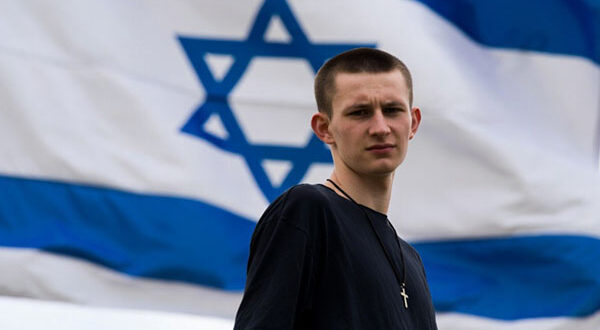
We live in a time where words carry weight, yet are often emptied of meaning. “Zionism,” “Israel,” “chosen people,” “Promised Land”… these are terms loaded with history, pain, politics, and also—above all—theology.
That is why this question is not superficial. It is not ideological. It is deeply spiritual:
Can a Catholic truly be a Zionist?
The answer requires rigor, love for truth, and fidelity to the Tradition of the Church. Opinions are not enough. We need doctrine, history, and discernment.
1. First of all: what is Zionism, really?
Zionism is not simply “loving Israel” or “respecting the Jewish people.” It is a modern political movement, born in the 19th century, whose goal is the creation and preservation of a Jewish state in the historic land of Israel.
Its key figure was Theodor Herzl, who promoted a project that was essentially secular and nationalist, not religious.
Here is the first important point:
👉 Zionism is not a theological category, but a political one.
And that completely changes the framework.
2. The fundamental error: confusing biblical Israel with political Israel
Many Christians—especially those influenced by certain Protestant currents—make a serious mistake:
👉 Identifying the modern State of Israel with the chosen people of the Bible.
But the Church teaches something very different.
The true Israel, according to the Catholic faith
Saint Paul explains it clearly:
“Not all who are descended from Israel are Israel” (Romans 9:6)
And even more explicitly:
“If you belong to Christ, then you are Abraham’s seed, and heirs according to the promise” (Galatians 3:29)
This means something revolutionary:
👉 The true people of God is no longer defined by blood, but by faith in Christ.
The Church does not replace Israel…
The Church is the fulfillment of Israel.
3. The traditional position of the Church
For centuries, the Church has maintained a consistent teaching:
- The promises made to Israel are fulfilled in Christ
- The Old Covenant finds its fullness in the New Covenant
- There are not two parallel peoples of salvation
Therefore, the idea that there exists a “divine plan” independent for a modern political Israel is theologically problematic.
👉 It is not part of traditional Catholic doctrine.
4. So… can a Catholic be a Zionist?
Here we must be very precise.
✔️ What IS compatible with the Catholic faith
A Catholic can:
- Love the Jewish people as brothers in the history of salvation
- Reject antisemitism (which is a grave sin)
- Recognize the historical role of Israel in Revelation
- Desire peace and justice in the Holy Land
❌ What is NOT compatible with traditional Catholic faith
A Catholic cannot, without falling into doctrinal confusion:
- Identify the State of Israel with the Kingdom of God
- Believe that salvation comes through belonging to the Jewish people
- Affirm that the Old Covenant remains valid without Christ
- Adopt a theological view of Zionism as a “parallel divine plan”
👉 This would, in essence, deny that Christ is the definitive fulfillment.
5. The spiritual danger of “Christian Zionism”
Although it originates mainly in Protestant environments, this idea has spread among many Catholics:
👉 The belief that politically supporting Israel is a religious obligation.
But this is dangerous for several reasons:
1. It displaces Christ from the center
Christianity ceases to be Christ-centered and becomes geopolitical.
2. It distorts salvation history
It returns to a “carnal” reading of biblical promises.
3. It reduces faith to ideology
Faith ceases to be universal and becomes a political stance.
6. Christ: the true center of everything
This is the key.
It is not Jerusalem that saves.
It is not a nation that redeems.
It is not a land that sanctifies.
👉 It is Christ.
As He Himself said:
“My kingdom is not of this world” (John 18:36)
And also:
“Destroy this temple, and in three days I will raise it up” (John 2:19)
The true temple is no longer a place.
It is His own Body.
7. A pastoral perspective: how to live this today
This topic is not merely theoretical. It has practical consequences.
1. Avoid extremes
- ❌ Neither antisemitism
- ❌ Nor political idolatry
👉 The Catholic loves truth, not sides.
2. Form your conscience
Do not be carried away by social media, propaganda, or emotions.
👉 Study Scripture and the Magisterium.
3. Pray for the conversion of all
This is key and often forgotten.
👉 The greatest act of love toward the Jewish people is to desire their encounter with Christ.
Saint Paul lived this way:
“My heart’s desire and prayer to God for them is that they may be saved” (Romans 10:1)
4. Live your faith with coherence
The issue is not whether you are “pro-Israel” or “pro-Palestine.”
👉 The issue is: are you truly of Christ?
8. Conclusion: a clear answer
Can one be Catholic and Zionist?
👉 It depends on what you mean by Zionism.
- If it is a prudential political stance → it may be debatable
- If it is a theological stance → it is not compatible with traditional Catholic faith
Because in the end, everything comes down to one central truth:
👉 Christ is the fulfillment of all promises.
Nothing and no one can take His place.
9. A final call
Now more than ever, the world needs Catholics who are firm, well-formed, and courageous.
Not ideologues.
Not trend followers.
Not slogan Christians.
👉 But disciples of Christ.
Because only from Him can we look at history—including that of Israel—with truth, charity, and hope.