Related Articles

We live in a culture that values the exceptional: great moments, intense experiences, visible achievements. We are taught—almost without realizing it—to expect that what truly matters will come wrapped in something extraordinary. Yet the wisdom of the Catholic Church, rooted in centuries of tradition, invites us to look in another direction: toward the everyday, the repetitive, the seemingly “normal.” There, precisely there, a profound mystery is hidden.
The so-called Ordinary Time of the liturgical calendar is not, as its name might suggest, a time without importance. Quite the opposite. It is the space where Christian life unfolds with the greatest authenticity. It is the ground where grace acts in silence, transforming what is small into something eternal.
- What is Ordinary Time, really?
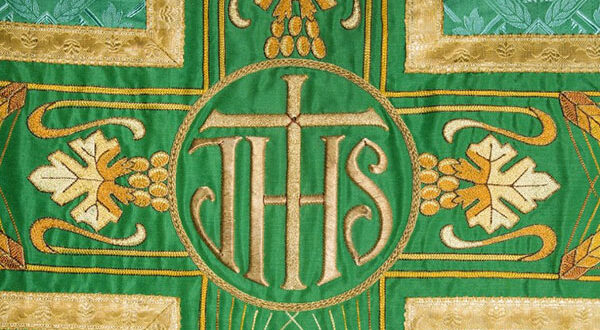
Ordinary Time is the longest period of the liturgical year. It extends between the strong seasons—Advent, Christmas, Lent, and Easter—and is organized into numbered weeks. The term “ordinary” comes from the Latin ordo, meaning “order” or “sequence,” not “common” or “insignificant.”
This time is dedicated to contemplating the public life of Christ: His teachings, His miracles, His encounters with people. It is, so to speak, the time of the “daily life of Jesus.” And this already gives us a fundamental key: God has chosen to reveal Himself not only in extraordinary moments, but in the routine of human existence.
- God’s logic: the small as the path to the great
From a theological perspective, Ordinary Time reflects one of the most surprising constants of divine action: God works through the small.
The Incarnation itself is the greatest example. The Son of God did not come into the world in a context of political grandeur or visible spectacle, but in the humility of a manger, within a simple family, in an unknown village.
Jesus spent most of His life in what we might call “ordinary time”: working, living, praying, growing. Thirty years of hidden life compared to three years of public ministry.
This is not accidental. It is deeply revealing.
“The Kingdom of God is like a mustard seed, which, when sown upon the ground, is the smallest of all the seeds on earth; yet once it is sown, it grows…” (Mark 4:31–32)
Divine pedagogy teaches us that the ordinary is not an obstacle to holiness, but its privileged path.
- The hidden mystery: the sacramentality of the everyday
In Catholic theology, we speak of a fundamental reality: the created world is capable of revealing God. This reaches its fullness in the sacraments, but it extends to the entire life of the believer.
Ordinary Time educates us in this sacramental vision of reality. It invites us to discover that:
A conversation can be a space of charity.
Work can be an offering.
Rest can be an act of trust in God.
Routine can be a school of fidelity.
Here a forgotten virtue comes into play: perseverance. It is not about doing extraordinary things, but about doing ordinary things extraordinarily well.
- A spirituality for the 21st century
In today’s context—marked by haste, constant distraction, and the search for stimulation—the message of Ordinary Time is profoundly countercultural.
We struggle to slow down. We struggle to dwell in the present. We struggle to find meaning in repetition.
And yet, that is precisely where God awaits us.
The spirituality of Ordinary Time offers very concrete answers to the wounds of our time:
a) In the face of anxiety: daily fidelity
You don’t need to change the world today. You only need to be faithful today.
b) In the face of emptiness: hidden meaning
What you do each day has eternal value if it is united to God.
c) In the face of distraction: attention
God manifests Himself in the here and now, not in an abstract idea of the future.
- Christ in the everyday: a real presence
Jesus not only lived the ordinary, He sanctified it. Every gesture of His, every word, every encounter was filled with the presence of the Father.
This radically changes the way we see life:
There are no moments “without God.”
There are no insignificant actions if they are done with love.
There is no empty routine if it is lived in grace.
“Whatever you do, do it from the heart, as for the Lord and not for men” (Colossians 3:23)
This verse summarizes the spirituality of Ordinary Time: to transform every action into an act of love offered to God.
- Practical applications: how to live the extraordinary in the ordinary
Moving from theory to concrete life is essential. Here are some pastoral keys to embody this spirituality:
- Sanctify your work
It is not only about fulfilling duties, but about offering them. Before starting your day, make a brief prayer: “Lord, I offer You this day.”
- Rediscover routine
Instead of seeing it as a burden, see it as a space for inner growth. Repetition shapes the soul.
- Practice the presence of God
Small reminders throughout the day: a short prayer, a brief pause, an inward glance.
- Live with intention
Do not act on autopilot. Put awareness, love, and meaning into every action.
- Embrace simplicity
You do not need extraordinary experiences to become holy. You need fidelity.
- The holiness of the everyday: a universal call
The Second Vatican Council strongly reaffirmed an ancient truth: all are called to holiness. It is not a privilege for a few, but a universal vocation.
And that holiness is not built in isolated moments, but in the daily fabric of life.
Ordinary Time is, in this sense, the great laboratory of holiness. It is where the authenticity of our faith is tested.
- A conclusion that changes our perspective
Perhaps the greatest mistake we can make is to think that the spiritual life happens only in special moments: a solemn Mass, a retreat, an intense experience.
But reality is deeper—and more demanding:
God dwells in the ordinary.
The mystery is not only in the extraordinary, but hidden in every moment lived with love, faith, and self-giving.
Ordinary Time is not a “filler season.” It is the time when God works in silence, when the soul grows without noise, when grace transforms the everyday into something eternal.
In the end, the question is not whether our life is extraordinary.
The real question is:
Are we discovering the extraordinary that God has hidden within the ordinary?