Related Articles

The Great Spiritual Crisis of Our Time and the Urgent Call to Return to God
We live in a paradoxical age. Never before has humanity had access to so much information, so much technology, so many material comforts, and so many possibilities for communication. Yet at the same time, there has never been such a widespread sense of emptiness, anxiety, loneliness, and loss of meaning.
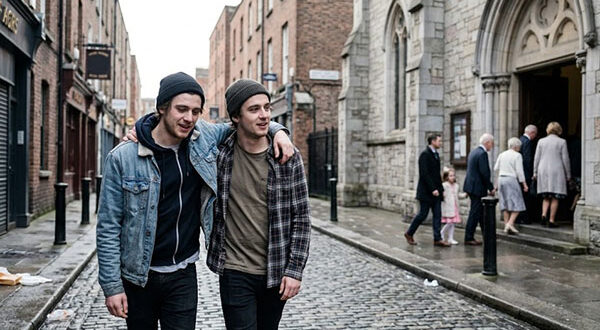
What is most surprising is that this reality does not affect only those who declare themselves atheists or agnostics. It also reaches many baptized Catholics. In fact, one of the most troubling phenomena facing the Church today is that countless Catholics continue to identify themselves as believers while living, in practice, as though God did not exist.
They attend Mass occasionally. They maintain certain religious traditions. They celebrate baptisms, weddings, and funerals in the Catholic Church. They may even pray from time to time. Yet when it comes to making important decisions, organizing priorities, managing time, facing suffering, or discerning the meaning of life, God seems to be entirely absent.
We are not necessarily speaking about formal apostasy or an explicit rejection of the faith. We are speaking about something more subtle and, precisely for that reason, more dangerous: a faith reduced to a cultural label that no longer transforms one’s existence.
This is one of the deepest spiritual illnesses of our time.
The Church’s Diagnosis: Practical Atheism
Catholic theology distinguishes between theoretical atheism and practical atheism.
The theoretical atheist explicitly denies the existence of God.
The practical atheist, on the other hand, may affirm belief in God while organizing his life as though God did not exist.
This second form is particularly serious because it often goes unnoticed.
Many baptized Catholics would never say:
“I do not believe in God.”
Yet their lives seem to say:
“God has no real influence over my decisions.”
The problem is not merely intellectual.
It is existential.
It is possible to believe with the mind while living with a heart completely distant from God.
That is why Our Lord warns:
“This people honors me with their lips, but their heart is far from me” (Matthew 15:8).
Authentic faith does not consist merely in accepting certain doctrinal truths. It consists in allowing those truths to transform one’s entire life.
A Crisis Foretold
Long before modern secularization, Sacred Scripture already described this temptation.
The people of Israel repeatedly experienced periods of prosperity that eventually led to a dangerous spiritual amnesia.
When difficulties disappeared, the people began to forget God.
Moses solemnly warned:
“Take care lest you forget the Lord your God” (Deuteronomy 8:11).
And he added:
“Lest, when you have eaten and are full, and have built goodly houses and live in them… then your heart be lifted up, and you forget the Lord your God” (Deuteronomy 8:12–14).
These words seem written for our own age.
Western societies have reached levels of material well-being unimaginable to previous generations.
Yet many people have come to believe, consciously or unconsciously, that they no longer need God.
Technology seems to replace Providence.
Medicine seems to replace hope.
Economics seems to replace trust.
Entertainment seems to replace joy.
And social media seems to replace human communion.
But none of these things can take the place of God.
Secularism: The Invisible Religion of Our Time
Many people think that the principal enemy of faith is militant atheism.
In reality, the greatest challenge today is secularism.
What is secularism?
It is a worldview in which God is considered irrelevant to everyday life.
His existence is not necessarily denied.
He is simply removed from real decision-making.
God is relegated to the private sphere.
Religion becomes a personal hobby.
Faith ceases to be the center of existence.
Within this mentality, God may be present for one hour on Sunday but absent during the other one hundred and sixty-seven hours of the week.
This phenomenon has penetrated even many Catholic environments.
When God Ceases to Be the Center
The great spiritual question of our age is not:
“Do you believe in God?”
The real question is:
“Is God truly the center of your life?”
Because one can believe in God and still live centered on oneself.
One can pray and remain a slave to the ego.
One can attend Mass and still place money, pleasure, professional success, or social approval above God.
The First Commandment remains the foundation of all spiritual life:
“You shall love the Lord your God with all your heart, and with all your soul, and with all your mind” (Matthew 22:37).
Notice that Christ does not say part of your heart.
He says all.
Authentic conversion begins when God ceases to occupy a corner of our lives and once again takes His rightful place upon the throne.
The Causes of This Spiritual Indifference
1. Modern Materialism
Contemporary man is surrounded by constant stimuli.
We live obsessed with producing, consuming, buying, and accumulating.
The problem is not possessing material goods.
The Church has never condemned legitimate prosperity.
The problem arises when material goods take the place of God.
Jesus was extraordinarily clear:
“You cannot serve God and mammon” (Matthew 6:24).
Modern idolatry rarely takes the form of pagan statues.
Today it takes the form of bank accounts, professional careers, social prestige, and personal comfort.
2. The Dictatorship of Immediacy
Spiritual life requires patience.
Modern culture demands instant results.
We want immediate answers.
Immediate gratification.
Immediate success.
But God often works slowly.
Prayer requires perseverance.
Sanctification requires years.
Spiritual maturity requires an entire lifetime.
Many people give up because they expect their relationship with God to function like a mobile application.
3. Constant Noise
Never before has it been so difficult to remain in silence.
Mobile phones.
Social media.
Videos.
News.
Messages.
Notifications.
The soul needs spaces of silence in order to hear God.
Without interior silence, the divine voice is drowned out by thousands of human voices.
It is no coincidence that God spoke to the prophet Elijah not in the earthquake nor in the fire, but in a “still small voice” (1 Kings 19:12).
4. The Loss of the Supernatural Sense
One of the most serious tragedies of our time is that many Catholics have lost their awareness of eternity.
Little thought is given to Heaven.
Little thought is given to judgment.
Little thought is given to salvation.
Little thought is given to holiness.
Everything is reduced to the here and now.
But the Christian lives oriented toward a reality infinitely greater.
As Saint Paul reminds us:
“Our citizenship is in heaven” (Philippians 3:20).
The Spiritual Consequences
When God disappears from the center of life, something else inevitably takes His place.
And whatever that something may be, it never fully satisfies the human heart.
Saint Augustine expressed this truth in one of the most famous sentences in Christian history:
“You have made us for Yourself, O Lord, and our hearts are restless until they rest in You.”
The crisis of meaning, existential anxiety, hopelessness, and spiritual emptiness that characterize our age are, to a great extent, consequences of attempting to build a civilization without God.
Man may ignore God.
But he cannot eliminate the need for God inscribed within his nature.
How Can We Return to Living with God at the Center?
The answer does not consist in grand theories.
It consists in concrete conversion.
Recover Daily Prayer
There is no Christian life without prayer.
This does not mean praying only when problems arise.
Prayer is the breathing of the soul.
A Catholic who does not pray will inevitably drift away from God.
Return to the Sacraments
Frequent confession and the worthy reception of the Holy Eucharist are essential pillars.
Christ did not leave us merely teachings.
He left us sacraments.
And it is precisely through them that He communicates His grace.
Rediscover Spiritual Reading
Many Catholics consume hours of digital content every day while devoting barely a few minutes to Scripture.
The Word of God transforms both mind and heart.
Sanctify Ordinary Life
Holiness is not reserved for monasteries and convents.
God can be found in work, family life, household duties, and everyday responsibilities.
The true challenge is to live every moment in the presence of God.
Recover the Sense of Eternity
Remembering that this life is a pilgrimage completely changes our perspective.
Temporal concerns find their proper measure when we contemplate eternal realities.
The Great Challenge of the New Evangelization
Today the Church is not confronted only with those who have never known Christ.
She must also re-evangelize millions of baptized Catholics who have forgotten how to live according to the faith they profess.
The New Evangelization begins within each one of us.
Before asking why the world lives far from God, we must ask ourselves:
Is God truly the center of my life?
Does He shape my decisions?
Does He influence my priorities?
Does He transform my relationships?
Does He direct my plans?
Because authentic faith does not consist merely in believing that God exists.
Even the demons believe that.
As Saint James writes:
“You believe that God is one; you do well. Even the demons believe—and tremble” (James 2:19).
True faith is to trust, obey, love, and live for God.
Conclusion: Returning to the Living God
Perhaps the great spiritual tragedy of our time is not declared atheism.
Perhaps it is something far more silent: baptized Christians who have learned to live without truly counting on God.
Yet there is always hope.
Christ continues to call.
He continues to seek.
He continues to wait.
He continues to knock at the door of the human heart.
The decisive question is not whether God is present.
God is always present.
The question is whether we are willing to place Him once again in the position that belongs to Him.
For when God returns to the center, everything finds its true order.
Faith ceases to be a mere custom.
Religion ceases to be an empty tradition.
And life itself acquires a new, profound, and eternal meaning.
In a world that lives as though God did not exist, the saints are precisely those who live as though God were real.
Because they know that He is.