Related Articles


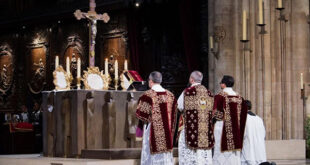
Few figures in the history of Christianity have been as influential, profound, and at the same time as debated as Origen of Alexandria. His thought shaped the early centuries of the Church, molded Christian theology, inspired biblical spirituality, and opened paths of reflection that still influence the understanding of the mystery of God today.
To speak of Origen is to speak of the very origins of systematic Christian theology, of a radical love for Sacred Scripture, of a passionate desire for holiness, and of humanity’s effort to understand the divine mystery.
This article offers a deep journey through his life, thought, theological relevance, and spiritual application for the believer today.
The historical context: the origins of Christian thought
Origen was born around 185 A.D. in Alexandria, one of the most important cities of the ancient world. It was a melting pot of cultures, philosophies, and religions where Christianity was in constant dialogue with Greek thought.
His father, Leonidas, died a martyr during the persecution of Emperor Septimius Severus. This event would deeply mark the spiritual life of the young Origen, awakening in him a radical dedication to God.
From a very young age he stood out for his extraordinary intelligence and passionate love for Scripture. He came to direct the catechetical school of Alexandria, where Clement of Alexandria had previously taught.
He lived in a time when:
- Christian theology was being born,
- the Church was defining its doctrines against heresies,
- the interpretation of the Bible was still developing,
- martyrdom was an everyday reality.
Within this context, Origen became one of the most influential thinkers of early Christianity.
A life radically devoted to God
Origen lived Christianity with a radicalism that today can seem astonishing.
Extreme asceticism
- He lived in voluntary poverty.
- He slept very little.
- He fasted frequently.
- He dedicated his life to the study of Scripture and teaching.
His desire was to live the Gospel literally. Interpreting the passage:
“There are eunuchs who have made themselves eunuchs for the sake of the kingdom of heaven” (Matthew 19:12),
he made an extreme decision (later regretted by the Church), which reveals his radical desire for purity and total self-giving.
This episode shows a central trait of his spirituality: the absolute search for God above all things.
The passionate love for Sacred Scripture
If there is one thing that defines Origen, it is his relationship with the Bible.
Scripture as an encounter with Christ
For him, the Bible was not merely a text:
- it was the living presence of God,
- a path of interior transformation,
- nourishment for the soul,
- a school of holiness.
He wrote thousands of biblical commentaries and developed a form of interpretation that would shape the entire Christian tradition.
The three senses of Scripture
Origen taught that the Bible has three levels of meaning:
1. Literal sense
The historical meaning of the text.
2. Moral sense
The teaching for the believer’s life.
3. Spiritual or mystical sense
The revelation of the mystery of Christ.
This method would influence the entire later tradition, from the Fathers of the Church to medieval theology.
Contemporary application
Today this teaches us:
- not to read the Bible superficially,
- to seek the deeper meaning of the Word,
- to allow Scripture to transform our lives.
As he taught: Scripture grows with the one who reads it.
The great architect of Christian theology
Origen was the first great systematic theologian of Christianity.
His main work: De Principiis
In this work he sought to explain rationally:
- God,
- creation,
- human freedom,
- sin,
- redemption,
- humanity’s final destiny.
It was the first attempt at organized theology in the history of the Church.
God as infinite love
For Origen:
- God is absolute love.
- Everything proceeds from divine love.
- All history is a return to love.
This vision profoundly influenced Christian spirituality.
Human freedom
A central theme in his thought is freedom.
- God creates free beings.
- Evil arises from the misuse of freedom.
- Salvation involves cooperation with grace.
This vision emphasizes personal responsibility in the spiritual life.
The theology of divinization
One of Origen’s deepest contributions is the idea of the transformation of the human person into God by grace.
The goal of the Christian life is not merely to avoid sin, but to:
- participate in divine life,
- be interiorly transformed,
- unite oneself with God.
This anticipates what the tradition would later call deification or theosis.
Pastoral application
For the believer today this means:
- holiness is possible,
- the Christian life is real transformation,
- the Gospel is not merely moral teaching, but communion with God.
The drama of his controversies
Not everything in Origen’s thought was later accepted.
Some of his theological speculations generated controversy:
- ideas about the preexistence of the soul,
- hypotheses concerning the final universal restoration,
- excessively allegorical interpretations.
Centuries later, some of his theses were rejected by the Church. Nevertheless, his theological and spiritual influence remains enormous.
Even those who criticized him, such as Saint Jerome, drank deeply from his thought.
This teaches something important:
the sincere search for truth involves risk, humility, and ecclesial discernment.
Spirituality of struggle: the soul’s path toward God
For Origen, the Christian life is a spiritual battle.
The interior struggle
The believer must:
- purify the heart,
- master the passions,
- grow in virtue,
- allow oneself to be transformed by grace.
Christianity is not comfort, but a path of continual conversion.
The soul as pilgrim
Origen describes the soul as a being on a journey toward God.
This vision has practical consequences:
- life is a spiritual path,
- every experience can draw us closer to God,
- suffering can purify the heart.
The contemporary relevance of Origen
His thought is surprisingly modern.
In a superficial culture
Origen invites us to:
- spiritual depth,
- serious study of faith,
- interiority.
In a world without transcendent meaning
He reminds us that:
- the human person is made for God,
- history has a destiny,
- life has eternal meaning.
In the contemporary crisis of faith
His method teaches:
- faith and reason are not opposed,
- intelligence can serve God,
- Christianity can dialogue with culture.
Practical applications for Christian life today
1. Love Scripture daily
Read the Bible deeply, not superficially.
2. Seek the spiritual meaning of life
See God acting in personal history.
3. Cultivate the interior life
Silence, prayer, reflection.
4. Take holiness seriously
Christianity is real transformation.
5. Live in constant conversion
The spiritual life is an ongoing process.
A key biblical quote in his spirituality
All his theology revolves around this conviction:
“God may be all in all” (1 Corinthians 15:28).
For Origen, this phrase expresses the final destiny of the universe: fullness in God.
Theological evaluation by the Church
Today the Church recognizes in Origen:
- an extraordinary theological genius,
- a pioneer of biblical exegesis,
- a spiritual master,
- a thinker who must be read with discernment.
His legacy belongs to the intellectual heritage of Christianity.
Conclusion: Origen’s spiritual challenge
Origen poses a radical question to us:
Do we truly seek God with all our heart?
His life teaches that:
- faith demands depth,
- Scripture transforms the soul,
- Christianity is a path toward union with God,
- intelligence can be an act of love.
In an age of constant distraction, his message resounds with power:
humanity was created to know, love, and unite with God.
And that journey begins today, in the concrete life of every believer.