

Related Articles

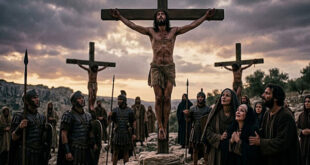

When an ancient psalm speaks with brutal clarity to the modern man
There are words that do not age. Words that cross centuries, empires, moral crises, and spiritual fashions without losing an ounce of their power. Miserere mei, Deus — “Have mercy on me, O God” — is one of them.
It is not merely a pious phrase in Latin. It is the most honest cry that can rise from the human heart when it discovers itself sinful, fragile, and in need of mercy.
In an age that flees from guilt, relativizes sin, and anesthetizes conscience, the Miserere stands as an act of spiritual courage. It does not accuse, it does not justify, it does not disguise: it confesses, it begs, and it hopes.
This article seeks to help you understand, pray, and live the Miserere mei, Deus for what it truly is:
👉 a school of conversion,
👉 a path of interior healing,
👉 and a spiritual guide of enormous relevance today.
1. What is the Miserere mei, Deus?
Miserere mei, Deus are the opening words of Psalm 50 (51) according to the Latin numbering of the Vulgate. It is the penitential psalm par excellence of Jewish and Christian tradition.
It begins:
“Miserere mei, Deus, secundum magnam misericordiam tuam”
Have mercy on me, O God, according to your great mercy (Ps 51:1)
It does not ask for justice.
It does not demand rights.
It does not compare itself to others.
It asks for mercy.
And that changes everything.
2. A psalm born of sin… and of hope
David: king, sinner, and penitent
Biblical tradition situates the origin of the psalm in one of the darkest episodes of King David’s life:
– adultery with Bathsheba,
– abuse of power,
– indirect murder of Uriah.
When the prophet Nathan confronts him, David does not defend himself. He does not relativize. He does not blame circumstances.
He simply says:
“I have sinned against the Lord” (2 Sam 12:13)
From that broken heart the Miserere is born.
👉 This is crucial: the psalm is not born from an ideal spirituality, but from a real, deep, and humiliating fall.
That is why it remains relevant.
3. Theology of the Miserere: a master lesson about God and man
3.1. God is not an implacable judge, but a merciful Father
The psalm rests on a fundamental theological certainty:
“According to your great mercy”
The Hebrew word used here (hesed) indicates faithful, tender love, almost maternal.
David knows that if he presents himself before God with the truth of his sin, he will not be destroyed, but restored.
👉 The Miserere destroys the false image of a God who only punishes.
3.2. Sin is not a psychological error; it is a spiritual rupture
The psalm does not speak of “mistakes” or “personal processes.” It says:
“Against You, You alone, have I sinned” (Ps 51:4)
Sin is not merely a social or moral failure.
It is a wound in the relationship with God.
And until this is understood, there will be no true healing.
3.3. Authentic conversion begins within
One of the most profound verses of the psalm states:
“Create in me a clean heart, O God” (Ps 51:10)
David does not ask merely to be spared punishment.
He asks for a new heart.
This anticipates the entire Christian theology of grace:
👉 conversion is not external makeup,
👉 it is interior re-creation.
4. The Miserere in the Tradition of the Church
4.1. Liturgy and monastic life
For centuries, the Miserere has been prayed:
- in Lauds,
- on penitential Fridays,
- during Holy Week,
- at funerals and moments of mourning.
In many monasteries it was prayed daily, as a reminder that no one lives without mercy.
4.2. Art, music, and spirituality
The Miserere has inspired some of the most sublime works of sacred music, such as the famous Miserere by Gregorio Allegri, sung for centuries exclusively in the Sistine Chapel.
Why?
Because sorrowful repentance, when offered to God, is transformed into beauty.
5. The Miserere before the modern man
Today we live in a paradox:
- there is much talk of self-esteem,
- yet there is a vast interior emptiness;
- sin is denied,
- yet diffuse guilt and anxiety increase.
The Miserere offers a clear way out:
👉 to name evil,
👉 to hand it over to God,
👉 to receive real forgiveness.
No self-justification.
No self-deception.
Grace.
6. Rigorous practical guide: living the Miserere today
(Theologically and pastorally)
6.1. Before: preparing the heart
- Real silence (no phone, no noise).
- A simple but honest examination of conscience:
- Where have I failed to love?
- What have I avoided facing?
- Whom have I wounded?
👉 Not to sink into despair, but to speak the truth.
6.2. Praying the Miserere step by step
Theologically and pastorally, it is recommended to:
- Pray the psalm slowly, even in a low voice.
- Pause at the phrases that hurt the most.
- Repeat interiorly: “A broken and contrite heart, O God, you will not despise” (Ps 51:17)
👉 Prayer is not emotional discharge; it is an act of faith.
6.3. Uniting the Miserere with the sacrament of confession
The Miserere reaches its fullness when:
- it leads to the Sacrament of Reconciliation,
- it becomes living word in the confessional.
Pastorally:
- pray it before going to confession,
- or after, as thanksgiving.
6.4. After: concrete fruits
The authentic Miserere produces:
- real humility (not false guilt),
- compassion toward others,
- sincere desire to repair the harm done,
- rejection of sin, not of oneself.
👉 If there is no fruit, it must be prayed again.
7. The Miserere as a path of hope
The psalm does not end in sadness, but in mission:
“Then I will teach transgressors your ways” (Ps 51:13)
The forgiven becomes a witness.
The healed, an instrument.
The humbled, a messenger.
Conclusion: when you no longer know what to say, say Miserere
There are moments in life when:
- words are superfluous,
- excuses are lacking,
- and only naked truth remains.
In those moments, the Church places an eternal prayer on your lips:
Miserere mei, Deus.
Have mercy on me, Lord.
It is not weakness.
It is spiritual wisdom.
Because whoever abandons himself to mercy is never disappointed.