
Related Articles
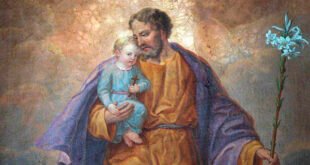


When We Discover Who Saint Joseph Really Was, We Understand Better How Jesus Lived
For centuries, millions of Christians have imagined Saint Joseph as a silent old man in a small carpenter’s workshop, surrounded by tables, chairs, and wood shavings. The image is tender… but probably incomplete.
The Gospel gives us a key word that completely changes our understanding:
“Is not this the carpenter’s son?” (Matthew 13:55)
The Greek word used by Saint Matthew is not simply “carpenter” in the modern sense. It is téktōn (τέκτων), a much broader, deeper, and more revealing term.
Saint Joseph was not merely a furniture maker.
He was a builder. A craftsman. A skilled laborer. A man of wood and stone. A maker of tools. A creator of structures. A comprehensive worker.
Understanding this does not merely correct a superficial translation: it transforms our spiritual vision of Saint Joseph, of the Holy Family, and of Jesus Christ Himself.
Because the man who taught Jesus to work with His hands did not merely make tables:
he raised structures, built yokes, repaired roofs, carved beams, assembled doors, and likely worked stone to support homes.
And that has profound theological implications.
I. What Does Téktōn Really Mean? Beyond “Carpenter”
The richness of a forgotten word
In the Greco-Roman world, téktōn meant:
- Builder
- Skilled craftsman
- Technical laborer
- Mason
- Carpenter
- Tool maker
- Agricultural constructor
It was not limited to wood.
It described someone capable of transforming raw materials into useful instruments for human life.
In first-century Galilee, this was especially important, because Nazareth was not a major industrial city, but a small agricultural village near urban projects like Sepphoris, where manual workers were likely needed.
Scarce wood, abundant stone
Here is a fascinating historical detail:
In the Holy Land, especially in Galilee, stone was more common than quality wood.
Therefore, a téktōn like Joseph surely worked:
With wood:
- Yokes for oxen
- Plows
- Doors
- Frames
- Beams
- Roof structures
- Agricultural tools
With stone:
- Foundations
- Walls
- Structural repairs
- Architectural elements
In other words:
Saint Joseph was more like an integral rural builder than a modern cabinetmaker.
He was not a designer of decorative furniture:
He was a man who sustained the daily life of his community.
II. Saint Joseph: Worker’s Holiness and the Dignity of Labor
The silence of the Gospel is not emptiness: it is depth
Saint Joseph does not speak a single word in Scripture.
And yet, he teaches more than many speeches.
Why?
Because Joseph represents the spirituality of redemptive labor.
Working to sustain God made Man
Consider this with reverence:
Joseph’s hands fed Mary.
Joseph’s hands protected the Child Jesus.
Joseph’s hands taught the Eternal Word Incarnate to use human tools.
The eternal Son of God chose to learn from a worker.
This destroys every pagan idea that humble labor lacks spiritual value.
In Nazareth, work became a school of redemption
Before preaching to multitudes,
before healing the sick,
before carrying the Cross…
Jesus spent years watching Joseph measure, cut, carry, fit, and repair.
Nazareth was the first seminary of holy work.
III. Jesus, Disciple of the Téktōn: When God Learned From Saint Joseph
Mark 6:3 even directly calls Jesus:
“Is not this the carpenter?”
Not only the son of the craftsman.
Jesus Himself was known as a craftsman.
This means Christ likely worked for years in Joseph’s trade.
What does this imply spiritually?
That God sanctified:
- Physical effort
- Work fatigue
- Manual precision
- Family economy
- Daily construction
Every hammer strike in Nazareth anticipated the nails of Calvary.
Every yoke made by Jesus recalls His words:
“Take my yoke upon you… for my yoke is easy, and my burden is light.” (Matthew 11:29-30)
This does not seem like an improvised metaphor.
It was likely language born from real experience.
Christ knew how a yoke was made.
He knew where it rubbed.
He knew how to shape it to lighten weight.
Only someone who knew the trade could use that image with such power.
IV. The Similes of Jesus: Preaching Born From the Workshop
Jesus did not speak like an abstract philosopher.
He spoke like someone formed among fields, tools, and construction.
1. The house built on rock
“The wise man built his house upon the rock…” (Matthew 7:24)
This is not merely a spiritual metaphor:
It is technical builder’s language.
In a region of torrential rains and uneven terrain, building on rock was survival.
Christ preaches like one who understands structures.
2. The cornerstone
“The stone the builders rejected…” (Psalm 118:22; Matthew 21:42)
The term builder here resonates profoundly with His formative context.
Jesus understands the value of a structural stone because He likely saw and used construction materials.
3. The yoke
This is not just poetic imagery:
It is crafted equipment.
A bad yoke wounds.
A well-made one relieves burden.
Christ presents Himself as the true craftsman of the soul.
4. Counting the cost before building
“Which of you, desiring to build a tower, does not first sit down and count the cost?” (Luke 14:28)
This is the mentality of a builder.
Planning.
Cost.
Foundation.
Responsibility.
V. Saint Joseph as a Model for the Modern Man
In an age of superficiality, Joseph teaches depth
Today, visibility, rapid success, and self-promotion are exalted.
Joseph teaches the opposite:
Josephine virtues:
- Fruitful silence
- Constant work
- Strength without spectacle
- Protection of family
- Obedience to God
- Chastity
- Sacrifice
Saint Joseph proves that a man does not need prominence to change history
He only needs obedience.
VI. Theology of Work: The Workshop of Nazareth as a School of Holiness
Catholic tradition has always defended that work is not punishment, but participation in God’s creative work.
Joseph did not merely make objects:
He cooperated with the order of creation.
Every useful tool served families.
Every structure protected life.
Every plow helped feed others.
To work well was to love one’s neighbor.
Here is an urgent lesson:
Your daily work can become a path to sanctification.
Office.
Store.
Construction.
Cleaning.
Caregiving.
If Joseph sanctified the hammer,
you can sanctify your responsibilities.
VII. Saint Joseph and the Integral Formation of Jesus
Though Jesus is God, in His humanity He chose to grow within a true family.
“And He was subject unto them.” (Luke 2:51)
Joseph taught Christ according to the flesh:
- Discipline
- Work
- Hebrew prayer
- Responsibility
- Perseverance
This makes Joseph patron of:
- Fathers
- Workers
- Craftsmen
- Builders
- The dying
- The universal Church
VIII. Pastoral Applications for Today
For fathers
To educate is not only to provide.
It is to form by example.
For workers
Your labor has eternal dignity.
For youth
Learn trade, virtue, and discipline.
For the Church
We need to rediscover Saint Joseph not as decorative imagery, but as a master of interior life.
IX. Saint Joseph: Builder of Homes… and Guardian of Redemption
There is immense beauty in this:
Joseph built temporary houses…
while protecting the Living House of God.
He crafted doors…
while caring for the One who said:
“I am the door.” (John 10:9)
He built yokes…
while forming the One who would lighten every burden.
He worked stone…
while raising the Cornerstone.
X. Conclusion: Rediscovering Saint Joseph in a World That Despises the Hidden
Saint Joseph was far more than “the carpenter.”
He was:
Téktōn.
Builder.
Craftsman.
Holy laborer.
Guardian father.
Teacher of the Redeemer.
His life proclaims that greatness does not always make noise.
In a world obsessed with fame,
Joseph reminds us that eternity is also built in silence.
Perhaps today the question is not only:
Who was Saint Joseph?
But rather:
Are we willing to live like him?
Working faithfully.
Protecting the sacred.
Building patiently.
Serving without applause.
Because in Nazareth, among wood, stone, dust, and prayer,
a humble téktōn helped prepare the Savior of the world.