Related Articles
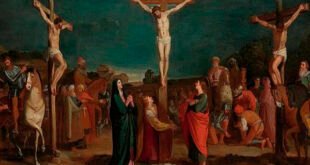
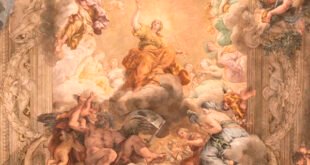

You were not born to crawl as a slave to sin, but to live in the glorious freedom of the children of God
Introduction: The great modern lie about freedom
We live in an age that constantly repeats a seductive but deeply mistaken idea: to be free is to do whatever you want.
We are told that freedom means breaking limits, rejecting norms, denying sacrifice, ignoring God, and turning personal desire into the supreme law.
But human experience proves otherwise.
Whoever always does whatever he wants often ends up becoming a slave to himself: a slave to his impulses, his wounds, his vices, his ego, his disordered passions.
The Catholic vision offers a much deeper, more demanding, and more luminous truth:
True freedom does not consist in doing whatever one wants, but in being able to do the good for which one was created.
And here enters the immense mystery of Grace.
Grace is not an abstract concept, nor an impersonal energy, nor a superficial “blessing.”
Grace is the very life of God poured into the human soul to heal, elevate, transform, and lead man toward his supernatural fulfillment.
Grace does not destroy your freedom:
it rescues it, purifies it, and perfects it.
As Saint Paul teaches:
“For freedom Christ has set us free” (Galatians 5:1).
This article seeks to rigorously explore one of the most decisive pillars of all Catholic theology: grace, that divine help without which man can never fully understand himself nor attain his eternal destiny.
I. Human fragility: Man wounded and in need of being raised
Created for greatness
God created man in a state of original justice.
Adam and Eve were created in friendship with God, in interior harmony, without moral suffering, without death, without sin, with a nature rightly ordered.
Man was free, but not autonomous.
He depended lovingly on his Creator.
The wound of original sin
With the Fall, humanity was not destroyed, but deeply wounded.
The Church teaches that human nature was affected in four great dimensions:
1. Darkened intellect
Man no longer sees clearly.
He confuses truth with opinion, good with pleasure, freedom with whim.
2. Weakened will
We often know what is right… but do not do it.
Saint Paul expressed it with brutal realism:
“For I do not do the good I want, but the evil I do not want is what I do” (Romans 7:19).
3. Disordered affections
Passions, desires, fears, pride, sensuality.
4. Mortality and suffering
The body decays, becomes sick, and dies.
Present-day fragility
Today this wound manifests itself dramatically:
- addictions,
- anxiety,
- nihilism,
- pornography,
- individualism,
- despair,
- identity crisis.
Modern man has advanced technology, but often a devastated soul.
Catholic doctrine does not humiliate man by speaking of his fragility; on the contrary:
it explains why even while desiring the good, he so often falls.
II. Grace and sin: Two states, two paths, two destinies
Concupiscence: the interior inclination toward disorder
After original sin, there remains an interior tendency toward evil. It is not sin in itself, but it inclines one toward sin.
It is a constant battle.
State of sin
To live in mortal sin means voluntarily breaking friendship with God in grave matter, with full knowledge and consent.
Consequences:
- loss of sanctifying grace,
- spiritual darkening,
- profound sadness,
- interior slavery,
- moral weakening.
Christ was radical:
“Everyone who commits sin is a slave to sin” (John 8:34).
State of grace
This is living in friendship with God.
It does not mean absolute perfection, but living communion with Him.
Fruits:
- peace,
- strength,
- spiritual growth,
- supernatural capacity,
- deep joy.
Grace turns the soul into a temple of God.
III. Sanctifying grace: Divine life in the soul
What is it?
Sanctifying grace is a habitual, permanent supernatural gift infused by God into the soul, making us sharers in His divine nature.
It is not symbolism.
It is a supernatural reality.
“He has made us partakers of the divine nature” (2 Peter 1:4).
Effects
1. It erases mortal sin (when restored through confession)
2. It makes us adopted children of God
3. It gives us a right to eternal life
4. It causes the Trinity to dwell in the soul
Growth in grace
Grace can increase through:
- prayer,
- charity,
- sacrifice,
- sacraments,
- fidelity.
Here enters the principle of ex opere operantis:
personal disposition matters.
Two people may receive the same sacrament, but not with the same spiritual fruit.
IV. Sacramental grace: Christ acting today
The sacraments are not empty symbols
They are efficacious signs instituted by Christ to communicate grace.
Ex opere operato
This means the sacrament confers grace by the very action of Christ, provided there is no grave obstacle.
Each sacrament has a particular mission
Baptism
- removes original sin,
- incorporates into Christ.
Confirmation
- strengthens for spiritual combat.
Eucharist
- unites intimately with Christ.
“Whoever feeds on my flesh and drinks my blood abides in me” (John 6:56).
Penance
- restores lost grace.
Anointing
- strengthens in illness.
Matrimony
- sanctifies conjugal love.
Holy Orders
- configures one to Christ the Priest.
V. Actual graces: Concrete helps in decisive moments
These are special interventions of God to enlighten the mind and strengthen the will in specific circumstances.
Examples:
- resisting temptation,
- forgiving betrayal,
- accepting a cross,
- conversion,
- perseverance.
Many radical conversions are born from an actual grace.
Saint Augustine, a man who pursued himself in all the wrong places, became a saint because God broke into his life.
Important:
Actual grace does not cancel freedom.
It moves it, invites it, strengthens it.
VI. Virtues: When grace transforms habits
Grace does not replace human effort; it elevates it.
Theological virtues
Faith
Believing God.
Hope
Trusting even in the night.
Charity
Loving as God loves.
“So now faith, hope, and love abide, these three; but the greatest of these is love” (1 Corinthians 13:13).
Cardinal virtues
Prudence
Choosing rightly.
Justice
Giving each his due.
Fortitude
Persevering.
Temperance
Mastering desires.
The modern world confuses freedom with the absence of discipline.
The Church teaches that without virtue there is no true freedom.
A man dominated by his impulses is not free.
VII. Sacrifice: The forgotten path to freedom
The modern scandal of sacrifice
Our culture idolizes comfort, immediate pleasure, and escape.
But Christ said:
“If anyone would come after me, let him deny himself and take up his cross daily and follow me” (Luke 9:23).
Christian sacrifice is not self-destruction
It is training for the soul.
It involves:
1. Mastering oneself
Not living according to whims.
2. Fighting evil
Cutting off occasions of sin.
3. Striving for the good
Growing in virtue, promoting peace, and leaving the world better than we found it.
Sacrifice liberates because it breaks interior chains.
Fasting, prayer, penance, discipline… are not punishments, but spiritual medicine.
VIII. Grace in today’s world: A pastoral urgency
Today many baptized people live as though grace did not exist.
It is replaced by:
- self-help,
- psychology without transcendence,
- relativism,
- empty spirituality.
But no human technique can replace divine life.
The great crisis is not political, economic, or climatic.
It is spiritual.
When grace is lost:
- sin is trivialized,
- the family is destroyed,
- liturgy is emptied,
- charity grows cold.
IX. Practical guide: How to live in grace
1. Frequent confession
Not only when you are “really bad.”
2. Worthy reception of the Eucharist
The supreme source of grace.
3. Daily prayer
Without prayer, our cooperation with grace weakens.
4. Concrete moral life
Avoid mortal sin.
5. Voluntary sacrifice
Fasting, order, discipline.
6. Marian devotion
Mary leads to grace because she leads to Christ.
X. Conclusion: Grace takes nothing from you—it gives you back to yourself
Man’s tragedy is not simply suffering.
It is living far from God while believing himself free.
Without grace, freedom becomes distorted.
With grace, freedom flourishes.
Grace does not eliminate your personality; it heals it.
It does not destroy your desires; it orders them.
It does not extinguish your humanity; it divinizes it.
In a society that promises freedom while multiplying slaveries, the Church continues proclaiming the eternal truth:
Only grace makes man truly free.
Because the greatest slavery is not political.
It is spiritual.
And the greatest liberation is not doing whatever you want.
It is being able to love the good.
Today the question is not whether you are free to choose anything.
The real question is: Are you free to choose God?
“Where the Spirit of the Lord is, there is freedom” (2 Corinthians 3:17).