Related Articles

The forgotten truth that would radically change how we live today
We live in an age obsessed with the body… yet deeply confused about its true destiny.
Never before has there been so much talk about health, aesthetics, youth, exercise, surgery, image, or bodily pleasure. The body is idolized, exploited, displayed, modified, and often degraded. But at the same time, a fundamental truth of the Catholic faith has been almost completely lost: your body is not destined to disappear forever.
Christianity does not simply teach that “the soul lives on.” That would be incomplete.
The Church proclaims a far greater, more powerful, and more revolutionary truth:
“I believe in the resurrection of the flesh.”
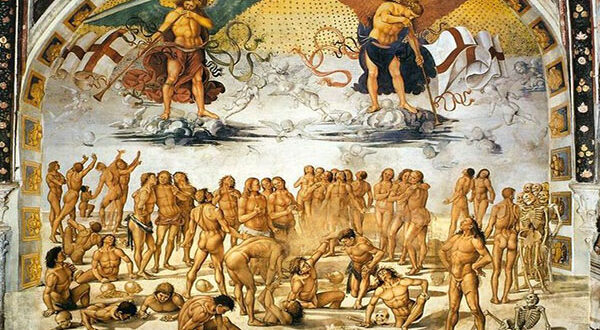
Not only will your soul stand before God. Your body will live again too.
Not as a metaphor.
Not as a symbol.
Not as spiritual energy.
Really.
And this truth, which forms an essential part of the Creed, is not a secondary detail. It is one of the most astonishing proclamations in all Christian Revelation.
1. What does the eleventh article of the Creed teach?
“The resurrection of the dead.”
The traditional catechism expresses it clearly:
All men will rise again, each soul taking back the same body it had in this life.
This means that your present body—the very one with which you love, sin, work, suffer, pray, or serve—will not be abandoned forever.
It will be restored by the power of God.
This completely changes our vision of the human person
We are not souls trapped in bodies, as some pagan philosophers believed.
No.
We are a sacred unity of body and soul.
God created the body.
God assumed a body in the Incarnation.
God redeemed the body on the Cross.
And God will also glorify or punish the body in eternity.
That is why Christianity treats the body with reverence:
- In Baptism
- In the Eucharist
- In purity
- In Christian burial
- In the veneration of relics
Because the human body is not a disposable object.
It is the temple of the Holy Spirit (1 Cor 6:19).
2. How will the resurrection happen?
Here enters one of the great modern objections:
“How can a body that has decomposed, been reduced to ashes, or vanished centuries ago rise again?”
Catholic answer:
By the power of Almighty God.
The same God who created the universe from nothing can perfectly restore every body.
He who made Adam from the dust of the earth can call every atom back into place.
Nothing is impossible for God
The resurrection does not depend on biological processes, but on the absolute power of the Creator.
Saint Paul explains it magnificently:
“It is sown in corruption; it shall rise in incorruption” (1 Cor 15:42).
The body buried does not disappear as its final destiny. It is like a seed.
What today seems like ruin will tomorrow become manifestation.
3. When will it happen?
At the end of the world.
When Christ returns in glory to judge the living and the dead, all will rise.
Then the Universal Judgment will take place.
Why is the particular judgment not enough?
Because although each soul receives its immediate destiny after death, divine justice must be manifested fully before all creation.
The good and evil done in the body must become visible.
Hidden scandals.
Unrepaired injustices.
Humiliated martyrs.
Secret sins.
Everything will be revealed.
History will end in total truth.
4. Why does the body also rise?
Because the body participated in our works.
With the body:
- we helped or harmed,
- we adored or blasphemed,
- we served or exploited,
- we lived in purity or in sin.
Therefore it is just that the body should also share in reward or punishment.
A tremendously powerful moral teaching
Your hands are not neutral.
Your eyes are not neutral.
Your tongue is not neutral.
Your sexuality is not neutral.
Everything has eternal significance.
The body was not made for sin, but for glory.
5. Will all rise in the same way?
No.
Here the catechism is absolute:
There will be an immense difference between the bodies of the just and the bodies of the damned.
The chosen
Will rise in the likeness of Christ glorified.
The condemned
Will also rise… but for eternal shame.
This should shake us.
Resurrection is not automatically a blessing.
For some it will be glory.
For others, horror.
As Daniel 12:2 teaches:
“Some unto everlasting life, and others unto reproach, to see it always.”
6. The four gifts of glorified bodies
The sublime destiny of the saints
Catholic tradition, especially Saint Thomas Aquinas, teaches four glorious properties:
1st Impassibility
The body will no longer suffer.
No more illness.
No more pain.
No more cancer.
No more fatigue.
No more hunger.
No more death.
Imagine that.
All bodily suffering will be over forever.
2nd Clarity
The saints will shine with supernatural beauty.
This is not merely physical light, but the visible radiance of the soul’s glory.
Christ in the Transfiguration gave us a foretaste.
Each saint will reflect grace with incomparable splendor.
3rd Agility
The body will obey the soul perfectly.
Without limitation.
Without exhaustion.
Without heaviness.
It will be perfect freedom.
4th Subtlety
The body will be fully spiritualized, perfectly subject to the glorified soul.
Like the risen Christ passing through closed doors.
7. And what about the damned?
Here traditional theology speaks soberly… but gravely.
The bodies of the damned will also be immortal, but:
- without glory,
- without beauty,
- without relief,
- without death,
- without hope.
The body will become an instrument of eternal suffering, outwardly reflecting the soul’s inward separation from God.
This is not “religious fearmongering.”
It is divine justice.
A culture that trivializes sin needs to remember that our decisions have eternal consequences.
8. The great modern problem: living as though we will never rise again
Today many:
- profane their bodies,
- commercialize them,
- turn them into idols,
- surrender them to vice,
- mutilate them morally or spiritually.
Why?
Because they have forgotten their eternal destiny.
When resurrection is lost, the body becomes either an object of pleasure or mere meaningless matter.
But when you remember that your flesh is destined to stand before God…
Then everything changes:
- how you dress,
- how you love,
- how you suffer,
- how you age,
- how you bury your dead.
9. Christ’s Resurrection: the guarantee of ours
Our hope is not theory.
Christ truly rose.
His tomb was empty.
And Saint Paul says forcefully:
“If Christ be not risen again, then is our preaching vain, and your faith is also vain” (1 Cor 15:14).
But Christ did rise.
And therefore our flesh will rise too.
Easter is not only about Jesus.
It is also about you.
10. Practical application: living today for eternity
What does this article of the Creed demand?
Reverence for the body
Purity, modesty, discipline, respect.
Hope in suffering
Your pain, united to Christ, is not meaningless.
Dignity before death
The Christian cemetery is not abandonment; it is waiting.
Moral urgency
What you do with your body matters forever.
Conclusion: Your body has an eternal destiny
The world tells you:
“Enjoy it.”
“Use it up.”
“Redefine it.”
“Do whatever you want.”
Christ tells you:
“It shall rise again.”
Your body will return.
And it will be glorious… or it will bear witness to condemnation.
That is why the eleventh article of the Creed is not an abstract idea. It is a radical call to live with eternity in view.
Every knee shall bend.
Every body shall rise.
Every soul shall answer.
And then we will fully understand that nothing was insignificant.
Because this flesh, now fragile and passing, is destined for immortality.
“I believe in the resurrection of the flesh.”
It is not merely a doctrine.
It is a warning.
It is a hope.
It is a promise.