Related Articles



Yahweh, Jehovah, or Simply “the Lord”? The Fascinating Story of the Holiest Name in All Sacred Scripture
There are words that possess extraordinary power. Some awaken memories, others evoke emotions, and still others are capable of changing the course of history. Yet there is one Name that infinitely surpasses all others. A Name which, according to biblical tradition, was revealed by God Himself; a Name so holy that the people of Israel ceased to pronounce it out of reverence; a Name that appears nearly seven thousand times in the Old Testament and yet remains virtually unknown to most Christians.
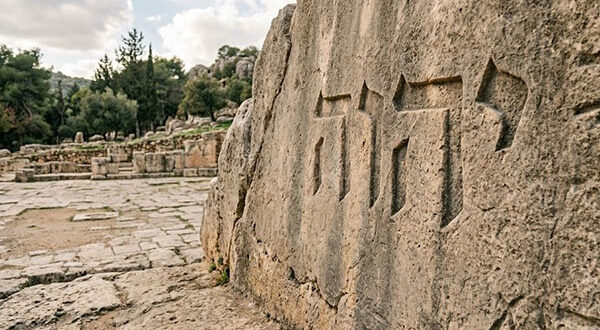
That Name is the Tetragrammaton, the four mysterious Hebrew letters:
יהוה
Transliterated into the Latin alphabet:
YHWH
These four consonants constitute the proper Name by which God chose to reveal Himself to Moses on Mount Horeb. For centuries it has inspired scholarly research, controversy, mispronunciations, and profound theological reflection. From it emerged such familiar forms as Yahweh and Jehovah, although neither corresponds with absolute certainty to its original pronunciation.
Behind this linguistic question, however, lies a reality infinitely deeper: the Name reveals who God is.
Understanding the meaning of the Tetragrammaton is not merely an academic exercise. It is an approach to the very heart of Divine Revelation.
The Meaning of the Term “Tetragrammaton”
The word Tetragrammaton comes from Greek:
- tetra = four
- grammata = letters
It literally means:
“The four letters.”
It refers exclusively to the divine Name written with the Hebrew consonants:
Yod – He – Waw – He
יהוה
In ancient Hebrew, only consonants were written. Vowels were not added through diacritical marks until many centuries later.
This explains why today we do not know with absolute certainty how the Name was originally pronounced.
The Context of the Revelation of the Name
The great revelation takes place in the Book of Exodus.
Moses beholds the burning bush.
God commissions him to free Israel from Egypt.
Then Moses asks:
“If I come to the Israelites and say to them, ‘The God of your fathers has sent me to you,’ and they ask me, ‘What is His name?’ what shall I say to them?”
Then God answers:
“I AM WHO AM.” (Exodus 3:14)
And immediately adds:
“Thus shall you say to the children of Israel: ‘I AM has sent me to you.'”
And He continues:
“This is My name forever, and thus I am to be remembered throughout all generations.” (Exodus 3:15)
Here the Tetragrammaton appears.
It is not merely a proper name.
It is a revelation of God’s very being.
“I AM WHO AM”: Far More Than a Name
The Hebrew expression is:
Ehyeh Asher Ehyeh
It may be translated in several ways:
- I am who I am.
- I am the One who exists.
- I am who will be.
- I am the One who remains.
- I am the One who always is.
All of these translations are partially correct.
Catholic tradition, especially following Saint Thomas Aquinas, sees in this expression the revelation of Absolute Being.
God does not receive existence.
God does not begin to exist.
God depends on nothing.
He simply is.
Everything else exists because it participates in received being.
God alone possesses Being by His very essence.
As the Catechism of the Catholic Church (No. 206) teaches, the revealed Name expresses that God is Being itself, eternally faithful to Himself and to His promises throughout the ages.
In the words of the Angelic Doctor, God is Ipsum Esse Subsistens—Being itself subsisting.
Therefore, the Tetragrammaton does not merely designate an identity; it reveals the very nature of God.
How Many Times Does the Tetragrammaton Appear?
Remarkably, it appears approximately:
6,828 times
in the Hebrew text of the Old Testament.
It is the most frequently occurring Name in all of Sacred Scripture.
Nevertheless, many modern Bibles replace it with:
LORD
written in capital letters.
This custom originates from an ancient Jewish tradition.
Why Did the Jews Stop Pronouncing the Name?
As the centuries passed, an immense reverence for the divine Name developed.
The Third Commandment declared:
“You shall not take the name of the Lord your God in vain.” (Exodus 20:7)
To avoid any possibility of profaning the Name, the rabbis eventually ceased pronouncing the Tetragrammaton altogether.
Whenever they encountered it during the reading of Scripture, they would say:
Adonai
which means:
Lord.
In other contexts they used:
HaShem
meaning:
The Name.
Eventually, the original pronunciation disappeared.
Not because God wished to conceal Himself, but because His people desired to express the highest possible reverence for His holiness.
How Did the Pronunciation “Jehovah” Arise?
Here we encounter one of the most fascinating stories in biblical philology.
Between the sixth and tenth centuries A.D., Jewish scribes known as the Masoretes added vowel markings to the Hebrew text in order to preserve its correct reading.
Whenever they came across the Tetragrammaton:
יהוה
they did not insert its original vowels.
Instead, they placed the vowels of:
Adonai
as a reminder that the reader should say “Lord” rather than pronounce the divine Name.
Visually, it appeared something like:
YeHoWaH
Many medieval Christian scholars were unaware of this convention.
They assumed that those vowels actually belonged to the divine Name itself.
Thus was born:
Jehovah
The earliest clear documentation of this form appears during the Middle Ages, particularly in the writings of the Latin scholar Peter Galatin (16th century), although earlier precedents can be traced back to the thirteenth century.
Therefore, Jehovah is not the original pronunciation of the divine Name, but rather the result of combining the consonants of the Tetragrammaton with the vowels of Adonai.
For centuries, however, the form “Jehovah” spread widely throughout Western theology, appearing in hymns, biblical commentaries, and even some Bible translations.
Where Does “Yahweh” Come From?
Beginning in the nineteenth century, comparative studies of the Semitic languages led scholars to propose a different hypothesis.
Many specialists concluded that the pronunciation closest to the original would have been:
Yahweh
This reconstruction is based upon several indications:
- ancient Greek testimonies;
- Hebrew theophoric names (such as Isaiah, Jeremiah, and Elijah);
- the phonetic rules of ancient Hebrew;
- patristic testimonies.
Nevertheless, one important fact must be emphasized: no one can state with absolute certainty that this was the exact pronunciation, because the living tradition of pronouncing the Name had already disappeared many centuries before any phonetic records existed.
For this reason, “Yahweh” is a highly probable scholarly reconstruction, but not an absolute historical certainty.
Why Does the Church Prefer to Say “Lord”?
From the earliest days of Christianity, believers inherited the practice found in the Greek Septuagint of translating the Tetragrammaton as Kyrios, meaning “Lord.” The authors of the New Testament followed this custom when quoting the Old Testament, while also applying the title “Lord” to Jesus Christ, thereby affirming His full divinity.
In continuity with this tradition, the Church has instructed that, in the liturgy, the equivalent translation “Lord” should be used rather than a reconstructed pronunciation of the Tetragrammaton. This practice expresses the reverence due to the revealed Name and preserves fidelity to the Church’s liturgical tradition.
Thus, whenever we proclaim at Mass, “The Word of the Lord,” or hear “The Lord be with you,” we are not merely using a polite formula. We are employing the title by which the Church has confessed for centuries both the God of Israel and Jesus Christ, true God and true Man.
The Name of God and the Divinity of Christ
One of the most extraordinary aspects of the New Testament is that Jesus applies to Himself the expression:
“I AM” (ego eimi).
During His dispute with the Jews He declares:
“Before Abraham came to be, I AM.” (John 8:58)
He does not say:
“I was.”
He says:
“I AM.”
His listeners understood His meaning perfectly.
That is why they attempted to stone Him.
They did not interpret His words as a metaphor.
They understood them as a claim to equality with God.
Jesus Christ was identifying Himself with the God who spoke from the burning bush.
The whole of Christology is illuminated in this light: the Eternal Word fully shares in the divine Being and the divine Name.
The Second Commandment and Reverence for God’s Name
We live in a culture where God’s Name is frequently used as a casual exclamation or even as a blasphemy. Catholic tradition reminds us that the Second Commandment not only forbids perjury and blasphemy but also calls us to pronounce the divine Name with adoration, gratitude, and trust.
Every time we make the Sign of the Cross, we invoke the Father, the Son, and the Holy Spirit. Every time we pray the Lord’s Prayer, we say:
“Hallowed be Thy Name.”
We do not ask that God become holy—for He is Holiness itself—but that His Name may be recognized, loved, and glorified throughout all creation.
Spiritual Applications for Christians Today
The study of the Tetragrammaton should not remain merely an academic pursuit. It has concrete consequences for our spiritual lives.
1. Recover the sense of adoration. The mystery of the divine Name reminds us that God is infinitely greater than our categories and worthy of profound reverence.
2. Guard our speech. Avoiding frivolous use of God’s Name is a powerful witness of faith in a world that trivializes the sacred.
3. Trust in God’s faithfulness. The God who revealed His Name to Moses is the same God who accompanies His Church today and remains faithful to His promises.
4. Recognize Christ as Lord. Acknowledging Jesus as the great “I AM” strengthens our faith in His divinity and in His Real Presence in the Holy Eucharist.
5. Live a life of holiness. If we bear the name of Christians, we are called to reflect through our lives the holiness of the God whose Name we venerate.
A Lesson for Our Time
In an age marked by relativism, where God is often reduced to an idea, a feeling, or a personal opinion, the Tetragrammaton reminds us of one essential truth: God is not a projection of humanity. He is the Eternal Being, the Creator, the Lord of history, the Holy One of Israel who has revealed Himself and chosen to establish a covenant with His people.
Understanding the history behind the names Yahweh and Jehovah is both fascinating and helpful for appreciating how Sacred Scripture has been transmitted. Yet the decisive issue is not pronouncing four ancient Hebrew consonants correctly. Rather, it is welcoming in faith the One who revealed Himself to Moses and who, in the fullness of time, revealed Himself definitively in Jesus Christ.
Conclusion
The Tetragrammaton remains one of the greatest mysteries of Divine Revelation. Four letters that have traversed more than three thousand years of history, copied with reverence by generations of scribes, contemplated by prophets, the Fathers of the Church, theologians, and saints alike. Four letters that lead us to one immense truth: God alone exists by Himself. He is eternally faithful, the beginning and the end of all things.
Therefore, beyond the historical interest surrounding the forms Yahweh or Jehovah, every believer is called to contemplate the profound meaning of the divine Name and to respond as Moses did before the burning bush: removing the sandals of pride, worshipping in silence, and allowing oneself to be transformed by the presence of the living God.
As the Psalmist proclaims:
“Some trust in chariots and others in horses, but we trust in the name of the Lord our God.” (Psalm 20:7)
May that most holy Name, revealed in the Old Covenant and fully glorified in Jesus Christ, become for us a source of adoration, confidence, and hope until the day when we shall behold face to face the God whose mystery we can scarcely begin to utter in this life.