Related Articles
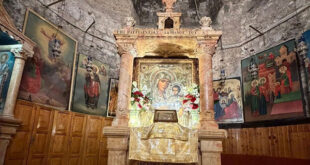

“There are not many Virgins. There is only one Mother of God, contemplated under many titles that reveal the richness of her mission throughout the history of salvation.”
Few questions are as common among Catholics and non-Catholics alike as this one:
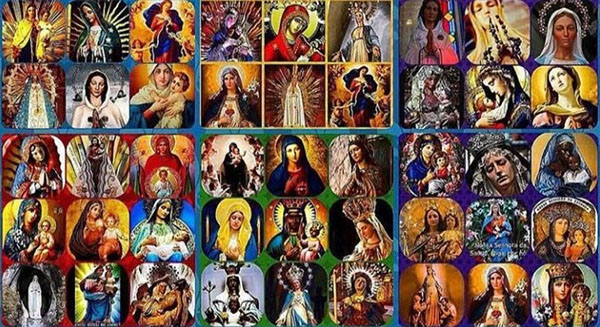
Why do Catholics have so many Virgins? Shouldn’t there be only one? Who is Our Lady of the Pillar? What about Our Lady of Mount Carmel? Our Lady of Fatima? Our Lady of Guadalupe? Are they different people?
These questions are entirely understandable. At first glance, the immense number of images, names, feast days, and shrines may give the impression that there are many different “Virgins.”
However, the exact opposite is true.
The Catholic Church has always taught that there is only one Virgin Mary: the Blessed Mother of Jesus Christ, the Mother of God (Theotokos), conceived Immaculate from the very first instant of her existence, ever Virgin, and assumed body and soul into Heaven.
So then…
Why does she have so many names?
The answer introduces us to one of the most beautiful spiritual treasures of Christianity: the Marian titles (advocations).
Far from dividing devotion, these titles show how one and the same Mother makes herself close to different peoples, cultures, and historical moments, revealing the many facets of the unique mission entrusted to her by God.
Understanding this not only answers a widespread question but also allows us to discover the extraordinary depth of Marian spirituality.
What Exactly Is a Marian Title (Advocation)?
The word advocation comes from the Latin advocatio, meaning an invocation or a calling upon someone.
In the language of the Church, an advocation is a title by which the faithful invoke the Blessed Virgin Mary, recalling a particular aspect of her life, a truth of the faith, a privilege granted to her by God, an apparition recognized by the Church, or a special protection experienced by a Christian people.
In other words:
Mary does not change.
What changes is the way believers contemplate one particular aspect of her person and mission.
It is similar to the many titles given to Jesus Christ:
- Lamb of God
- Good Shepherd
- King of the Universe
- Son of David
- Emmanuel
- Bread of Life
- Light of the World
- Alpha and Omega
There are not many Christs.
There is only one Christ contemplated through the many facets of His mystery.
The same is true of Mary.
One Mother for the Entire Church
When Elizabeth welcomes Mary into her home, she exclaims:
“And why is this granted to me, that the mother of my Lord should come to me?”
(Luke 1:43)
From the earliest centuries, Christians understood that Mary occupies an absolutely unique place.
She is not a goddess.
She is not a feminine deity.
She does not replace Christ.
Her entire greatness consists precisely in leading souls to Him.
As she said during the Wedding Feast at Cana:
“Do whatever He tells you.”
(John 2:5)
Every authentic Marian devotion always ends in Jesus Christ.
Never in Mary herself.
Why Did So Many Marian Titles Develop?
Marian titles developed naturally as Christianity spread throughout the world.
Each people and culture began to experience Mary’s maternal protection under particular historical circumstances.
Sometimes during epidemics.
Sometimes in times of war.
Sometimes following extraordinary miracles.
In other cases, after Marian apparitions.
And often through ancient traditions that had been lovingly preserved by generations of faithful.
Each of these experiences enriched the spiritual heritage of the Church.
Thus arose titles such as:
- Our Lady of the Pillar
- Our Lady of Mount Carmel
- Our Lady of the Rosary
- Our Lady of Lourdes
- Our Lady of Fatima
- Our Lady of Guadalupe
- Our Lady of Covadonga
- Our Lady of Montserrat
- Our Lady of Loreto
- Our Lady of Perpetual Help
- Our Lady of the Miraculous Medal
Every one of these titles refers to exactly the same Mother of Jesus Christ.
Marian Titles According to Their Origin
Marian titles can generally be grouped into several categories.
1. Titles Related to a Mystery of Mary’s Life
These focus on dogmatic truths or significant moments in Mary’s life.
For example:
- The Immaculate Conception
- The Assumption
- Mother of God
- Our Lady of Sorrows
- The Visitation
- The Presentation of Mary
In these cases, the title recalls not a geographical location but a revealed truth of the faith.
2. Titles Related to Marian Apparitions
At certain moments in history, God permitted private apparitions of the Blessed Virgin that have later been recognized by the Church.
In these apparitions, Mary consistently called humanity to prayer, penance, conversion, and fidelity to the Gospel.
Among the best known are:
- Lourdes
- Fatima
- Guadalupe
- La Salette
The Church carefully distinguishes between Public Revelation, which ended with the death of the last Apostle, and private revelations, which add nothing new to the deposit of faith but can help Christians live the Gospel more faithfully in particular historical circumstances.
3. Titles Associated with Particular Places
In many shrines, devotion gradually developed around a miraculous or especially venerated image of the Blessed Virgin.
This gave rise to titles such as:
- Our Lady of the Pillar (Zaragoza)
- Our Lady of Covadonga
- Our Lady of Montserrat
- Our Lady of Aránzazu
- Our Lady of Candelaria
The title refers to the place where the devotion flourished—not to a different Mary.
4. Titles Related to Mary’s Spiritual Mission
Some titles express the way Mary exercises her maternal care toward the faithful.
Examples include:
- Mary Help of Christians
- Comforter of the Afflicted
- Refuge of Sinners
- Queen of Peace
- Mother of Good Counsel
- Mother of Divine Grace
Many of these titles are found in the beautiful Litany of Loreto, prayed throughout the Catholic world for centuries.
Does the Church “Invent” New Virgins?
Absolutely not.
The Church has never taught that there are several Marys.
On the contrary.
The Council of Ephesus (A.D. 431) solemnly proclaimed Mary as Theotokos, the Mother of God, affirming both the unity of her person and her unique role within the mystery of Christ.
As centuries passed, theological reflection together with the authentic piety of the faithful gradually developed numerous titles that express the richness and depth of her singular spiritual motherhood.
These titles do not multiply Mary’s identity.
They simply illuminate different aspects of the same divine vocation.
The Bible Already Foretold Mary’s Greatness
Mary herself prophesied:
“For behold, from now on all generations will call me blessed.”
(Luke 1:48)
This statement is extraordinary.
She did not say:
“Some generations.”
Nor:
“The Christians of the first century.”
She said:
“All generations.”
And that is exactly what has happened throughout the past two thousand years.
Every culture has honored her.
Every language has sung her praises.
Every nation has found in her a loving Mother.
Her countless titles are nothing more than the historical fulfillment of the prophecy spoken under the inspiration of the Holy Spirit.
Is It Idolatry to Venerate Images of the Blessed Virgin?
This is another very common question.
The Church’s answer has remained constant since the earliest centuries:
No.
Because adoration (latria) belongs to God alone.
The saints receive veneration (dulia).
Mary, because of her incomparable dignity as the Mother of God, receives a unique and higher form of veneration known as hyperdulia.
The image itself is never the final object of devotion.
Rather, the image directs the believer to the person represented.
It is much like a son kissing a photograph of his mother.
He does not believe the paper itself is his mother.
Instead, the photograph awakens love for the person whom it represents.
The same principle applies to sacred images.
Their purpose is to elevate the heart toward heavenly realities.
What Does the Catechism Teach?
The Catechism of the Catholic Church states:
“The Church’s devotion to the Blessed Virgin is intrinsic to Christian worship.”
Marian devotion is not a sentimental addition to Christianity.
It belongs to the very life of the Church because Mary herself is inseparably united to the mystery of Christ and to His saving work.
Whenever the Church honors Mary, she ultimately glorifies the marvelous work that God accomplished in His humble handmaid.
Marian Titles Manifest the Universality of the Church
One of the most beautiful aspects of Marian devotion is seeing how Mary speaks every language and embraces every culture.
In Mexico, she is lovingly venerated as Our Lady of Guadalupe.
In Portugal, as Our Lady of Fatima.
In France, as Our Lady of Lourdes.
In Spain, as Our Lady of the Pillar.
In Poland, as Our Lady of Częstochowa.
In Ireland, as Our Lady of Knock.
In Japan and throughout Asia, she is also honored under titles that have grown from the history of evangelization.
Across Africa, numerous Marian titles have emerged alongside the spread of the Gospel, reflecting the encounter between the Christian faith and local cultures.
Mary does not change.
Rather, it is the human heart that discovers in her a unique maternal closeness according to its own history, language, and circumstances.
This universality is one of the clearest signs of the catholicity of the Church itself. Wherever the Gospel takes root, there too the faithful discover the loving presence of the Mother whom Christ gave to His disciples.
Mary Never Takes the Place of Christ
This point is absolutely essential from a theological perspective.
Every authentic Marian theology is profoundly Christ-centered.
The Second Vatican Council, in its Dogmatic Constitution Lumen Gentium, presents Mary always in relation to Christ and to the Church.
Her entire mission consists in leading souls to her Son and cooperating maternally in His saving work, while never diminishing or replacing His unique mediation.
As Saint Paul teaches:
“For there is one God, and there is one mediator between God and men, the man Christ Jesus.”
(1 Timothy 2:5)
Mary’s maternal mediation participates entirely in Christ’s unique mediation.
It depends completely upon Him.
It never competes with Him.
It never obscures Him.
Every authentic Marian devotion leads the Christian toward:
- a deeper love for Jesus Christ;
- greater fidelity to Sacred Scripture;
- a richer sacramental life;
- more fervent prayer;
- sincere conversion of heart;
- and faithful obedience to the Gospel.
Whenever devotion to Mary does not lead to Christ, it has lost its authentic Catholic character.
True Marian spirituality always echoes Mary’s own words at Cana:
“Do whatever He tells you.”
The Spiritual Richness of the Marian Titles
Each Marian title highlights a particular dimension of Christian life.
Our Lady of Sorrows teaches us to remain faithful beneath the Cross, even in suffering.
Our Lady of the Rosary invites us to contemplate the mysteries of Christ through persevering prayer.
Our Lady of Mount Carmel reminds us of the hope of salvation and of the call to be clothed with Christ.
The Immaculate Conception proclaims the triumph of divine grace over sin.
Our Lady of Perpetual Help manifests Mary’s constant assistance to those who confidently seek her intercession.
Mary Help of Christians reminds believers that Heaven continually comes to the aid of the Church in times of trial.
Each title illuminates a different facet of the same mystery.
Far from fragmenting Mary’s identity, these titles resemble the many facets of a magnificent diamond.
Each reflects the light differently.
Yet every facet belongs to the same precious stone.
So too, every Marian title reveals another aspect of the incomparable beauty of the Mother of God.
The Pastoral Dimension of the Marian Titles
From a pastoral perspective, Marian titles help believers recognize that Mary accompanies the concrete realities of everyday life.
Those suffering from illness often entrust themselves to Our Lady of Lourdes.
Those carrying heavy crosses find consolation in Our Lady of Sorrows.
Those seeking perseverance in prayer turn to Our Lady of the Rosary.
Travelers confidently invoke Our Lady of Loreto.
Families seek the protection of Our Lady of Perpetual Help.
Countless faithful throughout history have experienced Mary’s maternal closeness under these beloved titles.
When properly understood, these devotions never replace the sacraments or the Word of God.
Rather, they strengthen Christian life by fostering filial confidence, encouraging prayer, and reminding believers that the Church journeys through history accompanied by the Mother whom Christ entrusted to the beloved disciple.
At Calvary, Jesus said:
“Woman, behold your son… Behold your mother.”
(John 19:26–27)
The Church has traditionally understood these words not merely as a personal gesture toward Saint John, but also as a profound sign of Mary’s universal spiritual motherhood toward all disciples of Christ.
A Message for Our Times
We live in an age marked by individualism, uncertainty, confusion, and the gradual loss of spiritual reference points.
In such a world, Marian titles proclaim a profoundly consoling truth:
God willed that the Mother of His Son should also become our Mother.
The many Marian titles demonstrate that the Gospel can take root within every culture without losing its essential truth.
Mary belongs to no single nation.
She belongs to the entire Church.
Under her many titles she continues to call humanity to the very same message she has proclaimed throughout the centuries:
Prayer.
Conversion.
Penance.
Charity.
Faithfulness.
Hope.
Holiness.
In a society that frequently confuses freedom with independence from God, Mary continues to point toward the only path that leads to authentic happiness:
“Do whatever He tells you.”
These few words remain the perfect summary of all genuine Marian spirituality.
Conclusion: Many Titles, One Mother
The next time you stand before an image of Our Lady of the Pillar, Our Lady of Guadalupe, Our Lady of Mount Carmel, Our Lady of Fatima, or Our Lady of Lourdes, remember this:
You are not looking at “another Virgin.”
You are contemplating the very same Mary—
the Mother of God,
the Mother of the Church,
the Mother of all believers—
honored under a title that highlights a particular aspect of her maternal love or recalls a significant event in salvation history.
The Marian titles are like different windows opening onto the same mystery.
Each allows a unique ray of light to enter.
Yet every window reveals the same face:
the humble handmaid of the Lord,
the woman who welcomed the Word made Flesh,
who remained faithful beneath the Cross,
and who continues to accompany Christ’s disciples with a mother’s love.
To know the Marian titles should never remain merely an exercise in historical curiosity or cultural appreciation.
Rather, they should lead us to rediscover Mary’s place within God’s plan of salvation and inspire us to imitate her virtues:
her unwavering faith,
her profound humility,
her perfect obedience,
her purity,
her hope,
her charity,
and her total surrender to God’s will.
For, in the end, the true purpose of every Marian title is not to multiply names.
It is to lead every soul, through the sure guidance of the Mother, to the one and only Savior of the world:
Jesus Christ.