Related Articles
Introduction: Much More Than The Four Seasons
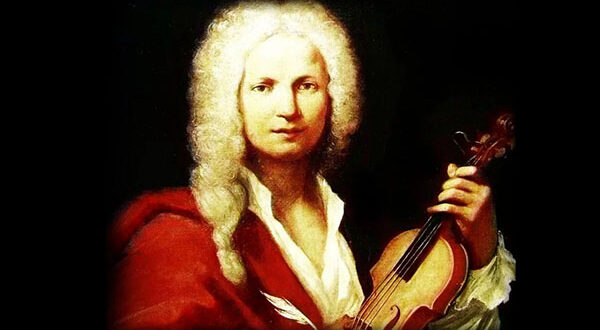
When someone hears the name Antonio Vivaldi, they almost immediately think of vibrant violins, springtime blooming through musical notes, storms transformed into sound, and one of the most famous works in history: The Four Seasons. Yet what much of the world does not know — or has forgotten — is a profoundly fascinating truth: Antonio Vivaldi was not only a brilliant composer. He was a Catholic priest.
Yes. Antonio Lucio Vivaldi, one of the most influential musicians of all time, was ordained a priest in the Catholic Church, and throughout his life he remained marked by that identity, even after he stopped regularly celebrating Mass due to health problems.
This completely changes the way we understand his legacy.
Because Vivaldi was not merely an artist.
In many ways, he was a man seeking to translate divine order into audible harmony.
In an age like ours — marked by noise, superficiality, and the loss of the sense of the sacred — rediscovering Vivaldi through a theological and pastoral lens is not only enriching: it can be deeply transformative.
I. Antonio Vivaldi: The Priest Behind the Musical Genius
Antonio Vivaldi was born on March 4, 1678, in Venice, into a Catholic family. His father, Giovanni Battista Vivaldi, a professional violinist, quickly recognized his son’s extraordinary talent and trained him musically from childhood.
But in Baroque Venice, art and faith were not necessarily separated as they often are today. Music was part of worship, education, and the soul of Christian civilization.
For this reason, Vivaldi followed the ecclesiastical path and was ordained a priest in 1703.
Because of his red hair, he became known as Il Prete Rosso (“The Red Priest”).
Why Did He Stop Celebrating Mass?
Shortly after his ordination, Vivaldi stopped regularly celebrating the Eucharist. Historical sources point to chronic health problems, possibly asthma or a severe respiratory condition, which made full liturgical ministry difficult.
This generated rumors and criticism, but no evidence of abandonment of the faith.
In fact, he remained connected to Catholic institutions, dedicated much of his life to teaching music at the Ospedale della Pietà (a Venetian orphanage for girls), and composed abundant sacred music.
Here we find a crucial pastoral truth:
A vocation does not necessarily disappear when its form changes.
Vivaldi may not have exercised the priesthood in a conventional way, but he lived a profoundly Christian mission: to educate, elevate souls, and serve through beauty.
II. Music and Theology: When Art Reflects the Order of God
The Catholic tradition has always understood that authentic beauty leads to God.
Saint Thomas Aquinas connected beauty with three elements:
- Integrity
- Proportion
- Clarity
Do these not perfectly describe Vivaldi’s music?
His compositions reveal structure, harmony, intelligence, and an almost supernatural ability to organize emotional chaos into intelligible beauty.
“The heavens declare the glory of God; the skies proclaim the work of His hands.” (Psalm 19:1)
This verse seems to resonate throughout Vivaldi’s work.
In The Four Seasons, for example, there is not only technical virtuosity. There is contemplation of the created order:
- Spring as rebirth
- Summer as force and storm
- Autumn as harvest
- Winter as austerity and waiting
This aligns profoundly with the Christian vision of the cosmos:
Creation is not chaos; it is a language spoken by God.
Vivaldi, like many artists formed within a Catholic worldview, did not see nature as mere matter, but as a symphony created by the Logos.
III. Vivaldi and the Logos: Christ as the Harmony of the Universe
The Gospel of Saint John begins with a breathtaking affirmation:
“In the beginning was the Word (Logos)… and through Him all things were made.” (John 1:1–3)
The term Logos means reason, order, meaning.
Music — especially sacred Baroque music — can be understood as a sensory reflection of that divine Logos.
Vivaldi worked with patterns, the resolution of tension, mathematical order, and emotional expression submitted to structure. This was not accidental.
Christian theology teaches that the universe possesses an intrinsic musicality because it proceeds from God.
Saint Augustine wrote:
“He who sings well prays twice.”
Although this phrase is often simplified, it expresses a profound intuition: music can become prayer when it arises from a soul directed toward God.
In Vivaldi, even outside strictly liturgical contexts, we find a spiritual elevation that reminds us beauty is never neutral; it can become sacramental.
IV. The Ospedale della Pietà: Charity, Education, and Redemption
One of the most moving aspects of Vivaldi’s life was his work at the Ospedale della Pietà in Venice.
There he taught music to orphaned, abandoned, or vulnerable girls.
This was not a minor detail.
It was a genuine work of mercy.
At a time when many of those girls were condemned to marginalization, Vivaldi offered them:
- Formation
- Dignity
- Discipline
- Beauty
- A future
From a pastoral perspective, this recalls the heart of the Gospel:
“Whatever you did for one of the least of these brothers and sisters of mine, you did for Me.” (Matthew 25:40)
Here Vivaldi appears not merely as a composer, but as a servant.
His music also became a tool of human restoration.
V. A Warning for Our Time: Technique Without Transcendence
We live in an era in which music has often been reduced to consumption, provocation, or mere entertainment.
Not all music elevates.
Not all beauty humanizes.
The life of Vivaldi raises an uncomfortable but necessary question:
Are we using art to glorify God or to feed emptiness?
Catholic tradition never rejected art; it baptized it.
It oriented it toward truth.
For this reason, recovering figures like Vivaldi can help us discern:
- What are we listening to?
- What are we spiritually cultivating?
- What kind of sensitivity are we forming in our children?
Beauty can evangelize.
But it can also degrade if separated from the Good.
VI. Vivaldi’s Silent Suffering: Success, Oblivion, and Humility
Paradoxically, Vivaldi died in Vienna in 1741 relatively poor and largely forgotten by the public of his own time.
This too carries a powerful spiritual lesson.
The world usually measures success through immediate fame.
God works on eternal scales.
Many saints, artists, and servants of God died in apparent failure, only to bear immense fruit later.
“For My thoughts are not your thoughts…” (Isaiah 55:8)
Today, centuries later, Vivaldi’s music is still alive.
It did not merely survive.
It triumphed.
This reminds us of a decisive pastoral lesson:
Fidelity matters more than applause.
VII. Practical Applications for Catholics Today
1. Rediscover Beauty as a Spiritual Path
Listening to elevated, contemplative, and structured music can purify the soul.
2. Educate Your Taste
Not everything popular nourishes the spirit. Christian tradition invites us to form our sensitivity.
3. Use Your Talents to Serve
Vivaldi transformed his gift into service for orphans and culture.
4. Understand That Your Vocation May Take Unexpected Forms
Although his ministry changed, his life still retained purpose.
5. Recover Interior Silence
Authentically beautiful music does not merely entertain: it brings order.
VIII. Vivaldi and the New Evangelization of Culture
Today more than ever, the Church must recover the evangelizing power of beauty.
Pope Benedict XVI repeatedly insisted on the via pulchritudinis — the way of beauty — as a path toward God.
Vivaldi represents precisely that:
A faith incarnated in artistic excellence.
He was not perfect.
He was not a canonized saint.
But he was a testimony to how Catholic identity can fruitfully shape culture in an immortal way.
Conclusion: The Priest Who Continued Celebrating… Through Violins
Perhaps Antonio Vivaldi stopped publicly celebrating Mass relatively early, but in a certain sense he never stopped lifting hearts upward.
His musical scores became sonic altars.
His concertos became spiritual architecture.
His teaching became concrete charity.
Vivaldi reminds us that when talent is placed at the service of truth, beauty becomes mission.
In a world that confuses noise with art and fame with purpose, the “Red Priest” still whispers a forgotten truth:
Music can become prayer.
Beauty can lead souls to God.
And a life offered — even in unexpected ways — can continue proclaiming divine glory centuries later.
“Let everything that has breath praise the Lord.” (Psalm 150:6)
And Vivaldi, with every note, still seems to do exactly that.