

Related Articles
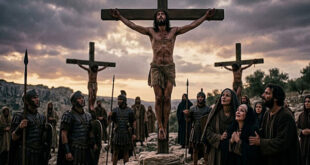


In the midst of a world marked by uncertainty, haste, and the constant feeling of scarcity—lack of time, peace, and security—there is a biblical phrase that has crossed the centuries with astonishing strength:
“The Lord is my shepherd; I shall not want.”
(Psalm 23:1)
These words, seemingly simple, contain one of the deepest confessions of faith in all of Sacred Scripture. They are not a religious slogan nor a superficial promise of well-being. They are the expression of a radical trust in God, born from the spiritual experience of the people of Israel and, for Christians, fulfilled in Christ.
Psalm 23 is perhaps the most beloved psalm in the Bible. For generations it has been prayed in moments of joy, suffering, war, illness, and death. It is prayer, catechesis, comfort, and a spiritual path.
In this article we will explore its meaning from a theological, pastoral, and practical perspective, discovering how this psalm can transform the way we live our faith today.
1. The Origin of the Psalm: A Prayer Born from Experience
Biblical tradition attributes this psalm to King David, who before becoming king was a shepherd of sheep. This detail is essential for understanding the depth of the image.
David knew perfectly what it meant to care for a flock:
- watching during the night
- searching for pasture
- protecting from predators
- healing wounds
- guiding along safe paths
When David says “The Lord is my shepherd,” he is affirming something extraordinary:
God cares for His people with the same dedication, patience, and love with which a shepherd cares for his sheep.
In the Bible, this image of the shepherd appears repeatedly to describe the relationship between God and His people.
God is not a distant ruler.
He is not an impersonal force.
He is the One who guides, protects, and nourishes.
2. “The Lord Is My Shepherd”: A Declaration of Radical Trust
The psalm begins with a personal affirmation:
“The Lord is my shepherd.”
It does not say the shepherd, nor a shepherd. It says my shepherd.
This reveals something profoundly Christian:
the relationship with God is not only collective or institutional; it is also personal.
God knows:
- our history
- our wounds
- our doubts
- our hopes
As Christian tradition teaches, God does not care for humanity in the abstract but for each concrete person.
This image reaches its fullness in the Gospel when Jesus declares:
“I am the good shepherd. The good shepherd lays down his life for the sheep.”
(John 10:11)
Here the heart of the Christian message is revealed:
God does not merely guide the flock; He gives His life for it.
3. “I Shall Not Want”: The True Meaning of This Promise
At first glance, this phrase may seem like a promise of material prosperity. However, theological tradition has always understood these words in a deeper way.
“I shall not want” does not mean:
- that there will never be problems
- that we will always have everything we desire
- that life will be easy
It means something much greater:
God never abandons those who trust in Him.
True abundance does not consist in possessing much, but in living sustained by divine providence.
Saint Augustine explained it masterfully:
when God is our supreme good, everything else finds its proper place.
For this reason, a Christian can go through difficulties and still affirm with faith:
“I lack nothing, because God is with me.”
4. “He Makes Me Lie Down in Green Pastures”: The Rest of the Soul
The psalm continues:
“He makes me lie down in green pastures;
he leads me beside still waters;
he restores my soul.”
(Psalm 23:2–3)
Modern life is marked by exhaustion:
- work stress
- hyperconnectivity
- constant anxiety
- the feeling of running without rest
This verse reminds us of a forgotten spiritual truth:
God wants to lead us toward the rest of the soul.
The “green pastures” symbolize:
- inner peace
- trust
- spiritual life
- communion with God
In Christian tradition, this rest is experienced especially in:
- prayer
- the Eucharist
- reading Scripture
- interior silence
God does not only guide us in struggle; He also invites us to pause and breathe in His peace.
5. “Even Though I Walk Through the Valley of the Shadow of Death…”
One of the most moving verses of the psalm says:
“Even though I walk through the valley of the shadow of death,
I will fear no evil,
for you are with me.”
(Psalm 23:4)
Here a fundamental truth of Christianity appears:
Faith does not eliminate suffering, but it changes its meaning.
The believer is not exempt from:
- illness
- loss
- crises
- pain
But in the midst of those dark moments he discovers something decisive:
God walks with him.
This verse has accompanied people for centuries in moments of:
- war
- persecution
- terminal illness
- grief
The reason for hope is not the absence of danger but the presence of God.
6. “Your Rod and Your Staff Comfort Me”
In the culture of the biblical shepherd, the rod and the staff were instruments of protection and guidance.
The rod was used to defend the flock from predators.
The staff was used to direct and rescue the sheep.
Spiritually, these symbols represent:
- God’s loving correction
- His moral guidance
- His providential protection
Sometimes God guides us along paths we do not understand.
At other times He allows trials that purify us.
But everything forms part of His pedagogy of love.
7. “You Prepare a Table Before Me”
The psalm then changes imagery:
“You prepare a table before me
in the presence of my enemies.”
(Psalm 23:5)
For Christian tradition, this verse carries a deeply Eucharistic resonance.
God not only guides us as a shepherd; He also feeds us.
The prepared table symbolizes:
- communion with God
- divine hospitality
- spiritual abundance
In the Christian faith, this promise reaches its fullest expression in the Eucharist, where Christ becomes food for the soul.
8. “Your Goodness and Mercy Shall Follow Me”
The psalm concludes with a declaration full of hope:
“Surely goodness and mercy shall follow me
all the days of my life,
and I shall dwell in the house of the Lord
forever.”
(Psalm 23:6)
Here the eschatological dimension of the psalm appears:
human life does not end in this world.
The believer walks toward a final goal:
eternal communion with God.
Christian life is, in a certain sense, a pilgrimage guided by the Shepherd toward the Father’s house.
9. How to Live Psalm 23 Today
This psalm is not only religious poetry. It is a concrete spiritual path.
Here are some ways to live it today:
1. Learn to trust
In a world obsessed with control, the psalm teaches us trust in providence.
2. Cultivate moments of silence
The spiritual “green pastures” are found when we dedicate time to God.
3. Do not flee from the dark valley
Difficulties are also part of the journey of faith.
4. Nourish sacramental life
The “prepared table” reminds us of the importance of the sacraments.
5. Live with hope
The last word does not belong to fear but to the mercy of God.
10. The Psalm That Still Speaks to the Heart of the World
Psalm 23 has been prayed by:
- saints
- martyrs
- monks
- families
- the sick
- soldiers
- believers of all cultures
Why does it continue to touch the human heart?
Because it speaks to the deepest questions of existence:
- Who guides me?
- Who takes care of me?
- Am I alone in suffering?
- Does life have meaning?
The psalm’s answer is simple and powerful:
We are not alone.
There is a Shepherd guiding our history.
And whoever allows himself to be led by Him can repeat—even in the midst of the uncertainty of the modern world:
“The Lord is my shepherd;
I shall not want.”