Related Articles



We live in an age marked by ideologies. Never before has there been such exposure to political, social, cultural, and philosophical currents that promise to give meaning to human life, explain the world, or build a “perfect” society. Social media, the media, universities, political parties, activist movements, and cultural trends constantly compete to shape people’s consciences. In the midst of this landscape, many Catholics ask themselves an increasingly urgent question:
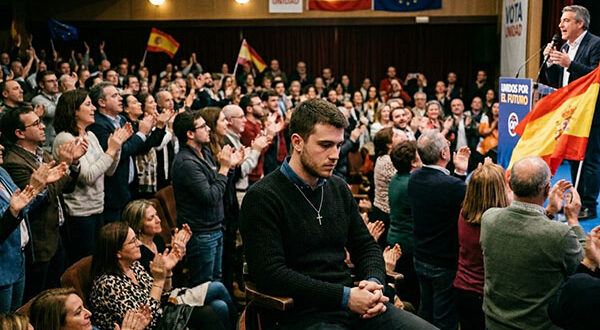
Can a Catholic militate in or adhere to ideologies contrary to the faith?
This is not a superficial issue. It is not simply about political preferences or cultural sympathies. The problem is much deeper: it directly affects the relationship between the Christian faith and the understanding of man, God, morality, and society.
Because Christianity is not merely a private feeling or a cultural tradition. The Catholic faith implies a concrete way of understanding reality, human dignity, freedom, sin, truth, salvation, and man’s eternal destiny.
Therefore, when an ideology contradicts these foundations, a conflict inevitably arises between Christ and that worldview.
What Is an Ideology?
Before answering, it is important to define the term properly.
An ideology is an organized system of ideas that seeks to explain reality and guide social, political, economic, or moral life. Modern ideologies usually offer comprehensive answers regarding:
- what the human being is,
- what freedom is,
- what the origin of social evils is,
- how society should be organized,
- which values should prevail,
- and what the “ideal world” would look like.
The problem appears when these ideologies replace God, relativize truth, or place man at the absolute center of everything.
Many contemporary ideologies were born precisely by explicitly rejecting Christianity or attempting to confine it to the private sphere.
Christianity Is Not an Ideology
It is important to understand something essential: Christianity cannot be reduced to just another ideology.
The Catholic faith is not a human construction born from philosophical theories or political struggles. Christianity is born from a Person: Jesus Christ.
The Christian does not merely follow a political program, but the Son of God.
Therefore, when an ideology demands total adherence, absolute moral obedience, or the reinterpretation of revealed truth, it enters into direct competition with the faith.
Christ said:
“I am the way and the truth and the life.”
— John 14:6
He did not say He was “one truth among many.”
The Catholic faith affirms that there is an objective truth about God and about man. Many modern ideologies, however, maintain that truth depends on culture, consensus, or individual desire.
That is where the clash begins.
The Historical Temptation to Mix Faith and Ideology
Throughout history, many Christians have attempted to merge the Gospel with ideological projects.
Sometimes this happened out of naivety.
Other times, out of political opportunism.
And at other times because certain movements promised justice, order, or progress.
However, the Church has always warned about the danger of absolutizing human systems.
The Problem of Turning Politics into Religion
When an ideology takes the place of God, it eventually demands an almost religious obedience.
This happened especially with the totalitarianisms of the twentieth century.
Atheistic Communism
The Church repeatedly condemned Marxist communism because of its atheistic materialism, its denial of God, its class struggle ideology, and its religious persecution.
Marxism was not merely an economic model: it implied a vision of man incompatible with the Christian faith.
It denied:
- the soul,
- transcendence,
- authentic freedom,
- private property as a natural right,
- and the spiritual dimension of the human being.
Millions of Christians were persecuted under communist regimes.
Churches destroyed.
Priests murdered.
Religious imprisoned.
Laypeople executed for professing the faith.
The history of the twentieth century is full of martyrs of communism.
Nazism and Pagan Fascism
Although different from one another, several extreme nationalist movements also clashed with Catholic doctrine when they exalted:
- race,
- the State,
- violence,
- or the political leader above God.
Every ideology that turns a human reality into an absolute eventually distorts human dignity.
What Does the Church Say About Ideologies?
The Church does not forbid Catholics from participating in politics. In fact, it encourages the transformation of society according to the Gospel.
But it establishes a fundamental principle:
No Ideology Can Replace the Christian Faith
The social doctrine of the Church teaches that Catholics may collaborate in many political and social areas, but never by accepting principles that contradict:
- natural law,
- the Gospel,
- Catholic morality,
- or human dignity.
The problem is not having political opinions.
The problem is embracing systems incompatible with the faith.
Can a Catholic Belong to Parties or Movements Contrary to the Gospel?
Here we enter into a delicate and very current issue.
Many Catholics today participate in organizations that promote:
- abortion,
- euthanasia,
- gender ideology,
- moral relativism,
- attacks on the family,
- contempt for religion,
- social engineering,
- or a radically secularized vision of the human person.
Sometimes they do so thinking:
- “I only support the economic side,”
- “I do not agree with everything,”
- “it is the lesser evil,”
- or “religion should not mix with politics.”
However, the Christian conscience cannot be fragmented.
A Catholic cannot actively support programs that gravely contradict God’s law without falling into a serious moral contradiction.
The Danger of a Double Spiritual Life
One of the greatest tragedies of modern Catholicism is the separation between faith and public life.
Many live:
- as Catholics on Sunday,
- and as relativists during the rest of the week.
But Christ did not call His disciples to a private and hidden faith.
He said:
“You are the salt of the earth… you are the light of the world.”
— Matthew 5:13-14
Faith must permeate:
- politics,
- work,
- culture,
- economics,
- family life,
- and all social life.
The False Idea of Moral Neutrality
In our time, much is said about “neutrality.”
But in reality, every ideology begins from a concrete moral vision.
When a society claims:
- that abortion is a right,
- that objective truth does not exist,
- that gender is a subjective construction,
- or that all moral conduct is equivalent,
it is already imposing a particular morality.
Christianity cannot accept a neutrality that expels God and moral law from public life.
Relativism: The Great Ideology of Our Time
Perhaps the most widespread ideology today is not a specific political system, but relativism.
The idea that:
- there is no absolute truth,
- each person creates his own morality,
- all religions are equal,
- and every personal choice is valid as long as it “does no harm.”
However, this mentality ultimately destroys the very notion of sin, conversion, and truth.
If objective truth does not exist:
- there is no sin,
- there is no need for repentance,
- nor any need for salvation.
That is why relativism is profoundly incompatible with the Gospel.
Can a Catholic Defend Partially Good Ideas Within Problematic Movements?
Here a prudent distinction is necessary.
Not everything within a political current is necessarily evil.
A Catholic may partially agree with certain:
- economic,
- social,
- labor-related,
- or cultural aspects.
The Church recognizes legitimate political diversity among Catholics.
However, there is a clear limit:
one can never formally support that which gravely contradicts Christian morality.
Prudence requires discernment.
The Social Doctrine of the Church: An Alternative to Extremism
The Church does not propose a closed ideology, but permanent principles.
Among them:
- the dignity of the human person,
- the common good,
- subsidiarity,
- solidarity,
- the defense of the family,
- religious freedom,
- social justice,
- and respect for natural moral law.
This prevents falling into either:
- extreme collectivism,
- or absolute individualism.
Catholic social doctrine seeks an integral vision of the human person.
The Problem of Idolizing Ideologies
When a person identifies more with an ideology than with Christ, a dangerous spiritual inversion occurs.
Then:
- the party becomes “sacred,”
- the political leader becomes untouchable,
- and the faith is subordinated to ideological interests.
Many end up reinterpreting the Gospel to fit their political current.
But the Christian is called to do exactly the opposite:
to examine every ideology in the light of Christ.
Not to adapt Christ to the world,
but to judge the world according to the Gospel.
Saint Paul and Spiritual Incompatibility
Sacred Scripture speaks clearly about the incompatibility between light and darkness.
“What fellowship can light have with darkness?”
— 2 Corinthians 6:14
This does not mean isolating oneself from the world.
Christians must actively participate in society.
But it does mean that they cannot embrace principles contrary to God.
The Pastoral Risk of Doctrinal Confusion
One of the great problems today is confusion.
Many sincere Catholics no longer know how to distinguish:
- what is compatible with the faith,
- what is negotiable,
- and what directly contradicts the Gospel.
This happens because for decades:
- doctrinal formation was weakened,
- faith was reduced to emotions,
- and clear teaching about sin and truth was avoided.
The consequence is a generation of Catholics easily absorbed by the ideologies of the moment.
Modern Ideologies Especially Problematic for the Faith
Without falling into political simplifications, there are elements incompatible with Catholicism present in many current movements:
Materialism
It reduces man to matter and economic well-being.
Radical Individualism
It turns personal desire into the supreme criterion of good.
Absolute Moral Progressivism
It denies objective limits to human conduct.
Nihilism
It claims that life lacks transcendent meaning.
Aggressive Secularism
It seeks to expel faith from the public sphere.
Gender Ideology
It denies human nature created by God as male and female.
Extreme Transhumanism
It seeks to artificially redefine the human being.
How Should a Catholic Act Today?
1. Form One’s Conscience
Many errors arise from doctrinal ignorance.
It is essential to:
- read the Catechism,
- study the social doctrine of the Church,
- know Sacred Scripture,
- and understand the moral teaching of the Church.
2. Discern Everything in the Light of the Gospel
It is not enough to repeat political slogans.
The Christian must ask:
- does this respect human dignity?
- does this contradict God’s law?
- does this bring people closer to Christ or farther away from Him?
3. Do Not Absolutize Political Parties
No political party perfectly represents the Gospel.
The Christian’s hope is not in human systems, but in God.
4. Have Public Courage
Today many remain silent out of fear:
- of rejection,
- of cancellation,
- of ridicule,
- or of losing social acceptance.
But Christ warned:
“If the world hates you, know that it hated me first.”
— John 15:18
Charity and Truth Must Remain United
Defending truth does not mean hating those who think differently.
The Christian must act:
- with firmness,
- but also with charity,
- humility,
- patience,
- and a sincere desire for the salvation of all.
Truth without charity can become harshness.
But charity without truth becomes empty sentimentalism.
Christ united both perfectly.
The Danger of Building a “Custom-Made Christianity”
Today there is a growing temptation:
to adapt the faith to personal ideological preferences.
Thus appear distorted versions of Christianity:
- a Christianity without the Cross,
- without sin,
- without conversion,
- without objective morality,
- and without spiritual demands.
But the Gospel cannot be reduced to a political tool.
Christ did not come to confirm our ideologies.
He came to convert the human heart.
The Saints in the Face of Ideologies
Many saints lived in times of enormous political and ideological confusion.
And yet:
- they were not swept away by fashions,
- they did not betray the truth,
- and they remained faithful to Christ even under persecution.
The martyrs of the twentieth century are an immense example:
they preferred to lose freedom, prestige, or life itself rather than renounce the faith.
The Christian Belongs First to Christ
The Catholic’s primary identity is not:
- political,
- national,
- cultural,
- nor ideological.
His fundamental identity is to be a child of God.
Therefore no human project can demand an absolute obedience that belongs only to the Lord.
“Seek first the Kingdom of God and His righteousness.”
— Matthew 6:33
Conclusion: Fidelity in Times of Confusion
So, can a Catholic militate in ideologies contrary to the faith?
From a theological and moral point of view, the answer is clear:
a Catholic cannot knowingly adhere to principles incompatible with the Gospel without entering into contradiction with his faith.
That does not mean living isolated from the world.
Nor abandoning public life.
Nor falling into fanaticism.
It means something much deeper:
placing Christ above every ideology.
In an age where so many currents seek to redefine:
- man,
- the family,
- truth,
- morality,
- and even human nature itself,
the Christian is called to remain firm, with intelligence, charity, and fidelity.
Not blindly following the fashions of the age,
but remaining united to the One who is eternal.
Because ideologies pass away.
Empires fall.
Cultural currents change.
But Christ remains forever.