Related Articles


Among the many figures of the Old Testament, some stand out for their courage, others for their holiness, and others for their political leadership. But there is one man who united three missions that are deeply necessary in any time of spiritual crisis: to restore faith, to return to the Word of God, and to teach the people to live according to it. That man was Ezra.
His story is mainly told in the Book of Ezra, a fundamental text for understanding how God rebuilds His people when they have strayed from Him.
Ezra was not a warrior or a king. He was a priest, a scribe, and a teacher of the Law. And precisely for that reason his figure is surprisingly relevant today: in an age of moral confusion, loss of religious identity, and weakening transmission of faith, the example of Ezra reminds us that spiritual renewal always begins by returning to the Word of God.
This article seeks to walk through his story, delve into its theological meaning, and offer spiritual insights for applying his example in our daily lives.
1. The Historical Context: When God’s People Had Lost Everything
To understand the importance of Ezra, we must place ourselves in one of the most painful moments in Israel’s history.
In 587 B.C., Jerusalem was destroyed by the Babylonian Empire under the king Nebuchadnezzar II. The Temple of Jerusalem was razed, and a large part of the Jewish people was deported to Babylon.
This event is known as the Babylonian Exile.
It was not only a political crisis, but also a spiritual one:
- Israel had lost its land.
- It had lost its temple.
- It had lost its autonomy.
And worst of all: it had largely forgotten the Law of God.
Decades later, the situation changed when the Persian king Cyrus the Great allowed the Jews to return to Jerusalem and rebuild the temple.
This return is narrated in the Book of Ezra.
However, although the temple was rebuilt, the people remained spiritually weakened.
This is where the providential figure of Ezra appears.
2. Who Was Ezra?
Ezra was:
- a priest
- a scribe skilled in the Law
- a spiritual leader of the people
The Bible presents him in this way:
“This Ezra went up from Babylon. He was a scribe skilled in the Law of Moses that the Lord, the God of Israel, had given.”
(Ezra 7:6)
His mission was neither military nor political.
His mission was spiritual: to restore fidelity to God.
In a sense, Ezra can be considered one of the first great theologians and biblical teachers in the history of Israel.
The biblical text describes his attitude with an extraordinary phrase:
“For Ezra had set his heart to study the Law of the Lord, to do it, and to teach his statutes and rules in Israel.”
(Ezra 7:10)
This phrase summarizes three fundamental pillars of any authentic spiritual life:
- To study the Word
- To live the Word
- To teach the Word
It is not enough to know it.
It is not enough to preach it.
First, one must allow it to transform the heart.
3. The Return to Jerusalem: A Spiritual Mission
Ezra returned to Jerusalem around 458 B.C., authorized by the Persian king Artaxerxes I.
But his journey was not merely geographical.
It was a spiritual pilgrimage to renew the covenant with God.
During the journey something significant happened: Ezra refused to ask the king for military protection, because he had proclaimed that God protects those who trust in Him.
So he proclaimed a fast.
Scripture says:
“Then I proclaimed a fast there, at the river Ahava, that we might humble ourselves before our God, to seek from Him a safe journey.”
(Ezra 8:21)
Here we see a very profound spiritual teaching:
Before undertaking a mission for God, Ezra prays, fasts, and trusts.
He does not begin with human strategies.
He begins with interior conversion.
4. Ezra’s Great Spiritual Reform
When he arrived in Jerusalem, Ezra discovered something that filled him with sorrow: the people had once again fallen into many practices contrary to the Law of God.
Ezra’s reaction was deeply spiritual.
The Bible describes that he:
- tore his garments
- fell down in prayer
- confessed the sins of the people
He does not place himself as a judge.
He places himself as an intercessor.
His prayer says:
“O my God, I am ashamed and blush to lift my face to you, my God, for our iniquities have risen higher than our heads.”
(Ezra 9:6)
Here we see an attitude that we have almost lost today: the awareness of communal sin.
Ezra understands that the sin of the people is not merely an individual problem.
It is a rupture of the covenant with God.
5. The Most Important Moment: The Public Proclamation of the Law
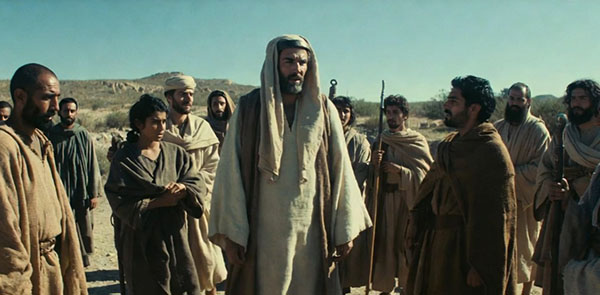
One of the most moving episodes in the Bible occurs when Ezra gathers the people to publicly read the Law.
This moment is also narrated in the Book of Nehemiah, where he appears together with the governor Nehemiah.
Ezra stands on a platform and reads the Scripture before all the people.
The reaction was astonishing.
The Bible says:
“All the people wept as they heard the words of the Law.”
(Neh 8:9)
Why were they weeping?
Because the Word of God had touched their hearts.
This moment is a powerful image of what happens every time Scripture is proclaimed with faith.
In a sense, it is an anticipation of Christian liturgy, where the Word of God continues to be proclaimed before the people.
6. The Theological Relevance of Ezra
From a theological perspective, the figure of Ezra has several profound dimensions.
1. Restorer of the Covenant
Ezra reminds the people that their identity depends on their relationship with God.
Without fidelity to the Law, Israel loses its mission.
2. Father of the Biblical Tradition
Many scholars believe that the scribal movement initiated by Ezra was fundamental for the preservation of the Scriptures.
Without this tradition, much of the Old Testament might never have reached us.
3. A Figure That Anticipates the Ministry of Teaching
Ezra’s mission anticipates something that will later be central in the Church:
the faithful transmission of the Word of God.
In Christianity this mission is carried out by:
- the apostles
- the bishops
- the priests
- the catechists
7. Ezra and the Church Today
The example of Ezra is surprisingly relevant today.
We live in an age in which many Christians:
- know little about the Bible
- have a superficial faith
- live disconnected from tradition
In this context, Ezra’s mission becomes necessary again.
The renewal of the Church does not begin with structural reforms, but with something much deeper:
returning to the Word of God.
8. Practical Applications for Christian Life
The story of Ezra offers concrete lessons for our daily lives.
1. Returning to Scripture
Many Christians barely read the Bible.
Ezra reminds us that faith grows stronger when we listen to and meditate on the Word of God.
A small spiritual habit can change our lives:
reading the Gospel every day.
2. Preparing the Heart
The Bible says that Ezra prepared his heart.
This means:
- prayer
- humility
- openness to conversion
The Word of God does not transform those who listen to it with indifference.
3. Living What We Believe
Ezra did not only teach the Law.
He practiced it.
This is one of the greatest challenges of Christian life: coherence.
4. Transmitting the Faith
Ezra understood that faith does not preserve itself.
It must be taught.
Today this is especially important in:
- families
- catechesis
- parish communities
Every Christian is called, in some way, to become a small Ezra for others.
9. A Lesson for Our Time
The story of Ezra teaches us something very profound:
when the people of God drift away, God always raises up men and women who call them back.
They will not always be political leaders.
Often they will simply be people who deeply love the Word of God.
Perhaps today the world does not need more religious strategies.
Perhaps it needs more men and women like Ezra:
people who:
- study the Scriptures
- live the faith
- lovingly teach the truth of God.
Conclusion: Rebuilding the Temple of the Heart
Ezra helped rebuild Jerusalem.
But his most important work was something else.
He rebuilt the heart of the people.
Today many temples still stand, but sometimes hearts are in ruins.
Ezra’s mission continues every time someone opens the Bible, listens to God’s voice, and decides to live according to His will.
Because in the end, the true reconstruction does not happen in the stones of a temple.
It happens in the most important place of all:
the human soul.