Related Articles
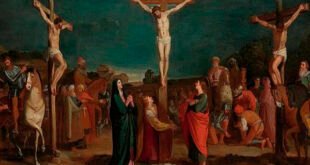
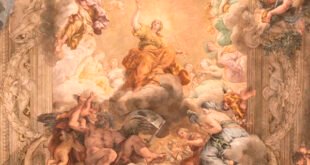

At the heart of the Christian faith, there are names that are not mere labels, but true revelations. One of them is “Christ.” It is not a surname, nor an honorary title without content: it is a confession of faith, a synthesis of the entire mission of Jesus Christ, and a key to understanding who He is… and who we are called to be.
In this article, we will calmly, deeply, and accessibly explore this question: why is the Son of God made man also called Christ? And we will see how this truth, which may seem theoretical, has very concrete implications for our lives today.
1. The meaning of “Christ”: the Anointed One of God
The word “Christ” comes from the Greek Christós, which means “Anointed One.” It is the translation of the Hebrew term Messiah (Mashiach). Therefore, when we say “Jesus Christ,” we are literally saying:
“Jesus, the Anointed One of God”
But what does it mean to be “anointed”?
In the Old Testament, anointing with oil was a visible sign of divine election. It was not an empty symbolic gesture: it meant that God consecrated a person for a specific mission and granted them His grace to fulfill it.
2. Anointing in the Old Testament: kings, priests, and prophets
In the history of Israel, three types of people were anointed:
1. Kings
They were anointed to govern the people in the name of God. For example, King David was anointed by the prophet Samuel.
2. Priests
They were consecrated to offer sacrifices and mediate between God and the people. The priest Aaron is the classic example.
3. Prophets
Although not always with oil, they were spiritually “anointed” to proclaim the Word of God. Think of Isaiah or Jeremiah.
3. Jesus Christ: the perfect and definitive Anointed One
Here is the central point: Jesus Christ is not just another anointed one… He is the Anointed One par excellence.
He does not merely fulfill one of these roles, but all three at once, in a full and perfect way:
✦ Christ the King
He does not rule with political power, but with divine authority and sacrificial love. His kingdom is not of this world, yet it transforms the world from within.
“My Kingdom is not of this world” (Jn 18:36)
✦ Christ the Priest
He does not offer external sacrifices: He offers Himself. He is both priest and victim at the same time.
“You are a priest forever according to the order of Melchizedek” (Heb 5:6)
✦ Christ the Prophet
He does not merely transmit the Word of God: He is the Word made flesh.
“And the Word became flesh and dwelt among us” (Jn 1:14)
4. A different anointing: not bodily, but divine
Here we enter into a profoundly theological teaching:
The anointing of Jesus Christ was not bodily, but spiritual and divine.
Unlike the ancient kings or priests, Jesus was not anointed with visible oil. Why?
Because in Him dwells the fullness of God Himself:
“In Him the whole fullness of deity dwells bodily” (Col 2:9)
This means that His “anointing” is not an external sign, but an absolute interior reality:
Jesus is totally consecrated because He is God made man.
His humanity is completely permeated by divinity. He does not need a sign:
He is the very reality that the signs pointed to.
5. Christ: fulfillment of all the promises
For centuries, the people of Israel awaited the Messiah. This hope runs throughout all of Scripture.
The prophets announced an Anointed One who would bring salvation:
“The Spirit of the Lord is upon me, because He has anointed me…” (Is 61:1)
Jesus applies these words to Himself in the synagogue:
“Today this Scripture is fulfilled in your hearing” (Lk 4:21)
That is to say:
Jesus does not merely speak about the Christ… He is the awaited Christ.
6. Theological relevance: why is this title so important?
Calling Jesus “Christ” is not optional. It is essential to the Christian faith.
To deny that Jesus is the Christ would be to deny His mission and identity. That is why Peter’s confession of faith is so central:
“You are the Christ, the Son of the living God” (Mt 16:16)
In that sentence, the whole of Christianity is summarized.
7. Practical application: what does it mean for you that Jesus is the Christ?
This truth is not only to be studied. It is to be lived.
1. Christ is your King
This means allowing Him to govern your life: your decisions, your priorities, your values.
👉 Concrete question:
Who truly rules your life?
2. Christ is your Priest
He constantly intercedes for you. You are not alone before God.
👉 Application:
Turn to Him in prayer. Trust in His mercy.
3. Christ is your Prophet
He continues to speak to you today: in Scripture, in the Church, in your conscience.
👉 Application:
Listen to His voice. Dedicate time to the Gospel.
8. A call for today: living as the anointed
Here is something beautiful and often misunderstood:
Through baptism, you also share in the anointing of Christ.
In a certain way, you are:
- a priest (you offer your life to God),
- a prophet (you bear witness to the truth),
- a king (you master sin and serve others).
In a world marked by confusion, relativism, and a loss of meaning, this identity is more necessary than ever.
9. Conclusion: Christ, center of history… and of your life
To say that Jesus is the Christ is not to repeat an ancient formula. It is to affirm that:
- God has acted in history,
- He has fulfilled His promises,
- and He continues to act in your life today.
Christ is not only a figure of the past.
He is the living, present, and near Anointed One.
And the great question is not only:
why is He called Christ?
But rather:
what place does Christ occupy in your life?
Spiritual closing
Perhaps today is a good moment to make Peter’s confession of faith your own—not only with words, but with your heart:
“Lord, You are the Christ…
the Anointed One of God,
the meaning of my life,
my King, my Priest, and my Prophet.”
And from there, begin—or begin again—a more conscious, deeper, and more authentic journey of faith.