

Related Articles

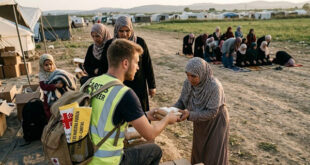

We live in a time when images of war once again dominate headlines, screens, and conversations. Conflicts near and far force us to confront questions that are not new, but are certainly urgent: can a Christian support a war? Is faith in Christ—the Prince of Peace—compatible with the use of force? Where is the line between legitimate defense and unjust violence?
The Catholic Church, far from offering simplistic answers, has reflected on this question for centuries. Between the sword and the cross, she has always sought a deeply human and evangelical synthesis: the defense of life, justice, and peace, even in a world wounded by sin.
This article aims to accompany you along that path: to understand the Church’s teaching on war, to discover its theological foundation, and above all, to help you live today with a Christian conscience in the midst of a complex reality.
1. The Starting Point: The Gospel of Peace
Everything begins with an apparent paradox.
Jesus Christ preaches love for enemies:
“Love your enemies, do good to those who hate you” (Luke 6:27)
And yet, He also acknowledges the existence of evil in the world and the need to confront it. This is not naive pacifism, but a demanding peace—one that passes through justice, truth, and sacrifice.
Early Christianity, especially in its first centuries, tended toward a radical rejection of violence. Many Christians preferred martyrdom rather than taking up the sword. But as the Church grew and faced social and political responsibility, an inevitable question arose:
What should be done when evil threatens the lives of the innocent?
2. The Development of Doctrine: The “Just War”
The most influential answer came from Saint Augustine and was later systematized by Saint Thomas Aquinas. They did not justify war as something good in itself, but as an evil that may be permitted under very specific circumstances.
Thus was born the doctrine of the just war.
For a war to be considered morally legitimate, very strict conditions must be met. The Catechism of the Catholic Church (n. 2309) gathers this tradition and establishes four fundamental criteria:
1. Just cause
There must be grave, certain, and lasting damage. Political or economic interests are not enough.
2. Last resort
All peaceful means must have been exhausted: dialogue, negotiation, sanctions…
3. Proportionality
The use of force must not produce evils greater than those it seeks to eliminate.
4. Serious prospect of success
It is not moral to initiate a war doomed to failure that will only bring more suffering.
These criteria reveal something essential:
war is never desirable; it may only be tolerated as an extreme last resort.
3. Legitimate Defense: A Fundamental Key
The doctrine of just war is grounded in a broader principle: the right to legitimate defense.
The Church teaches that it is not only permissible to defend one’s own life, but that in certain circumstances it may even be a moral duty to defend others, especially the most vulnerable.
This has important implications:
- A father may defend his family.
- A police officer may use force to protect society.
- A State may defend its people against unjust aggression.
Here emerges a deeply Christian idea:
love is not passivity; love also protects.
4. War Never Ceases to Be a Tragedy
Although the Church acknowledges the possibility of a just war, it never glorifies it.
In fact, the modern Magisterium has increasingly emphasized its tragic nature. Saint John Paul II, Benedict XVI, and Pope Francis have strongly denounced the violence of war, especially in the context of modern weaponry.
Today, with the existence of nuclear, biological, and advanced technological weapons, the question becomes even more serious:
Is it still possible to speak of a “just war” in the classical sense?
Many theologians argue that current conditions make it almost impossible to fulfill the traditional moral criteria.
For this reason, the Church increasingly insists on:
- The prevention of conflicts
- International diplomacy
- The building of a culture of peace
5. The Heart of the Problem: Human Sin
To understand war from a Christian perspective, we must go to its root.
War is not merely a political or economic phenomenon. Ultimately, it is a consequence of sin: pride, greed, hatred.
As the Letter of James says:
“What causes wars and fights among you? Is it not your passions that are at war within you?” (James 4:1)
This completely changes the perspective.
Peace is not built only through treaties.
It is built in the human heart.
6. Practical Applications for Today’s Christian
It may seem that all this is far removed from our daily lives. But it is not.
The Church’s teaching on war has very concrete implications:
1. Forming one’s conscience
Not all conflicts are the same. A Christian is called to be informed, to reflect, and to judge according to moral criteria—not ideological ones.
2. Rejecting unnecessary violence
From aggressive language to a culture of hatred, everything contributes to a logic of war.
3. Praying for peace
Prayer is not escapism. It is real participation in God’s work in the world.
4. Promoting reconciliation
In the family, at work, in society. Peace begins in small things.
5. Accompanying suffering
The victims of war—refugees, the wounded, broken families—are a direct call to Christian charity.
7. Between the Sword and the Cross: A Permanent Tension
The Christian lives in a tension that is not easily resolved.
On one hand, he is called to the radicalism of the Gospel: to love, to forgive, to turn the other cheek.
On the other, he lives in a world where evil is real—and sometimes violent.
The cross does not eliminate the sword, but transforms it.
Christ did not come to legitimize violence, but to redeem it. He teaches us that the true victory is not destroying the enemy, but overcoming evil with good.
8. A Final Perspective: Peace as a Vocation
The Church’s teaching on war is not a justification of violence, but a defense of human dignity in extreme situations.
At its core, everything points to a higher calling:
“Blessed are the peacemakers, for they shall be called children of God” (Matthew 5:9)
It is not only about avoiding war.
It is about building peace.
A peace that is not weakness, but strength.
That is not silence, but truth.
That is not indifference, but active love.
Conclusion
The sword may, in extreme cases, be tolerated.
But the cross is always the way.
The Church reminds us that even when war seems inevitable, it never ceases to be a wound in the heart of humanity. And that the Christian, even in the midst of conflict, is called to be a sign of hope.
Today more than ever, in a divided world, this teaching is not just theory:
it is an urgent call to live with responsibility, discernment, and faith.
Because the true battle—the decisive one—is not fought on the battlefield,
but in the human heart.