Related Articles

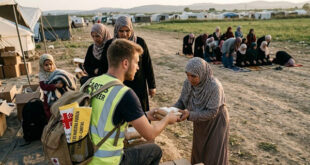

There are human sorrows that seem too deep for words.
The loss of a child is one of them.
It does not matter whether that child died in the womb, during childbirth, in childhood, in youth, or even as an adult. Nor does it matter whether the death came suddenly, through illness, accident, violence, or even through the silent tragedy of abortion. The wound left by the absence of a child pierces the soul in a unique way.
Many parents describe this experience as an interior amputation.
Something dies within them as well.
And yet, in the midst of that darkness, the Catholic Church has spent two thousand years proclaiming something scandalous to the modern world: suffering does not have the final word. Death does not have the final word. Christ has conquered it.
This article does not seek to offer easy phrases or superficial comfort. Authentic pain deserves reverence. But it does seek to offer a deeply Catholic, theological, and pastoral reflection on one of the hardest trials a human being can endure.
Because when everything seems destroyed, faith still whispers:
“I am the resurrection and the life; he who believes in Me, though he die, yet shall he live.”
— John 11:25
The Most Unnatural Pain
There is something profoundly devastating about the death of a child because it contradicts the natural order we instinctively expect.
Parents expect to die before their children.
They expect to protect them, guide them, and watch them grow.
When the opposite happens, the human heart enters a kind of existential bewilderment. Time itself seems shattered. Many parents experience guilt, anger, emptiness, disbelief, or even a sense of betrayal by God.
In Sacred Scripture, we find countless scenes of parents weeping for their children:
- David mourning inconsolably for Absalom.
- Rachel “weeping for her children.”
- Jairus begging for his dying daughter.
- The widow of Nain accompanying the body of her only son.
- And above all, the Blessed Virgin Mary at the foot of the Cross.
Christianity does not deny pain.
It looks directly at it.
Jesus Christ did not say that death was something “natural” and insignificant. He Himself wept at the tomb of Lazarus.
“Jesus wept.”
— John 11:35
This shortest verse in Scripture contains immense depth. God made man wept. He did not pretend indifference. He did not suppress suffering. He sanctified human tears.
The Mystery of Suffering: One of Humanity’s Hardest Questions
One of the most common questions after losing a child is:
“Why did God allow this?”
It is a legitimate question. Even the saints asked it.
Catholic theology teaches that God did not create death as part of His original plan. Death entered the world because of original sin and the fallen condition of humanity.
“Through one man sin entered the world, and through sin, death.”
— Romans 5:12
We live in a wounded world.
This means that illnesses, tragedies, accidents, and sufferings are not always “personal punishments” sent directly by God. Very often, they are consequences of a fallen creation.
But here lies the heart of Christianity:
God can bring good even out of the most terrible suffering.
The Cross is the supreme proof.
The worst crime in history — the death of the Son of God — became the instrument of the world’s salvation.
That does not mean pain stops hurting.
It means suffering can have meaning when united to Christ.
The Virgin Mary: Mother of Sorrows
No Catholic reflection on the loss of a child can ignore the Virgin Mary.
She watched her innocent Son die in the cruelest way imaginable.
She held His lifeless body in her arms.
She heard the blows of the nails.
She remained standing at the foot of the Cross.
That is why the Church calls her:
- Our Lady of Sorrows
- Mater Dolorosa
- Queen of Martyrs
Mary understands the pain of parents like no one else.
Many parents who lose a child discover an entirely new relationship with the Virgin. They no longer see her only as the Queen of Heaven, but as a wounded Mother.
And there is a tremendous lesson in this:
Mary did not flee from suffering. She remained beside the Cross.
The modern world often responds to pain with:
- escape,
- distraction,
- medication,
- entertainment,
- frantic activism,
- or despair.
The Virgin teaches another path: to remain with God even when we understand nothing.
The Lights and Shadows of Grief from a Catholic Perspective
The Shadows: The Spiritual Dangers of Suffering
The loss of a child can become a devastating spiritual crisis.
Some people:
- abandon the faith,
- feel hatred toward God,
- fall into deep depression,
- develop addictions,
- destroy their marriage,
- live trapped in guilt,
- or seek answers in spiritism and occult practices.
Here the Church speaks clearly.
Pain never justifies turning to:
- mediums,
- séances,
- attempts to “contact” the dead,
- esotericism,
- belief in reincarnation,
- New Age practices,
- tarot,
- or superstition.
Although these often arise from a legitimate desire to see the lost child again, such practices open dangerous spiritual doors and lead people away from the true consolation of God.
The Church invites us to pray for the dead, not to attempt to manipulate the spiritual world.
There is also another danger: idolizing suffering.
Some parents become psychologically and spiritually paralyzed for years. They cling to suffering as though allowing healing would be a betrayal of the child who died.
But healing does not mean forgetting.
Smiling again does not mean loving less.
Christ does not desire a life destroyed forever.
The Lights: How God Transforms Suffering
Throughout the history of the Church, countless parents have found in this trial a profound spiritual transformation.
Many discover:
- a more authentic faith,
- a deeper prayer life,
- detachment from the world,
- greater compassion,
- true conversion,
- and stronger hope in eternal life.
Suffering can break us… or open us entirely to God.
Saint Paul wrote:
“We know that in everything God works for good with those who love Him.”
— Romans 8:28
He does not say that all things are good.
The death of a child is not good.
But God can still act even there.
Where Is My Child Now? Catholic Hope
The Church teaches that every human soul is eternal.
Death is not disappearance.
It is a passage.
For baptized children, Christian hope is immense. The Church fully trusts in God’s mercy and in the promises of Christ.
In the case of children who die without baptism, including miscarriages and prenatal deaths, the Church avoids absolute statements but teaches something deeply hopeful: we may entrust those children to the infinite mercy of God.
The Catechism states:
“The great mercy of God… allows us to hope that there is a way of salvation for children who have died without Baptism.”
This is especially important for parents devastated by prenatal loss.
Abortion: A Silent and Deep Wound
To speak about the loss of a child also requires addressing the tragedy of abortion.
We live in a culture that often presents abortion as a simple medical procedure. But the human and spiritual reality is frequently far more complex.
Many mothers — and fathers as well — experience after abortion:
- guilt,
- emptiness,
- anxiety,
- depression,
- nightmares,
- emotional breakdown,
- difficulty loving,
- and even suicidal thoughts.
Although some attempt to deny these consequences, the Church has spent decades pastorally accompanying this silent suffering.
And here it is essential to understand something:
the Church condemns the sin, but never abandons the repentant sinner.
Christ came precisely to save the wounded.
Can God Forgive an Abortion?
Yes. Absolutely yes.
There is no sin God cannot forgive when there is sincere repentance.
Despair does not come from God.
Many women believe:
- “God will never forgive me.”
- “I am a murderer.”
- “I do not deserve to return to the Church.”
But the Gospel tells another story.
Peter denied Christ.
Paul persecuted Christians.
Many saints had terrible pasts.
Divine mercy is infinitely greater than human sin.
The traditional Catholic path involves:
- sincere repentance,
- sacramental confession,
- penance,
- spiritual direction,
- interior reparation,
- and trusting abandonment to divine mercy.
Many mothers find profound spiritual healing by praying for that child, giving the child a name, and entrusting him or her to God.
This is not about denying the gravity of abortion.
It is about proclaiming that Christ can rebuild even the most painful ruins.
How to Face the Loss of a Child through Catholic Faith
1. Allow Yourself to Weep
Authentic spirituality does not demand emotional coldness.
Crying is not a lack of faith.
Even the saints wept deeply.
2. Do Not Isolate Yourself
Suffering tends to imprison.
But prolonged isolation can slowly destroy the soul.
The Church insists on the importance of:
- family,
- community,
- parish life,
- the sacraments,
- and spiritual direction.
3. Turn to the Sacraments
Especially:
- confession,
- the Eucharist,
- Eucharistic adoration,
- and anointing in cases of extreme psychological or physical suffering.
Christ truly acts through the sacraments.
They are not empty symbols.
4. Pray for Your Child
Catholic tradition has always insisted on praying for the dead.
Having Masses offered for a deceased child is one of the deepest expressions of Christian love.
Death does not break spiritual communion.
5. Avoid Superficial Answers
Phrases such as:
- “God needed another angel,”
- “Everything happens for a reason,”
- “You just have to stay strong,”
can wound deeply.
Grief requires silence, presence, and authentic charity.
Sometimes the greatest apostolate is simply to remain beside someone in pain.
6. Understand That Grief Has No Clock
Some wounds will accompany a person for life.
And that does not mean a lack of faith.
Even years later, the following may reopen the pain:
- anniversaries,
- memories,
- important dates,
- songs,
- photographs,
- or painful questions.
Christian healing does not always remove the wound; often it transforms it.
The Cross Is Not the End
Christianity would be unbearable if it ended at Calvary.
But it ends at the empty tomb.
The Resurrection completely changes the meaning of death.
For a Catholic, the cemetery is not a place of definitive farewell.
It is a place of waiting.
Saint Paul wrote:
“That you may not grieve as others do who have no hope.”
— 1 Thessalonians 4:13
The Christian does indeed weep.
But not without hope.
The Loss of a Child and Eternity
The modern world lives obsessed with this life.
That is why death seems like an absolute catastrophe.
Catholic faith reminds us of something revolutionary: we were created for eternity.
This life, with all its beauty and suffering, is temporary.
That does not minimize the pain of losing a child.
But it does change the horizon.
If Christ has risen, then love does not end in a grave.
One day, in Christ, every tear will be wiped away.
“He will wipe away every tear from their eyes, and death shall be no more, neither shall there be mourning nor crying nor pain anymore.”
— Revelation 21:4
Conclusion: When Nothing Remains but to Cling to God
There are moments when no answer is sufficient.
Theology can illuminate.
Pastoral care can accompany.
The sacraments can sustain.
But certain wounds can only be placed silently before God.
The loss of a child never leaves a human being unchanged.
Something is altered forever.
Yet Catholic faith teaches that even from the deepest suffering, holiness, conversion, and supernatural hope can arise.
Christ never promised a life without crosses.
He promised that we would never carry them alone.
And perhaps there lies the very heart of Christianity:
a God who does not observe suffering from afar, but enters into it, carries it upon His shoulders, and opens — even from the tomb — a path toward eternal Life.