Related Articles



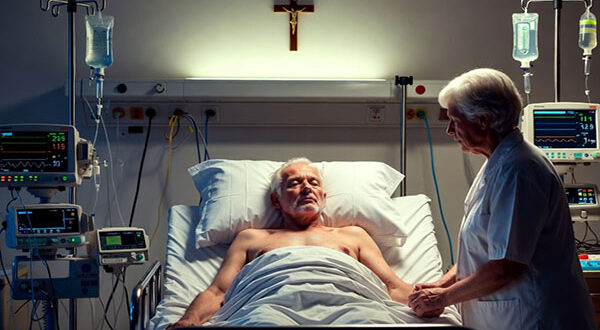
We live in an age in which medical technology has reached extraordinary levels. Today, it is possible to keep a person alive for weeks, months, and even years thanks to machines. But this technical capacity confronts us with one of the deepest and most delicate questions of human existence:
When is it morally permissible to disconnect a patient from life-support machines?
This is not merely a medical question. It is, above all, a moral, spiritual, and profoundly human issue. And the Catholic Church, far from offering simplistic answers, provides a rich, nuanced teaching filled with mercy.
This article seeks to be a clear, deep, and practical guide to help you understand this issue through the lens of faith.
1. The Starting Point: Life Is a Gift, Not a Possession
The Church teaches something fundamental:
Human life is sacred because it comes from God and belongs to Him.
We are not absolute owners of our lives or the lives of others. We are stewards, not proprietors.
Sacred Scripture expresses this powerfully:
“The Lord gave, and the Lord has taken away; blessed be the name of the Lord” (Job 1:21)
And also:
“You shall not kill” (Exodus 20:13)
This commandment not only forbids direct killing, but any action that intends to cause death.
Therefore, from the outset, we must be clear:
👉 Directly causing the death of a patient (euthanasia) is never permitted.
But here arises the key point:
👉 Not every “letting die” is euthanasia.
2. The Key Difference: Causing Death vs. Allowing It to Occur
Here lies the heart of Christian discernment.
❌ Euthanasia (always immoral)
It is:
- Acting or failing to act with the intention of causing death
- In order to eliminate suffering
👉 Example: administering a substance to cause death.
✅ Accepting the Natural End (morally permissible)
It is:
- Recognizing that death is inevitable
- Avoiding disproportionate treatments
- Accompanying the person with dignity, love, and care
👉 Here, the goal is not death, but not artificially prolonging meaningless suffering
3. Ordinary and Extraordinary Means: The Moral Key
The Church distinguishes between:
A) Ordinary Means (always obligatory)
These are basic forms of care that must always be provided, because they respect human dignity.
They include:
- Food and hydration (even artificial, in many cases)
- Hygiene
- Proportionate pain relief
- Basic care
👉 To deny these can constitute euthanasia by omission
B) Extraordinary Means (not obligatory)
These are treatments that:
- Are very costly, painful, or invasive
- Offer no reasonable hope of improvement
- Only artificially prolong life
Examples:
- Aggressive life-support with no expectation of recovery
- Disproportionate interventions in terminal phases
👉 These may be legitimately refused
4. So… When Is It Permissible to Disconnect Someone?
The answer, though complex, can be expressed clearly:
✅ It is permitted when:
- The patient is in a terminal condition or has no reasonable hope of recovery
- Machines only artificially prolong the dying process
- The treatment is disproportionate or extraordinary
- There is no intention to cause death
- Basic care is maintained (nutrition, hydration when appropriate, pain relief)
👉 In this case, the patient is not being killed
👉 One allows death to come naturally
❌ It is NOT permitted when:
- Disconnection is done with the intention of causing death
- The patient could live with an acceptable quality of life
- Basic care (such as food or water without serious reason) is withdrawn
- The goal is to eliminate suffering by eliminating the person
👉 In these cases, it is euthanasia (direct or indirect)
5. The Role of Intention: What Is in the Heart Matters
In Catholic moral theology, intention is crucial.
Two externally similar actions can be morally different:
- Disconnecting “so that he may stop suffering” → ❌ Euthanasia
- Withdrawing a useless and disproportionate treatment → ✅ Morally licit
It is not the same:
👉 “I want him to die”
as
👉 “I do not want to uselessly prolong his agony”
6. Suffering and Its Christian Meaning
Here we enter a deeply spiritual dimension.
The modern world flees from suffering. But Christianity illuminates it:
“I complete in my flesh what is lacking in Christ’s afflictions” (Colossians 1:24)
This does not mean seeking pain, but understanding that:
- Suffering can have redemptive value
- It can be offered to God
- It can be a moment of profound grace
👉 But be careful:
The Church does not oblige us to suffer uselessly
Therefore:
- It is legitimate to use pain relief
- It is legitimate to avoid disproportionate treatments
7. Palliative Care: The Truly Human Response
In contrast to euthanasia, the Church proposes something far greater:
Palliative Care
These involve:
- Comprehensive medical care
- Pain management
- Psychological and spiritual support
- Presence, love, and dignity
👉 The patient is not abandoned
👉 The person is accompanied until the end
This reflects the heart of the Gospel:
“I was sick and you visited me” (Matthew 25:36)
8. Practical Application: How to Act in Real Life
If you are facing such a situation, here are clear criteria:
1. Always ask:
- Does this treatment heal or merely prolong agony?
- Is it proportionate or excessive?
2. Always ensure:
- Nutrition and hydration (except in exceptional cases)
- Pain relief
- Human and spiritual accompaniment
3. Reject:
- Any action intended to cause death
4. Accept:
- Death when it is inevitable
9. An Uncomfortable but Liberating Truth
There is something we need to relearn:
👉 Dying is not the greatest evil
👉 Losing moral dignity is
Today’s society fears death so much that, at times, it proposes eliminating the one who suffers.
But Christianity responds with a deeper truth:
👉 Human dignity does not depend on health, autonomy, or usefulness
Every person has value:
- Sick or healthy
- Conscious or unconscious
- Productive or dependent
Because their worth comes from God.
10. Conclusion: We Are Not Called to Decide Death, but to Love Until the End
Disconnecting someone from a machine can be an act of respect,
or it can be an act of elimination.
The difference lies in:
- The intention
- The type of treatment
- Respect for the dignity of the person
The Church’s teaching is not cold or technical. It is profoundly human:
👉 Never kill
👉 Do not uselessly prolong agony
👉 Always accompany with love
Because in the end, what truly matters is not how long we extend life…
👉 but how we love until the very last moment