Related Articles
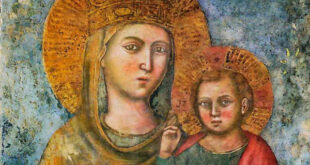

The Heart of Christianity Explained Through the Second Article of the Creed
When a Christian prays the Creed, he may not always be aware of the immensity of what he is proclaiming. Yet every phrase of the Creed is a synthesis of centuries of revelation, prayer, martyrdom, and theological contemplation. Among all its affirmations, one stands at the absolute center of the Christian faith:
“I believe in Jesus Christ, His only Son, Our Lord.”
Here we are not simply dealing with a beautiful religious phrase or an ancient formula mechanically repeated at Mass. We are standing before the most revolutionary declaration in human history: God became man in order to save us.
The second article of the Creed introduces us directly into the mystery of Jesus Christ. It speaks to us about His divine identity, His redemptive mission, His eternal relationship with the Father, and the fulfillment of all the promises of the Old Testament.
At a time when many reduce Jesus to a “moral teacher,” a “spiritual leader,” or a “humanistic prophet,” the Church continues proclaiming exactly what the Apostles announced two thousand years ago: Jesus Christ is true God and true man.
And understanding this changes life completely.
What Does the Second Article of the Creed Teach Us?
The traditional catechism answers:
“The second article of the Creed teaches us that the Son of God is the second Person of the Most Holy Trinity; that He is eternal God, almighty, Creator and Lord just as the Father is; that He became man to save us, and that the Son of God made man is called Jesus Christ.”
Several fundamental truths appear here:
- Jesus did not begin to exist in Bethlehem.
- Jesus Christ is not a creature.
- He is not “a lesser god.”
- He is not merely an extraordinary man.
- He is eternal.
- He is God.
- He is the eternal Son of the Father.
- And He became man out of love for us.
The entire Catholic faith revolves around this truth.
Saint John expresses it with astonishing depth:
“And the Word became flesh and dwelt among us” (Jn 1:14).
Christianity is not an abstract philosophy.
It is an encounter with a divine Person.
Jesus Christ: The Eternal Word of the Father
Why Is the Second Person Called “Son”?
The catechism teaches:
“The second Person is called Son because He is begotten of the Father by way of understanding from all eternity.”
This may sound complex to the modern man, who is accustomed to thinking only in material terms. But the Church is trying to explain an eternal mystery here: within God there exists a perfect spiritual generation.
The Father, by knowing Himself infinitely, eternally begets the Son.
That is why He is also called:
- Word of God
- Eternal Logos
- Eternal Wisdom of the Father
This is not “sonship” in a biological or human sense.
There was never a “moment” when the Son began to exist.
The Son exists eternally with the Father.
That is why the Creed later says:
“God from God, Light from Light, true God from true God, begotten, not made.”
This distinction was absolutely crucial in the history of the Church. During the first centuries, heresies such as Arianism claimed that Jesus was a highly perfect creature, but not truly God.
The Church responded with absolute clarity at the Council of Nicaea (325):
Christ possesses the very same divine nature as the Father.
He is not merely similar to God.
He is God.
Why Is Jesus Christ the “Only Son”?
Here an interesting question arises:
If we are all children of God, why is Jesus called the “Only Son”?
The catechism gives a beautiful answer:
“Because He alone is Son by nature, while we are sons by creation and adoption.”
Here lies the immense difference between Christ and us.
We Are Adopted Children
God creates us and adopts us through grace.
Through Baptism we participate in divine life.
But we are not divine by nature.
Christ Is Son by Nature
Jesus does not merely “participate” in divinity:
He possesses it eternally.
We become children.
He eternally is the Son.
And here emerges a deeply moving truth:
Christ came so that we might share in His sonship.
Saint Athanasius summarized it this way:
“God became man so that man might become a son of God.”
“Our Lord”: A Forgotten Word Today
We live in a culture obsessed with personal autonomy.
The idea of “lordship” makes modern man uncomfortable because it implies obedience, dependence, and authority. Yet Christianity proclaims precisely this:
Jesus Christ is Lord.
Not merely teacher.
Not merely inspiration.
Not merely example.
Lord.
The catechism explains:
“Jesus Christ is called Our Lord because, besides having created us together with the Father and the Holy Spirit, He has also redeemed us.”
That means:
- He created us,
- He sustains us,
- He redeemed us,
- and we belong to Him.
Saint Paul writes:
“You are not your own; you were bought at a price” (1 Cor 6:19-20).
Modernity wants a Christ who “motivates,” but not Christ the King.
Yet the Gospel cannot be separated from His divine authority.
Accepting Christ means accepting His lordship over:
- our morality,
- our sexuality,
- our money,
- our decisions,
- our time,
- our conscience,
- our entire life.
That is why authentic Christianity will always be uncomfortable for the world.
The Name of Jesus: The Name That Saves
What Does “Jesus” Mean?
The catechism answers:
“Jesus means Savior.”
The name comes from the Hebrew Yehoshua or Yeshua, meaning:
“God saves.”
It is not a random name.
In the Bible, a name expresses identity and mission.
Christ did not come merely to teach.
He came to save.
Save from what?
- from sin,
- from eternal condemnation,
- from slavery to the devil,
- and from spiritual death.
Today many speak of Jesus as an emotional therapist, but forget the central word of the Gospel:
salvation.
Christ came to rescue fallen mankind.
The Archangel Gabriel and the Announcement of the Incarnation
The catechism reminds us that it was God Himself who gave the name Jesus through the Archangel Gabriel during the Annunciation.
Here we see something extraordinary:
All history converges in Nazareth.
Eternity enters time.
The Creator enters His creation.
Mary’s “yes” changes human history.
That is why the Incarnation is not a secondary detail of Christianity: it is the absolute center of history.
Christ: King, Priest, and Prophet
What Does “Christ” Mean?
“Christ” means:
“Anointed One.”
It is equivalent to the Hebrew term “Messiah.”
In the Old Testament, the following were anointed:
- kings,
- priests,
- and prophets.
Jesus perfectly fulfills all three roles.
Christ the King
He does not reign through political violence, but from the Cross.
His kingdom is neither ideological nor partisan.
It is spiritual, universal, and eternal.
Christ the Priest
He is the true High Priest who offers the perfect sacrifice:
His own life.
The entire Catholic liturgy revolves around this eternal priesthood.
Christ the Prophet
He does not merely announce the truth.
He is the Truth.
An Anointing Not Bodily but Divine
Unlike the kings of old, Jesus was not anointed with material oil to receive human power.
The catechism teaches:
“The anointing of Jesus Christ was entirely spiritual and divine.”
In Christ dwells the fullness of divinity.
Here appears the mystery of the hypostatic union:
Jesus Christ = true divine nature + true human nature in one divine Person
Although this is not a mathematical formula, this synthesis helps us understand the central teaching of Christianity:
- Jesus is fully God.
- Jesus is fully man.
- They are not two persons.
- He is one divine Person.
This was solemnly defined at the Council of Chalcedon (451).
The Messiah Expected from the Beginning
The catechism teaches something fascinating:
Humanity knew about Christ’s coming even before Bethlehem.
From Adam and Eve onward, God promised a Redeemer.
The Entire Bible Points Toward Christ
The Old Testament is not a disconnected collection of ancient stories.
It is a preparation for Jesus.
The messianic prophecies announced:
- His birth,
- His lineage,
- His miracles,
- His Passion,
- His death,
- His Resurrection,
- and His eternal kingdom.
The Prophecies Fulfilled in Christ
The prophetic fulfillment in Jesus is one of the most astonishing arguments in favor of the Christian faith.
Some Remarkable Messianic Prophecies
He Would Be Born from the Line of David
Foretold in:
- Isaiah
- Jeremiah
- Samuel
Fulfilled in the Gospels.
He Would Be Born in Bethlehem
The prophet Micah announced it centuries beforehand.
He Would Suffer for the Sins of the People
Isaiah 53 describes Christ’s Passion with extraordinary precision.
He Would Be Pierced
Psalm 22 seems to narrate the Crucifixion centuries before the Romans.
The Figures of the Old Testament
The catechism mentions symbolic figures that foreshadow Christ.
This is called biblical typology.
Abel
The innocent man murdered.
Isaac
The son offered in sacrifice by his father.
Joseph
Sold by his brothers and later becoming the savior of his people.
Jonah
Three days in the belly of the great fish: a figure of the Resurrection.
The Paschal Lamb
The blood that saves from death.
The Bronze Serpent
Lifted up by Moses to heal the people.
Jesus Himself said:
“And when I am lifted up, I will draw all men to myself.”
All Scripture converges in Him.
How Do We Know That Jesus Christ Is True God?
The catechism gives four foundations.
1. The Testimony of the Father
At the Baptism and at the Transfiguration, the voice is heard:
“This is my beloved Son.”
2. The Testimony of Christ Himself
Jesus claimed things absolutely impossible for a mere man:
- “Before Abraham was, I AM.”
- “The Father and I are one.”
- “Whoever has seen Me has seen the Father.”
The Jews perfectly understood what He was saying:
He was making Himself equal to God.
3. The Miracles
The miracles were not mere “wonders.”
They were signs of divine authority.
Christ:
- calms the sea,
- raises the dead,
- forgives sins,
- multiplies bread,
- heals instantly.
And the supreme miracle is the Resurrection.
Without the Resurrection, Christianity collapses.
With the Resurrection, everything changes.
4. The Constant Tradition of the Church
From the Apostles until today, the Church has never ceased proclaiming:
Jesus Christ is God.
Despite persecutions, heresies, and cultural attacks, this truth remains intact.
The Miracles of Christ and Modern Spiritual Hunger
The catechism lists concrete miracles:
- He gave sight to the blind,
- hearing to the deaf,
- life to the dead,
- health to the sick.
But the physical miracles revealed something deeper:
Christ came to heal the human soul.
Today there is an enormous spiritual emptiness.
We have technology, entertainment, and consumerism, yet also:
- anxiety,
- depression,
- nihilism,
- loneliness,
- loss of meaning.
Modern man still needs exactly what mankind needed two thousand years ago:
redemption.
Jesus Christ Is Not an Idea: He Is a Living Person
The second article of the Creed is not a cold philosophical treatise.
It is an invitation.
To believe in Jesus Christ means:
- to trust Him,
- to obey Him,
- to love Him,
- to follow Him,
- to allow oneself to be transformed by Him.
It is not enough to admire Jesus historically.
The devil also knows who Christ is.
The decisive question is another:
Is He truly the Lord of our life?
The Modern Challenge: Recovering Faith in Christ
We live in times of doctrinal confusion and spiritual superficiality.
Many baptized Christians:
- do not know the Creed,
- ignore doctrine,
- reduce faith to emotions,
- or adapt the Gospel to the modern world.
Yet the second article of the Creed remains an unshakable rock.
Jesus Christ:
- is God,
- is Savior,
- is King,
- is Lord,
- is the promised Messiah,
- is the Redeemer of the world,
- and He will return in glory.
The Church does not merely proclaim values.
She proclaims a divine Person.
Conclusion: The Name Above Every Name
Saint Paul wrote:
“At the name of Jesus every knee should bow, in heaven and on earth and under the earth” (Phil 2:10).
The second article of the Creed leads us to the center of the universe:
Jesus Christ.
There is no Christianity without Christ.
There is no salvation apart from Him.
There is no true hope far from Him.
In a fragmented, confused, and exhausted world, the Creed continues proclaiming the same eternal truth:
I believe in Jesus Christ, His only Son, Our Lord.
And whoever truly discovers who Christ is can never live the same way again.