Related Articles

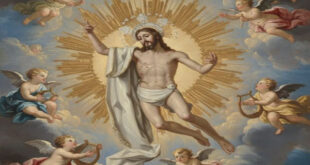
Introduction: It’s not a gesture… it’s an encounter with eternity
We live in a time when many sacred things have become routine. Among them, Holy Communion. For many, approaching the altar is almost automatic: line up, receive the Host, say “Amen”… and that’s it.
But the reality is far deeper —and also far more serious.
Receiving the Eucharist is not a symbol. It is not a reminder. It is not merely a communal gesture.
It is truly receiving the living Christ.
As the Church has taught since the earliest centuries, in Holy Communion are present the Body, Blood, Soul, and Divinity of Our Lord. It is the same Christ who was born in Bethlehem, died on the Cross, and rose in glory.
That’s why not everything goes.
In fact, the Bible warns us with striking clarity:
“Whoever eats the bread or drinks the cup of the Lord unworthily will be guilty of the Body and Blood of the Lord” (1 Cor 11:27).
The question, then, is unavoidable:
What do we need to receive Holy Communion worthily?
The answer from the Church’s Tradition is clear, consistent, and profoundly wise:
👉 Three things are necessary:
- To be in a state of grace
- To observe the Eucharistic fast
- To know whom we receive
Let’s go deeper into each one.
1. To be in a state of grace: the indispensable condition
What does “being in a state of grace” mean?
To be in a state of grace means to live in friendship with God, without mortal sin on the soul. It is to have a clean, reconciled soul, open to divine life.
Mortal sin is not “a minor mistake.” It is a real rupture with God.
And here is the key point:
👉 One cannot receive Christ while rejecting Him through grave sin.
That is why the Church has always taught that anyone conscious of mortal sin must go to Confession before receiving Communion.
Biblical foundation
Saint Paul leaves no room for doubt:
“Let a man examine himself, and so eat of the bread and drink of the cup” (1 Cor 11:28).
He does not say: “receive first and sort it out later.”
He says: examine yourself first.
Theological development
The Eucharist is food… but not for the spiritually dead.
As Saint Augustine of Hippo taught:
“No one eats this flesh without first adoring it.”
And we could add: no one should receive it without proper interior disposition.
A soul in mortal sin is spiritually “dead.” And Communion, far from automatically healing that condition, can become a sacrilege.
Practical application
- If you have committed a grave sin: do not receive Communion until you have confessed
- Return to frequent use of the Sacrament of Penance
- Make an examination of conscience before Mass
👉 Confession is not a punishment. It is the embrace of the Father.
2. To observe the Eucharistic fast: preparing the body for the sacred
What is the Eucharistic fast?
It means abstaining from food (and drink, except water and medicine) for at least one hour before receiving Communion.
It may seem like something small… but it is not.
Historical roots
In the early centuries of Christianity, the faithful fasted from midnight. It was a serious, conscious preparation—almost physically “dramatic.”
Over time, the discipline was mitigated, but its meaning remains intact:
👉 The body must also be prepared to receive God.
Theological meaning
The fast expresses three profound realities:
- Reverence: this is not ordinary food
- Desire: I hunger for God
- Order: God first, everything else afterward
It is a concrete act of love.
Practical application
- Avoid eating at least 1 hour before Communion
- Live that time as interior preparation
- Teach children that this is not mere formality
👉 A small sacrifice that educates the soul.
3. To know whom we receive: living faith in the Real Presence
The great problem today
Many receive Communion… but do not truly know what they are receiving.
And here lies one of the greatest crises of our time:
👉 The loss of the sense of the sacred.
What must we believe?
The Church teaches that in the Eucharist occurs transubstantiation: the bread and wine cease to be such and become the Body and Blood of Christ.
It is not a symbol. It is not a metaphor.
It is Christ.
As He Himself said:
“My flesh is true food and my blood is true drink” (Jn 6:55).
Theological development
Denying or ignoring this truth is not a minor detail.
Because:
👉 Interior disposition completely transforms Communion.
- The one who believes: receives with faith, love, and spiritual fruit
- The one who does not: receives without awareness… and deprives himself of grace
This is where formation becomes essential.
Practical application
- Meditate before Communion: “I am about to receive God”
- Avoid routine
- Cultivate Eucharistic adoration
- Teach this truth within your family
As Saint Thomas Aquinas said:
“In this sacrament is contained all the spiritual good of the Church.”
Conclusion: Communion is not an automatic right… it is a gift that requires preparation
Receiving Holy Communion is the greatest gift we can receive in this life.
But precisely because of that:
👉 It demands a serious, conscious, and loving response.
The three conditions are not obstacles. They are pathways:
- State of grace → purity of soul
- Eucharistic fast → preparation of the body
- Living faith → openness of the heart
If we live this way, Communion will not be an empty gesture…
It will be a transforming encounter.
Final call: receive Communion as if it were your first… or your last
Imagine that today were your last Communion.
Would you receive it the same way?
Recovering reverence is not nostalgia. It is justice.
Because we are not receiving something…
👉 We are receiving Someone.
And that Someone is Christ.