Related Articles



Rediscovering the Great Unknown of the Trinity in a World That Has Reduced Him to a Symbol
The problem: when the divine becomes a caricature
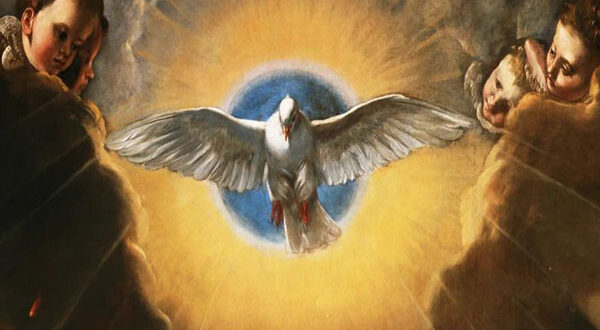
For centuries, millions of Christians have grown up with a fixed image in their minds: a white dove descending from heaven. It is beautiful, peaceful… but also dangerous if misunderstood.
Because no, the Holy Spirit is not a dove.
Reducing the third Person of the Holy Trinity to a symbolic animal does not just impoverish our faith: it can deeply distort it. The Holy Spirit is not an energy, not a symbol, not a “vague presence.” He is true God, a divine Person, co-eternal with the Father and the Son.
And understanding this changes everything.
So where does the image of the dove come from?
The origin lies in a specific moment in the Gospel: the Baptism of Christ.
“And the Holy Spirit descended upon Him in bodily form, like a dove…” (Luke 3:22)
This verse has been correctly interpreted by the Church: it does not mean that the Holy Spirit is a dove, but that He manifested Himself under that visible appearance.
It is a theophany, that is, a sensible manifestation of an invisible reality.
The same happens when God manifests Himself as fire, wind, or cloud. God is none of these things… but He uses them to make Himself understandable to man.
All the images of the Holy Spirit in the Bible (and what they mean)
To understand who the Holy Spirit truly is, we must journey through Sacred Scripture. Because the dove is only one among many images.
1. The Spirit as wind and breath
In Hebrew, the word ruah means wind, breath, spirit.
From the very beginning of the Bible:
“The Spirit of God was hovering over the waters” (Genesis 1:2)
Here the Spirit is life in motion, creative impulse, divine dynamism.
And at Pentecost:
“Suddenly there came from heaven a sound like a mighty rushing wind…” (Acts 2:2)
The Spirit is not static. He is God who breaks in, transforms, and shakes.
2. The Spirit as fire
“There appeared to them tongues as of fire…” (Acts 2:3)
Fire purifies, illuminates, and consumes.
The Holy Spirit:
- burns away sin
- enlightens the mind
- ignites love
He is not comfortable. He is not decorative. He is transformative.
3. The Spirit as living water
“Out of his heart shall flow rivers of living water… Now this He said about the Spirit” (John 7:38–39)
The Spirit is life that flows, grace that satisfies, presence that gives life.
In a world thirsty—for meaning, for love, for truth—the Spirit is the only water that never runs dry.
4. The Spirit as cloud and light
In the Exodus, God guides with a cloud. At the Transfiguration:
“A bright cloud overshadowed them…” (Matthew 17:5)
The cloud both hides and reveals. Light illuminates without being possessed.
The Holy Spirit is mystery accessible yet not controllable.
5. The Spirit as anointing (oil)
Anointing consecrates, strengthens, and equips.
That is why in the sacraments (especially Confirmation and Holy Orders), oil symbolizes the Spirit.
The Spirit does not only console: He empowers for mission.
6. The Spirit as a dove
We return to the starting point.
The dove evokes:
- peace
- purity
- new creation (as in Noah)
But it remains only that: a sign, not the reality itself.
So… who is the Holy Spirit really?
Here we enter the heart of the mystery.
The Holy Spirit is:
- The third Person of the Trinity
- The subsisting Love between the Father and the Son
- True God, not inferior nor symbolic
He is not “something.” He is Someone.
He is not an impersonal force. He is a Person who knows, loves, and acts.
A modern error: reducing the Spirit to “energy”
Today many speak of the Spirit as if He were:
- a vibration
- an emotion
- a subjective experience
But this is not Christianity. It is diluted spirituality.
The Holy Spirit is not merely felt: He is received, welcomed, and obeyed.
A key truth: the Holy Spirit does NOT incarnate
Here we must be very clear theologically.
Only the Second Person of the Trinity, the Son—Jesus Christ—became incarnate.
“And the Word became flesh…” (John 1:14)
The Holy Spirit:
- does not incarnate
- does not assume human nature
- does not “reincarnate” in people
This is crucial.
To say that the Spirit “reincarnates” or “is someone who returns in another person” is contrary to the Catholic faith.
The Spirit:
- dwells in the soul in a state of grace
- acts in the sacraments
- guides the Church
But He never becomes a human person.
Why does all this matter today?
Because we live in a time that:
- trivializes the sacred
- sentimentalizes faith
- confuses symbols with realities
And the result is a shallow faith.
Knowing the Holy Spirit correctly restores:
- depth
- reverence
- doctrinal clarity
Practical application: how to live in the Holy Spirit
It is not enough to understand. We must live it.
Here is a concrete guide:
1. Invoke Him daily
“Come, Holy Spirit” is not a nice phrase. It is a vital necessity.
2. Listen to His inspirations
Not everything you feel comes from God. Learn to discern.
3. Live in grace
The Spirit dwells fully in a soul that is clean.
4. Accept His fire
Sometimes it will hurt. Because it transforms.
5. Be docile
The Spirit does not impose Himself. He is welcomed.
Conclusion: stop looking at the dove… and encounter God
The problem was never the dove.
The problem is stopping at it.
The Holy Spirit is not a static image in stained glass. He is the living God acting right now:
- in the Church
- in the sacraments
- in your soul
And while many reduce Him to a symbol… others discover that He is the hidden protagonist of the entire Christian life.
The final question is not theoretical—it is existential:
Are you truly living under the action of the Holy Spirit… or only under His image?