Related Articles

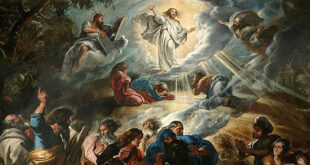

In a time like ours—marked by moral confusion, superficiality, and the loss of clear reference points—it is striking to discover that nearly two thousand years ago there already existed a clear, concrete, and profoundly relevant guide for living the Christian faith in the midst of a disordered society. That guide is the Epistle to Titus, one of the most direct, practical, and demanding pastoral letters of the New Testament.
Written by Saint Paul to his disciple Titus, this epistle is not an abstract treatise, but a manual for embodied Christian living. There is no room here for a lukewarm or merely intellectual faith: Paul demands coherence, order, virtue, and witness.
And that is precisely what we need most today.
📜 Historical context: a Church on hostile ground
The letter is addressed to Titus, whom Paul had left on the island of Crete with a clear mission: to organize the young Church in the midst of a difficult cultural environment.
Crete had a reputation—even in antiquity—for moral degradation. Paul himself quotes a local proverb:
“Cretans are always liars, evil beasts, lazy gluttons” (Titus 1:12)
This is not a gratuitous insult; it is the recognition that the Christian faith does not arise in ideal environments, but precisely in contexts of moral crisis.
Does that sound familiar?
We live in a culture that:
- relativizes truth
- trivializes good and evil
- exalts immediate pleasure
- distrusts authority
Exactly the kind of world in which Titus had to shepherd.
🧭 The heart of the message: order, truth, and witness
The Epistle to Titus revolves around three major pillars that remain fully relevant today:
1. The importance of order in the Church
Paul insists on something fundamental: faith cannot be lived without structure or authority.
“The reason I left you in Crete was that you might put in order what was left unfinished and appoint elders in every town” (Titus 1:5)
This challenges a very modern idea: that spirituality is purely individual.
No. In Christianity:
- there is doctrine
- there is authority
- there is community
Practical application:
In a world that rejects all authority, the Christian is called to rediscover the importance of the Church, her pastors, and fidelity to the Magisterium.
2. Sound doctrine versus relativism
Paul strongly warns against false teachers:
“For there are many rebellious people, full of meaningless talk and deception…” (Titus 1:10)
This is not just a first-century problem. Today we face an explosion of:
- opinions disguised as truth
- spiritualities without Christ
- reinterpretations of the Gospel
The Epistle to Titus reminds us of something essential:
👉 Not every religious idea comes from God.
Practical application:
- Be formed in the faith (Catechism, Scripture, Tradition)
- Do not be led by “what I feel”
- Seek the truth, even when it is uncomfortable
3. Coherence of life: faith is proven by living it
This is perhaps the most striking point of the letter.
Paul is not satisfied with Christians who merely “believe.” He demands that they live according to what they believe:
“Those who have trusted in God may be careful to devote themselves to good works” (Titus 3:8)
And he specifies how each group should live:
- older men: sober and steadfast
- young people: responsible
- women: examples of virtue
- leaders: above reproach
This is not moralism; it is coherence.
Practical application:
Today the greatest problem is not atheism… but the weak witness of believers.
✨ Grace: the driving force of all transformation
It would be a mistake to think that the Epistle to Titus is merely a list of rules. In reality, everything is grounded in the grace of God:
“For the grace of God has appeared that offers salvation to all people” (Titus 2:11)
Here lies the core of Christianity:
- We are not saved by our own strength
- But grace does demand a response
Paul explains this with remarkable depth:
“It teaches us to say ‘No’ to ungodliness…” (Titus 2:12)
Grace is not permissive.
Grace transforms.
🔥 A radical call: living in the world without being of the world
The Epistle to Titus presents a challenge that today sounds almost revolutionary:
👉 To be truly Christian in the midst of a society that is not.
This implies:
- living with different values
- accepting discomfort
- resisting cultural pressure
But it also means something beautiful:
- being light
- being a reference
- being hope
🧠 Deep theological insights
From a theological perspective, this epistle offers fundamental teachings:
✔ The relationship between faith and works
There is no opposition.
Authentic faith produces visible works.
✔ The communal dimension of salvation
God does not save isolated individuals, but a people.
✔ The pedagogy of grace
Grace does not only forgive: it educates, transforms, and elevates.
✔ Authority as service
Leaders do not dominate: they guide by example.
🏡 Practical applications for daily life
How can we live the Epistle to Titus today?
1. Bring order to your spiritual life
- Establish times for prayer
- Be consistent with the sacraments
- Seek spiritual direction
2. Be formed in the truth
- Read the Bible deeply
- Study the Catechism
- Avoid superficial or confusing content
3. Live with coherence
- Let your life reflect your faith
- Be honest, even when it is difficult
- Take care with your words, decisions, and relationships
4. Practice good works
- Help without expecting recognition
- Serve in your community
- Be generous
5. Embrace spiritual struggle
- Not everything will be easy
- Fidelity involves effort
- But also fulfillment
🌍 A letter more relevant than ever
The Epistle to Titus is not an ancient text without relevance. It is, in fact, a mirror of our time.
It tells us clearly:
- that the world may be disordered
- that truth may be rejected
- that faith may be ridiculed
But it also reminds us of something essential:
👉 It is possible to live a holy life in the midst of chaos.
🙏 Conclusion: an invitation to authenticity
The Epistle to Titus is uncomfortable… because it is demanding.
But it is also liberating… because it is true.
It invites us to leave behind:
- superficial faith
- inconsistency
- spiritual mediocrity
And it calls us to something far greater:
👉 An authentic, courageous, and transformative Christian life.
In a world that desperately needs true examples, the question is not whether this letter is still relevant.
The question is:
Are we willing to live it?