Related Articles

In a world saturated with information, opinions, and constant noise, something is paradoxically becoming increasingly scarce: true wisdom.
We have immediate access to data, news, and technical knowledge, yet we still struggle to know how to live, how to suffer, how to love, and how to die. The Bible clearly distinguishes between knowledge and wisdom. The first fills the mind; the second transforms the heart and directs life toward God.
One of the most profound texts ever written on this subject is the Book of Wisdom, an extraordinary work of the Old Testament that many Christians scarcely know, yet it offers a spiritual guide that is astonishingly relevant today.
This book does not speak of wisdom merely as an intellectual virtue. It speaks of a way of seeing the world from God’s perspective.
It speaks about justice, death, persecution, immortality, and the eternal destiny of man.
And it does so with a clarity that seems written for our own time.
1. What is biblical wisdom really?
The Bible does not understand wisdom as mere intelligence.
In the biblical mindset, wisdom means living in harmony with the will of God.
It is the ability to:
- discern good and evil
- choose what leads to life
- interpret events in the light of God
- direct one’s entire existence toward eternity
The book states clearly:
“For the beginning of wisdom is the most sincere desire for instruction, and concern for instruction is love.” (Wisdom 6:17)
Wisdom, therefore, is a living relationship with God.
It is not a theory.
It is a way of existing.
2. The history of the Book of Wisdom
The Book of Wisdom was written approximately between 100 and 50 B.C.
Most likely in Alexandria, one of the most important cultural centers of the ancient world.
The author was a deeply believing Jew who lived in the midst of a pagan society dominated by Greek philosophy. To give authority to his teaching, he writes the book symbolically attributing it to King Solomon, the great sage of Israel.
The context is very interesting.
The Jews of the diaspora were being seduced by:
- Greek materialism
- moral relativism
- the cult of idols
- fascination with pagan philosophy
Does that sound familiar?
The author responds by showing that true wisdom is not found in human philosophical systems but in God.
In this sense, the book is a bridge between the Old Testament and Christian thought.
3. The structure of the book
The book is divided into three major sections, each containing a profound spiritual teaching.
1. The destiny of the righteous and the wicked (chapters 1–5)
Here a fundamental question is posed:
Is it worth being righteous?
The author describes the mentality of the wicked:
“Our life is short and sorrowful… Come, therefore, let us enjoy the good things that exist.” (Wis 2:1–6)
This hedonistic vision is strikingly modern:
- living only for pleasure
- denying eternal life
- considering virtue to be naïve
But the book proclaims something revolutionary:
“The souls of the righteous are in the hand of God.” (Wisdom 3:1)
Even if the righteous suffer in this life, their destiny is eternal glory.
This teaching prepares the way for the Christian doctrine of the resurrection.
2. Wisdom as a gift from God (chapters 6–9)
Here we encounter one of the book’s central themes: wisdom is not manufactured; it is received.
The author describes wisdom as something living, almost like a person.
“For in her there is a spirit that is intelligent, holy, unique, manifold… all-powerful.” (Wis 7:22–23)
Christian tradition will later see here a prefiguration of the Holy Spirit.
The wise person is not the one who knows the most.
It is the one who seeks God with humility.
For this reason the book says:
“Wisdom is easily found by those who seek her.” (Wis 6:12)
3. Wisdom in the history of Israel (chapters 10–19)
The final part of the book recounts the history of the people of God.
From Adam to the Exodus, showing how wisdom guided the righteous.
The message is clear:
God does not abandon those who seek Him.
Even when they pass through persecutions, exiles, or difficulties, divine wisdom guides history toward salvation.
4. An astonishing prophecy about Christ
One of the most striking passages of the book is found in chapter 2.
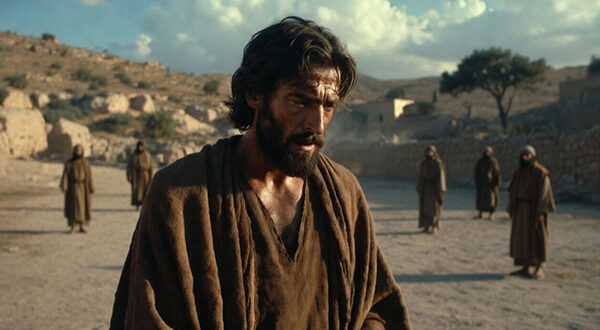
It describes the persecution of a righteous man who disturbs the wicked.
The ungodly say:
“Let us lie in wait for the righteous man, because he is inconvenient to us… He professes to have knowledge of God and calls himself a child of the Lord.” (Wis 2:12–13)
And they add:
“Let us condemn him to a shameful death.” (Wis 2:20)
Many Fathers of the Church saw here a prophecy of the Passion of Christ.
The persecuted righteous man is a prophetic image of Jesus Christ.
The world still reacts in the same way today:
holiness disturbs.
5. Wisdom in the face of modern materialism
The book of Wisdom seems to describe our current culture.
The dominant mentality today says:
- live to enjoy
- death is the end
- religion is irrelevant
- success is what matters
Exactly the same things the wicked say in chapter 2.
But the book responds firmly:
Life does not end in the grave.
“God created man for incorruption.” (Wis 2:23)
This statement is revolutionary.
Your life is not an accident.
It is not an absurd parenthesis.
It has an eternal destiny.
6. True wisdom according to Christian tradition
The Church has always seen in this book a preparation for the full revelation in Christ.
Divine wisdom will be fully manifested in the Gospel.
As Saint Paul the Apostle would later say:
“Christ is the wisdom of God.” (1 Cor 1:24)
For this reason, for Christians, wisdom is not merely a virtue.
It is a relationship with Christ.
7. How to live today according to biblical wisdom
The Book of Wisdom is not merely an ancient text.
It is a practical guide for the spiritual life.
Here are some concrete applications.
1. Seek wisdom before success
The world teaches us to pursue:
- money
- prestige
- recognition
The Bible teaches something different.
The true priority must be the wisdom of God.
The wise person lives with a constant question:
Does this bring me closer to God or farther from Him?
2. Do not be scandalized by the suffering of the righteous
The book insists on something that still confuses many people:
the righteous also suffer.
But their suffering is not useless.
God transforms it into glory.
3. Remember that life has an eternal goal
The great error of our culture is living as if this life were everything.
Biblical wisdom teaches the opposite:
this present life is preparation for eternity.
Every decision has eternal weight.
4. Ask for wisdom in prayer
The author of the book makes a beautiful prayer:
“Give me the wisdom that sits by your throne.” (Wis 9:4)
Wisdom is asked for.
It is received.
It is cultivated.
8. Why this book is more relevant than ever
We live in an era of extraordinary technological development… but also of great moral confusion.
Never has there been so much information.
And perhaps never so much lack of meaning.
The Book of Wisdom answers the great questions of the human heart:
- Is it worth being good?
- What happens after death?
- Why do the righteous suffer?
- How should we live in an unjust world?
And its answer is clear:
The wisdom of God leads to eternal life.
Conclusion: the forgotten path
The modern world seeks solutions in:
- ideologies
- politics
- technology
- material progress
But the Bible proposes a deeper path.
The path of wisdom.
A wisdom that begins with the fear of God, grows through virtue, and culminates in eternal communion with Him.
Because in the end, everything comes down to a single question:
Do we live according to the logic of the world… or according to the wisdom of God?
The Book of Wisdom invites us to choose well.
And that choice — silent but decisive —
determines our eternal destiny.