Related Articles


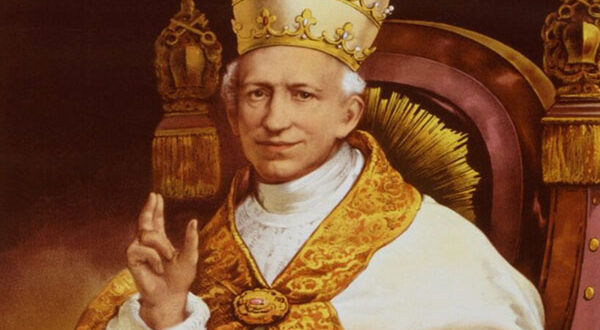
Throughout the history of the Church there are moments when heaven seems to break into the life of the world with particular intensity. Sometimes it does so through visible miracles; at other times through silences filled with mystery. Among these discreet — yet profoundly influential — episodes is an experience attributed to Leo XIII, which occurred at the end of the 19th century and gave rise to one of the most well-known prayers in the Catholic world: the Prayer to Saint Michael the Archangel.
This prayer, which for decades was recited at the end of every Mass, was born in a time of great cultural and spiritual tension. Today, in an age marked by secularization, moral confusion, and the interior struggles of modern man, its message resonates once again with surprising relevance.
This article seeks to explore the history, the theological dimension, and the spiritual meaning of this tradition, as well as to offer a practical guide for living today the spirituality of spiritual combat embodied by Saint Michael.
1. A Pope in Times of Spiritual Combat
The pontificate of Leo XIII (1878–1903) unfolded during a turbulent era for the Church.
Europe was undergoing profound transformations:
- political secularization
- anti-clerical movements
- the rise of rationalism
- the loss of the Papal States
- and the growth of ideologies hostile to Christianity
Yet Leo XIII was also one of the great intellectual popes of modern times. He promoted the revival of the thought of Thomas Aquinas, developed the Church’s social doctrine with the encyclical Rerum Novarum, and defended the faith against the cultural challenges of his time.
But alongside his sharp intellectual vision, Leo XIII also possessed a profound awareness of spiritual combat.
For him, human history was not merely a political or cultural stage: it was also a battlefield between good and evil.
2. The Mysterious Vision After Mass
According to a widely circulated tradition — recorded by numerous ecclesiastical testimonies from the 19th century — the event took place around 1884.
One day, after celebrating Mass in the Vatican, the Pope remained silent for several minutes. Those present noticed that his expression had changed. He appeared deeply shaken, even troubled.
He then quickly withdrew to his office and composed a prayer that he later ordered to be recited throughout the Church.
Tradition recounts that the Pope experienced a mystical vision or interior locution in which he heard a dialogue between Christ and Satan.
According to this account:
- Satan asked permission to test the Church for a certain period of time.
- Christ granted a limited period for this trial.
- At that moment, the Pope understood the seriousness of the spiritual struggle that lay ahead.
Although the Church has never officially defined the exact details of this vision, what is historically certain is that Leo XIII composed the Prayer to Saint Michael and ordered its universal recitation.
3. The Birth of the Prayer to Saint Michael
After that experience, Leo XIII wrote the famous prayer:
“Saint Michael the Archangel, defend us in battle.
Be our protection against the wickedness and snares of the devil…”
He also included this prayer among the so-called “Leonine Prayers,” which were recited after Mass.
These prayers had several intentions:
- to ask for the protection of the Church
- to pray for religious freedom
- to implore help in the spiritual struggle
For more than 80 years, millions of Catholics around the world concluded Mass by praying this prayer.
It was a way of remembering something fundamental:
the Christian life is not comfortable; it is a spiritual battle.
4. Who Is Saint Michael the Archangel?
The central figure of this prayer is Saint Michael the Archangel, one of the most powerful figures in biblical tradition.
His name means:
“Who is like God?”
It is a question that expresses humility and fidelity.
In Christian tradition, Saint Michael is:
- the defender of the People of God
- the leader of the heavenly armies
- the conqueror of Satan
The Bible describes his mission clearly.
In the Book of Revelation, a cosmic battle is described:
“Then war broke out in heaven: Michael and his angels fought against the dragon… but he was not strong enough.”
(Revelation 12:7–8)
This passage reveals something profound: the history of salvation includes a real spiritual battle.
It is not merely a metaphor.
5. The Silence of the Popes
For many years, several pontiffs promoted devotion to Saint Michael.
Among them were:
- Pius IX
- Pius XII
- John Paul II
However, in the second half of the twentieth century, language about the devil and spiritual combat began to disappear from everyday discourse.
This led some spiritual writers to speak of “the Silent Popes,” referring to the fact that many pastors no longer spoke clearly about the spiritual dimension of evil.
Yet the teaching of the Church never changed.
The Catechism of the Catholic Church affirms:
“The whole of man’s history has been the story of dour combat with the powers of evil.” (CCC 409)
In other words:
the spiritual battle still exists.
6. The Relevance of the Prayer to Saint Michael Today
Interestingly, in recent years there has been a renewed interest in this prayer.
Many priests have begun to pray it again after Mass.
Even Francis spoke on several occasions about the reality of the devil and the need to fight him through prayer and humility.
Why is this devotion returning?
Because the modern world faces deep crises:
- loss of the sense of God
- moral relativism
- cultural hostility to faith
- spiritual despair
In this context, the figure of Saint Michael reminds us of something essential:
evil does not have the last word.
7. The Theology of Spiritual Combat
Christian tradition has always taught that the believer faces three great struggles:
- against personal sin
- against the temptations of the world
- against the spiritual forces of evil
Saint Paul expresses this clearly:
“For our struggle is not against flesh and blood, but against the rulers, against the authorities, against the powers of this dark world.”
(Ephesians 6:12)
This does not mean living in fear.
It means living with spiritual vigilance.
8. How to Apply This Teaching in Daily Life
The story of Leo XIII is not merely a historical curiosity.
It is a spiritual call.
Here are some practical ways to live this spirituality today.
1. Pray the Prayer to Saint Michael
It is a short but powerful prayer.
Many Catholics pray it:
- after the Rosary
- before going to sleep
- at the beginning of the day
2. Recover Spiritual Awareness
We live in a culture that explains everything psychologically or sociologically.
But Christianity reminds us that there is also a spiritual dimension.
3. Strengthen the Sacramental Life
The sacraments are the true defense against evil:
- Confession
- the Eucharist
- prayer
4. Live with Hope
Spiritual combat does not end in defeat.
Christ has already won.
9. A Lesson for Our Time
The experience attributed to Leo XIII reminds us of something that the modern world often forgets:
evil exists, but it is not invincible.
Saint Michael does not fight alone.
He fights in the service of God.
And every Christian participates in that victory when living in the state of grace.
10. The Complete Prayer
It is worth ending this article with the prayer that was born from that experience.
Saint Michael the Archangel, defend us in battle.
Be our protection against the wickedness and snares of the devil.
May God rebuke him, we humbly pray.
And do thou, O Prince of the heavenly host,
by the power of God,
cast into hell Satan and all the evil spirits
who prowl about the world seeking the ruin of souls.
Amen.
Conclusion: A Spirituality for Difficult Times
Perhaps the most interesting aspect of this story is not the vision itself, but what it produced:
a call to spiritual vigilance.
In every age, God raises reminders for His Church.
The Prayer to Saint Michael is one of them.
It does not invite fear.
It invites trust.
Because at the end of history, the question that gives the archangel his name still echoes:
“Who is like God?”
And the answer remains the same since the beginning of time:
no one.