Related Articles

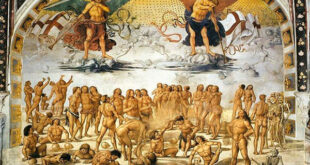
In a time like ours—marked by political uncertainty, cultural crises, wars, moral relativism, and a growing sense of spiritual emptiness—many people wonder whether the world is moving toward some kind of definitive end. Curiously, while social media is full of conspiracy theories about the end of the world, many Christian sermons barely mention what the New Testament actually teaches about it.
And yet, one of the earliest theologians of the Church, the apostle Saint Paul the Apostle, spoke very clearly about the end of history, the rise of the Antichrist, and the return of Christ. And he did so years before Saint John the Apostle wrote the Book of Revelation.
Today, Paul’s teachings are surprisingly relevant. But they are also uncomfortable. Because they do not only speak about the future; they invite us to live with seriousness, spiritual vigilance, and hope.
This article seeks to recover that often-forgotten teaching: what Paul really said about the end times and why it still matters so much for our Christian life today.
1. Paul: The First Great Theologian of the End Times
Many believers think that teaching about the end of the world appears mainly in Revelation. But historically, the earliest Christian reflections on the end of history appear in Paul’s letters, written approximately between A.D. 50 and 60.
Among them, two stand out:
- the First Letter to the Thessalonians
- the Second Letter to the Thessalonians
These letters were written about 40 years before the Book of Revelation.
The Christian community in Thessalonica was worried.
Some believed that Christ’s return had already happened or that it was about to happen immediately.
Paul responds with a profound catechesis about three major themes:
- The Second Coming of Christ
- The resurrection of the dead
- The appearance of an evil figure before the end
This last point is especially important: Paul describes a mysterious figure whom Christian tradition would later identify as the Antichrist.
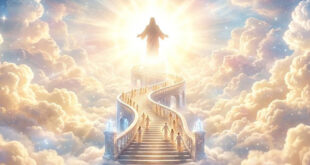
2. The Parousia: The Glorious Return of Christ
Paul uses a very precise Greek term: Parousia, which means the solemn arrival or presence of a king.
For Christians, the Parousia is the glorious return of Christ at the end of history.
Paul describes this moment with one of the most beautiful passages in the New Testament:
“For the Lord himself will descend from heaven with a command, with the voice of an archangel, and with the trumpet of God; and the dead in Christ will rise first.”
(1 Thessalonians 4:16)
This passage reveals several fundamental truths:
- Christ will truly return in history
- There will be a bodily resurrection
- Death does not have the final word
Christian hope is not about escaping the world, but about the final transformation of all creation.
3. The “Man of Lawlessness”: The First Description of the Antichrist
One of Paul’s most striking texts appears in the Second Letter to the Thessalonians.
Here we encounter a mysterious figure:
“Let no one deceive you in any way; for that day will not come unless the rebellion comes first, and the man of lawlessness is revealed, the son of perdition.”
(2 Thessalonians 2:3)
Paul describes him with several titles:
- the man of lawlessness
- the son of perdition
- the adversary
This figure:
- opposes God
- seeks worship
- deceives many people
The text continues with a surprising description:
“He takes his seat in the temple of God, proclaiming himself to be God.”
Christian tradition, from the earliest centuries, identified this figure with the Antichrist.
Although the term Antichrist would later appear in the letters of Saint John the Apostle, the first major theological description appears in Paul.
4. The Great Apostasy: A Global Spiritual Crisis
Before the appearance of the “man of lawlessness,” Paul speaks about another event: the apostasy.
Apostasy means the abandonment of the faith.
It does not simply refer to external persecution, but to something deeper:
many who once believed will stop believing.
This phenomenon worries Paul because the greatest danger for the Church does not always come from outside.
Very often it comes from within.
When Christians:
- relativize the truth
- adapt the Gospel to the world
- forget the spiritual life
then the erosion of faith begins.
5. The Mystery of Lawlessness: Evil Is Already at Work
Paul introduces another fascinating expression:
“For the mystery of lawlessness is already at work.”
(2 Thessalonians 2:7)
This means something very important from a theological perspective.
The final manifestation of evil will not appear suddenly.
It is already active in history.
This mystery of lawlessness manifests itself in:
- ideologies that deny God
- political systems that absolutize power
- cultures that destroy the truth about the human person
- false spiritualities that replace Christ
The Church Fathers interpreted that history is a battlefield between two mysteries:
- the mystery of Christ
- the mystery of lawlessness
6. What “Restrains” the Manifestation of Evil
One of the most mysterious passages of the New Testament is this:
“And you know what is now restraining him so that he may be revealed in his time.”
(2 Thessalonians 2:6)
Paul speaks about something that holds back the full manifestation of evil.
Throughout history, several interpretations have been proposed:
- the political order
- the Roman Empire
- the preaching of the Gospel
- the action of the Holy Spirit
- the Church itself
Many theologians believe that God limits evil so that the Gospel may continue to spread.
This means that history is not outside God’s control.
7. Paul Did Not Want to Create Fear, but Vigilance
It is important to understand something.
Paul did not write these teachings to create panic.
His goal was something else: to form vigilant Christians.
Jesus had already taught something similar:
“Watch,” “be ready,” “you do not know the day or the hour.”
Christian eschatology—the theology about the end times—is not meant to feed apocalyptic curiosity, but to transform our present life.
8. How to Live Today in Light of the End Times
The big question is:
what does all this mean for our daily life?
Paul answers in very concrete ways.
1. Live in hope
Christianity is not historical pessimism.
We know that history ends with the victory of Christ.
2. Remain firm in the faith
Paul insists:
“So then, brothers and sisters, stand firm and hold fast to the traditions that you were taught.”
(2 Thessalonians 2:15)
In times of doctrinal confusion, fidelity to the apostolic teaching is essential.
3. Do not be deceived
Paul repeats several times:
“Let no one deceive you.”
Spiritual deception will be one of the signs of the last times.
For this reason, it is vital to:
- know the faith
- study Scripture
- live in communion with the Church
4. Live with spiritual sobriety
Paul invites believers to live a vigilant life:
- prayer
- the sacraments
- constant conversion
9. A Forgotten Teaching… That We Need to Recover
For centuries, the Church preached clearly about:
- the second coming of Christ
- the final judgment
- the struggle between good and evil
Today, these topics are often avoided because they are considered uncomfortable or not “modern.”
But forgetting them impoverishes the faith.
Christian hope is not only about improving the present world.
It is about awaiting the fullness of the Kingdom of God.
10. The End of History Is Not Chaos, but Christ
The Christian vision of the end of the world is not a meaningless catastrophe.
It is an encounter.
The end of history is the definitive encounter with Christ.
Paul knew this.
That is why he concludes one of his eschatological teachings with a deeply pastoral phrase:
“Therefore encourage one another with these words.”
(1 Thessalonians 4:18)
Christianity does not await the end of the world with fear.
It awaits it with hope.
Because for the believer, the end of history is not destruction.
It is the arrival of the King.