Related Articles

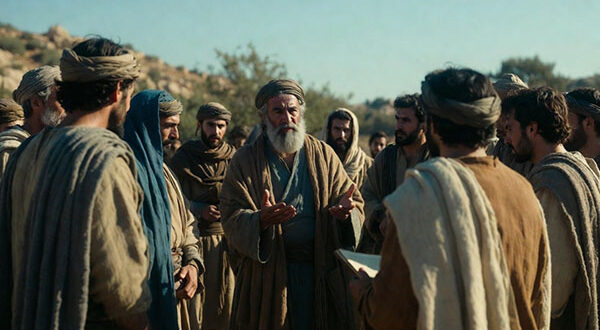
We live in the age of information… but not necessarily in the age of wisdom. Never have we had so much data, so many opinions, so many “experts,” and yet never has moral confusion, emotional fragility, and spiritual disorientation been so evident.
In the midst of this deafening noise, there is an ancient, brief, direct, and tremendously relevant book that seems to shout to us from almost three thousand years ago: “Here is the way. Walk in it.”
That book is the Book of Proverbs.
Today we will enter into it with theological depth and a pastoral gaze. Not as someone studying an ancient document, but as someone opening a map in order not to get lost.
1. What Is the Book of Proverbs?
The Book of Proverbs belongs to the wisdom literature of the Old Testament, together with books such as Job and Ecclesiastes. It is traditionally attributed in large part to King Solomon, son of David, famous for having asked God not for riches or power, but for wisdom (cf. 1 Kings 3:9).
The book itself begins by stating:
“The proverbs of Solomon, son of David, king of Israel,
for learning wisdom and instruction,
for understanding words of insight…” (Prov 1:1–2)
We are not dealing with a collection of pretty phrases for social media. We are standing before a school of wisdom inspired by the Holy Spirit.
2. “The Fear of the Lord Is the Beginning of Wisdom”
If we had to summarize the entire book in a single sentence, it would be this:
“The fear of the Lord is the beginning of knowledge” (Prov 1:7).
From a theological point of view, this verse is key.
What Does “Fear of the Lord” Mean?
It is not servile fear. It is not psychological terror. It is reverence, recognition, adoration. It is knowing who God is… and who I am.
In a world that constantly repeats, “you are the center,” Proverbs tells us: God is the center.
Wisdom does not begin with self-esteem, but with worship.
It does not begin with “I feel,” but with “God says.”
Theologically, this is fundamental: biblical wisdom is not mere human intelligence; it is a virtue that flows from relationship with God.
3. Wisdom as a Person: A Preparation for Christ
One of the most profound aspects of the Book of Proverbs is the personification of Wisdom.
In chapter 8 we read:
“The Lord possessed me at the beginning of his work,
the first of his acts of old…” (Prov 8:22)
Wisdom speaks as if she were someone real, prior to creation, present alongside God.
Christian tradition has seen in these texts a prefiguration of the eternal Word, the Logos, who would be incarnate in Jesus Christ.
What in Proverbs is personified Wisdom, in the New Testament is Christ Himself:
“Christ the power of God and the wisdom of God” (1 Cor 1:24).
From a Christological reading, Proverbs is not merely a book of moral advice: it is a veiled announcement of Christ, the incarnate Wisdom.
4. The Pedagogy of the Father: A Permanent Pastoral Guide
Much of the book takes the form of a father teaching his son:
“Hear, my son, your father’s instruction,
and forsake not your mother’s teaching” (Prov 1:8).
This tone is not accidental. Wisdom is transmitted through relationship. It is not only information; it is formation.
In a time when the father figure is culturally weakened, Proverbs reminds us of something essential: moral education is a sacred mission.
Contemporary Pastoral Application:
- Fathers: your task is not only to feed and clothe; it is to form the soul.
- Priests and catechists: you are spiritual fathers.
- Every Christian: is responsible for transmitting wisdom to the next generation.
Wisdom is not improvised; it is inherited and cultivated.
5. Proverbs and Everyday Life: God Is Also in the Concrete
One of the greatnesses of the Book of Proverbs is that it brings theology down to practical ground.
It speaks about:
- The use of the tongue.
- Laziness.
- Justice in business.
- Marital fidelity.
- Friendship.
- Discipline.
- Stewardship of goods.
- Self-control.
Nothing human is indifferent to it.
The Tongue: An Instrument of Life or Death
“Death and life are in the power of the tongue” (Prov 18:21).
In the era of social media, impulsive comments, and constant judgment, this verse is strikingly relevant.
Do I build up or destroy with what I say?
Do I spread truth or gossip?
Am I an instrument of peace or division?
Pastorally, this point is crucial: many souls are wounded not by spectacular visible sins, but by constant words of criticism, irony, or contempt.
6. The Struggle Against Foolishness: The Great Spiritual Drama
Proverbs constantly sets up a contrast between two figures:
- The wise.
- The fool.
The fool is not the ignorant one. He is the one who rejects correction.
“Fools despise wisdom and instruction” (Prov 1:7).
From a theological perspective, foolishness is a form of spiritual pride. It is closing one’s heart to truth.
In our cultural context, where everything is relativized and no one wants to be corrected, this message is radical.
The wise person:
- Listens.
- Learns.
- Allows himself to be corrected.
- Accepts limits.
The fool:
- Justifies himself.
- Plays the victim.
- Blames others.
- Rejects all authority.
Proverbs invites us to examine ourselves:
Am I teachable?
7. The Wise Woman and the Foolish Woman: A Catechesis on Vocation
The book concludes with the famous praise of the valiant woman (Prov 31:10–31):
“An excellent wife who can find? She is far more precious than jewels.”
This text is not a superficial romantic poem. It is a theology of the feminine vocation: hardworking, prudent, generous, God-fearing.
In contrast, it also warns against the foolish woman who seduces and destroys.
It is not a misogynistic caricature, as some claim, but a moral catechesis on fidelity and responsibility.
Contemporary application:
- Recover the dignity of woman through virtue, not ideology.
- Understand that wisdom transforms the home into a sanctuary.
8. The Social Dimension of Wisdom
Proverbs insists on justice:
“Whoever oppresses a poor man insults his Maker” (Prov 14:31).
Here we find a profound social theology. Wisdom is not individualistic. It has communal consequences.
- Honesty in work.
- Justice in commerce.
- Compassion for the needy.
- Integrity in leadership.
In your store, in your office, in your family… that is where wisdom is at stake.
Holiness is not abstract. It is concrete ethics.
9. Proverbs as a Spiritual Guide Today
How can we apply this book in daily life?
1️⃣ Read one chapter a day
It has 31 chapters. One for each day of the month.
2️⃣ Underline one verse and meditate on it
Do not read quickly. Chew on it.
3️⃣ Daily examination in the light of Proverbs
Ask yourself:
- Have I been prudent today?
- Have I spoken with wisdom?
- Have I acted justly?
4️⃣ Ask for wisdom as a grace
It is not only about human effort. Wisdom is a gift of the Holy Spirit.
10. Proverbs and Holiness in Times of Confusion
Today we suffer from:
- Identity crisis.
- Moral relativism.
- Emotional fragility.
- Loss of authority.
- Spiritual superficiality.
Proverbs is an antidote.
It reminds us that:
- Truth exists.
- Good is objective.
- Discipline is necessary.
- Virtue is possible.
- God governs history.
And above all, it reminds us that life has consequences.
Conclusion: Wisdom Is Calling You
In chapter 9, Wisdom cries out in the streets:
“Come, eat of my bread and drink of the wine I have mixed.”
This is not mere literature. It is an invitation.
From a Christian reading, that invitation finds its fullness in Christ, eternal Wisdom, who offers us the Bread of Life.
Proverbs is not an ancient book for dusty shelves. It is a manual for spiritual survival in the 21st century.
It does not promise worldly success.
It does not guarantee applause.
But it offers something far greater:
A life ordered according to God.
A clean conscience.
A prudent heart.
And a path that leads to eternity.
Because in the end, true wisdom is not knowing much.
It is living well.
And to live well… is to live in God.