
Related Articles
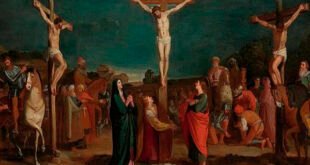

The story of Jesus’ death is not just an ancient account; it is the key to our faith, a mystery that reveals the heart of God and teaches us how to live fully. For many, hearing that “Jesus died” may seem tragic, unjust, or even distant. However, understanding why Jesus had to die is opening the door to hope, forgiveness, and true life.
1. Human tragedy and the need for redemption
From the beginning of time, God created human beings to live in communion with Him, in a paradise of love, beauty, and peace. But the story of Adam and Eve in the Garden of Eden shows us how sin broke that harmony.
The Bible says:
“For all have sinned and fall short of the glory of God” (Romans 3:23)
Sin is not just doing bad things; it is breaking our relationship with God, with others, and with ourselves. Every time we choose selfishness over what is right, every time we let pride or fear govern our hearts, we participate in that sin.
The problem is that sin has deep consequences: death, separation from God, and suffering in the world. To restore that broken relationship, a perfect reconciliation was needed—an act of love greater than any human failure. And that is where Jesus enters.
2. Jesus, the Son of God, and His saving mission
Jesus did not die by chance or simply as an innocent victim. The Church teaches that He came into the world with a clear mission: to save humanity from sin and open the gates of eternal life.
Jesus is true God and true man. This means that, as man, He could suffer and die, and as God, His sacrifice had infinite value. Only someone without sin could offer a sacrifice capable of reconciling humanity with God.
Saint Paul explains this truth powerfully:
“Christ died for our sins according to the Scriptures; he was buried, and he was raised on the third day” (1 Corinthians 15:3–4)
The death of Jesus is not a historical accident or a meaningless act of violence; it is the supreme act of love, a gift of mercy that allows us to draw close to God again.
3. Death as the fulfillment of the Law and the prophets
In the Old Testament, God prepared His people to understand the need for a Savior. Animal sacrifices were a sign: the shedding of blood represented the forgiveness of sins. But these sacrifices were temporary, never sufficient to erase sin definitively.
Jesus presents Himself as the Lamb of God, whose blood has the power to cleanse our sins forever. Isaiah 53 describes Him prophetically:
“Surely he took up our pain and bore our suffering… he was pierced for our transgressions, he was crushed for our iniquities” (Isaiah 53:4–5)
His death fulfills God’s promise and grants us access to the grace that was once only foreshadowed in symbols and prophecies.
4. The cross: an act of love and obedience
For many, the cross is a symbol of suffering, pain, and humiliation. But in Catholic theology, it is the throne of divine love. Jesus embraced the cross freely, not because He could not avoid it, but because to love means to sacrifice for the good of the other.
From a pastoral point of view, the cross teaches us that suffering can have meaning. We all face difficulties, injustices, and pain in our daily lives. By contemplating the cross, we see that even the greatest suffering can contain redemption and hope.
Saint John reminds us:
“Greater love has no one than this: to lay down one’s life for one’s friends” (John 15:13)
Jesus chose to give His life for us, transforming the cross into a path of salvation.
5. The Resurrection: victory over death
Jesus’ death was not the end. Three days later, He rose again, showing that sin and death do not have the final word. His Resurrection is the proof that God’s love is stronger than any evil and that eternal life is open to all who believe and convert.
For our daily lives, this means that no mistake, no wound, and no failure separates us definitively from God. We can always return to Him, trusting in His mercy.
6. Practical application: living the mystery of His death
Understanding why Jesus died is not just intellectual knowledge; it is a call to transform our lives. Some ways to apply this mystery are:
- Forgive others: Jesus died to forgive, and He invites us to do the same. Every act of reconciliation is a small cross that becomes freedom.
- Accept our trials: Life brings difficulties. If we offer them with love, they can draw us closer to God and to others.
- Live with humility and service: The cross teaches us that true love does not seek personal recognition or immediate reward.
- Approach the sacraments: Confession and the Eucharist unite us with the sacrifice of Jesus, renewing our faith and grace.
7. How to explain it to children
Sometimes it is difficult for children to understand Jesus’ sacrifice. A simple way is to use images and analogies:
- The “greatest gift” example: “Jesus gave us His life as the greatest gift anyone can give. He loved us so much that He wanted to forgive us and teach us how to love too.”
- The rescue: “When we do wrong things, we get trapped in problems. Jesus came to free us, like a hero who saves us.”
- Love that hurts: “Sometimes loving someone means doing hard things for them, even when it hurts. Jesus did that for all of us.”
These simple explanations help children connect with the message of love and sacrifice without losing its spiritual depth.
8. Conclusion: the death that gives us life
The death of Jesus was not an accident or a useless act. It was the greatest act of love the world has ever known, the key that opens the heart of God and allows us to walk in truth, forgiveness, and hope.
In a world where pain, injustice, and selfishness seem to dominate, the cross of Jesus reminds us that true love always triumphs. Understanding why He died invites us to live with greater love, humility, and mercy, remembering that every act of sacrifice and kindness, no matter how small, participates in that divine mystery.
May the death of Jesus not be just a story of the past, but a guiding light for today: to live by loving, forgiving, and offering our lives to others, as He taught us.