Related Articles

The Cry of the Martyrs That Challenges a World That Has Forgotten God
In an age when millions of Catholics consider Sunday Mass to be optional, an ancient phrase echoes from the earliest centuries of Christianity with extraordinary force:
“Sine dominico non possumus.”
Translated literally, it means:
“Without Sunday we cannot live.”
However, this expression contains much more than a reference to a day of the week. For the Christians who first pronounced it, it meant:
“Without the Eucharist, without the Christian assembly, without Christ present among us, we cannot live.”
Those words were spoken before a Roman tribunal by men, women, and children who knew they were going to die for remaining faithful to the Holy Mass.
Today, when many voluntarily abandon what others shed their blood for, it is worth rediscovering the profound meaning of this phrase, which has become one of the most powerful mottos in the entire history of Christianity.
The Historical Context: The Martyrs of Abitina
To understand the meaning of Sine Dominico Non Possumus, we must travel back to the year 304.
The Roman Empire was undergoing one of the worst persecutions against Christians under Emperor Diocletian.
A decree was issued prohibiting Christian gatherings and ordering the surrender of the Sacred Scriptures.
Celebrating the Eucharist had become a crime punishable by death.
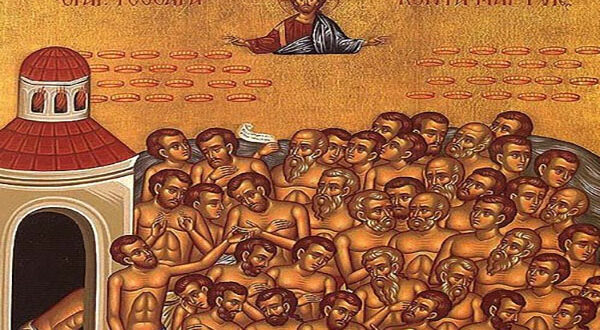
In the North African city of Abitina, a group of forty-nine Christians decided to gather in secret to celebrate the Holy Sacrifice of the Mass.
They knew perfectly well the risk they were taking.
They were not reckless.
They were not ignorant of the consequences.
They simply considered obedience to God more important than preserving their lives.
The authorities discovered the gathering, and all were arrested.
During the trial, they were asked why they had violated the imperial decree.
The answer of one of them was engraved forever in the memory of the Church:
“Sine dominico non possumus.”
That is:
“Without Sunday we cannot live.”
Shortly afterward, they were tortured and executed.
The Church remembers them as the Martyrs of Abitina.
What Does “Dominicum” Really Mean?
There is a very important linguistic detail.
The Latin word dominicum can refer both to the Day of the Lord (Sunday) and to that which belongs to the Lord, especially the Eucharist.
For this reason, many historians and theologians believe that the phrase can be understood in a deeper sense:
“Without the Lord’s Eucharist we cannot live.”
The martyrs were not merely defending a religious calendar.
They were not saying:
“We enjoy gathering on Sundays.”
They were proclaiming something infinitely deeper:
“Our lives depend on Christ.”
And Christ gives Himself to us in a unique way through the Holy Mass.
Sunday: A Divine Institution
From a Catholic perspective, Sunday is not a human invention.
Its roots are directly linked to the mystery of Christ.
The Gospels repeatedly point out that the Resurrection took place:
“On the first day of the week.”
(Mk 16:2)
That day immediately became the center of Christian life.
The Apostles began gathering to break bread precisely on Sunday.
The Book of Acts relates:
“On the first day of the week, when we were gathered together to break bread…”
(Acts 20:7)
Likewise, Saint Paul refers to this practice:
“On the first day of every week, each of you is to put something aside and store it up.”
(1 Cor 16:2)
As early as the end of the first century, Sunday was already known as:
“The Lord’s Day.”
(Rev 1:10)
Therefore, the sanctification of Sunday is not a late custom.
It has been part of the Church’s life since Apostolic times.
The Eucharist: The Heart of Sunday
When the martyrs declared that they could not live without Sunday, they were pointing to an essential truth:
The Eucharist is the heart of Christian existence.
The Church teaches that the Holy Mass is not merely a gathering of believers.
It is not a spiritual conference.
It is not a symbolic ceremony.
It is the sacramental re-presentation of the Sacrifice of Calvary.
The same Christ who died and rose again becomes truly present upon the altar.
That is why He taught:
“I am the living bread that came down from heaven; if anyone eats of this bread, he will live forever.”
(Jn 6:51)
And also:
“Unless you eat the flesh of the Son of Man and drink His blood, you have no life in you.”
(Jn 6:53)
These words are fundamental.
Jesus does not present the Eucharist as an optional supplement.
He presents it as the source of supernatural life.
The Vision of the Fathers of the Church
The earliest Christians understood this reality perfectly.
Saint Ignatius of Antioch called the Eucharist:
“The medicine of immortality.”
He did not describe it as a mere remembrance.
It was the divine remedy against spiritual death.
Saint Justin Martyr described in the second century how Christians gathered every Sunday to hear the Scriptures and celebrate the Eucharist.
For them, it was impossible to separate Christian faith from participation in the Eucharistic Sacrifice.
The Christian community was born around the altar.
The Modern Problem: When Sunday Loses Its Meaning
One of the greatest spiritual tragedies of our time is the gradual disappearance of the Christian meaning of Sunday.
For many, it has become merely:
- A day of rest.
- A sports day.
- A shopping day.
- A time for entertainment.
- An opportunity to sleep longer.
All these things may have their legitimate place.
But when Sunday loses its reference to God, it loses its true identity.
The result is a society that is spiritually exhausted.
Paradoxically, never have there been so many forms of entertainment, and yet so many people experience inner emptiness.
The Martyrs of Abitina remind us of an uncomfortable truth:
the human person cannot live on material activities alone.
We need an encounter with God.
We need spiritual nourishment.
We need worship.
We need grace.
Why Does the Church Oblige Attendance at Sunday Mass?
Many people ask:
“If God is love, why does the Church impose an obligation?”
The answer is simple.
Because the Church acts as a mother.
A mother does not require a child to eat because she enjoys imposing rules.
She does so because she knows that without food the child will become sick.
Likewise, the Church knows the spiritual necessity of the Eucharist.
For this reason, she establishes the Sunday obligation.
Not as a burden.
But as a protection.
The Catechism teaches that participation in Sunday Mass constitutes a witness of belonging to Christ and to His Church.
A Lesson for Catholics Today
The Martyrs of Abitina walked toward their execution because they were unwilling to renounce the Mass.
Today, many have open churches, religious freedom, and multiple Mass schedules available.
Yet Sunday attendance continues to decline in many places.
The question these martyrs ask us from heaven is direct:
Do we truly value what they died for?
If someone had told those Christians:
“You can save your life simply by staying away from Mass for a few weeks,”
they would have answered:
“We cannot.”
Not because they were fanatics.
But because they understood that biological life is not the supreme good.
The supreme good is remaining united to Christ.
“Without Christ We Cannot Live”
At its deepest level, the phrase Sine Dominico Non Possumus summarizes the entire Christian spiritual life.
It is not merely about fulfilling an obligation.
It is about recognizing a loving dependence.
The authentic Christian knows that he needs God.
He needs grace.
He needs prayer.
He needs the sacraments.
He needs the Church.
He needs the Eucharist.
For this reason, the phrase of the martyrs remains relevant seventeen centuries later.
In a culture that proclaims human self-sufficiency, they remind us of a fundamental truth:
“I am the vine; you are the branches. He who abides in Me, and I in him, bears much fruit; for apart from Me you can do nothing.”
(Jn 15:5)
Pastoral Applications for Our Lives
1. Rediscover the Centrality of the Mass
Mass should not occupy the last place in our weekly schedule.
It should be the center around which we organize our lives.
2. Prepare Ourselves Spiritually
Arriving early, maintaining recollection, and participating attentively help us live the Eucharistic mystery more deeply.
3. Recover the Sacred Character of Sunday
Sunday should include moments of prayer, spiritual reading, holy rest, and family fellowship.
4. Teach the Next Generation
Children learn by observing.
If they see that their parents consider Mass a priority, they will understand that faith is not merely a cultural accessory.
5. Live Eucharistically Throughout the Week
Sunday Communion should be extended through works of charity, patience, sacrifice, and love of neighbor.
Conclusion: The Challenge of the Martyrs Remains
The words spoken in Abitina more than seventeen centuries ago do not belong to the past.
They are an urgent call for our own time.
We live in a society that tries to convince us that we can live without God, without prayer, without the sacraments, and without the Church.
The martyrs answered with a certainty that no torture could destroy:
“Sine Dominico Non Possumus.”
Without the Lord’s Day we cannot live.
Without the Eucharist we cannot live.
Without Christ we cannot live.
And perhaps therein lies one of the greatest lessons for the contemporary Catholic: to understand that Sunday Mass is not merely a religious obligation, but the weekly encounter with the One who gives meaning to our entire existence.
For when everything passes away, when human securities disappear, and when the world offers insufficient answers to the deepest questions of the heart, one truth remains—the truth that traveled through the centuries from the prisons of Abitina to our own day:
man may survive without many things, but he cannot attain the fullness for which he was created without God.
That is why the martyrs preferred death to abandoning the Eucharist.
And that is why the Church continues to proclaim, century after century, the same message:
“Sine Dominico Non Possumus.” Without the Lord, without His Day, and without His sacramental presence, our lives lose their center, their strength, and their eternal destiny.