31 de August de 2026
History and Tradition, Liturgy and Liturgical Year
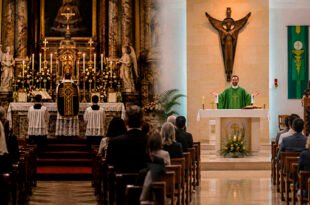
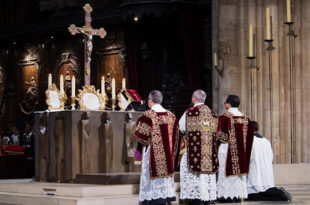
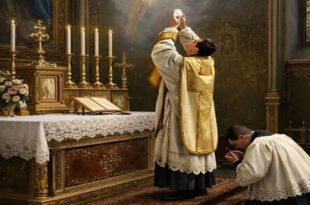
The silent revolution that transformed the way millions of Catholics understand the Mass There are questions that are uncomfortable precisely because they force us to look beyond appearances. One of them is this: Why did the Catholic liturgy change so dramatically after the Second Vatican Council? Was it simply so …
Read More »
13 de August de 2026
History and Tradition, Liturgy and Liturgical Year
There are feasts that the Church celebrates because they commemorate a particular event in the life of a saint. And there are others that seem to open a window directly onto heaven. The solemnity of the Assumption of the Blessed Virgin Mary undoubtedly belongs to this second category. Every August …
Read More »
9 de August de 2026
History and Tradition, History of the Church
There are words that, in the contemporary imagination, seem to carry a verdict even before they are explained. One of them is Inquisition. For millions of people, merely pronouncing this word immediately evokes images of bonfires, torture, fanaticism, obscurantism, and a Church obsessed with persecuting those who thought differently. The …
Read More »
6 de August de 2026
History and Tradition, Liturgy and Liturgical Year
Introduction: Why Do Traditional Churches Have “Boundaries”? One of the aspects that most surprises those who enter an ancient church is discovering that the altar was not always completely open to the rest of the building. In many churches, the communion rail, the steps leading to the sanctuary, choir screens, …
Read More »
4 de August de 2026
History and Tradition, Magisterium of the Church
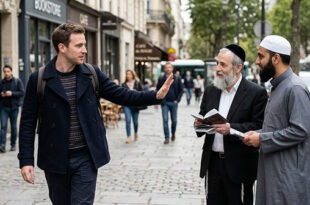
The Truth of the Catholic Faith and Dialogue with Religions in Today’s World In recent decades, a phrase has become widespread that, although it may appear well-intentioned, requires a profound clarification from the Catholic perspective: “We all worship the same God.” Many times, this expression is used as a sign …
Read More »
12 de July de 2026
History and Tradition, Liturgy and Liturgical Year
At every Holy Mass, a mystery takes place that surpasses all human understanding: the very Sacrifice of Calvary becomes present in an unbloody manner upon the altar. Everything surrounding this mystery possesses an extraordinary dignity. Not only the priest, but also those who assist in the sacred liturgy are called …
Read More »
12 de July de 2026
History and Tradition, Liturgy and Liturgical Year
Every Gesture in the Liturgy Speaks of God… and Also of Us We live in an age in which body language has taken on enormous importance. A glance, a hug, a handshake, or standing before an authority communicates far more than words alone. Yet there is a much older, deeper, …
Read More »
10 de July de 2026
History and Tradition, Liturgy and Liturgical Year
Introduction: When the Liturgy Ceases to Be Ours and Returns to Being God’s We live in an age in which creativity is often regarded as an absolute virtue. We are constantly encouraged to “do things our own way,” to express our individuality, and to break with established norms. While this …
Read More »
10 de July de 2026
History and Tradition, Liturgy and Liturgical Year
We live in an age in which there has never been so much information about Christianity and, paradoxically, so little understanding of its mysteries. Many people know the prayers, the rites, and even certain aspects of Catholic doctrine, yet few have discovered the immense spiritual treasure that the Church has …
Read More »
30 de June de 2026
History and Tradition, Magisterium of the Church
We live in an age of extraordinary technological progress and profound spiritual crisis. Never before has humanity had access to so much information, yet rarely has it experienced such an overwhelming interior emptiness. We seek happiness in success, money, entertainment, or the approval of others, yet we continue to feel …
Read More »
22 de June de 2026
History and Tradition, History of the Church
Much Older Than the Council of Trent There is a widespread idea, even among many Catholics, that the so-called Tridentine Mass was born in the 16th century during the Council of Trent. However, this statement is historically inaccurate. The reality is quite different: the Traditional Mass was not created by …
Read More »
19 de June de 2026
History and Tradition, History of the Church
For decades, many traditional Catholics have prayed for full reconciliation between Rome and the Society of Saint Pius X (SSPX). After years of excommunications, doctrinal discussions, gestures of goodwill, and pastoral rapprochement, it seemed that the abyss opened in 1988 could slowly be closing. However, the events of 2026 have …
Read More »
15 de June de 2026
History and Tradition, Liturgy and Liturgical Year
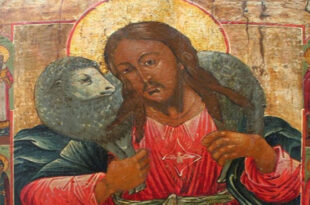
A Symbol That Seems Insignificant… Yet Contains Centuries of Theology Every year, in the heart of Rome, a ceremony takes place that goes unnoticed by most Catholics. While the world pays attention to doctrinal debates, conclaves, or major liturgical celebrations, a small group of lambs is brought to be blessed. …
Read More »
9 de June de 2026
Fathers of the Church and Doctors, History and Tradition
When Catholics affirm that bread and wine truly become the Body and Blood of Jesus Christ during the Holy Mass, we are not defending a medieval doctrine invented centuries after the Apostles. Nor is it merely a symbolic interpretation or a pious devotion that developed over time. Faith in the …
Read More »
7 de June de 2026
History and Tradition, History of the Church
The Cry of the Martyrs That Challenges a World That Has Forgotten God In an age when millions of Catholics consider Sunday Mass to be optional, an ancient phrase echoes from the earliest centuries of Christianity with extraordinary force: “Sine dominico non possumus.” Translated literally, it means: “Without Sunday we …
Read More »
23 de May de 2026
History and Tradition, Liturgy and Liturgical Year
There are nights that change history. Not because some great visible spectacle takes place, but because the human heart silently prepares itself to receive God. The Vigil of Pentecost is one of those nights. In many parts of the Catholic world, it goes unnoticed, overshadowed by the solemnity of Pentecost …
Read More »
17 de May de 2026
History and Tradition, History of the Church
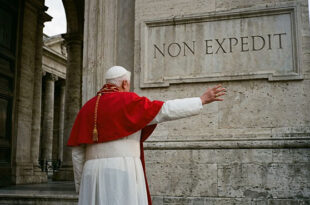
There was a time when the Catholic Church clearly told the faithful that they should not participate in the political life of the modern Italian state. It was not a mild recommendation nor a simple prudential opinion. It was a serious directive, deeply tied to the defense of the faith, …
Read More »
13 de May de 2026
History and Tradition, History of the Church
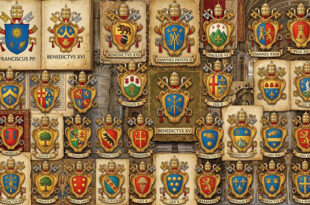
When most people look at a papal coat of arms, they usually see it simply as a decorative symbol: crossed keys, a tiara — or a mitre — golden and red colors, some strange animal, a star, a flower, or a motto written in Latin. Yet for centuries, the Catholic …
Read More »
11 de May de 2026
History and Tradition, Magisterium of the Church
We live in a strange age. Never has there been so much information… and never so much confusion. Every day new opinions appear about God, morality, the Bible, the liturgy, or even about who Christ really was. Many Catholics no longer know how to distinguish between doctrine and personal opinion, …
Read More »
8 de May de 2026
History and Tradition, Liturgy and Liturgical Year
In 1969, the Catholic Church introduced a new way of celebrating the Mass. Millions of faithful witnessed the change without fully understanding it. Today, decades later, many Catholics have never known what was lost. This article is for them. Introduction: A Heritage of Twenty Centuries Imagine arriving one day at …
Read More »
5 de May de 2026
History and Tradition, Liturgy and Liturgical Year
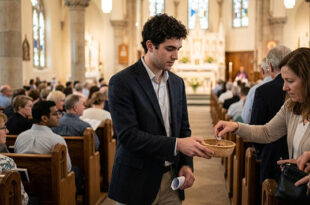
In the midst of the Eucharistic celebration, there is a moment that, at first glance, may seem brief or even secondary, yet it contains immense spiritual depth: the presentation of the offerings. It is not merely about bringing bread and wine to the altar. In truth, it is a gesture …
Read More »
4 de May de 2026
History and Tradition, History of the Church
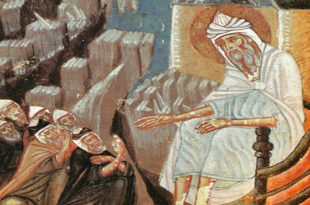
In a world dominated by noise, speed, social media, and the constant need for approval, few works are as striking — and at the same time as profoundly relevant — as the Sayings of the Desert Fathers. Written and compiled mainly between the 4th and 5th centuries, these texts contain …
Read More »
4 de May de 2026
History and Tradition, History of the Church
When we think about the early centuries of Christianity, we imagine catacombs, martyrs, hostile emperors, and small communities that nevertheless changed the course of history. But who has told us all this? How do we know what happened in those decisive years? The answer leads us to a key figure, …
Read More »
4 de May de 2026
History and Tradition, History of the Church
Among the most surprising texts of ancient Christianity, there exists a work that many Catholics today scarcely know, yet for centuries it was read in churches alongside the Scriptures. A book that some Church Fathers considered inspired, that appeared copied inside ancient biblical codices, and that was deeply loved by …
Read More »
29 de April de 2026
Fathers of the Church and Doctors, History and Tradition
Introduction: When the world burns, God raises up saints There are moments in history when everything seems to tremble: moral corruption, political division, spiritual crisis, weak leaders, and a confused society. Many then believe that darkness has won… but the history of the Church proves otherwise: precisely in the darkest …
Read More »
28 de April de 2026
History and Tradition, Liturgy and Liturgical Year
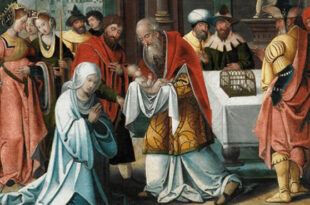
There are liturgical feasts that, at first glance, may seem quiet, almost unnoticed. And yet, they contain immense spiritual depth. One of them is the Purification of the Blessed Virgin Mary, celebrated on February 2, also known as Candlemas. This mystery, deeply rooted in the tradition of the Church, is …
Read More »
26 de April de 2026
History and Tradition, History of the Church
Introduction: When a Crown Defied an Altar There are moments in history when one decision changes not only the destiny of a nation, but also the spiritual course of millions of souls. The rise of Anglicanism was not merely the birth of a new Christian confession: it was a fracture …
Read More »
23 de April de 2026
History and Tradition, Liturgy and Liturgical Year
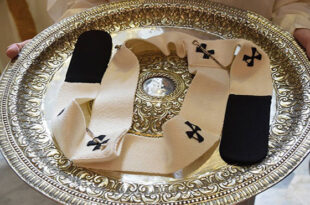
There are gestures in the liturgy that often go unnoticed by many of the faithful, yet they contain an immense spiritual depth. One of them is that brief, almost silent moment when the priest takes the stole… and kisses it. It may seem like a minor detail. However, in the …
Read More »
22 de April de 2026
History and Tradition, Liturgy and Liturgical Year
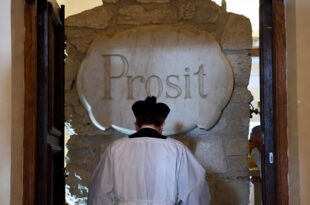
In the quiet silence of the sacristy, when the bustle of the celebration has faded and the priest slowly removes the sacred vestments, there is a brief word—almost whispered—that has echoed through the centuries: “Prosit.” It may seem like a simple formality, a ritual expression without much importance. Yet, as …
Read More »
22 de April de 2026
History and Tradition, History of the Church
In a time like ours—marked by doctrinal confusion, the relativization of truth, and a faith often diluted into something merely emotional—it becomes almost prophetic to look back at a practice that, although it may sound distant today, holds an immense spiritual force: the Anti-Modernist Oath. It was not a mere …
Read More »