Related Articles
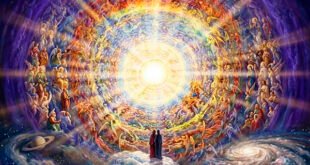
There is a reality that escapes our senses, that does not belong to the material world and yet forms part of human existence. The Catholic faith teaches that we are not alone in creation: alongside the visible world, there exists a spiritual world inhabited by personal beings endowed with intelligence and will, who possess a nature far superior to our own in certain respects.
Sacred Scripture speaks of angels, heavenly spirits, Satan, and demons. It does not present them as symbols of our emotions, literary representations of good and evil, or mere figures of ancient religious language. They are spiritual realities whose existence forms part of the faith of the Church.
However, when these matters are discussed, a concept frequently appears that is not always properly understood: the preternatural.
What exactly does this word mean? What is the difference between the preternatural and the supernatural? What abilities do angels and demons possess? How can the latter act upon man’s thoughts, emotions, imagination, and behaviour? Can they introduce thoughts into our minds, influence our decisions, or even come to dominate our will?
Traditional Catholic theology offers profound answers to these questions. Understanding them is not an invitation to fear, but an opportunity to better comprehend the nature of spiritual warfare, the greatness of human freedom, and the need to live united to Jesus Christ.
For there is one fundamental truth that must accompany every reflection on this subject: the devil exists, his action is real, but his power is limited. God is the Lord of all creation, and no creature can place itself above His authority.
1. What Is the Preternatural World?
The word preternatural comes from the Latin praeter naturam, which literally means “beyond nature.”
In classical Catholic theology, it is used to designate certain abilities, phenomena, or interventions that surpass the faculties proper to a particular nature, without necessarily belonging to the supernatural order in the strict sense.
To understand this, we must remember that creation is not composed exclusively of material realities. God has also created purely spiritual beings: the angels.
These beings possess an intelligence and a will that do not depend upon a bodily organism, as happens with man. Their manner of knowing and acting is therefore different from ours and superior to it in certain respects.
Good angels and fallen angels retain the capacities proper to their angelic nature, although the latter use their faculties in a disordered manner and contrary to God.
Therefore, when we speak of the preternatural world in relation to demons, we are referring principally to the possibilities of action that correspond to their spiritual nature and that exceed the ordinary capacities of human beings.
We must not, however, confuse this expression with the existence of a second universe independent of the world created by God. The preternatural world does not constitute an autonomous kingdom, nor a reality that competes with the Creator.
Everything that exists depends upon God, including angelic spirits and demons.
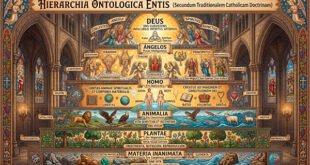
The distinction between the natural, the preternatural, and the supernatural allows us to better understand the relationship between the different creatures and their Creator.
2. The Natural, the Preternatural, and the Supernatural: Three Different Realities
This distinction is fundamental to avoiding theological confusion.
Although the three expressions are related, they do not mean the same thing.
The Natural Order: That Which Belongs to Our Nature
The natural order encompasses the faculties, properties, and capacities that belong to each being by virtue of its own nature.
In the case of man, we are speaking of his body, his senses, his intelligence, his will, and his psychological faculties.
We can know through our senses, reason, remember, imagine, experience emotions, and make decisions.
These capacities belong to our human condition.
The laws of physics, biology, and psychology that govern the existence of creatures also belong to the natural order.
Scientific knowledge studies precisely many of these realities and enables us to understand their mechanisms and relationships.
The Preternatural Order: That Which Surpasses the Ordinary Capacities of a Nature
The preternatural lies beyond the faculties proper to a particular nature, but this does not mean that it is necessarily a supernatural divine intervention.
For example, an angel, by virtue of its spiritual nature, possesses intellectual and operative capacities that surpass those of man.
It does not need human eyes to know, nor a human body to act. Its intelligence does not depend upon brain function, and its existence is not subject to the material limitations proper to our bodily condition.
From the perspective of scholastic theology, angelic spirits can produce certain effects in the material world and act upon some human faculties, always within the limits of their nature and under divine permission.
This explains why the theological tradition considers that demons can influence the imagination, the senses, and human passions.
However, an important clarification is necessary: the fact that a creature can do something that surpasses human capacities does not mean that it possesses absolute supernatural power.
An angel is not God. A demon is not God either.
The Supernatural Order: The Life of God Communicated to Man Through Grace
The supernatural, in the strict theological sense, belongs to a completely different order.
It refers to the gratuitous participation of the creature endowed with reason in divine life, something that surpasses the requirements and capacities of every created nature.
Man cannot attain the Beatific Vision through his own powers, nor can he produce sanctifying grace by himself.
He needs God’s initiative.
Grace is a free gift that makes us partakers of the divine nature, as Saint Peter teaches:
“By these He has granted to us His precious and very great promises, that through them you may become partakers of the divine nature” (2 Pet 1:4).
The Catechism of the Catholic Church develops this teaching when explaining man’s vocation to beatitude and the divine initiative in communicating His life (CCC, 1996–2000).
We must therefore remember:
- Natural: that which belongs to the capacities proper to a creature.
- Preternatural: that which surpasses the ordinary capacities of a particular nature, without necessarily being supernatural in the strict sense.
- Supernatural: that which belongs to the order of grace and participation in divine life, through God’s gratuitous initiative.
This final distinction is particularly important: demons can act in a preternatural manner, but they cannot grant sanctifying grace, produce supernatural union with God, or perform miracles by their own authority.
3. Angels and Demons: Two Realities of the Same Spiritual World
To understand the preternatural action of demons, we must begin by knowing what the Church teaches about angels.
The Catechism states that angels are spiritual, non-corporeal creatures endowed with intelligence and will. They are personal and immortal beings, and they surpass all visible creatures in perfection (CCC, 328–330).
They are not impersonal forces or cosmic energies.
They are personal creatures of God.
Their existence appears throughout Sacred Scripture.
In the Old Testament, we find angels as messengers and servants of God. In the New Testament, they appear announcing the birth of Christ, ministering to Him after His temptations in the desert, and proclaiming His Resurrection.
In Matthew 18:10, Jesus speaks of the angels of the little ones who continually behold the face of the heavenly Father.
The Church likewise teaches the existence of guardian angels, whose mission is connected with the protection and spiritual assistance of human beings.
But not all angels remained faithful to God.
The Fall of the Rebellious Angels
The Catechism teaches that Satan and the other demons were created good by God, but made themselves evil through their own decision (CCC, 391–395).
The Fourth Lateran Council, celebrated in 1215, expressed this doctrine by affirming that the devil and the other demons were created good by nature and made themselves evil.
Their fall was not the consequence of God having created something evil, but of a free decision to reject their Creator.
Scripture presents this rebellion through different images and testimonies.
In the Book of Revelation, we find the figure of the dragon and his angels:
“Now war arose in heaven, Michael and his angels fighting against the dragon; and the dragon and his angels fought” (Rev 12:7).
The same book identifies the dragon with the ancient serpent, who is called the Devil and Satan (Rev 12:9).
Christian tradition has reflected extensively upon this fall. Among its great representatives are Saint Augustine, Saint John Damascene, and Saint Thomas Aquinas.
It should be clarified that theological explanations concerning the precise nature of the angels’ sin and the circumstances of their fall include doctrinal elaborations that must not be confused with details explicitly revealed in Scripture.
What we must affirm essentially is that demons are fallen angels, that their wickedness originates in their own choice, and that their will remains obstinately fixed in their rejection of God.
4. The Preternatural World Is Not a Power Independent of God
One of the most dangerous errors when studying demonology is imagining that God and Satan are two equivalent powers engaged in a battle between equals.
This conception is completely foreign to the Catholic faith.
God is infinite, eternal, omnipotent, and the Creator of all things.
Satan is a spiritual creature.
However powerful his nature may be, he remains a creature.
The Catechism explains this explicitly in paragraph 395:
“The power of Satan is, nonetheless, not infinite.”
This affirmation has fundamental consequences.
The devil cannot create out of nothing, he is not omniscient, he is not omnipresent, and he cannot act independently of divine providence.
Nor does he know the secrets of the human heart as God knows them.
He can observe behaviour, interpret certain reactions, and draw conclusions about our inclinations, but he does not possess divine omniscience.
His activity is limited by his own nature and by God’s permission.
Here we find one of the most important teachings of the Book of Job.
When Satan accuses Job and asks to put his faithfulness to the test, God establishes limits upon his activity (Job 1:6–12; 2:1–6).
The account does not present Satan as an autonomous power, but as a creature whose activity remains subject to divine authority.
This does not mean that God desires evil or takes pleasure in human suffering.
It means that His providence is capable of permitting certain trials without ever losing dominion over history.
The Catechism teaches that the devil’s action causes serious spiritual harm and even, indirectly, physical harm, but that this action remains under divine providence (CCC, 395).
The devil can tempt, deceive, and cause harm, but he can never dethrone God.
5. How Do Demons Act Upon Man Through the Preternatural World?
We now arrive at one of the most important questions in this article.
Catholic theological tradition, especially as developed by Saint Thomas Aquinas, explains that evil spirits can act upon certain human faculties.
We must not imagine this action as an ordinary physical presence or as an intervention that necessarily has to manifest itself through extraordinary phenomena.
Demonic influence can be directed towards the sensitive faculties, the imagination, and the passions.
Its ultimate objective is to turn man away from God and lead him into sin.
To understand this properly, we must distinguish several forms of action.
5.1. Influence Upon the Imagination
The imagination is a human faculty that allows us to form mental representations of things we have come to know through our senses.
We can remember a face, imagine a situation, anticipate an event, or mentally reconstruct an experience.
Saint Thomas Aquinas examines this question in the Summa Theologiae, First Part, Question 111.
According to his explanation, angels, both good and evil, can act upon human imagination through certain effects upon the bodily faculties associated with it.
This means that, within the Thomistic understanding, a spirit can influence imaginative representations without needing to communicate with a person through audible words.
This statement must be properly understood.
It does not mean that every unpleasant thought, disturbing image, or involuntary memory comes from the devil.
The human imagination has its own natural functioning and can produce mental contents for a multitude of reasons.
Fatigue, fear, past experiences, memories, and worries all influence it.
The Thomistic teaching points to a possibility of spiritual action; it does not provide a method for diagnosing the demonic origin of every mental image.
5.2. Influence Upon the Senses
Saint Thomas also considers that spirits can act upon certain sensitive faculties.
This is understandable within his explanation of angelic nature.
Human senses depend upon bodily organs. However, angelic spirits are not subject to the material limitations proper to man.
In scholastic thought, it is accepted that certain sensory alterations can occur through action upon bodily elements.
This does not mean that every strange noise, shadow, sensation of a presence, or inexplicable perception is a demonic manifestation.
Prudence is indispensable.
An abnormal perception may have physical, psychological, or environmental causes. We must not automatically attribute it to a spiritual intervention.
The Catholic faith recognises the existence of evil spirits, but does not invite us to interpret every daily experience superstitiously.
5.3. Influence Upon the Passions and Emotions
Man is not merely intelligence and will.
He also possesses an affective dimension, formed by feelings, emotions, and passions.
Fear, anger, sadness, desire, hope, and joy are part of our human life.
These realities are not evil in themselves.
Passions can contribute to the good when they are ordered by reason and directed towards what is good morally.
But they can also become occasions of disorder.
Saint Thomas explains that spirits can influence certain sensitive dispositions and awaken passions that incline man towards particular actions.
For example, a temptation may arise accompanied by a strong attraction towards something disordered, a reaction of anger, or an inclination to reject something that requires sacrifice.
The devil can exploit human weaknesses, disordered inclinations, and the circumstances of life.
However, we must avoid an erroneous conclusion: experiencing anger, fear, sadness, or temptation does not demonstrate that a person is subject to extraordinary demonic action.
Emotions are part of our nature and are not, in themselves, signs of diabolical presence.
Moral responsibility depends upon how intelligence and will intervene in our actions.
5.4. The Suggestion of Thoughts
Can the devil introduce thoughts into our minds?
This question requires a particularly precise explanation.
In spiritual language, there is frequent reference to thoughts suggested by the enemy, evil inspirations, or inner temptations.
Saint Thomas addresses this question in the Summa Theologiae, First Part, Question 111, Article 2.
His explanation establishes a fundamental distinction: demons cannot move the human will directly from within as God does, but they can incite certain thoughts through persuasion, imagination, and the awakening of passions.
Therefore, when we speak of the devil “introducing thoughts”, we must understand this correctly.
It does not mean that he can enter our consciousness and control everything we think at will.
He can stimulate certain representations, present objects of desire, feed inclinations, and encourage deceptive reasoning.
Let us consider, for example, a person who feels a strong temptation to respond with hatred towards someone who has offended him.
The temptation may present apparently reasonable arguments:
- “You have no obligation to forgive him.”
- “You have every right to make him suffer.”
- “If you do not take revenge, you are weak.”
- “God cannot possibly ask you to forgive something like that.”
The temptation may use a real wound to lead to a morally erroneous conclusion.
But the person retains the possibility of examining these thoughts, rejecting them, and choosing what is good.
Temptation is not yet sin. Voluntary consent to evil is what introduces moral responsibility.
5.5. Influence Upon Memory and Recollections
Memory is another fundamental faculty of human life.
Through it, we preserve experiences, knowledge, and recollections that contribute to our personal identity.
Classical theology considers that the action of spirits can affect certain interior faculties related to sensory representations.
This helps us understand why the Thomistic tradition includes sensory memory and imagination within its reflection upon the faculties that may experience certain influences.
Nevertheless, we must not claim that the devil has unlimited access to all our memories or that he can directly know the entirety of our inner life.
God alone knows the human heart perfectly.
Memory can also be altered by entirely natural causes: illness, ageing, stress, painful experiences, and other psychological or neurological factors.
Therefore, automatically attributing an obsessive memory or a traumatic experience to demonic intervention would be an imprudent conclusion.
6. What Demons Cannot Do: The Limits of Their Power Over Man
Understanding the possibilities of demonic action is just as important as understanding what demons cannot do.
Catholic doctrine does not present the human being as a defenceless creature, inevitably subjected to evil spirits.
God has given man intelligence, will, and freedom.
And these faculties have decisive importance in spiritual warfare.
They Cannot Force the Will to Sin
This is one of the most important teachings of Saint Thomas.
In the Summa Theologiae, First Part, Question 111, Article 2, he explains that only God can move the human will inwardly as the principle of its inclination.
Angels can influence it indirectly through the passions, but they cannot necessarily determine the will.
Man retains his ability to consent or resist.
Therefore, the devil can tempt, persuade, and present evil under the appearance of good, but he cannot automatically turn that temptation into personal sin.
This distinction is essential to understanding moral responsibility.
They Cannot Know the Heart as God Does
Demons are not omniscient.
They can observe the external manifestations of human behaviour, know circumstances, and draw conclusions about our inclinations.
But they do not possess the infinite and perfect knowledge of God.
Saint Thomas addresses this question when discussing demonic temptations in the Summa Theologiae, First Part, Question 114.
The devil can tempt by taking into account dispositions that he observes, but he does not possess God’s divine knowledge of interior secrets.
They Cannot Create or Grant Grace
Demons have no creative power.
Nor can they grant sanctifying grace, forgive sins, or produce supernatural union with God.
These realities belong exclusively to divine action.
An evil spirit may attempt to turn man away from grace through temptation and sin, but it cannot destroy the redemptive power of Jesus Christ.
They Cannot Defeat God
The devil can cause harm, but he cannot definitively prevent the fulfilment of God’s plan.
Christ’s victory over Satan is a central truth of the Christian faith.
Saint Paul proclaims that Christ disarmed the principalities and powers and made a public spectacle of them, triumphing over them through the Cross (Col 2:15).
The Cross is not an apparent defeat that must be corrected through a struggle between equivalent powers.
It is the real victory of Jesus Christ over sin and death.
7. The Main Forms of Demonic Action Upon Man
Christian tradition has distinguished different forms of demonic influence.
Not all have the same nature or seriousness.
It is important to point out that some terms used in traditional demonology belong to theological and pastoral classifications and are not, in themselves, dogmatic categories defined by the Church.
Among the best-known distinctions are the following.
7.1. Ordinary Temptation
This is the most common form of spiritual warfare.
It consists of incitement to sin through thoughts, desires, circumstances, and suggestions that seek to turn man away from God’s will.
Temptation can arise in different areas:
- Against faith, through distrust in God.
- Against hope, through despair or presumption.
- Against charity, through hatred, resentment, and a lack of forgiveness.
- Against purity, through disordered thoughts and desires.
- Against justice, through lying, fraud, and exploitation.
- Against humility, through pride and arrogance.
- Against religion, through indifference towards God and contempt for sacred things.
Temptation does not require extraordinary manifestations.
It can develop under the most ordinary circumstances of life.
A person may be tempted to lie to avoid responsibility, abandon prayer out of convenience, or justify unjust behaviour because he believes that everyone else does the same.
In such cases, spiritual warfare takes place in the realm of freedom and conscience.
7.2. Diabolical Obsession
In traditional demonological terminology, the expression diabolical obsession is used to refer to a form of extraordinary influence manifested through certain external or internal disturbances attributed to demonic action.
Some traditional classifications distinguish between external and internal manifestations.
The former are associated with supposed phenomena affecting the environment or the senses.
The latter refer to interior disturbances considered extraordinary.
It must be emphasised that not every psychological obsession, repetitive thought, intense fear, or emotional disorder has a demonic origin.
Nor should the expression be used as an improvised diagnosis.
Discernment in such cases requires prudence, knowledge, and appropriate ecclesiastical guidance.
7.3. Diabolical Oppression
Traditional demonological literature uses this term to describe certain forms of extraordinary suffering or disturbance attributed to diabolical influence.
Traditional accounts include references to physical afflictions, external difficulties, and situations of suffering.
The Book of Job constitutes a particularly important biblical example for understanding that Scripture contemplates the possibility of Satan causing suffering to man, always within the limits established by God (Job 1–2).
Nevertheless, it would be a mistake to consider that illnesses, accidents, financial difficulties, or family misfortunes are necessarily the consequence of demonic intervention.
Human suffering has multiple causes and should not automatically be interpreted through an extraordinary explanation.
7.4. Diabolical Possession
This is the best-known extraordinary manifestation in Christian tradition.
The Church recognises the possibility that a demon may exercise extraordinary control over a person’s body, without this meaning that the human spirit becomes the demon’s property or that the person’s dignity disappears.
The Gospels contain several episodes in which Jesus Christ casts out demons.
One of the best-known appears in Mark 5:1–20, where the liberation of a man possessed by a legion of evil spirits is recounted.
Another important episode appears in Mark 1:21–28, when Jesus commands an unclean spirit to leave a man in the synagogue.
These accounts show Christ’s authority over evil spirits.
However, diabolical possession must not be confused with mental illness, a neurological disorder, or a psychological disturbance.
The Catechism itself establishes an explicit distinction between exorcism and illnesses, especially psychological illnesses, whose treatment belongs to medical science (CCC, 1673).
This clarification is fundamental to preventing unnecessary suffering and false interpretations.
8. The Devil’s Main Strategy: Turning Man Away from God
If there is one characteristic that allows us to understand the devil’s activity, it is his opposition to God’s plan for man.
His purpose is not simply to provoke strange phenomena, generate fear, or produce extraordinary manifestations.
His fundamental objective is to lead man towards sin and separate him from his Creator.
The Catechism, in paragraph 394, reminds us that Satan even attempted to turn Jesus Christ away from the mission He had received from the Father.
The account of the temptations in the desert is particularly revealing.
Christ’s Temptations in the Desert
The Gospel of Saint Matthew presents Jesus being led by the Spirit into the desert, where He is tempted by the devil after fasting for forty days and forty nights (Mt 4:1–11).
The three temptations reveal a profound spiritual reality.
First temptation: turning stones into bread.
The devil attempts to make Jesus use His power to satisfy a material need apart from obedience to the Father.
Christ responds:
“Man shall not live by bread alone, but by every word that proceeds from the mouth of God” (Mt 4:4).
The lesson is clear: man cannot reduce his existence to material needs.
Second temptation: throwing Himself down from the pinnacle of the Temple.
The devil seeks to make Jesus force God to intervene in an extraordinary way.
Christ responds:
“You shall not tempt the Lord your God” (Mt 4:7).
Here we find a warning against spiritual presumption and the desire to demand proofs of God’s power.
Third temptation: receiving the kingdoms of the world in exchange for worshipping the devil.
This is the clearest manifestation of rebellion against God.
The devil offers power and glory in exchange for worship.
Jesus responds:
“You shall worship the Lord your God and Him only shall you serve” (Mt 4:10).
The lesson is decisive: no material advantage, social position, human recognition, or power can justify infidelity to God.
Christ’s temptations teach us that spiritual warfare revolves around fundamental questions: obedience, trust in God, worship, and faithfulness.
They also show us that Christians are not called to live dominated by fear, but to resist evil by remaining united to Jesus Christ.
9. Can the Devil Use Our Weaknesses to Tempt Us?
Catholic theology recognises that the devil can take advantage of human dispositions in order to develop his tempting activity.
This does not mean that he knows our thoughts like God or that he can directly read all our feelings.
It means that he can observe our behaviour, recognise certain inclinations, and use external circumstances to present temptations suited to our weaknesses.
Saint Thomas Aquinas examines this question in the Summa Theologiae, First Part, Question 114, explaining that the devil can tempt by taking into account the dispositions of each person.
This helps us understand a very practical reality.
A person inclined towards arrogance may be tempted through pride.
Someone who struggles to forgive may experience temptations related to resentment.
Someone who constantly seeks recognition may be attracted by vanity.
Someone dominated by greed may justify unjust behaviour in order to obtain greater benefits.
The devil does not need to invent a different human nature in order to tempt man. He can exploit the disordered inclinations that already exist as a consequence of the human condition wounded by sin.
Here we find a fundamental distinction: human weakness is not necessarily demonic action, but it can become an opportunity that the devil exploits in order to tempt.
This is why growth in virtue is of decisive importance.
Humility combats pride.
Chastity orders desires.
Temperance disciplines the appetites.
Patience helps us resist anger.
Charity overcomes hatred.
Hope combats despair.
Christian life does not consist merely in avoiding certain behaviours, but in progressively transforming our hearts through God’s grace.
10. Sin: The True Victory the Devil Seeks
When we speak about the preternatural world, there is a danger of paying too much attention to extraordinary phenomena and forgetting the most important reality: sin.
The devil does not need to provoke a spectacular manifestation in order to cause spiritual harm.
He can achieve his objective when a person becomes accustomed to living far from God, deliberately rejects His commandments, and justifies what he knows to be contrary to the good.
Sin constitutes a rupture in the moral order established by God.
Not every temptation ends in sin, but voluntary consent to evil can lead man into a progressive spiritual slavery.
Saint Paul warns:
“Give no opportunity to the devil” (Eph 4:27).
This exhortation appears in a context of teachings concerning the new life in Christ, particularly those related to truth, anger, honest work, and charity.
It is not an invitation to obsessively search for possible demonic influences, but a call to avoid the occasions that favour sin.
The man who willingly feeds hatred, lies, impurity, pride, or injustice places himself in a situation of greater moral vulnerability.
This is why spiritual life must be directed towards the conversion of the heart.
It is not enough to ask whether the devil can influence us.
The truly important question is another:
Are we living in such a way that our intelligence, our will, and our actions remain under the lordship of Jesus Christ?
11. Occult Practices: Voluntarily Opening the Door to What God Forbids
One particularly important issue in our time is the proliferation of practices related to occultism.
Interest in magic, divination, spiritualism, and supposed communication with spiritual entities has spread throughout numerous cultural environments.
These practices are often presented as entertainment, a search for knowledge, personal development, or exploration of unknown energies.
But the Church maintains a very clear teaching.
The First Commandment forbids any practice that seeks to obtain hidden knowledge or subject spiritual powers through procedures contrary to the trust owed to God.
The Catechism develops this doctrine in paragraphs 2115–2117.
Among the practices it rejects are:
- Consulting horoscopes and astrology when used as forms of divination.
- Palmistry and the interpretation of omens.
- Evocation of the dead.
- Resorting to mediums and spiritualist practices.
- Magic and sorcery.
- Rituals intended to invoke or manipulate occult powers.
- The use of amulets as means of protection through superstition.
The seriousness of these practices does not depend solely upon whether their results are genuine or false.
Their fundamental problem is religious and moral: they seek to obtain, through improper procedures, knowledge, protection, or power that man must legitimately seek in God.
It is also important to distinguish between the spiritualist evocation of the dead and Christian prayer for the deceased.
The Church teaches that we can and must pray for those who have died, especially through the offering of Holy Mass.
The Communion of Saints has nothing to do with attempting to establish occult communications with the deceased.
Christians do not need to resort to unknown powers to find protection, guidance, or hope. Their trust is placed in God.
12. How Can We Protect Ourselves from Demonic Influence?
The Catholic response to the reality of the devil does not consist in living obsessed with him.
It consists in living deeply united to Jesus Christ.
The Church offers the faithful the spiritual means necessary to grow in grace, resist temptations, and remain firm in the faith.
Daily Prayer
Prayer is one of the fundamental means of Christian life.
Through it, we raise our souls to God, acknowledge our dependence upon the Creator, and strengthen our relationship with Jesus Christ.
The Lord’s Prayer contains a particularly important petition:
“And lead us not into temptation, but deliver us from evil” (Mt 6:13).
This petition expresses the Christian awareness that we need divine help in order to remain faithful.
It is not a magical formula, but a trusting supplication to the Father.
Sacramental Confession
The Sacrament of Penance occupies a fundamental place in spiritual warfare.
Through sincere confession, repentance, and sacramental absolution, Christians receive forgiveness for their sins and reconciliation with God.
Mortal sin destroys charity in the human heart and entails the loss of sanctifying grace.
For this reason, recovering friendship with God through the Sacrament of Reconciliation constitutes a spiritual necessity of the highest importance for anyone who has fallen into mortal sin.
Confession should not be experienced as a practice motivated by fear of the devil, but as an encounter with God’s mercy.
The Holy Eucharist
The Eucharist is the centre of Christian life.
In it, we truly receive Jesus Christ, present under the appearances of bread and wine.
Holy Communion, when received worthily, strengthens our union with Christ and nourishes supernatural life.
There is no more important spiritual protection than living in God’s grace and remaining united to Jesus Christ.
The Holy Rosary
The Rosary is a practice deeply rooted in Catholic spirituality.
Through the contemplation of the mysteries of Christ’s life and the Virgin Mary, the faithful deepen their understanding of the Gospel and learn to contemplate the work of Redemption.
Devotion to the Blessed Virgin has particular importance in the struggle against evil.
From Genesis to Revelation, Sacred Scripture presents the opposition between the power of evil and God’s saving work.
Catholic tradition contemplates Mary in a singular relationship with Christ’s victory over Satan.
We must not attribute magical properties to the Rosary or consider it an object that acts automatically.
Its spiritual strength comes from Christian prayer, contemplation of Christ, and the intercession of the Mother of God.
Reading Sacred Scripture
The Word of God enlightens our intelligence and strengthens our will.
When we know Scripture, we learn to distinguish between truth and deception, between good and evil, and between God’s will and the world’s false promises.
Jesus Christ’s response to the temptations in the desert is an extraordinary example.
In response to each temptation, Christ answers through the Word of God.
Christians must likewise learn to ground their lives in revealed truth.
Sacramentals and the Blessings of the Church
Holy water, blessings, religious medals, and other sacramentals occupy an important place in Catholic devotional life.
The Catechism explains that sacramentals are sacred signs instituted by the Church to prepare men to receive the fruit of the sacraments and to sanctify the various circumstances of life (CCC, 1667).
Among them we find blessings and prayers for protection.
The Medal of Saint Benedict is also well known, and its spiritual tradition is associated with protection against evil.
Nevertheless, we must remember that sacramentals are not amulets.
They do not act through some supposed magical force, nor do they replace personal conversion.
Their meaning lies in the prayer of the Church and in the disposition of faith of those who use them.
Christian protection does not consist in accumulating religious objects, but in living in communion with God.
13. Exorcism: The Authority of Christ Entrusted to the Church
The existence of the preternatural world and the possibility of extraordinary demonic influence explain the presence of exorcism in the life of the Church.
Jesus Christ cast out demons during His public ministry and repeatedly manifested His authority over evil spirits.
The Gospels show that this authority did not come from magical formulas or occult knowledge.
It came from His own divine authority.
The Church received from Christ the power and mission to continue His work.
The Catechism explains in paragraph 1673 that an exorcism takes place when the Church asks publicly and authoritatively, in the name of Jesus Christ, that a person or object be protected against the snares of the Evil One and withdrawn from his dominion.
Simple Exorcism and Solemn Exorcism
The Church distinguishes between different forms of exorcism.
Simple exorcism appears in the celebration of Baptism.
Solemn exorcism, known as a major exorcism, may only be performed by a priest and with the permission of the bishop.
It is not an activity that anyone can undertake on their own initiative.
The ministry of exorcism requires obedience to the norms of the Church, prudence, and discernment.
The Church does not allow these practices to become spectacles, businesses, or improvised procedures.
The Need to Distinguish Between Illness and Demonic Action
This issue deserves special attention.
The Catechism expressly warns that illnesses, particularly psychological illnesses, are a different reality whose treatment belongs to medical science.
Therefore, before an exorcism is performed, it must be established that an illness is not being confused with a supposed presence of the Evil One.
A person experiencing hallucinations, intrusive thoughts, anxiety, depression, behavioural disturbances, or psychological suffering needs to receive appropriate medical care.
The Catholic faith does not require the rejection of medicine.
On the contrary, reason, science, and legitimate medical care are compatible with Christian life.
When there is a well-founded suspicion of extraordinary influence, the appropriate course is to approach the competent ecclesiastical authority, not to seek solutions from supposed specialists without authorisation.
Exorcism is not a spectacle of human power: it is an official prayer of the Church exercised under the authority of Jesus Christ.
14. Spiritual Warfare in the Modern World
Contemporary society seems to oscillate between two apparently opposing positions.
On the one hand, we find environments that deny the existence of demons and consider these realities to be mere remnants of an ancient mentality.
On the other hand, there is growing interest in occultism, esoteric practices, magic, and experiences related to supposed invisible forces.
Both positions can lead to an erroneous understanding of spiritual reality.
Christians must not deny the existence of the devil, but neither should they make him the centre of their thoughts.
The Church teaches us to recognise his existence and activity without falling into fear, superstition, or fascination with the extraordinary.
In this context, we can identify some dangers that are particularly relevant.
The Trivialisation of Evil
In certain cultural environments, the devil is presented as a likeable figure, an aesthetic representation, or an entertainment character.
Fiction and artistic representations should not automatically be confused with religious adherence.
Nevertheless, trivialising evil can contribute to losing moral sensitivity towards that which truly destroys man.
Sin is not a game or a simple transgression of social rules.
It is a rupture in the relationship with God.
The Search for Occult Powers
The fascination with divination, mediums, rituals, and esoteric practices reveals an ancient temptation: wanting to know what God has not revealed to us and obtain a power that does not belong to us.
Man desires to control his future, dominate circumstances, and find security.
But true Christian trust does not consist in controlling the unknown, but in abandoning oneself to divine providence.
Spiritual Fear
There is also the opposite danger: interpreting every difficulty as a demonic intervention.
A run of bad luck, an illness, a family conflict, or a difficulty at work does not constitute proof of extraordinary demonic action.
Human life is subject to limitations, suffering, and events that we do not always understand.
Christians must learn to live through these circumstances with trust, prudence, and hope.
The Loss of the Life of Grace
Perhaps the greatest spiritual danger of our time is indifference towards God.
When man stops praying, abandons the sacraments, loses his sense of sin, and considers conversion unnecessary, his spiritual life becomes weakened.
The answer is not to live searching for demons, but to recover the centrality of God.
Holy Mass, Confession, prayer, doctrinal formation, and the practice of virtue are concrete means of remaining firm in the faith.
15. The Christian’s Spiritual Armour: Saint Paul and the Struggle Against Evil
One of the most important passages in Sacred Scripture concerning spiritual warfare is found in Saint Paul’s Letter to the Ephesians.
The Apostle writes:
“Put on the whole armour of God, that you may be able to stand against the wiles of the devil” (Eph 6:11).
And he continues:
“For we are not contending against flesh and blood, but against the principalities, against the powers, against the world rulers of this present darkness, against the spiritual hosts of wickedness in the heavenly places” (Eph 6:12).
Saint Paul then presents the elements of spiritual armour:
The belt of truth.
Christians must live in truth, reject lies, and keep their intelligence enlightened by the doctrine of Christ.
The breastplate of righteousness.
Moral life must be ordered according to God’s will. It is not enough to know what is good: it must be practised.
The footwear of the Gospel of peace.
Christians are called to live and proclaim the Gospel, bringing the peace of Christ to their families, workplaces, and surroundings.
The shield of faith.
Faith enables us to resist temptations, destructive doubts, and the world’s false promises.
The helmet of salvation.
The hope of salvation protects our minds against despair and reminds us that our lives are directed towards eternity.
The sword of the Spirit, which is the Word of God.
Sacred Scripture is a fundamental source of spiritual light and strength.
Saint Paul concludes by exhorting us to constant prayer.
This image of spiritual armour is extraordinarily relevant today.
Spiritual warfare is not won through knowledge of occult secrets, the accumulation of protective objects, or the search for extraordinary experiences.
It is won by living in truth, practising justice, growing in faith, and remaining united to Christ.
16. A Reflection for Spiritual Life: We Must Not Fear the Devil, but Rather Turn Away from Sin
The study of the preternatural world may awaken our curiosity, but it must lead us towards a much deeper conclusion.
The purpose of Christian life is not to know every possible mechanism of demonic action.
It is to know, love, and serve God.
It is possible to spend a great deal of time reading about exorcisms, possessions, extraordinary manifestations, and demonic phenomena, while at the same time neglecting prayer, Confession, charity, and sacramental life.
That would be a contradiction.
Christians must remember that spiritual warfare does not consist in constantly looking at the enemy, but in keeping their eyes fixed upon Jesus Christ.
When we experience temptation, we must reject it and turn to God.
When we fall into sin, we must repent and seek sacramental forgiveness.
When we experience fear, we must strengthen our trust in providence.
When we go through difficulties, we must remember that God does not abandon those who trust in Him.
And when we see evil in the world, we must respond by practising what is good.
The Virgin Mary is an extraordinary example of faithfulness to God.
Her life was marked by humility, obedience, and absolute trust in the divine will.
In her, we find an image of what Christians should be: creatures who do not seek to take God’s place, but who surrender themselves completely to Him.
For this reason, Marian devotion, the Rosary, and the imitation of Mary’s virtues constitute precious means of growing in spiritual life.
Not because Mary replaces Christ, but because her entire mission leads towards Him.
Conclusion: The Preternatural World Exists, but Christ Has the Final Word
The preternatural world reminds us that created reality is far broader than what our senses can perceive.
The Catholic faith teaches that spiritual beings exist, that good angels serve God, and that demons, former angels who rebelled against their Creator, continue to oppose His plan of salvation.
Their nature allows them to act in ways that surpass the ordinary capacities of man. Classical theology explains that they can influence certain human faculties, such as the imagination, the senses, and the passions, and that they can tempt through suggestions and persuasion.
But it also establishes fundamental limits: they cannot necessarily force our will to sin, they do not possess God’s infinite knowledge, and they have no independent power over creation.
The preternatural world must not become a cause of superstition or fear.
Nor should we deny the existence of the devil or reduce his action to a mere psychological metaphor.
Catholic doctrine invites us to maintain an attitude of spiritual vigilance, prudence, and trust in God.
The true struggle of Christians takes place every day: in the family, at work, in moral decisions, in prayer, in the struggle against our defects, and in the effort to live according to the Gospel.
Let us remember the words of Saint Peter:
“Be sober, be watchful. Your adversary the devil prowls around like a roaring lion, seeking someone to devour. Resist him, firm in your faith” (1 Pet 5:8–9).
And let us also remember the promise of Jesus Christ:
“In the world you have tribulation; but be of good cheer, I have overcome the world” (Jn 16:33).
This is the certainty that must accompany every Catholic.
The devil is a creature; Christ is the Lord. The devil tempts; Christ saves. The devil divides; Christ unites. The devil leads to death; Christ offers eternal life.
Therefore, in the face of visible and invisible realities, temptations, and difficulties, our response must always be the same: remain in God’s grace, live united to Jesus Christ, and place our complete trust in the victory of His Cross.
For Christians have not been called to live terrified by darkness, but to walk as children of the light.
Doctrinal and Theological Sources for Further Study
The following references make it possible to expand upon and verify the doctrinal and theological foundations developed in this article:
Sacred Scripture
- Genesis 3: the temptation and the fall of man.
- Job 1–2: Satan’s limited action under divine providence.
- Matthew 4:1–11: the temptations of Jesus Christ in the desert.
- Mark 1:21–28: Jesus Christ casts out an unclean spirit.
- Mark 5:1–20: the liberation of the demoniac of Gerasa.
- Ephesians 6:10–18: the Christian’s spiritual armour.
- James 4:7: resist the devil.
- 1 Peter 5:8–9: vigilance and firmness in faith.
- Colossians 2:15: Christ’s victory over the principalities and powers.
- Revelation 12:7–12: Michael and his angels fight against the dragon.
Magisterium of the Church
- Fourth Lateran Council (1215), constitution Firmiter credimus: doctrine concerning the creation of angels and the fall of demons.
- Catechism of the Catholic Church, paragraphs 328–336: the angels.
- Catechism of the Catholic Church, paragraphs 391–395: the fall of the angels and the action of Satan.
- Catechism of the Catholic Church, paragraphs 1667–1673: sacramentals and exorcisms.
- Catechism of the Catholic Church, paragraphs 1996–2000: grace.
- Catechism of the Catholic Church, paragraphs 2115–2117: divination, magic, and spiritualism.
Classical Theology
- Saint Thomas Aquinas, Summa Theologiae, First Part, Question 110: the action of angels upon bodily creatures.
- Saint Thomas Aquinas, Summa Theologiae, First Part, Question 111: the action of angels upon man.
- Saint Thomas Aquinas, Summa Theologiae, First Part, Question 114: the attacks and temptations of demons.
- Saint Thomas Aquinas, Summa Theologiae, First Part of the Second Part, Question 80: the devil as a cause of sin.
These sources make it possible to distinguish between the doctrine taught by the Church and the explanations proper to scholastic theological elaboration, avoiding the attribution of dogmatic character to every hypothesis concerning the specific mechanisms of preternatural action.