Related Articles
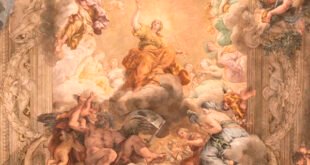
The Catholic faith is founded upon the truths revealed by God and transmitted and taught by the Church throughout the centuries. These truths encompass who God is, the Most Holy Trinity, Creation, Jesus Christ, the Virgin Mary, grace, the Church, the Sacraments, and the last things concerning Heaven, Purgatory, and Hell.
Below is a list of 255 statements of the Catholic faith, grouped by subject matter to facilitate their consultation, study, and meditation.
I. God: Existence, Nature, and Attributes
- God, our Creator and Lord, can be known with certainty by the natural light of reason from created things.
- The existence of God is not only an object of natural rational knowledge, but also an object of supernatural faith.
- The nature of God is incomprehensible to men.
- The blessed in Heaven possess an immediate, intuitive knowledge of the divine Essence.
- The immediate vision of God transcends the natural power of knowledge of the human soul and is therefore supernatural.
- The soul, for the immediate vision of God, needs the light of glory.
- The divine Essence is also incomprehensible to the blessed in Heaven.
- The divine attributes are really identical with one another and with the divine Essence.
- God is absolutely perfect.
- God is infinitely perfect in every perfection.
- God is absolutely simple.
- There is one God.
- The one God is, in the ontological sense, the true God.
- God possesses an infinite power of knowledge.
- God is the absolute Truth.
- God is absolutely faithful.
- God is absolute ontological Goodness in Himself and in relation to others.
- God is absolute moral Goodness or Holiness.
- God is absolute Benignity.
- God is absolutely immutable.
- God is eternal.
- God is immense or absolutely immeasurable.
- God is present everywhere throughout created space.
- The knowledge of God is infinite.
- God knows all merely possible things through the knowledge of simple intelligence (scientia simplicis intelligentiae).
- God knows all real things of the past, present, and future (scientia visionis).
- Through the knowledge of vision (scientia visionis), God also foresees with infallible certainty the free acts of rational creatures.
- The divine will is infinite.
- God necessarily loves Himself, but He freely loves and wills created things outside Himself.
- God is omnipotent.
- God is the Lord of Heaven and earth.
- God is infinitely just.
- God is infinitely merciful.
II. The Most Holy Trinity and Creation
- In God there are three Persons: the Father, the Son, and the Holy Spirit. Each of the three Persons possesses the one and identical divine Essence.
- In God there are two internal divine Processions.
- The divine Persons, and not the divine Nature, are the subject of the internal divine Processions, both in the active and passive sense.
- The Second Divine Person proceeds from the First Divine Person by generation and is therefore related to Him as Son to Father.
- The Holy Spirit proceeds from the Father and the Son as from one single Principle, through one single spiration.
- The Holy Spirit does not proceed by generation, but by spiration.
- The Relations in God are really identical with the divine Nature.
- The three Divine Persons are in one another.
- All of God’s activities ad extra are common to the three Persons.
- Everything that exists outside God was produced by God from nothing in its entire substance.
- God was moved by His Goodness to create the world.
- The world was created for the glorification of God.
- The three Divine Persons are one common Principle of Creation.
- God created the world free from every external coercion and from every internal necessity.
- God has created a good world.
- The world had a beginning in time.
- God alone created the world.
- God preserves all created things in existence.
- God, through His Providence, protects and guides everything that He has created.
III. Man, Original Sin, and the Angels
- The first man was created by God.
- Man consists of two essential parts: a material body and a spiritual soul.
- The rational soul is, of itself, the essential form of the body.
- Every human being possesses an individual soul.
- God has given man a supernatural destiny.
- Our first parents, before the Fall, were endowed with sanctifying grace.
- They were also endowed with the donum immortalitatis, that is, the gift of bodily immortality.
- Our first parents, in Paradise, committed a grave sin through the transgression of the divine commandment by which they were tested.
- Through sin, our first parents lost sanctifying grace and incurred the wrath and indignation of God.
- Our first parents became subject to death and to the dominion of the Devil.
- Adam’s sin is transmitted to his descendants, not by imitation, but by descent.
- Original sin is transmitted through natural generation.
- In the state of original sin, man is deprived of sanctifying grace and of everything that it entails, as well as of the supernatural gifts of integrity.
- Souls that depart this life in the state of original sin are excluded from the Beatific Vision of God.
- At the beginning of time, God created the spiritual substances — the angels — from nothing.
- The nature of the angels is spiritual.
- The secondary task of the good angels is the protection of men and the care of their salvation.
- The Devil possesses a certain dominion over humanity because of Adam’s sin.
IV. Jesus Christ: Incarnation and Divine Person
- Jesus Christ is true God and true Son of God.
- Christ assumed a real body, not an apparent body.
- Christ assumed not only a body, but also a rational soul.
- Christ was truly conceived and born of a daughter of Adam, the Virgin Mary.
- The divine and human natures are hypostatically united in Christ, that is, united with one another in one Person.
- The incarnate Christ is one, that is, one Person. He is God and man at the same time.
- The God-Logos is united to the flesh through an interior, physical, or substantial union. Christ is not merely a bearer of God, but is truly God.
- The human and divine activities attributed to Christ in Sacred Scripture and in the Fathers cannot be divided between two persons or hypostases, the Man-Christ and the God-Logos, but must be attributed to the one Christ, the Logos made flesh. It is the divine Logos who suffered in the flesh, was crucified, died, and rose again.
- The Blessed Virgin is Mother of God, since she truly gave birth to the God-Logos made flesh.
- In the Hypostatic Union, each of the two natures of Christ remains complete, without transformation and without mixture with the other.
- Each of the two natures of Christ possesses its own natural will and its own natural mode of operation.
- The Hypostatic Union of Christ’s human nature with the divine Logos took place at the very moment of conception.
- The Hypostatic Union will never cease.
- The Hypostatic Union was accomplished by the Three Divine Persons acting together.
- Only the Second Divine Person became man.
- Jesus Christ, besides being God, is also, as man, the natural Son of God.
- The God-Man Jesus Christ must be venerated with one single mode of worship: the absolute worship of latria, which belongs to God alone.
- The divine and human characteristics and activities of Christ must be attributed to the one Incarnate Word.
- Christ was free from all sin, both original sin and every personal sin.
- Christ’s human nature was passible, that is, capable of experiencing sensations and suffering.
V. The Redemption, Passion, Death, Resurrection, and Ascension
- The Son of God became man in order to redeem men.
- Fallen man cannot redeem himself.
- Jesus Christ, God and man, is the High Priest.
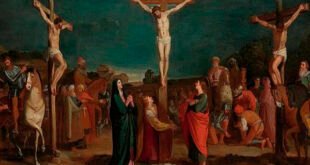
- Christ offered Himself on the Cross as a true and proper sacrifice.
- Christ, through His sacrifice on the Cross, has ransomed us and reconciled us with God.
- Christ did not die only for the predestined.
- Christ’s expiation does not extend to the fallen angels.
- Christ, through His Passion and Death, merited a reward from God.
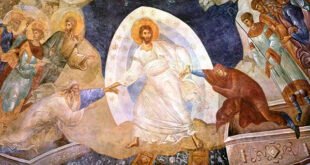
- After His death, Christ’s soul, separated from His body, descended into the underworld.
- On the third day after His death, Christ rose gloriously from the dead.
- Christ ascended into Heaven body and soul and is seated at the right hand of the Father.
VI. The Blessed Virgin Mary
- Mary is truly the Mother of God.
- Mary was conceived without the stain of original sin.
- Mary conceived by the power of the Holy Spirit, without the cooperation of man.
- Mary gave birth to her Son without in any way diminishing her virginal integrity.
- Even after the birth of Jesus, Mary remained a Virgin.
- Mary was a Virgin before, during, and after the birth of Jesus Christ.
- Mary was assumed into Heaven body and soul.
VII. Grace, Free Will, and Justification
- There is a supernatural intervention of God in the faculties of the soul that precedes the free act of the will.
- There is a supernatural influence of God upon the faculties of the soul that coincides in time with the free act of the human will.
- For every salutary act, the internal supernatural grace of God (gratia elevans) is absolutely necessary.
- Internal supernatural grace is absolutely necessary for the beginning of faith and salvation.
- Without God’s special assistance, the justified person cannot persevere until the end in justification.
- The justified person cannot, throughout his entire life, avoid all sins, even venial sins, without the special privilege of God’s grace.
- Even in the state of fallen nature, man can know, through his natural intellectual power, religious and moral truths.
- Sanctifying grace is not required in order to perform a morally good action.
- In the state of fallen nature, it is morally impossible for man, without supernatural Revelation, to know easily, with absolute certainty and without admixture of error, all religious and moral truths of the natural order.
- Grace cannot be merited through natural works, either de condigno or de congruo.
- God grants all the just sufficient grace (gratia proxima vel remota sufficiens) necessary for the observance of the Divine Commandments.
- God, through His eternal decree of will, has predestined certain men to eternal blessedness.
- God, through an eternal decree of His will, predestines certain men, on account of their foreseen sins, to eternal reprobation.
- The human will remains free under the influence of efficacious grace, which is not irresistible.
- There exists a grace which is truly and really sufficient and which nevertheless remains inefficacious (gratia vere et mere sufficiens).
- The sinner can and must prepare himself, with the help of actual grace, to receive the grace by which he is justified.
- The justification of an adult is impossible without faith.
- In addition to faith, other acts of disposition must be present.
- Sanctifying grace sanctifies the soul.
- Sanctifying grace makes the just man a friend of God.
- Sanctifying grace makes the just man a son of God and grants him a right to the inheritance of Heaven.
- The three divine or theological virtues of Faith, Hope, and Charity are infused together with sanctifying grace.
- Without a special divine Revelation, no one can know with the certainty of faith whether he is in the state of grace.
- The degree of justifying grace is not identical in all the just.
- Grace can increase through good works.
- The grace by which we are justified can be lost, and is lost through every grave [mortal, serious] sin.
- Through his good works, the justified man truly acquires for himself a right to a supernatural reward from God.
- Through each good work, the justified man truly merits for himself an increase of sanctifying grace, eternal life — if he dies in a state of grace — and an increase of heavenly glory.
VIII. The Church: Foundation, Constitution, and Authority
- The Church was founded by Jesus Christ, God-Man.
- Our Redeemer preserves by divine power the society founded by Him, the Church.
- Christ is the Divine Redeemer of His Body, the Church.
- Christ founded the Church in order to continue throughout all time His work of redemption of all men.
- Christ gave His Church a hierarchical constitution.
- The powers conferred upon the Apostles have descended to the bishops.
- Christ constituted the Apostle Peter as the first of all the Apostles and as the visible head of the whole Church, by conferring upon him immediately and personally the primacy of jurisdiction.
- According to Christ’s command, Peter must have successors in his primacy over the whole Church and for all time.
- The successors of Peter in the Primacy are the bishops of Rome.
- The Pope possesses full and supreme jurisdictional power over the whole Church, not only in matters of faith and morals, but also in the discipline of the Church and in its government.
- The Pope is infallible when he speaks ex cathedra.
- By divine right, bishops possess ordinary governing power over their dioceses.
- Christ is the Head of the Church.
- In the definitive judgment concerning doctrines relating to faith and morals, the Church is infallible.
- The primary object of infallibility is the formally revealed truths of Christian doctrine concerning faith and morals.
- The entire body of bishops is infallible when, gathered together in a general council or dispersed throughout the world, they propose a teaching concerning faith or morals as something to be held by all the faithful.
IX. The Marks of the Church and the Communion of Saints
- The Church founded by Christ is one and unique.
- The Church founded by Christ is holy.
- The Church founded by Christ is Catholic.
- The Church founded by Christ is apostolic.
- Membership in the Church is necessary for all men for salvation.
- It is lawful and beneficial to venerate the saints in Heaven and to invoke their intercession.
- It is lawful and beneficial to venerate the relics of the saints.
- It is lawful and beneficial to venerate images of the saints.
- The living faithful can assist the souls in Purgatory through their suffrages.
X. The Sacraments in General
- The Sacraments of the New Covenant contain the grace which they signify and confer it upon those who place no obstacle to it.
- The Sacraments operate ex opere operato (simply by the fact that they are performed).
- All the Sacraments of the New Covenant confer sanctifying grace upon those who receive them.
- Three Sacraments — Baptism, Confirmation, and Holy Orders — imprint a character, that is, an indelible spiritual mark, and for this reason cannot be repeated.
- The sacramental character is a spiritual mark impressed upon the soul.
- The sacramental character remains at least until the death of the person who receives it.
- All the Sacraments of the New Covenant were instituted by Jesus Christ.
- There are seven Sacraments of the New Law.
- The Sacraments of the New Covenant are necessary for the salvation of mankind.
XI. Administration of the Sacraments and Baptism
- For the valid administration of the Sacraments, it is necessary that the minister correctly perform the sacramental sign.
- The minister must also have, at least, the intention of doing what the Church does.
- In the case of adults receiving the Sacraments, a morally worthy disposition is required in order to receive them worthily and fruitfully.
- Baptism is a true Sacrament instituted by Jesus Christ.
- The remote matter of the Sacrament of Baptism is true and natural water.
- Baptism confers the grace of justification.
- Baptism produces the remission of all punishments due to sin, both eternal and temporal.
- Even if it is received unworthily, valid Baptism imprints upon the soul of the recipient an indelible spiritual mark, the baptismal character, and for this reason the Sacrament cannot be repeated.
- The Baptism of water (Baptismus fluminis) is, since the promulgation of the Gospel, necessary for all men, without exception, for salvation.
- Baptism can be validly administered by any person.
- Baptism can be received by any person who is in the state of earthly pilgrimage and who has not yet been baptized.
- The Baptism of infants is valid and lawful.
XII. Confirmation
- Confirmation is a true Sacrament in the proper sense of the term.
- Confirmation imprints an indelible spiritual mark upon the soul and, for this reason, cannot be repeated.
- The ordinary minister of Confirmation is the bishop alone.
XIII. The Most Holy Eucharist
- The Body and Blood of Jesus Christ are truly, really, and substantially present in the Eucharist.
- Christ becomes present in the Sacrament of the Altar through the transformation of the whole substance of the bread into His Body and of the whole substance of the wine into His Blood.
- The accidents of bread and wine remain after the change of substance.
- The Body and Blood of Christ, together with His Soul and Divinity, and therefore Christ whole and entire, are truly present in the Eucharist.
- Christ whole and entire is present under each of the two species.
- When either of the consecrated species is divided, Christ whole and entire is present in each part of the species.
- Once the consecration has been completed, the Body and Blood remain permanently present in the Eucharist.
- The worship of adoration (latria) must be given to Christ present in the Eucharist.
- The Eucharist is a true Sacrament instituted by Christ.
- The matter for the confection of the Eucharist is bread and wine.
- For children who have not yet reached the age of reason, reception of the Eucharist is not necessary for salvation.
- Communion under both species is not necessary for any individual member of the faithful, either by reason of a divine precept or as a means of salvation.
- The power to consecrate resides solely in a validly ordained priest.
- The Sacrament of the Eucharist can be validly received by every baptized person who is in the state of earthly pilgrimage, including young children.
- For the worthy reception of the Eucharist, the state of grace, as well as the proper and devout disposition, is necessary.
XIV. The Holy Sacrifice of the Mass
- The Holy Mass is a true and proper Sacrifice.
- In the Sacrifice of the Mass, the Sacrifice of Christ on the Cross is made present, His memory is celebrated, and its saving power is applied.
- In the Sacrifice of the Mass and in the Sacrifice of the Cross, the Sacrificial Offering and the Priest who offers are identical; only the nature and manner of the offering differ.
- The Sacrifice of the Mass is not merely a sacrifice of praise and thanksgiving, but also a sacrifice of expiation and impetration.
XV. The Sacrament of Penance and Confession
- The Church has received from Christ the power to forgive sins committed after Baptism.
- Through the Absolution of the Church, sins are truly and immediately remitted.
- The Church’s power to forgive sins extends to all sins without exception.
- The exercise of the Church’s power to forgive sins is a judicial act.
- The forgiveness of sins that takes place in the Tribunal of Penance is a true and proper Sacrament, distinct from the Sacrament of Baptism.
- Extra-sacramental justification is effected only by perfect contrition when it is joined to the desire for the Sacrament (votum sacramenti).
- Contrition arising from the motive of fear is a morally good and supernatural act.
- Sacramental confession of sins is ordained by God and is necessary for salvation.
- By divine disposition, all grave sins (mortal, serious sins), according to their species and number, as well as circumstances that change their nature, are subject to the obligation of confession.
- Confession of venial sins is not necessary, but it is permitted and useful.
- Not all temporal punishments due to sin are always remitted by God together with the guilt of sin and the eternal punishment.
- The priest has the right and duty, according to the nature of the sins and the capacity of the penitent, to impose salutary and appropriate works of satisfaction.
- Extra-sacramental penitential works, such as voluntarily performing penitential practices and patiently enduring trials sent by God, possess satisfactory value.
- The form of the Sacrament of Penance consists in the words of Absolution.
- Absolution, together with the acts of the penitent, produces the forgiveness of sins.
- The principal effect of the Sacrament of Penance is the reconciliation of the sinner with God.
- The Sacrament of Penance is necessary for salvation for those who, after Baptism, fall into grave sin.
- The sole possessors of the Power of Absolution in the Church are bishops and priests.
- Absolution given by deacons, clerics of lower orders, and laymen is not Sacramental Absolution.
- The Sacrament of Penance can be received by any baptized person who, after Baptism, has committed a grave or venial sin.
- The Church possesses the power to grant Indulgences.
- The use of Indulgences is useful and beneficial for the faithful.
XVI. Extreme Unction
- Extreme Unction is a true and proper Sacrament instituted by Christ.
- The remote matter of Extreme Unction is oil.
- The form consists in the priest’s prayer for the sick person which accompanies the anointing.
- Extreme Unction grants the sick person sanctifying grace in order to encourage and strengthen him.
- Extreme Unction produces the remission of grave sins that still remain and of venial sins.
- Extreme Unction sometimes produces the restoration of bodily health, if this is beneficial for spiritual good.
- Only bishops and priests can validly administer Extreme Unction.
- Extreme Unction can be received only by the faithful who are gravely ill.
XVII. The Sacrament of Holy Orders
- Holy Orders is a true and proper Sacrament instituted by Christ.
- The consecration of priests is a Sacrament.
- Bishops are superior to priests.
- The Sacrament of Holy Orders confers sanctifying grace upon the recipient.
- The Sacrament of Holy Orders imprints a character upon the recipient.
- The Sacrament of Holy Orders confers a permanent spiritual power upon the recipient.
- The ordinary dispenser of all degrees of Holy Orders, both sacramental and non-sacramental, is only a validly consecrated bishop.
XVIII. The Sacrament of Matrimony
- Marriage is a true and proper Sacrament instituted by God.
- From the sacramental contract of Marriage arises the Marriage Bond, which obliges both spouses to an indissoluble and lifelong communion of life.
- The Sacrament of Matrimony grants Sanctifying Grace to the contracting parties.
XIX. The Last Things: Death, Judgment, Heaven, Hell, and Purgatory
- In the present order of salvation, death is a punishment for sin.
- All human beings subject to original sin are subject to the law of death.
- The souls of the just who, at the moment of death, are free from all guilt of sin and from all punishment due to sin, enter Heaven.
- The blessedness of Heaven lasts for all eternity.
- The degree of perfection of the Beatific Vision granted to the just is proportionate to the merits of each one.
- The souls of those who die in a state of personal grave sin enter Hell.
- The punishment of Hell lasts for all eternity.
- The souls of the just who, at the moment of death, are burdened with venial sins or with temporal punishments due to sins, enter Purgatory.
- At the end of the world, Christ will come again in glory to pronounce judgment.
- All the dead will rise on the last day with their bodies.
- Christ, at His Second Coming, will judge all men.
Conclusion
The Catholic Faith is not a collection of changing opinions or merely human traditions. It is founded upon truths revealed by God and entrusted to the Church so that they may be faithfully preserved, taught, and transmitted throughout the centuries.
For this reason, the study of Catholic doctrine is not merely an intellectual exercise. It is an invitation to know God more deeply, to understand the truths of the Faith, to conform our lives to them, and to remain firmly attached to the perennial teaching of the Catholic Church.
As Saint Peter exhorts us:
“Always be ready to give an answer to everyone who asks you to give the reason for the hope that is in you.”
(1 Peter 3:15)