Related Articles

“But when the fullness of time had come, God sent forth His Son, born of a woman, born under the Law.” (Galatians 4:4)
A Question Many Believers and Non-Believers Ask
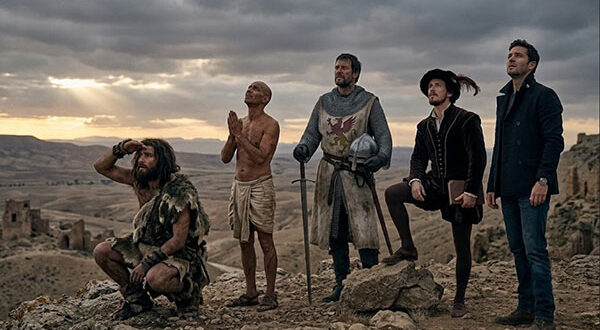
There is a question that, sooner or later, arises in the mind of anyone who seriously reflects on human history: if Jesus Christ is the center of God’s plan to save mankind, why did He wait so long to come? If we accept the scientific estimates that human beings have existed for hundreds of thousands of years—or even millions if we speak of the earliest hominins—why did the Incarnation take place only two thousand years ago? Why did God not send the Redeemer immediately? What happened during that immense span of time?
At first glance, the question seems to challenge the Christian faith. However, when we delve into Revelation, the Tradition of the Church, and the reflections of the great theologians, we discover that this question not only has an answer, but also introduces us to one of the most fascinating mysteries of Divine Providence.
The answer, in fact, forces us to abandon a way of thinking that is very characteristic of our age: the belief that God must act according to our clocks. We live obsessed with calendars, deadlines, and immediacy. God, on the other hand, beholds all of history from eternity.
As Saint Peter reminds us:
“With the Lord one day is as a thousand years, and a thousand years as one day.” (2 Peter 3:8)
This does not simply mean that God measures time differently; it means something far deeper: God exists outside of time, because He Himself is the Creator of time.
The First Mistake: Imagining That God “Waited”
The title of this article contains a very human expression: God waited. But, speaking with theological precision, God never waits.
Waiting implies that someone is subject to the passage of time.
God is not.
Saint Thomas Aquinas explains that God is Pure Act, without temporal succession. For Him, there is no past that no longer exists nor a future that has yet to come. Everything is eternally present before His divine gaze.
Therefore, when we ask:
“Why did God wait?”
What we should really ask is:
Why did God will the Incarnation to take place at that precise moment in history?
The difference may seem small, but it completely changes our perspective.
This is not about a delay.
It is about a plan.
All of History Was Oriented Toward Christ
Many people imagine the Old Testament as merely a long introduction.
But the Church teaches something much deeper.
The whole of creation was brought into existence with Christ as its ultimate purpose.
Saint Paul declares:
“All things were created through Him and for Him.” (Colossians 1:16)
He does not merely say that Christ came to save a world that already existed.
He says that the entire universe was created with Christ in view.
This means that from the very first instant of the cosmos, all of history was moving toward one specific moment:
The Incarnation of the Word.
History is not a chaotic succession of events.
It has a center.
And that center has a name:
Jesus Christ.
The “Fullness of Time”
Saint Paul uses an extraordinary expression:
“When the fullness of time had come…” (Galatians 4:4)
He does not say:
“When enough years had passed.”
He says:
“When the fullness had come.”
The Greek word used (pleroma) means fullness, completion, maturity.
It is like a piece of fruit.
It does not ripen in five minutes.
It requires a whole process.
If it is picked too early, it is still green.
If it is picked too late, it spoils.
God acts neither too early nor too late.
He acts precisely when history has reached maturity.
Could Christ Have Come Earlier?
From the standpoint of divine omnipotence, yes.
God could have sent the Messiah the very day after Adam’s sin.
He could even have prevented Original Sin altogether.
Nothing limits His power.
But God does not act only with power.
He also acts with wisdom.
And divine wisdom willed to prepare humanity gradually.
Divine Pedagogy
One of the most important concepts in all of biblical theology is that of God’s pedagogy.
Just as a teacher does not teach differential calculus to a four-year-old child, God educated the human race progressively.
He did not reveal the whole truth all at once.
He unveiled it little by little.
First Noah.
Then Abraham.
Then Moses.
Later the prophets.
Finally Christ.
Each stage prepared the way for the next.
The Catechism teaches that God progressively prepared Israel to receive the Savior.
Humanity needed to learn who the one true God is.
To understand sin.
To discover the need for grace.
To comprehend the value of sacrifice.
To long for the Messiah.
Without this preparation, the Incarnation would have been incomprehensible.
What Happened to All the People Who Lived Before Christ?
Here another great question arises.
Were they all condemned?
The answer is an unequivocal:
No.
The Church has never taught such a thing.
Christ also saves those who lived before His historical birth.
How?
Because the Cross has eternal reach.
The sacrifice of Christ occurred at one specific moment in history.
But its effects extend to every age.
Backward.
And forward.
When Christ died, He redeemed Adam.
Abraham.
Moses.
David.
Isaiah.
And all the righteous who awaited salvation.
That is why the Creed proclaims:
“He descended into hell.”
This does not refer to the hell of the damned.
It refers to what has traditionally been called the Bosom of Abraham, where the righteous of the Old Testament awaited redemption.
Christ went there to proclaim the Good News of salvation.
The Preparation of Israel
Why did God choose one single people?
Because God ordinarily works through mediations.
He chose Abraham.
Then a family.
Then a nation.
Israel became the spiritual laboratory of humanity.
There the essential foundations were developed:
- monotheism;
- the covenant;
- the moral law;
- holiness;
- sin;
- mercy;
- sacrifice;
- the hope of the Messiah.
All of these prepared the way for Christ.
Every sacrifice in the Temple pointed toward the perfect sacrifice of the Cross.
Every Passover lamb foreshadowed the true Lamb of God.
Every prophecy shed a little more light on the face of the Messiah.
The Pagan World Was Also Being Prepared
It was not only Israel that was being prepared.
The entire world was.
The Greek philosophers were searching for truth.
The Romans were building roads.
Greek had become the international language.
The Roman Empire had united much of the Mediterranean world.
All of this greatly facilitated the rapid spread of the Gospel.
The Fathers of the Church saw in these historical circumstances a genuine work of Divine Providence.
None of it was accidental.
It was preparation.
Christ Came When the World Was Ready
Saint Leo the Great affirmed that God chose the exact moment.
For centuries, humanity had experienced that it could not save itself.
It had tried philosophies.
Empires.
Religions.
Laws.
Power.
None of these was enough.
Then Christ appeared.
Not as just another philosopher.
But as the Savior.
What About Human Evolution?
Today, many Christians wonder how to reconcile faith with scientific theories concerning the antiquity of the universe and the human race.
The Church carefully distinguishes between scientific questions and revealed truths.
Revelation does not intend to provide a scientific chronology of biological evolution. Its purpose is to proclaim who created all things, what the dignity of the human person is, how sin entered the world, and how God accomplishes salvation. Investigations into the age of the universe or of the human body belong to the natural sciences and must be studied according to their own proper methods.
At the same time, the faith clearly affirms that the human person is not merely an accident of matter. Every rational soul is created immediately by God, and every human being possesses a unique dignity because he or she has been created in the image and likeness of the Creator (cf. Genesis 1:26–27).
Therefore, even if one accepts long processes in the history of the cosmos and of life, the decisive question remains the same:
When did God choose to reveal His love in its fullness?
The Christian answer does not depend on the number of years that passed, but on God’s saving plan, brought to its fulfillment in Jesus Christ.
What If We Had Lived Before Christ?
It is an interesting question.
Many people say:
“I wish I had lived in the time of Jesus.”
Perhaps.
But Jesus Himself said something surprising.
To Thomas He declared:
“Blessed are those who have not seen and yet have believed.” (John 20:29)
We possess something that millions of people before us did not have.
We know the outcome of history.
We know who the Messiah is.
We have the sacraments.
The Eucharist.
The Church.
The complete Scriptures.
The Apostolic Tradition.
In a certain sense, we live in a privileged age.
God’s Patience Is Not Slowness
Saint Peter directly answers those who believed that God was taking too long:
“The Lord is not slow concerning His promise… but is patient toward you.” (2 Peter 3:9)
God’s patience seeks our conversion.
It is not delay.
It is mercy.
Christ Came Once… Yet He Continues to Come
Here we encounter another fundamental teaching.
Many people think that the Incarnation was merely an event of the past.
In reality, Christ continues to make Himself present.
Every Holy Mass sacramentally makes present the one sacrifice of Calvary.
Every confession applies the fruits of the Cross.
Every baptism incorporates a new member into His Body, which is the Church.
Every Holy Communion truly unites us with Him.
The Incarnation did not end in Bethlehem.
It continues mysteriously through the sacramental life of the Church.
The Great Lesson for Our Lives
Perhaps the original question conceals another, more personal one.
We are not only asking:
“Why did God wait two million years?”
In reality, we often ask:
- Why does He take so long to answer my prayers?
- Why doesn’t He change my situation?
- Why doesn’t He heal this illness immediately?
- Why doesn’t He convert that member of my family?
- Why doesn’t He intervene right now?
The history of salvation teaches us that God is never late.
We see only fragments.
He sees the whole.
Just as He spent centuries preparing the coming of Christ, so too He prepares the events of our own lives with infinite wisdom. Very often we understand the meaning of a trial only years later; at other times we will not understand it fully until eternity. Nevertheless, faith invites us to trust that nothing escapes Divine Providence.
A Pastoral Reflection for Today’s Christian
We live in a culture marked by haste. We want immediate answers, instant solutions, and visible results. This mentality can also infiltrate our spiritual lives. We become discouraged when we do not quickly see the fruits of prayer, the education of our children, evangelization, or our struggle against sin.
God’s way of acting teaches us a different logic: that of the seed which grows slowly, the wheat that matures over time, and the Kingdom that begins like a mustard seed before becoming a great tree (cf. Matthew 13:31–32).
God often works in silence. He spent centuries preparing the coming of the Savior; likewise, He patiently prepares the sanctification of every soul. The Christian life does not consist in demanding that God follow our timetable, but in learning to walk according to His.
This certainty also encourages us to evangelize with hope. At times it seems that the world is drifting away from God, that faith is declining, or that Christian culture is retreating. Yet Divine Providence continues to guide history. Just as no one would have imagined, during Israel’s exile or under Roman rule, that the “fullness of time” was near, neither do we know God’s future plans. Our mission is simply to remain faithful.
Conclusion: The God Who Makes All Things New
The question of why Christ came two thousand years ago rather than earlier leads us to an even greater truth: God does not improvise history; He guides it with infinite wisdom toward its fulfillment in Jesus Christ. The Incarnation was not a delayed event but the precise moment chosen from all eternity to reveal the fullness of the Father’s love.
The center of history is not an empire, a revolution, or a scientific discovery.
The center of history is a Person:
Jesus Christ, true God and true Man.
Everything converges in Him.
Everything finds its meaning in Him.
Therefore, the decisive question is no longer how much time passed before Bethlehem, but what we ourselves do with the immense gift God has given us. We live after the Cross and the Resurrection. We know the Gospel, participate in the sacraments, and await the glorious return of the Lord. We are heirs of the “fullness of time.”
May this reflection strengthen our trust in Divine Providence. If God prepared the moment of the Incarnation with such extraordinary care, He is also guiding each of our personal histories with that same love. We may not understand all of His timing, but we can firmly believe that His plans are always wiser than our own.
As Saint Teresa of Ávila beautifully wrote:
“Let nothing disturb you, let nothing frighten you; all things are passing away. God never changes. Patience obtains all things. Whoever has God lacks nothing. God alone is enough.”
Ultimately, God did not arrive late in history.
He arrived precisely when He intended to.
And He continues to come today into the heart of everyone who, with faith and humility, opens the doors of his or her life to Him.