Related Articles

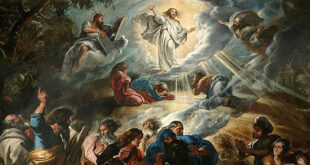
Who the Holy Spirit truly is and why the modern world desperately needs His presence
We live in an age marked by anxiety, moral confusion, constant noise, and a deep sense of spiritual emptiness. Never before has humanity had so much information at its fingertips, and yet never has it seemed so inwardly lost. Many seek answers in ideologies, therapies, vague spiritual movements, or fleeting emotional experiences, yet they continue to feel within themselves a thirst that nothing can satisfy.
In the midst of this landscape, Christianity preserves an immense truth that is often forgotten even among many believers: God did not want to leave mankind alone. Christ promised to send the “Paraclete,” the Comforter, the Defender, the Spirit of Truth.
And that promise remains alive today.
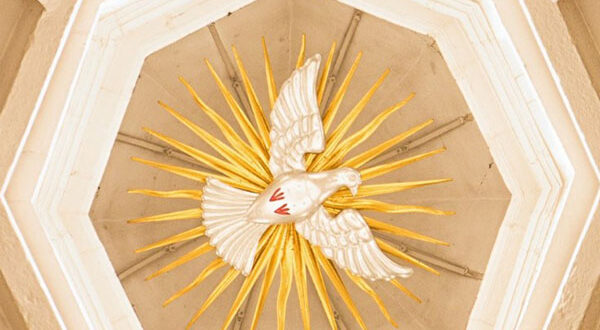
The term “Paraclete” is one of the deepest and most mysterious names of the Holy Spirit. It is not merely a spiritual energy, a religious emotion, or an inner inspiration. The Paraclete is God Himself acting within the human soul. He is the Third Person of the Holy Trinity, sent by the Father and the Son to sanctify, enlighten, strengthen, and guide the Church until the end of time.
To speak about the Paraclete is not a secondary topic within the Christian faith. It is to enter into the very heart of the spiritual life.
What does “Paraclete” mean?
The word “Paraclete” comes from the Greek Parákletos, and can be translated as:
- Comforter
- Defender
- Advocate
- Intercessor
- Helper
Jesus uses this term especially in the Gospel of Saint John during the discourse at the Last Supper, when He prepares His disciples for His Passion and His visible departure from the world.
Christ knows that the apostles will feel fear, disorientation, and sorrow. Therefore, He makes them an extraordinary promise:
“And I will ask the Father, and He will give you another Paraclete, to be with you forever: the Spirit of truth.”
(John 14:16-17)
Here we find a fundamental revelation: the Holy Spirit is not simply a “divine force,” but Someone personal. Jesus speaks of Him as “another Paraclete,” clearly indicating that He possesses personality, will, and His own mission.
The Holy Spirit teaches, reminds, guides, corrects, strengthens, and consoles.
The Paraclete at the heart of the Trinity
To truly understand who the Paraclete is, we must enter into the mystery of the Holy Trinity.
The Catholic faith teaches that there is one God in three distinct Persons:
- The Father
- The Son
- The Holy Spirit
They are not three gods, but one true God.
The Holy Spirit proceeds eternally from the Father and the Son as the bond of infinite love. Great theologians, especially Saint Augustine and Saint Thomas Aquinas, explained that the Holy Spirit is the subsisting Love between the Father and the Son.
This has immense consequences for spiritual life.
The Paraclete does not come merely to “give things”; He comes to communicate the very life of God to the soul. When the Holy Spirit dwells in a person in the state of grace, that soul becomes a living temple of the Trinity.
Saint Paul expresses it powerfully:
“Do you not know that you are God’s temple and that God’s Spirit dwells in you?”
(1 Corinthians 3:16)
Christianity is not merely a morality or a religious philosophy. It is an interior transformation brought about by divine indwelling.
Pentecost: the moment the world changed forever
The great historical and spiritual event connected to the Paraclete is Pentecost.
After Christ’s Ascension, the apostles remained gathered with the Virgin Mary in prayer. Humanly speaking, they were weak, fearful, and persecuted. Peter had denied Jesus. Many disciples were still confused.
But then something supernatural happened.
“Suddenly there came from heaven a sound like a mighty rushing wind… and they were all filled with the Holy Spirit.”
(Acts 2:2-4)
Pentecost was not merely a collective emotional experience. It was the visible birth of the Church.
The same Peter who had been afraid to acknowledge Christ before a servant girl now publicly preaches before thousands of people. The apostles receive courage, doctrinal clarity, and supernatural strength.
The Paraclete completely transforms men.
And this continues to happen today.
The great modern tragedy: baptized Christians but spiritually empty
One of the great problems of our time is that many people have received the sacraments but have never developed a true relationship with the Holy Spirit.
There are baptized people who live as though God were absent. They preserve certain religious rites or customs, but inwardly they experience:
- spiritual lukewarmness,
- lack of prayer,
- existential emptiness,
- constant fear,
- slavery to passions and sins,
- inability to persevere.
In many cases, the problem is not merely moral, but spiritual: they have forgotten the Paraclete.
Without the Holy Spirit, Christianity becomes a cold and purely external burden. With the Holy Spirit, faith becomes life, fire, and transformation.
Saint Seraphim of Sarov said:
“The true aim of the Christian life consists in acquiring the Holy Spirit.”
This statement summarizes the entire Christian spiritual life.
The seven gifts of the Holy Spirit
Catholic tradition, especially based on Isaiah 11, teaches that the Holy Spirit communicates seven supernatural gifts to the soul.
These gifts perfect the virtues and allow one to act under divine inspiration.
1. The Gift of Wisdom
It allows one to savor the things of God and to see the world from an eternal perspective.
A spiritually wise person understands that material success, pleasure, or fame are fleeting compared to eternal life.
2. The Gift of Understanding
It helps one penetrate the truths of the faith deeply.
Many discover that certain passages of the Gospel begin to come alive in a new way when the Holy Spirit enlightens the soul.
3. The Gift of Counsel
It enables one to discern correctly in difficult situations.
In a society filled with moral relativism, this gift is essential.
4. The Gift of Fortitude
It gives strength to endure trials, persecutions, and sufferings.
Christian martyrs are the most impressive example of this gift.
5. The Gift of Knowledge
It helps one see creation as God’s work and to use material things rightly.
6. The Gift of Piety
It produces filial love toward God and spiritual tenderness toward one’s neighbor.
7. The Gift of Fear of the Lord
This does not mean terror, but profound reverence before the divine majesty and horror of sin.
The Paraclete and spiritual warfare
To speak of the Holy Spirit also means speaking about spiritual combat.
Modern culture attempts to reduce evil merely to psychological, social, or political problems. However, Christian tradition teaches that a real spiritual battle exists.
Saint Paul states:
“For our struggle is not against flesh and blood, but against principalities, against powers…”
(Ephesians 6:12)
The Holy Spirit strengthens the believer to resist:
- temptation,
- despair,
- lies,
- pride,
- impurity,
- spiritual mediocrity.
Many Christians live defeated because they try to fight alone.
The Paraclete does not magically eliminate trials, but He grants supernatural strength to endure them.
The Holy Spirit and everyday holiness
There is a false idea that holiness is reserved for monks, religious sisters, or great mystics. Yet the Paraclete also acts in ordinary daily life:
- in the father or mother who raises children in the Christian faith,
- in the person who forgives a grave offense,
- in the one who perseveres amid illness,
- in the one who remains faithful to Christ in hostile environments,
- in the one who daily battles personal sins.
Holiness does not primarily consist in doing extraordinary things, but in allowing the Holy Spirit to act in ordinary life.
The silent action of the Paraclete within the soul
The Holy Spirit often acts silently and discreetly.
While the world constantly seeks noise, spectacle, and intense emotions, God often speaks in interior silence.
The Paraclete inspires:
- a call to conversion,
- a desire to go to confession,
- the impulse to return to prayer,
- an interior movement toward good,
- a warning of conscience against sin.
Sadly, modern man lives so distracted that he frequently ignores these divine inspirations.
Hyperconnectivity, constant entertainment, and the endless bombardment of stimuli make it extremely difficult to hear the voice of God.
That is why spiritual life requires moments of silence, recollection, and prayer.
Mary and the Paraclete
One cannot speak about the Holy Spirit without speaking about the Virgin Mary.
Many saints call her the “Spouse of the Holy Spirit” because no creature has ever been so united to His divine action.
It was through the Holy Spirit that Christ was conceived in her womb:
“The Holy Spirit will come upon you…”
(Luke 1:35)
Mary also appears at Pentecost accompanying the apostles.
Where Mary is present, the Holy Spirit acts abundantly.
For this reason, Catholic tradition has always recommended Marian devotion as a sure path toward a deeper life in the Spirit.
How to open the soul to the Paraclete
Many ask: “How can I live more united to the Holy Spirit?”
The spiritual tradition of the Church offers very concrete paths.
1. Life of grace
Mortal sin expels sanctifying grace from the soul.
That is why frequent confession is essential.
2. Daily prayer
The Holy Spirit acts especially in souls that pray.
One does not need to begin with extraordinary experiences. Simple fidelity already opens the heart to God.
3. Reading Sacred Scripture
The Holy Spirit inspired the Bible.
Reading the Gospel with humility allows the Paraclete to enlighten the understanding.
4. Worthy reception of the Eucharist
Holy Communion deeply strengthens union with God.
5. Interior docility
The Holy Spirit usually does not impose Himself violently.
The soul must learn to listen and obey good inspirations.
The Paraclete in the face of the chaos of the modern world
Humanity is going through a profound spiritual crisis:
- moral relativism,
- attacks on the family,
- loneliness,
- depression,
- nihilism,
- loss of the sense of God,
- hatred and constant polarization.
In the midst of all this, the Holy Spirit remains a source of truth and hope.
The Paraclete does not belong only to the apostolic past. He continues to act today in:
- conversions,
- vocations,
- family reconciliations,
- hidden saints,
- modern martyrs,
- people who rediscover the faith after years away from God.
The Holy Spirit continues renewing the Church even in times of darkness.
The sin against the Holy Spirit
One of the most serious themes in the Gospel is the so-called “sin against the Holy Spirit.”
Jesus says:
“Blasphemy against the Spirit will not be forgiven.”
(Matthew 12:31)
Tradition explains that this does not mean that God is unwilling to forgive, but that the person voluntarily closes himself to grace and stubbornly rejects conversion.
The Holy Spirit is the One who moves the heart toward repentance. Persistently rejecting Him hardens the heart.
That is why spiritual pride is so dangerous.
The Paraclete and true freedom
The modern world identifies freedom with doing whatever one wants. Yet many people who live this way end up enslaved by:
- addictions,
- disordered passions,
- ideologies,
- existential emptiness,
- interior despair.
The Holy Spirit leads toward a deeper freedom: the freedom to love the good.
Saint Paul summarizes it magnificently:
“Where the Spirit of the Lord is, there is freedom.”
(2 Corinthians 3:17)
True freedom does not consist in the absence of limits, but in the ability to live according to truth.
The fruits of the Holy Spirit
When the Paraclete acts in a soul, visible fruits appear.
Saint Paul lists some of them:
“Love, joy, peace, patience, kindness, goodness, faithfulness, gentleness, and self-control.”
(Galatians 5:22-23)
These fruits do not mean the absence of suffering, but rather interior transformation.
Even amid trials, the soul can preserve a supernatural peace.
The Paraclete and the mission of evangelization
The Holy Spirit always impels toward evangelization.
A faith locked solely in the private sphere eventually weakens.
After Pentecost, the apostles went out into the world.
Today as well, Christians are called to bear witness:
- on social media,
- in the workplace,
- within the family,
- in environments hostile to the faith.
Not through aggressiveness or fanaticism, but with truth, charity, and courage.
A prayer to the Holy Spirit for our times
In an age of spiritual darkness, perhaps never has such a simple and profound prayer to the Paraclete been more necessary:
Come, Holy Spirit.
Enlighten my mind to know the truth.
Strengthen my heart to remain faithful to Christ.
Purify my soul from sin.
Give me wisdom to live according to Your will.
Make me docile to Your inspirations.
Console my wounds and increase my faith.
Stay with me and never allow me to drift away from God.
Amen.
Conclusion: the great forgotten One who still changes lives
Many vaguely know God the Father. Many feel closeness to Jesus Christ. But for numerous Christians, the Holy Spirit remains the “great unknown.”
And yet the Paraclete is the One who makes faith alive.
He is the One who transforms sinners into saints.
He is the One who sustains the Church amid persecutions.
He is the One who enlightens the conscience.
He is the One who strengthens in suffering.
He is the One who gives hope when everything seems to collapse.
The modern world needs technology, progress, and human solutions, but above all it needs souls filled with the Holy Spirit.
Because only the Paraclete can truly heal the human heart.