

Related Articles


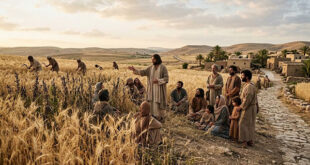
There are moments in reading Sacred Scripture when the soul pauses, becomes unsettled, and even feels scandalized. Passages where God appears severe, where there are punishments, wars, judgments, or words that, when read superficially, can seem shocking to the modern person. Not a few people, upon encountering these texts, experience a silent crisis: “How can this be the same God who is Love?”
This article does not aim to give simplistic answers, but rather to accompany you—as a spiritual and theological guide—on a deeper journey: learning to read these texts without losing faith, and even more, allowing faith to be purified and strengthened.
1. The Initial Scandal: When Scripture Disturbs
We live in a culture that has absolutized certain ideas: individual autonomy, tolerance understood as the absence of judgment, and a sentimental view of love. From this perspective, biblical texts that speak of divine justice, punishment, or moral demands seem incompatible with the idea of a good God.
However, this initial reaction says as much about us as it does about the text. We are faced with a tension: either we reinterpret God in our own image, or we allow Him to reveal who He truly is.
Here begins the true path of mature faith.
2. The Fundamental Key: God Does Not Change, But Revelation Is Progressive
One of the most important principles for understanding difficult texts is this: God reveals Himself progressively in history.
The Bible is not a book dictated all at once, but a history of salvation in which God educates His people step by step, like a patient father. In the Old Testament, we find a people still in the process of spiritual maturation, with a limited understanding of God.
This explains why some texts reflect a more rudimentary mindset, where divine justice is expressed in human categories, sometimes harsh ones.
But all of this reaches its fullness in Christ.
“In many and various ways God spoke of old to our fathers by the prophets; but in these last days he has spoken to us by his Son” (Hebrews 1:1–2).
Jesus Christ is the hermeneutical key to all Scripture. If a text seems obscure, it must be interpreted in the light of Christ, who reveals the definitive face of God: a Father who loves to the very end.
3. Justice and Mercy: Two Sides of the Same Love
One of the most common mistakes is to oppose justice and mercy, as if they were incompatible. But in God there is no contradiction.
God is infinitely just because He is infinitely good. And precisely because He loves, He cannot be indifferent to evil.
Imagine a father who sees his child destroying his life. Would it be loving if he did not correct him, if he did not intervene, if he did not set limits? Correction, even when it hurts, can be a profound form of love.
In the same way, many of the harsh texts in the Bible express not God’s cruelty, but His radical rejection of sin that destroys man.
“For the Lord disciplines him whom he loves, and chastises every son whom he receives” (Hebrews 12:6).
This verse, far from being a threat, is an affirmation of sonship: if God corrects, it is because He treats us as His children.
4. Symbolic and Cultural Language: Learning to Read Properly
Another essential point: not all biblical texts should be read in a literalist way.
Scripture uses diverse literary genres: poetry, history, prophecy, symbolic narrative… Many passages that seem violent or extreme are written in a language proper to their time, with rhetorical devices that feel foreign to us today.
For example, certain descriptions of wars or punishments may be exaggerated as a way of expressing the gravity of sin or the victory of God, not as a literal chronicle of events.
The Church, from its earliest centuries, has insisted on the need to interpret the Bible with spiritual intelligence, taking into account the historical, literary, and theological context.
Saint Augustine summarized it this way: “The letter kills, but the Spirit gives life” (cf. 2 Corinthians 3:6).
5. Christ Crucified: The Definitive Answer to the “Harsh God”
If there is a place where the scandal of difficult texts is resolved, it is the Cross.
There we see something astonishing: the very God who seemed to judge becomes the one judged; the one who seemed to punish takes the punishment upon Himself.
The Cross reveals that God is not a distant tyrant, but a Father who enters into human suffering in order to redeem it from within.
When we read harsh texts from the Old Testament, we must look at them from this horizon: God does not delight in suffering, but assumes it in order to save us.
“God shows his love for us in that while we were yet sinners Christ died for us” (Romans 5:8).
6. Practical Applications: How to Read Difficult Texts Today
a) Do not run away from them
Avoiding difficult texts impoverishes faith. Scripture is a whole, and those passages also have something to say to you.
b) Read them with guidance
Rely on biblical commentaries, the Catechism, and the tradition of the Church. Faith is not individualistic.
c) Pray with them
Even if you do not fully understand them, present them to God. Prayer opens paths that reason alone cannot reach.
d) Ask: What does this reveal about God and about me?
Sometimes, what unsettles us is not so much the text as the inner confrontation it provokes.
e) Always look to Christ
If something seems to contradict God’s love, return to the Gospel. Christ is the measure.
7. A More Mature, Not More Fragile Faith
Overcoming the scandal of difficult texts does not weaken faith; it purifies it.
It helps us move from a childish faith—one that seeks a God made to our measure—to a mature faith, capable of trusting even when it does not fully understand.
It teaches us that God is not a character shaped by our expectations, but the infinite Mystery who transcends us… and yet has drawn near to us with unimaginable tenderness.
8. Conclusion: When You Do Not Understand, Trust
There will be passages that remain difficult. There will be moments when God seems silent or even harsh. But it is precisely there that faith is tested.
Not a blind faith, but a trusting one.
Like a child who, even without understanding everything his father does, knows that he is loved.
“For my thoughts are not your thoughts, neither are your ways my ways, says the Lord” (Isaiah 55:8).
And yet, those ways—though mysterious—always lead to life.
Spiritual Epilogue
If a biblical text has ever unsettled you, do not take it as a threat, but as an invitation: God is calling you to go deeper, to grow, to enter more fully into the mystery of His love.
Because even in the harshest passages, if you learn to look with the eyes of Christ, you will discover something astonishing:
God is not less loving than you thought… but infinitely deeper.