Related Articles

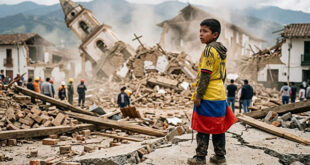

In football stadiums, in parliaments, in schools, at civil funerals, or at public ceremonies, we have all experienced that solemn moment when someone announces:
“Let us observe a minute of silence.”
Then the crowd becomes still.
Heads bow.
Noise disappears for sixty seconds.
It is a respectful gesture.
A solemn gesture.
A gesture that apparently honors the person who has died.
But from a Christian perspective, a profound question arises:
Why silence… when the Christian believes in the power of prayer?
For centuries, when a Christian died, the natural reaction of the people of God was not to remain silent, but to pray. Responsories were prayed, psalms, rosaries, and Masses were offered for the soul of the deceased. The Church knew that death is not the end, but the decisive moment when the soul appears before God.
In this context, the modern “minute of silence” raises a theological, historical, and spiritual question of great relevance today:
Are we replacing prayer with an empty gesture?
This article seeks to explore the origin of the minute of silence, its cultural meaning, its contrast with the Christian tradition, and above all the Catholic alternative: praying for souls.
The Origin of the Minute of Silence: A Modern and Secular Gesture
Although today it seems like a universal tradition, the minute of silence is relatively recent.
Its spread began after the First World War, when several European countries sought a way to remember the soldiers who had fallen in civil ceremonies organized by the State.
One of the key moments occurred during the Armistice of 1919, when in the United Kingdom two minutes of silence were instituted to remember those who died in the war.
The intention was clear:
- to create a neutral gesture
- valid for people of any religion or no religion
- used in public and state ceremonies
Over time, this practice spread to civil funerals, sporting events, commemorations, and official ceremonies.
But that neutrality carried a deeper meaning.
Silence replaced prayer.
Prayer was not offered because the modern State sought to be religiously neutral.
Instead of praying for the deceased, people simply remembered them.
Thus was born a practice that today we see throughout the world.
The Radical Difference Between Remembering and Praying
For the contemporary mindset, remembering someone may seem sufficient.
But for Christianity, remembering is not the same as praying.
Remembering looks toward the past.
Prayer looks toward eternity.
Christians believe that the soul of a person continues to exist after death and may need spiritual help.
For this reason, the Church has always insisted on something essential:
praying for the dead is an act of charity.
Scripture expresses this clearly:
“It is therefore a holy and wholesome thought to pray for the dead, that they may be loosed from sins.”
(2 Maccabees 12:46)
This statement, deeply rooted in Catholic tradition, explains why for centuries the Christian people responded to death with immediate prayer.
Not silence.
The Christian Tradition: Praying for Souls
From the earliest centuries of Christianity, the faithful offered prayers for the deceased.
In the catacombs of Rome, inscriptions appear such as:
“Pray for us”
“May God grant rest to his soul”
This reveals something essential:
Christians knew that communion between the living and the dead continues in God.
The Church calls this reality the communion of saints.
The faithful on earth can spiritually help those who have died.
How?
Through:
- prayer
- sacrifice
- the Eucharist
- penance
- indulgences
Especially through the Holy Mass, considered the greatest suffrage for the dead.
For this reason, for centuries, when someone died, the natural reaction was to say:
“Let us pray for his soul.”
Modern Silence: A Tribute Without Transcendence
Although respectful, the minute of silence has an obvious spiritual limitation.
It does not ask anything of God.
It does not intercede for the soul.
It does not recognize the eternal dimension of the person.
It simply remembers.
From a Christian perspective, this can be insufficient.
Because if the soul is immortal — as the Christian faith teaches — then the greatest act of love toward someone who has died is not remembering them, but praying for them.
Silence may express human respect.
But prayer expresses supernatural charity.
The Christian Alternative: The Minute of Prayer
In light of this reality, many Catholics propose recovering a simple but deeply Christian practice:
replacing the minute of silence with a minute of prayer.
Instead of remaining silent, pray.
Even silently, but praying interiorly.
It can be something very simple:
- an Our Father
- a Hail Mary
- “Lord, grant him eternal rest”
The Church has a traditional prayer that is very brief and very powerful:
“Eternal rest grant unto him, O Lord,
and let perpetual light shine upon him.”
This prayer has been spoken for centuries by millions of Christians.
It is brief.
It is simple.
But it is profoundly theological.
Because it asks for two fundamental things:
- eternal rest
- the light of God
The Spiritual Value of Praying for the Dead
Praying for the deceased not only helps souls.
It also transforms the heart of the person who prays.
It reminds us of three fundamental truths of the faith:
1. Life is passing
Death reminds us that our earthly existence is brief.
As Scripture says:
“Teach us to number our days, that we may gain a heart of wisdom.”
(Psalm 90:12)
2. Eternity is real
For the Christian, death is not the end.
It is the passage to eternal life.
3. Love does not end with death
When we pray for someone who has died, we affirm something profoundly Christian:
love continues beyond the grave.
A Small Gesture That Can Change the World
In an increasingly secularized culture, recovering the Christian meaning of death is urgent.
It is not about criticizing the minute of silence.
It is about giving it a deeper meaning.
A Christian can live that moment differently.
While everyone remains silent, he can pray in his heart.
Perhaps no one will notice.
But that small act can be spiritually immense.
Because every prayer is an act of love.
How to Live These Moments as a Christian
In daily life there are many occasions when a minute of silence is requested.
A Christian can take advantage of that moment to pray interiorly:
- “Lord, receive his soul.”
- “Grant him eternal rest.”
- “Forgive his sins.”
He can also offer:
- a Rosary
- a Mass for the deceased
- a small sacrifice
In this way, the human tribute becomes spiritual intercession.
Recovering a Forgotten Tradition
For centuries, when someone died, the church bells rang.
Neighbors would stop.
And they would pray an Our Father for the soul of the deceased.
It was a simple gesture.
But profoundly Christian.
Perhaps today we need to recover some of that spiritual wisdom.
Because the greatest act of respect toward someone who has died is not silence.
It is prayer.
Conclusion: When Silence Becomes Prayer
The minute of silence was born as a secular gesture, intended for public ceremonies where prayer could not be offered.
But the Christian knows something the world sometimes forgets:
prayer has power.
It can console.
It can intercede.
It can help a soul on its journey toward God.
Therefore, the next time you hear:
“Let us observe a minute of silence”
you can do something profoundly Christian.
Close your eyes.
Bow your head.
And pray in your heart.
Because in that moment, while the world is silent…
your prayer may open heaven.