Related Articles
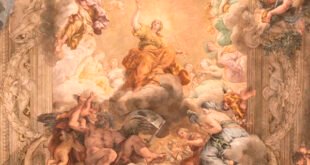

When Holy Week arrives, most Christians immediately think of the final days of Jesus: the entry into Jerusalem, the Last Supper, the Passion, and the Resurrection. However, centuries before Christ walked toward Calvary, there was a Jewish family that lived something that seems to anticipate the mystery of the Cross: the Maccabees.
The story told in the books of First Book of Maccabees and Second Book of Maccabees is not merely a heroic account of religious resistance. For the Catholic tradition, it is a true spiritual preparation for understanding the sacrifice of Christ.
Surprisingly, many modern Christians are not aware of this connection. One of the historical reasons is that these books were removed from the biblical canon by Protestant reformers in the 16th century, which caused entire generations to lose a key piece for understanding the faith.
Today we are going to rediscover that profound relationship—
- historical
- theological
- spiritual
—and we will see how the experience of the Maccabees illuminates Holy Week and our Christian life today.
1. A Story of Persecution that Anticipates the Cross
The Historical Context
In the second century before Christ, the people of Israel were living under the rule of the Seleucid Empire. The king Antiochus IV Epiphanes attempted to eradicate the Jewish faith by imposing pagan practices and prohibiting the Law of God.
The following were forbidden:
- circumcision
- the Sabbath
- the reading of the Torah
- worship in the Temple
The Temple of Jerusalem itself was even profaned with pagan sacrifices.
In this context a priestly family appeared, led by Mattathias the Hasmonean and his sons, among them the famous Judas Maccabeus.
They led a rebellion that was not merely political but religious: defending fidelity to God in the face of apostasy.
But beyond the war itself, what deeply shaped Jewish spirituality was the witness of the martyrs.
2. The Martyrdom of the Maccabees: A Prelude to Calvary
Chapter 7 of the Second Book of Maccabees recounts one of the most powerful passages in the Bible: the martyrdom of a mother and her seven sons for refusing to violate the Law of God.
One by one they are tortured and executed before their mother.
One of the sons proclaims:
“You accursed fiend, you dismiss us from this present life, but the King of the universe will raise us up to an everlasting renewal of life, because we have died for his laws.”
(2 Maccabees 7:9)
This passage contains something extraordinary: a clear affirmation of the future resurrection, centuries before Christ.
Here a key idea appears that will later become central in Holy Week:
suffering offered out of fidelity to God is not defeat, but a path toward life.
Is that not exactly what happens at Calvary?
3. The Maccabees Prepare the Heart to Understand Christ
When Jesus arrives in Jerusalem in the Gospel of Matthew, the Jewish people already possess a long spiritual memory marked by:
- persecutions
- martyrdom
- fidelity to the Law
- hope in the resurrection
The Maccabees helped shape that mindset.
That is why the first Christians saw in them a foreshadowing of the sacrifice of Christ.
Three Striking Parallels
1. Fidelity unto death
The Maccabees die rather than betray the Law.
Christ dies rather than abandon the mission of the Father.
2. Redemptive suffering
The martyrs offer their lives for the people.
Christ offers His life for all humanity.
3. Hope in the resurrection
The Maccabees proclaim that God will restore life.
Christ truly conquers death in the Resurrection.
The story of the Maccabees is like a lived prophecy of the Paschal mystery.
4. One of the Biblical Foundations for Praying for the Dead
There is another key passage that connects directly with Catholic spirituality.
In chapter 12 of the Second Book of Maccabees, Judas Maccabeus orders sacrifices to be offered for fallen soldiers so that their sins may be forgiven.
The text says:
“Therefore he made atonement for the dead, that they might be delivered from their sin.”
(2 Maccabees 12:46)
This verse is fundamental because it supports practices that remain alive in the Church today:
- praying for the dead
- offering Masses for the souls of the departed
- the doctrine of purgatory
During Holy Week, especially on Good Friday, Christians pray for all humanity redeemed by the Cross of Christ. This spiritual sensitivity was already present among the Maccabees.
5. Why Did Protestants Remove the Maccabees from the Bible?
This point often raises many questions.
During the Reformation in the 16th century, Martin Luther decided to remove several books from the Old Testament that had been present in the Christian Bible since the earliest centuries.
Among them:
- Tobit
- Judith
- Wisdom
- Sirach
- Baruch
- 1 and 2 Maccabees
These books are now known as the Deuterocanonical books.
Why were they removed?
Primarily for three reasons.
1. They were not part of the later Hebrew canon
Jewish rabbis in the first century (after the destruction of the Temple) established a narrower canon in Hebrew. Luther chose to follow that canon.
However, Christians from the beginning used the Greek Bible known as the Septuagint, which did include these books.
2. Theological disagreements
Some passages support Catholic doctrines that Luther rejected:
- prayer for the dead
- the merit of good works
- intercession
In particular, 2 Maccabees 12 conflicted with his theology.
3. Tradition vs. interpretation
The Catholic Church officially confirmed these books as inspired at the Council of Trent in 1546, reaffirming a tradition that had existed since the earliest centuries of Christianity.
6. The Spiritual Message of the Maccabees for Christians Today
Beyond the historical debate, the message of the Maccabees is profoundly relevant today.
We live in a culture that often pressures Christians to:
- relativize their faith
- hide their religious convictions
- adapt to values contrary to the Gospel
The Maccabean story reminds us of something essential:
fidelity to God always has a cost.
Jesus Himself said:
“Whoever wants to be my disciple must deny themselves and take up their cross and follow me.”
(Matthew 16:24)
The Maccabees took up their cross before the Cross even existed as a Christian symbol.
7. How to Live the Maccabean Spirit During Holy Week
The connection with Holy Week is not merely historical; it is deeply spiritual.
Here are some practical ways to live it.
1. Rediscover the value of sacrifice
The modern world flees from suffering, but the Christian faith transforms it into love offered to God.
Small daily sacrifices can become prayer.
2. Defend the faith with courage
The Maccabees teach us that faith is not merely something private.
Sometimes it means going against the cultural current.
3. Live with hope in the resurrection
Holy Week does not end on Good Friday.
It ends with Easter.
The Maccabees already sensed this hope centuries earlier.
8. A Story that Prepares the Heart for Christ
The story of the Maccabees reminds us that God prepares history centuries in advance.
Before Jesus died on the Cross:
- there were martyrs who offered their lives
- there were believers who hoped in the resurrection
- there were men and women who chose God over comfort
Therefore, when we contemplate Calvary during Holy Week, we can understand something deeper:
The Cross did not suddenly appear in history.
It was the fulfillment of a long divine pedagogy.
The Maccabees are one of the most heroic pages of that preparation.
Conclusion: The Maccabean Echo in Every Christian
Every time a Christian remains faithful in the midst of difficulty, the spirit of the Maccabees lives on.
Every time someone offers their suffering united with Christ, the mystery of the Cross becomes present again.
And every time we celebrate the Resurrection, we remember the hope proclaimed by a young martyr centuries before Jesus:
“The King of the universe will raise us up to everlasting life.”
The story of the Maccabees is not merely ancient history.
It is a living call to embrace a courageous, profound, and truly Paschal faith.