Related Articles

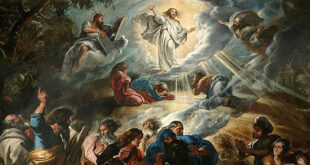
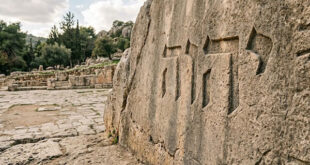
In an age marked by rapid cultural change, identity crises, and social pressure to abandon faith, the Book of Daniel emerges as one of the most timely and necessary biblical texts for Christians. Far from being merely an ancient story filled with mysterious visions, Daniel is a spiritual school of fidelity, a profound catechesis on how to live one’s faith when the world seems to be moving in the opposite direction from God.
The figure of the prophet Daniel reveals something deeply Christian:
holiness does not depend on circumstances, but on interior fidelity to the Lord.
This book of the Old Testament has been read for centuries by Jews and Christians as a guide for spiritual perseverance in times of crisis, and its message resonates with great force in our own time as well.
1. Historical context: faith in the midst of exile
To understand the depth of the Book of Daniel, it is necessary to place it within its historical context.
In 586 B.C., Jerusalem was destroyed by the Babylonian Empire. King Nebuchadnezzar deported many young Israelites to Babylon. Among them was Daniel, a young man of noble lineage.
This event marks one of the most traumatic moments in the history of the people of Israel:
- the temple had been destroyed
- the promised land had been lost
- the people were now living within a pagan culture
From a human perspective, it seemed that God had abandoned His people.
Yet the Book of Daniel reveals a fundamental theological truth:
God continues to govern history even when His people appear defeated.
2. Daniel: a model of radical fidelity
Daniel is not presented as a warrior or as a priest. Rather, he is a young believer who lives out his faith in a hostile environment.
His story begins with a decision that may appear small: not to defile himself with the king’s food.
“Daniel resolved that he would not defile himself with the king’s food or with the wine that he drank.”
(Daniel 1:8)
This gesture carries profound spiritual meaning.
Daniel understands that fidelity begins in the small decisions of everyday life.
This is not simply about a religious diet; it is an affirmation of identity:
even while living in Babylon, he still belongs to God.
Here we find a very important pastoral lesson:
Faith is not lived only in temples, but in the concrete decisions of daily life.
3. Wisdom and holiness within political power
One of the most fascinating aspects of the book is that Daniel does not live isolated from the world. On the contrary:
- he serves in the king’s court
- he interprets dreams
- he participates in political affairs
This breaks a false opposition that sometimes appears in spirituality: faith versus the world.
Daniel demonstrates that it is possible to:
- work within structures of power
- participate in society
- influence culture
without losing fidelity to God.
His wisdom is recognized even by pagan kings.
This anticipates a teaching that Christianity will later fully develop:
Believers are called to be “the salt of the earth and the light of the world” (Matthew 5:13–14).
4. The fiery furnace: faith that resists persecution
One of the most well-known episodes of the book is the story of the three young men in the fiery furnace: Shadrach, Meshach, and Abednego.
King Nebuchadnezzar commands everyone to worship a golden statue. Whoever refuses will be thrown into the fire.
The three young men refuse.
Their response is one of the most courageous declarations of faith in the entire Bible:
“Our God whom we serve is able to deliver us from the burning fiery furnace… but even if he does not, we will not serve your gods.”
(Daniel 3:17–18)
This sentence contains a very deep spiritual theology.
Authentic faith does not depend on miracles.
They believe in God:
- if He saves them
- and even if He does not.
This is pure faith — the faith that trusts even when it does not understand.
In the end, God protects them in the furnace, an image that Christian tradition has often interpreted as a symbol of Christ’s presence in human suffering.
5. Daniel in the lions’ den: prayer as spiritual resistance
Another famous episode is Daniel in the lions’ den.
Daniel had gained great prestige in the Persian Empire. His enemies set a trap: a decree forbidding prayer to any god except the king.
But Daniel does something that defines his spiritual life.
He continues to pray three times a day.
“He got down on his knees three times a day and prayed and gave thanks before his God.”
(Daniel 6:10)
This reveals something fundamental:
Prayer is the center of spiritual resistance.
It is not merely a religious practice, but the source of fidelity.
Daniel is thrown into the den, yet God shuts the mouths of the lions.
The message is clear:
those who trust in God are never alone, even in the darkest trials.
6. Apocalyptic visions: God governs history
The second part of the Book of Daniel contains prophetic and apocalyptic visions that deeply influenced both Jewish and Christian theology.
Symbols appear such as:
- beasts representing empires
- kingdoms that rise and fall
- a final judgment
In the midst of these visions appears a mysterious figure:
“I saw in the night visions, and behold, with the clouds of heaven there came one like a Son of Man.”
(Daniel 7:13)
This image is crucial because Jesus will apply it to Himself in the Gospels.
The “Son of Man” receives from God:
- authority
- glory
- an eternal kingdom.
This means that history does not end with human power.
The final word belongs to God.
7. Theological relevance for Christianity
The Book of Daniel holds enormous theological importance because it:
1. Introduces the hope of resurrection
In Daniel we find one of the earliest clear references to the resurrection of the dead.
“Many of those who sleep in the dust of the earth shall awake.”
(Daniel 12:2)
This prepares the way for the Christian teaching on eternal life.
2. Announces the Kingdom of God
The visions show that all human empires are temporary.
Only the Kingdom of God is eternal.
3. Foreshadows Christ
The figure of the Son of Man becomes central in New Testament Christology.
Jesus repeatedly identifies Himself with this title.
8. Practical applications for Christian life today
The Book of Daniel is not merely an ancient story. It contains very concrete lessons for our lives today.
1. Being faithful in a secularized world
Today many Christians experience cultural pressure similar to that of Babylon:
- moral relativism
- religious indifference
- rejection of faith
Daniel teaches that Christian identity should not be diluted simply to gain acceptance.
2. Prayer as the foundation of life
Daniel was not strong because of his intelligence or social position, but because of his constant life of prayer.
In a noisy world, rediscovering silence and dialogue with God is essential.
3. Living faith in public life
Daniel shows that faith should not be hidden in private life.
Christians are called to influence society through:
- wisdom
- justice
- integrity.
4. Trusting God in times of crisis
Daniel’s visions remind us that no historical crisis lies outside God’s plan.
This is especially important in times of global uncertainty.
9. Daniel as a spiritual model for our time
If we examine the figure of Daniel, we discover four essential characteristics of his spirituality:
1. Fidelity in small things
refusing to defile himself with the king’s food.
2. A deep life of prayer
praying even when it is forbidden.
3. Courage in the face of persecution
refusing idolatry.
4. Eschatological hope
trusting that God governs history.
Conclusion: Daniel, the prophet of hope in difficult times
The Book of Daniel is far more than a collection of heroic stories or mysterious visions. It is a catechesis on fidelity in times of crisis.
It reminds us that:
- God is present even in exile
- prayer sustains faith
- fidelity can transform history
- the Kingdom of God will ultimately triumph
In a world that often seems to forget God, the figure of Daniel invites us to live with a profound certainty:
History does not belong to human power, but to God.
And those who remain faithful — even in the midst of the “furnaces” and “lions’ dens” of life — will discover that the Lord walks with them.