Related Articles

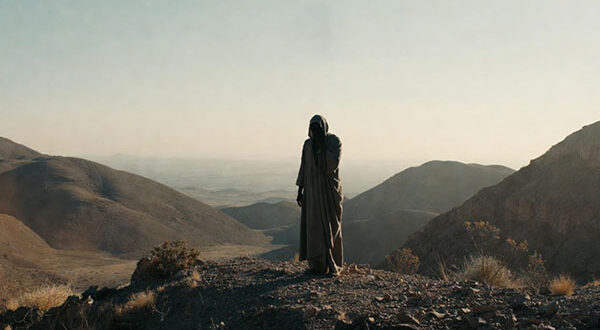
We live in an age of constant noise, instant success, and permanent self-affirmation. We have been promised that if we achieve goals, accumulate experiences, and endlessly reinvent ourselves, we will find fulfillment. And yet, deep in the human heart, an uncomfortable question still echoes:
What if none of this is enough?
More than two thousand years ago, a brief, unsettling, and profoundly relevant book offered a radical diagnosis of the human condition. That book is Ecclesiastes, also known by its Hebrew name Qohelet, “the Preacher.”
Far from being a pessimistic text, it is a work of devastating spiritual lucidity. It is the book that dares to say what we all feel but few confess: without God, everything becomes emptiness.
Today we will explore it in depth: its history, its theology, its pastoral message, and above all, how it can become a concrete guide for your daily life.
1. Who Wrote Ecclesiastes? Historical and Literary Context
Traditionally, Jewish and Christian tradition have attributed the book to King Solomon, son of David, famous for his incomparable wisdom (cf. 1 Kings 3:12). The author presents himself as “son of David, king in Jerusalem” (Eccl 1:1), reinforcing this symbolic identification.
Many contemporary scholars believe it may have been written centuries later, during the Persian or Hellenistic period, adopting Solomon’s figure as a literary framework. However, from a traditional theological perspective, the Solomonic attribution highlights a key message:
The man who had everything—wealth, pleasure, wisdom, power—declares that none of it can fill the human heart.
Ecclesiastes belongs to the wisdom books of the Old Testament, alongside Proverbs and Job. It is not history, nor law, nor prophecy in the strict sense. It is existential reflection. It is philosophy under divine inspiration.
2. “Vanity of Vanities”: Pessimism or Spiritual Realism?
The most well-known phrase of the book opens and sets the tone for the entire work:
“Vanity of vanities, says Qohelet, vanity of vanities! All is vanity.” (Eccl 1:2)
The Hebrew word hebel literally means “vapor,” “breath,” “smoke.” It does not refer so much to something “sinful” as to something fleeting, inconsistent, impossible to grasp.
The message is not that creation is evil. It is that it is passing.
It is not that work is useless. It is that it is not absolute.
It is not that pleasure is illicit in itself. It is that it cannot save.
Ecclesiastes is not nihilistic. It is profoundly theological. It forces us to distinguish between:
- The relative and the absolute
- The temporal and the eternal
- The created and the Creator
And here its spiritual power begins.
3. The Drama of Modern Man… Was Already Written
If we read carefully, we discover that Ecclesiastes perfectly describes the contemporary world:
✔ The obsession with performance
“What does man gain by all the toil at which he toils under the sun?” (Eccl 1:3)
Today we measure our worth by productivity, success, and recognition. But Qohelet reminds us that all of this ends with death.
✔ The accumulation of goods
The Preacher speaks of palaces, gardens, treasures, servants… and concludes that all is “a chasing after wind” (Eccl 2:11).
Is this not exactly what we live in a culture of permanent consumption?
✔ Pleasure as salvation
He tested wine, music, women, entertainment… and still confesses that the heart remains unsatisfied.
The message is brutally current:
Nothing created can take the place of God.
4. The Great Theological Teaching: God Is the Center
Although the book may seem somber, it culminates in a luminous affirmation:
“Fear God and keep his commandments, for this is the whole duty of man.” (Eccl 12:13)
Here lies the theological heart of Ecclesiastes.
Man was created for God. When he seeks his meaning outside of Him, everything fragments.
Ecclesiastes does not despise the world; it puts it in its proper place.
It does not eliminate joy; it purifies it.
The book teaches us three fundamental truths:
1️⃣ Life is a gift
Every moment, every meal, every relationship is a gift from God (cf. Eccl 3:13).
2️⃣ Death is a teacher
Not to depress us, but to order us interiorly.
3️⃣ Judgment exists
God will bring every deed into judgment (Eccl 12:14). This introduces moral responsibility and eternal meaning.
5. “There Is a Time for Everything”: Providence and Divine Order
One of the most beautiful passages in all of Scripture is Eccl 3:1–8:
“For everything there is a season, and a time for every matter under heaven:
a time to be born, and a time to die…”
This text is not fatalism. It is a theology of Providence.
God governs history. There are spiritual seasons. Not everything depends on our control. In a culture that wants to dominate everything, Ecclesiastes invites us to trust.
6. Practical Applications for Your Daily Life
This is where the book becomes pastoral and transformative.
🔹 1. Reorder Your Priorities
Ask yourself honestly:
- Why do I work?
- Why do I accumulate?
- What am I truly seeking?
Ecclesiastes forces you to go to the root.
🔹 2. Live with an Awareness of Eternity
Remembering death is not morbid; it is Christian wisdom. Spiritual tradition has always recommended the memento mori.
When you know your life here is not eternal, you choose better.
🔹 3. Enjoy Without Idolizing
The book repeatedly invites us to enjoy bread, wine, work… but as gifts from God.
Not as absolutes.
The difference is enormous.
🔹 4. Learn to Accept Limits
You will not understand everything. Not everything will be resolved.
Ecclesiastes teaches us intellectual and spiritual humility.
7. Ecclesiastes Read in the Light of Christ
For the Christian, Ecclesiastes finds its fulfillment in Jesus Christ.
What Qohelet intuits, Christ fully reveals:
- If everything is vapor, Christ is the Rock.
- If everything passes, He is eternal.
- If the world does not satisfy, He is the Bread of Life.
Where Ecclesiastes points out the emptiness, the Gospel fills it.
Therefore, read in the light of Catholic faith, the book does not lead to despair, but to purification of desire. It detoxifies us from the world in order to open us to eternity.
8. A Spirituality Against Superficiality
In times of constant distraction, Ecclesiastes is medicine.
It teaches us:
- Interior silence
- Spiritual realism
- Detachment
- Fear of God
It is an uncomfortable book because it dismantles our illusions. But it is also profoundly liberating.
When you accept that the world is not your ultimate end, you stop demanding from it what it cannot give you.
And then you can begin to truly live.
Conclusion: The Book That Saves from Self-Deception
Ecclesiastes is not a sad book. It is an honest one.
It is the voice of someone who walked every road the world offers and returned with a clear conclusion: without God, everything evaporates.
But with God, even the smallest thing acquires eternal weight.
Today, in the midst of stress, hyperconnectivity, and the anxious search for meaning, this biblical book becomes an indispensable spiritual guide.
Perhaps the question is not whether Ecclesiastes is relevant.
The question is whether we are ready to listen to what it says.
Because if we do, we will discover that the true meaning of life is not found “under the sun”…
but beyond it.