

Related Articles
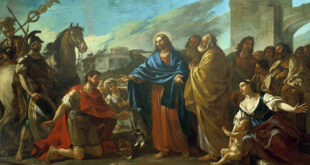

There are scenes in the Gospel that seem small, almost anecdotal… and yet they contain a depth capable of transforming an entire life. The story of Zacchaeus, told in the Gospel of Luke (Lk 19:1–10), is one of them.
There are no spectacular miracles. No crowds being healed. No long speeches. Just a look. A name spoken. A decision. And a radical conversion.
And yet, the whole Gospel is contained there.
1. The Man Nobody Wanted… and Whom God Was Seeking
Zacchaeus was a chief tax collector. That is, a collector of taxes in the service of the Roman Empire. In the context of Israel, this was not simply a profession: it was a betrayal.
Tax collectors were considered:
- Public sinners
- Collaborators with the oppressor
- Legal thieves (many collected more than they should)
Zacchaeus was not just one of them… he was a chief.
And the Gospel adds a key detail: “he was rich.”
In the biblical mindset, this was not neutral. Wealth, when united with injustice, reveals a life disordered with respect to God and neighbor.
But the text introduces a crack in that seemingly closed world:
“He was trying to see who Jesus was, but on account of the crowd he could not, because he was small in stature.” (Lk 19:3)
Here is where everything begins.
2. The Desire That Precedes Grace
Before conversion… there is a desire.
Zacchaeus wants to see Jesus Christ.
He does not yet know exactly what he is seeking. There is no explicit act of repentance. No prior confession. Only an interior restlessness.
Theologically, this is fundamental.
The tradition of the Church has always taught that:
- The grace of God precedes conversion
- But the human heart can cooperate with that grace
That small gesture—running, climbing a tree—is not trivial. It is a sign of openness.
In other words:
Zacchaeus has not yet converted… but he is no longer closed.
And that is enough for God to act.
3. The Scandal of a Look
The central moment of the account is not the tree. It is not the wealth. It is not the later restitution.
It is the look.
“When Jesus came to the place, he looked up and said to him, ‘Zacchaeus, hurry and come down; for I must stay at your house today.’” (Lk 19:5)
Here something theologically immense takes place.
3.1. God Takes the Initiative
Zacchaeus was trying to see Jesus.
But it is Jesus who finds him.
This reveals the heart of Christianity:
It is not man who reaches God…
it is God who comes out to meet man.
3.2. A Personal Call
Jesus calls him by name: “Zacchaeus.”
In the Bible, a name is not a superficial detail. It is identity, history, dignity.
In the middle of the crowd, Jesus does not see “just another sinner.”
He sees a concrete person.
This is profoundly relevant today.
In a society where many feel:
- invisible
- labeled
- reduced to their past mistakes
Christ continues to look in a personal way.
3.3. An Unexpected Invitation
“Today I must stay at your house.”
He does not say: “repent first.”
He does not say: “change your life and then I will come.”
He goes first. He enters first. He loves first.
This is the order of grace:
- God draws near
- God dwells
- The heart changes
4. The Murmuring of the World… and the Freedom of the Soul
The reaction of the people is immediate:
“All who saw it began to grumble and said, ‘He has gone in to be the guest of a sinner.’” (Lk 19:7)
This is not a secondary detail. It is a constant in the Gospel.
Whenever God acts with mercy… human scandal appears.
Because the logic of the world says:
- First deserve
- Then receive
But the logic of God is:
- First love
- Then transform
Here lies a key pastoral teaching for today:
Many people do not draw near to God because they:
- feel unworthy
- believe they are “not good enough”
- think they must change before approaching
The episode of Zacchaeus destroys that lie.
Christ enters precisely into the house of the sinner.
5. True Conversion: From Money to the Heart
After the encounter, Zacchaeus speaks decisive words:
“Behold, Lord, the half of my goods I give to the poor; and if I have defrauded anyone of anything, I restore it fourfold.” (Lk 19:8)
This is authentic conversion.
5.1. It Is Not Just Emotion
Zacchaeus does not say: “I feel better.”
He does not say: “your visit moved me.”
He does something concrete.
Christian conversion always has two dimensions:
- Interior (the heart changes)
- Exterior (life changes)
5.2. Justice and Charity
Zacchaeus:
- Repairs the harm (justice)
- Gives to the poor (charity)
This is deeply theological.
It is not enough to “feel forgiven.”
The love of God impels one to restore what has been broken.
6. “Today Salvation Has Come to This House”
Jesus concludes with a solemn declaration:
“Today salvation has come to this house… for the Son of Man came to seek and to save the lost.” (Lk 19:9–10)
Here the full meaning of the episode is revealed.
6.1. Salvation Is an Encounter
It is not an idea.
It is not a rule.
It is not an emotion.
It is a personal encounter with Christ.
6.2. Salvation Is “Today”
Not tomorrow.
Not when you are perfect.
Not when everything is resolved.
Today.
This “today” is key in the Gospel of Luke:
- Today a Savior is born
- Today the Scripture is fulfilled
- Today you will be with me in paradise
God acts in the present.
7. Practical Applications for Daily Life
This passage is not just history. It is a concrete spiritual guide.
7.1. Dare to “Climb the Tree”
Today, “climbing the tree” may mean:
- Seeking God in the midst of noise
- Setting aside time for prayer
- Reading the Gospel even if you do not fully understand it
You do not need to have everything clear. It is enough to want to see.
7.2. Let Christ Look at You
Many live fleeing from that gaze:
- because of guilt
- because of shame
- because of wounds
But the gaze of Christ does not humiliate.
It reveals dignity.
7.3. Come Down from the Tree: Decide
Zacchaeus does not remain up there observing.
He responds.
The spiritual life is not only contemplation.
It is decision.
7.4. Open Your House
“Your house” today is:
- your life
- your wounds
- your sins
- your story
Christ does not ask for a perfect house.
He asks for an open door.
7.5. Change What Is Concrete
Real conversion is visible in:
- how you treat others
- how you use money
- how you repair harm
The Gospel is not abstract. It is profoundly practical.
8. A Final Reflection: What If You Were Zacchaeus?
This passage has a special power because, at some point, we are all Zacchaeus:
- Small before life
- Limited
- With mistakes
- Searching without fully knowing what for
And yet… seen.
Called by name.
Invited into a relationship.
The story of Zacchaeus is not only his story.
It is yours.
Because the same Christ still passes by today.
He still raises His gaze.
He still says:
“Come down quickly… for today I want to stay at your house.”
Conclusion
The conversion of Zacchaeus teaches us that:
- No one is too far from God
- A small desire can open the door to grace
- The gaze of Christ transforms more than any human effort
- True conversion always translates into action
In a world that labels, discards, and judges quickly, this passage reminds us of something revolutionary:
God does not love perfect versions of us.
He loves real people… and transforms them from within.
And everything can begin today.
With a look.
And with the courage to come down from the tree.


