
Related Articles
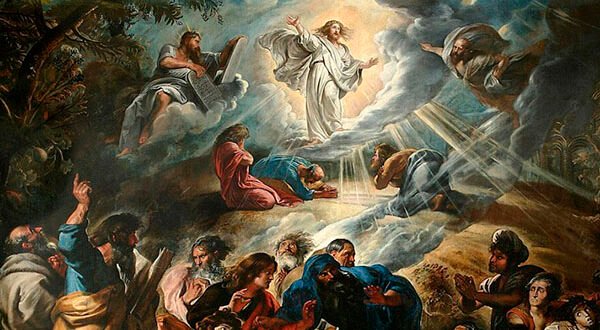
“And He was transfigured before them; His face shone like the sun, and His garments became white as light.”
(Matthew 17:2)
Introduction: An Event That Forever Changed the Apostles’ Vision
There are moments in the history of salvation that stand as true pillars upon which the whole Christian faith rests. One of these, without a doubt, is the Transfiguration of Our Lord Jesus Christ, an event as full of mystery as it is of hope, as radiant as it is profound.
Each year, on August 6, the Church celebrates this feast in memory of the moment when Jesus Christ allowed three of His disciples to behold, for a brief instant, the splendor of His divinity hidden beneath the humility of His human nature.
The Transfiguration was not merely a spectacular miracle intended to impress Peter, James, and John. It was a genuine revelation of God’s plan of Redemption. It was a foretaste of the Resurrection. It was a preparation for the scandal of the Cross. It also remains a permanent lesson for Christians of every age.
In a world obsessed with appearances, immediate success, and passing emotions, the Transfiguration reminds us that true glory comes only after the Cross.
That message is more necessary today than ever before.
What Does “Transfiguration” Mean?
The word comes from the Latin transfiguratio, which literally means a change of appearance or the manifestation of someone under a new form.
The Greek term used in the Gospels is μετεμορφώθη (metemorphōthē), from which our word “metamorphosis” is derived.
But one very important point must be understood.
Christ did not become God during the Transfiguration, because He had been God from all eternity.
What happened was exactly the opposite.
For a few moments, Jesus allowed the divine glory, normally veiled by His humanity, to shine forth visibly.
The human nature of Christ was flooded by the glory of His divinity.
There was no change in His nature.
Rather, it was a manifestation of who He truly was.
The Gospel Account
The Transfiguration is recounted in three Gospels:
- Matthew 17:1–9
- Mark 9:2–10
- Luke 9:28–36
All three present the same historical event.
Jesus takes with Him only three Apostles:
- Peter
- James
- John
This is no coincidence.
These same three will later witness His agony in Gethsemane.
Those who behold His glory will also behold His suffering.
The Christian life never separates the Cross from glory.
The Mountain of the Transfiguration
The Gospels speak only of a “high mountain.”
For centuries, Christian tradition has identified this place with Mount Tabor.
Although some scholars have proposed Mount Hermon, the liturgical, patristic, and spiritual tradition has consistently maintained Mount Tabor as the site of this event.
Beyond the geographical question, the mountain carries profound biblical symbolism.
Mountains are privileged places of encounter with God.
On a mountain Abraham offered Isaac.
On a mountain Moses received the Law.
On a mountain Elijah heard the gentle whisper of God.
On a mountain Christ proclaimed the Beatitudes.
On a mountain He died upon the Cross.
And on a mountain He revealed His glory.
The Light of Christ
The Gospel declares:
“His face shone like the sun.”
This was not an external light.
It was not a heavenly spotlight.
It was not an atmospheric phenomenon.
It was Christ’s own divine glory revealing itself.
The Fathers of the Church teach that this light was the very Uncreated Light, the eternal glory of the Son of God.
For a brief moment, the humanity of Jesus became like a transparent crystal through which the Apostles contemplated the beauty of God Himself.
The White Garments
The Gospels place particular emphasis on this detail.
His garments became whiter than snow.
White symbolizes:
- holiness;
- purity;
- victory;
- heavenly glory;
- the Resurrection.
It is no coincidence that angels appear clothed in white.
Nor that the Risen Christ is revealed clothed in dazzling brightness.
Everything points toward the definitive victory over death.
Why Do Moses and Elijah Appear?
This is one of the richest aspects of the account.
Standing beside Jesus are two figures:
- Moses.
- Elijah.
They were not chosen at random.
Moses Represents the Law
He received the Ten Commandments.
He is the great lawgiver of Israel.
The entire Old Covenant converges in Christ.
Elijah Represents the Prophets
He was the great defender of true worship against idolatry.
All prophetic preaching finds its fulfillment in Christ.
Thus a magnificent truth is revealed.
Christ did not come to abolish the Old Testament.
He came to fulfill it.
As He Himself declared:
“Do not think that I have come to abolish the Law or the Prophets; I have not come to abolish them but to fulfill them.”
(Matthew 5:17)
All of Sacred Scripture points toward Him.
The Luminous Cloud
In the Old Testament, the cloud is the symbol of God’s presence.
The cloud accompanied Israel through the wilderness.
It covered Mount Sinai.
It filled Solomon’s Temple.
Now it appears once again.
Not as an ordinary cloud.
It is the visible manifestation of divine glory.
From within it, the voice of the Father resounds.
The Voice of the Father
This is one of the most solemn moments in all of Sacred Scripture.
“This is My beloved Son, in whom I am well pleased; listen to Him.”
(Matthew 17:5)
It is almost the same declaration spoken at the Baptism of the Lord.
But now one command is added:
Listen to Him.
The entire Christian life can be summed up in these words.
Listen to Christ.
Not to our emotions.
Not to passing fashions.
Not to the spirit of the world.
Listen to the Son.
Peter Wants to Remain There
Peter, overwhelmed with wonder, exclaims:
“Lord, it is good for us to be here!”
It is a deeply human reaction.
When the soul experiences the closeness of God, it longs to stop time itself.
But Christ does not allow them to remain there.
After the mountain comes the valley.
After contemplation comes mission.
After consolation comes spiritual combat.
The Christian life alternates between moments of light and moments of darkness.
Both are necessary.
Why Does the Transfiguration Take Place Before the Passion?
This is perhaps the central key to understanding the entire event.
Only a few days earlier, Jesus had announced His Passion for the first time.
The Apostles were bewildered.
They expected a triumphant Messiah.
They could not understand the Cross.
Then Christ grants them a glimpse of the glory that is to come.
It is as though He were saying to them:
“Do not lose faith when you see Me nailed to the Cross.
Remember what you have seen today.”
The Transfiguration strengthens faith before the trial.
And it continues to do so for us today.
The Teaching of the Fathers of the Church
The Fathers of the Church contemplated this mystery with extraordinary depth.
Saint Leo the Great taught that the purpose of the Transfiguration was to strengthen the Apostles’ faith so that the humiliation of the Passion would not destroy their confidence in Christ.
Saint John Chrysostom explained that Jesus revealed only as much glory as the disciples were capable of bearing.
Saint Thomas Aquinas teaches that the Transfiguration was a foretaste of the future glory promised to the righteous, revealing in Christ what the members of His Mystical Body will one day share by grace.
The Theological Significance
From the perspective of traditional Catholic theology, the Transfiguration possesses multiple dimensions.
It Reveals Christ’s Divinity
Jesus is not merely a teacher.
He is not simply another prophet.
He is the eternal Son of God.
It Foreshadows the Resurrection
The glory of Mount Tabor announces the glory of Easter Sunday.
It Anticipates the Glory of Heaven
What the Apostles contemplated was only a glimpse of the eternal beatitude awaiting the saints.
It Strengthens Us in Times of Trial
Every cross embraced with Christ leads to glory.
It Reveals Man’s Ultimate Destiny
Salvation is not merely about escaping hell.
It is about sharing in the divine life itself.
As Saint Peter teaches:
“…that you may become partakers of the divine nature.”
(2 Peter 1:4)
The Transfiguration and Our Own Transformation
The mystery of Mount Tabor speaks not only about Christ.
It also speaks about us.
Every Christian is called to be transformed by grace.
Not through merely human techniques.
Not through self-help.
But through:
- prayer;
- the sacraments;
- penance;
- charity;
- the life of grace;
- obedience to God.
Holiness consists precisely in allowing Christ to transform our souls.
The Feast of the Transfiguration in the Liturgy
The Church celebrates the Feast of the Transfiguration of the Lord on August 6.
Although it had been celebrated in the Christian East since the earliest centuries, in the West it became a universal feast in 1457, when Pope Callixtus III extended it to the entire Latin Church in thanksgiving for the Christian victory at the Siege of Belgrade against the Ottoman Empire, news of which reached Rome on August 6.
In the traditional liturgy, this feast has a profoundly contemplative character. White vestments are worn, symbolizing glory, joy, and purity. The Holy Mass and the Divine Office invite the faithful to fix their gaze upon Christ in His glory, strengthening their hope amid the struggles of this world.
The feast also possesses a deeply eschatological meaning: it reminds us that the glory revealed on Mount Tabor will one day become the everlasting inheritance of all who persevere in friendship with God.
The Transfiguration and the Modern World
We live in a culture fascinated by appearances.
Social media presents carefully edited images.
People pursue immediate success.
Fame.
Acceptance.
Outward beauty.
But the Transfiguration teaches something radically different.
True beauty is born from union with God.
True light does not come from spotlights.
It comes from holiness.
Modern man wants to change the body.
Christ wants to transform the soul.
How Can We Live the Spirit of the Transfiguration Today?
Every Christian can make this mystery his own through concrete actions:
- Set aside time each day for silent prayer in order to “climb the mountain” and listen to the Lord.
- Participate frequently and devoutly in the Holy Mass, where Christ continues to make His presence sacramentally known.
- Approach the Sacrament of Penance regularly, allowing grace to transform the heart.
- Read and meditate upon Sacred Scripture, especially the Gospels.
- Accept the crosses of daily life with hope, remembering that Mount Tabor leads to Calvary, and Calvary leads to the Resurrection.
- Practice charity, making the light of Christ visible through kindness and love toward others.
The Transfiguration does not invite us to flee from the world, but to return to it with hearts renewed.
Conclusion: Climbing Mount Tabor in Order to Walk Toward Calvary
The Transfiguration is not an isolated event, nor merely a historical memory. It is a window opened toward the destiny for which God created us. Upon Mount Tabor, the Apostles contemplated the glory of the Incarnate Word and received the strength necessary to endure the scandal of the Cross. We too must lift our eyes if we are not to lose hope when suffering, uncertainty, or trial comes our way.
Christ teaches us that the Cross is not the end of the journey but the threshold of glory. The very Lord who shone like the sun upon Mount Tabor is the One who gave His life on Calvary and rose victorious on the third day. His light did not disappear; it was simply veiled by love in order to accomplish our redemption.
Whenever we pray, receive the sacraments, and live in the state of grace, a true interior transfiguration already begins within us. Holiness consists precisely in allowing the light of Christ to illuminate our thoughts, purify our actions, and transform our hearts until one day we may behold Him “face to face” (cf. 1 Corinthians 13:12).
May the contemplation of the Transfigured Lord renew our faith, strengthen our hope, and inflame our charity, so that, always heeding the Father’s voice—“This is My beloved Son… listen to Him.”—we may walk steadfastly toward the eternal glory that He has prepared for those who love Him.