Related Articles
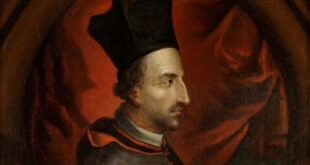


In an age like ours, marked by immediacy, constant motion, and a certain discomfort with speaking about death, it may seem strange that our ancestors left in their wills properties, lands, revenues, or “endowments” destined exclusively for the celebration of Masses for their souls—and even perpetually.
Yet behind that practice lies a profound theological understanding, great spiritual wisdom, and a moving expression of faith in the communion of saints. Rediscovering the meaning of suffrages for the holy souls is not an archaeological exercise; it is a pastoral urgency for modern man.
1. What Are Suffrages for the Holy Souls?
In Catholic tradition, suffrages are prayers and works offered to God on behalf of the deceased, especially those who are in Purgatory.
The word “suffrage” comes from the Latin suffragium, meaning help, support, assistance. It is therefore a real help that the Church on pilgrimage offers to the Church suffering.
Sacred Scripture already provides the foundation for this practice. In the Second Book of Maccabees we read:
“He made atonement for the dead, that they might be delivered from their sin” (2 Maccabees 12:46).
This text is crucial: it not only confirms the existence of a state of purification after death, but also reveals that our actions can benefit those who have departed.
2. The Theological Foundation: The Communion of Saints
The doctrine of suffrages rests upon a central pillar of the Creed: the communion of saints.
The Church is not only the visible community of those who live on earth. She is composed of:
- The Church Militant (we, the pilgrims).
- The Church Suffering (the souls in Purgatory).
- The Church Triumphant (the saints in Heaven).
There exists a true supernatural solidarity among these three states. What we do in Christ resonates throughout the entire Mystical Body.
Why Can We Help the Souls in Purgatory?
Because charity does not die. And because the sacrifice of Christ, sacramentally renewed in the Holy Mass, has infinite value.
The Mass is not merely a symbolic remembrance. It is the very Sacrifice of Calvary made present sacramentally. To apply its fruits to a particular soul is an act of supreme charity.
From a theological perspective:
- The souls in Purgatory are already saved.
- They can no longer merit for themselves.
- But they can benefit from the merits of Christ applied by the Church.
Here lies the essential role of suffrages.
3. What Were “Endowments” and Legacies for Perpetual Masses?
In past centuries—especially during the Middle Ages and well into the nineteenth century—it was common for the faithful to include in their wills financial provisions destined for the perpetual celebration of Masses for their souls.
What Were “Endowments”?
An “endowment” was a juridical arrangement by which a person left capital or property whose annual revenue was assigned to fund Masses.
For example:
- A piece of land would be given to a monastery.
- Or an annual rent would be established.
- Or capital would be left whose interest financed an annual perpetual Mass.
These foundations were called:
- Chaplaincies
- Pious works
- Perpetual memorials
- Mass foundations
The intention was clear: to ensure a constant flow of suffrages for the soul of the deceased, even centuries after death.
4. Superstition or Profound Faith?
From a modern mindset, some might view this as a “medieval” or even self-interested practice. But that would be a serious misunderstanding.
Our ancestors were not “buying” salvation. They knew perfectly well that salvation is grace. What they were doing was an act of humility and spiritual realism:
“I know I am a sinner. I trust in God’s mercy. And I ask the Church to pray for me when I can no longer do so.”
This reveals:
- Awareness of sin.
- Faith in Purgatory.
- Love for the Church.
- Spiritual responsibility.
Moreover, many did not leave Masses only for themselves, but also for relatives, benefactors, and even for “the most forgotten souls.”
5. Purgatory: An Uncomfortable Yet Consoling Truth
Speaking today about Purgatory can seem uncomfortable. Yet it is a profoundly consoling doctrine.
Purgatory is not a “second chance.” It is the purifying embrace of divine Love. It is the final stage of sanctification.
God is Love—but He is also infinite Holiness. Nothing impure can enter His presence (cf. Revelation 21:27). If we die in grace but still with imperfections, we need that purification.
Suffrages hasten this purification because they apply the merits of Christ.
From a theological standpoint:
- It is not “time” as we understand it here.
- It concerns the intensity of purification.
- The Mass possesses a satisfactory and propitiatory value.
This is why the Church has always considered the Mass the most efficacious suffrage.
6. The Pastoral Dimension: What This Practice Teaches Us Today
Although almost no one today establishes perpetual chaplaincies, the spirit that animated this practice is more necessary than ever.
1. Recovering the Sense of Eternity
We live as if this life were definitive. The ancients constantly thought of eternity. That awareness ordered their moral lives.
One who thinks about his particular judgment:
- Goes to confession.
- Lives in a state of grace.
- Practices charity.
2. Revaluing the Holy Mass
Many Catholics today attend Mass without understanding its sacrificial dimension.
Having a Mass celebrated for a deceased person:
- Is an act of faith.
- Is an act of charity.
- Is a profoundly ecclesial act.
3. Including the Spiritual in Estate Planning
Today we speak much about inheritances, investments, and insurance. But what about spiritual inheritance?
Why not include in our wills:
- The celebration of certain Masses?
- Donations to parishes or monasteries?
- Foundations with spiritual intentions?
This is not medieval nostalgia, but Christian coherence.
7. Practical Applications for the Contemporary Catholic
Not all of us can establish a perpetual foundation, but all of us can live the spirit of suffrages.
✔ Regularly Offer Masses for the Deceased
Not only at the funeral, but also on anniversaries.
✔ Pray for the Holy Souls in Purgatory
Especially during the month of November.
✔ Offer Sacrifices and Penances
Holy Communion offered for a deceased person has immense value.
✔ Teach Our Children
Recover the tradition of praying for deceased grandparents.
✔ Prepare Our Wills Spiritually
With proper guidance, including spiritual dispositions is an act of mature faith.
8. Love That Crosses the Threshold of Death
There is something deeply human in this practice: love does not resign itself to separation.
When we offer a Mass for someone who has died, we are saying:
“Our relationship did not end at the cemetery.”
Christian charity is stronger than death.
And paradoxically, the souls in Purgatory, once in Heaven, will intercede for us with gratitude. Thus a circle of charity is created, uniting generations.
9. A Countercultural Spirituality
In a world that avoids speaking of the afterlife, suffrages remind us of:
- The seriousness of sin.
- The reality of judgment.
- The need for purification.
- Divine mercy.
- Communal responsibility.
It is a sober, realistic, and profoundly hopeful spirituality.
It is not fear. It is responsible love.
Conclusion: Recovering a Living Tradition
The ancients left endowments for perpetual Masses because they truly believed in eternity. They believed in the infinite value of the Mass. They believed in the communion of saints. And they knew that death does not break charity.
Today we are called to rediscover that faith.
Perhaps we cannot leave great foundations. But we can leave something even more important:
- A life lived in grace.
- A family that prays for us.
- A witness of faith in eternal life.
- And a sincere devotion to the holy souls in Purgatory.
For in the end, all of us will need someone to pray for us.
And how beautiful it will be to know that, just as we helped others in their purification, someone will offer the Holy Sacrifice for our soul.
May we never forget this truth:
To pray for the dead is one of the greatest acts of charity we can perform.